Dental hygienists hit the road to expand oral care
Three hygienists across Michigan use foundation-funded vans to deliver preventive dental care to underserved children and families.
This story is part of a series on the challenges and solutions related to oral health in Michigan, Indiana, and Ohio. It is made possible with funding support from the Delta Dental Foundation.
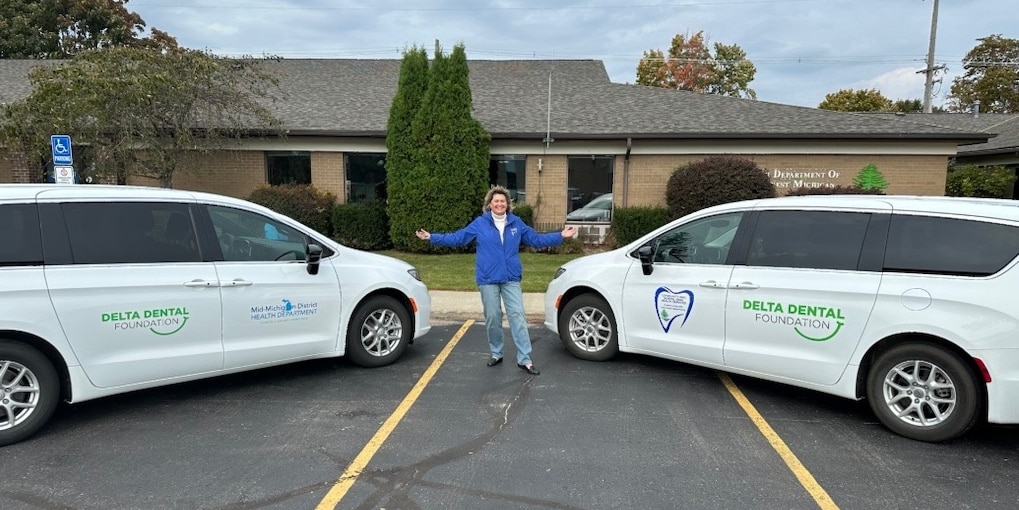
Dawn Marie Strehl, who conceived the idea of creating a dental care mobile unit to visit students in rural northern Michigan counties, still laughs about the day her car became a “low rider,” its suspension sagging under compressors, folding chairs, and supplies crammed to the roof.
Her husband told her the car wasn’t going to work.
“I packed up my car with compressors and dental equipment,” she says. “There was enough room just for me to drive.”
That trip in 2017 pushed the longtime hygienist to try a different approach. Strehl wrote a proposal to the Delta Dental Foundation asking not for a bus, but for a family van with fold-flat seats.
She received a white Chrysler Pacifica. It would be the first in what has grown into a small fleet run by public health hygienists who bring preventive care into Michigan schools and community sites.
Strehl is the regional oral health supervisor for the Health Department of Northwest Michigan. She and her team work on several oral health programs targeting seniors and children, including conducting screenings under the Kindergarten Oral Health Assessment program. Their dental van lets them take their services on the road, providing essential preventive care at schools and other community settings.
“It really helped me scale with sustainability,” Strehl says. “We pack it up. Two seats for the team, the rest full of sealant equipment, and we set a classroom up like a dental office.”
Along with Strehl, who is based in Northwest Michigan, hygienists Elisa Dack, in the northeast region, and Deanna Alexander, in metro Detroit, are using similar vans to reach children, seniors, and families who struggle to get to traditional clinics.
Each van came through the Delta Dental Foundation. Each program focuses on prevention, education, and navigation to a “dental home,” not on drilling or fillings.
‘Amazing outcomes’
Strehl, a hygienist for more than 40 years, works for the Health Department of Northwest Michigan, a regional health department that covers Emmet, Charlevoix, Otsego, and Antrim counties, with contracts in Grand Traverse and Benzie.
She runs multiple school sealant teams, kindergarten oral health assessments, and “Senior
Smiles,” a summer initiative at meal sites.
“We set it up just like foot clinics,” she says of Senior Smiles. “They sign up for a slot. We do head and neck cancer exams and oral health assessments. We’ve had amazing outcomes.”
The van changed logistics and costs. Instead of reimbursing staff members mileage for using personal cars, the department maintains a program vehicle with snow tires and a standardized load of sterilized portable gear.
“It protects our equipment, and it’s a safety thing,” Strehl says. “It’s not in the trunk where you might have cats walking all over.”
Data fueled her first sealant push. After screenings showed a large share of students without sealants, her team launched clinics during the school day and watched demand climb.
“Our clinics have gone from about 25 kids consenting to 90 kids,” she says. “They can’t get into dental offices that no longer take Healthy Kids Dental, so parents figure, well, I might as well sign them up for the dental hygienist at school.”
Strehl’s work stretches beyond daily clinics. She serves on the Michigan Board of Dentistry and participates in national testing for hygienists.
“I call it the pillow test,” she says. “I can’t sleep at night if I have a little one with an abscess who needs help.”
Connecting to care
Elisa Dack runs the oral public health program for District Health Department No. 2, which covers four counties and has its home base in West Branch, an hour north of Saginaw.
“I’m almost finished with year three,” Dack says.
Before the Delta Dental Foundation awarded her a 2024 Pacifica last November, Dack hauled equipment in a 2013 Toyota Highlander with nearly 300,000 miles.
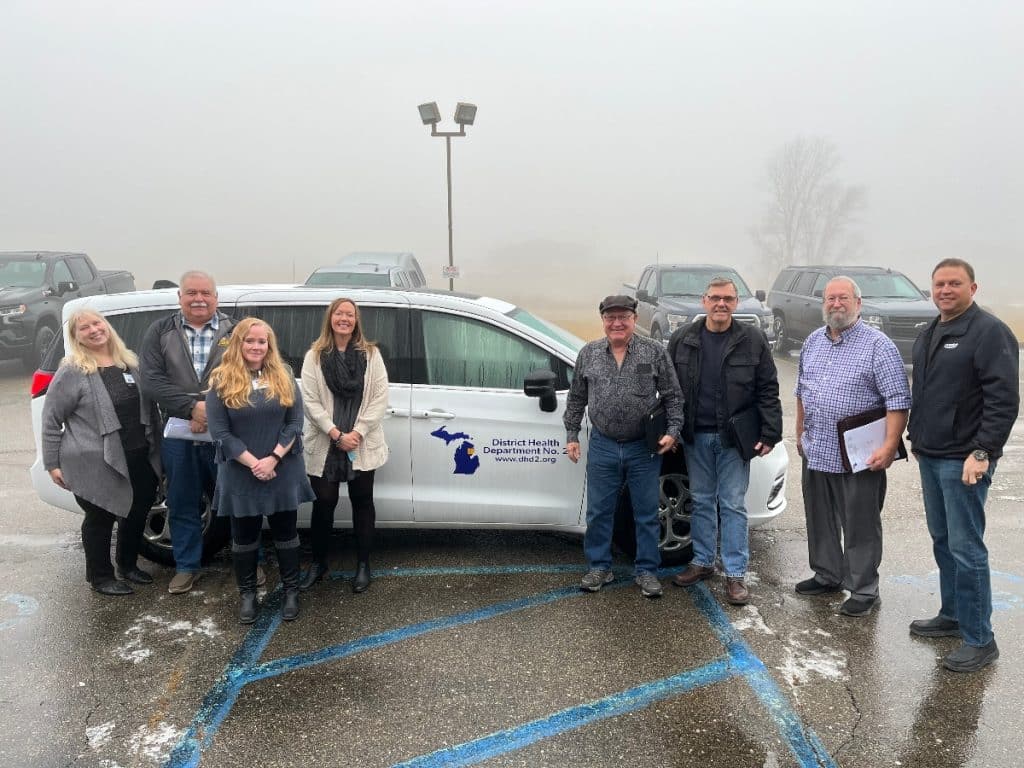
“It was going to blow,” she jokes.
Dack works through Michigan’s Public Dental Prevention Program (Public Act 161), which allows hygienists to deliver preventive services in community settings under a supervising dentist.
Her supervising dentist directs Dental Clinics North, a network of safety-net offices that can receive referrals. That link is crucial, Dack says, because the region has few pediatric specialists and long waits for clinics that accept Medicaid.
“All of my counties have at least a 30 to 40 percent decay rate,” she says. “Over 60% of my clients need a connection to a dental office in northern Michigan. There are a lot of kids by the age of 5 who still have never seen a dentist.”
Dack’s daily work is different from that of a mobile restorative clinic. She and her team line up consent forms, roll bins into school gymnasiums or classrooms, and deliver education, assessments, fluoride varnish, and, increasingly, sealants. When families lack transport or need help with insurance renewals, she loops in community health workers.
“It’s a full-circle follow-up,” Dack says. “We find out which kids need connection to care, and we get those kids connected to care.”
The new van has expanded her reach. Dack estimates she serves 1,500 to 2,000 students a year, mostly kindergarteners, and she plans to expand to all grades under the Seal! Michigan program.
“I can’t say enough about the Delta Dental Foundation,” she says. “They awarded me the van. I see a bigger vision, and the van lets me expand.”
Taking services to the people
Three hundred miles south in Metro Detroit, Deanna Alexander parks her mobile unit at block parties, school fairs, and senior centers. She is the founder of Hygiene on Wheels, which conducts oral health screenings for Head Start classrooms.
“We’re a mobile hygiene service,” Alexander says. “We bring access to the community. Those individuals who don’t normally go to the dentist or don’t have access to the dentist, we come to them.”

The work shifts with the seasons. Summer weekends are filled with outdoor events. Fall brings school visits. Winter limits van access for some seniors, so Alexander heads indoors with assessments and referrals.
“I’m prevention,” she says. “We provide access to care. I’ll provide a referral source if you need that. Some people don’t go into a brick-and-mortar. They will come to a community event where they’re not judged.”
Though the Detroit metro area has more providers than northern counties, gaps in care persist. Alexander hears from adult children seeking help for homebound parents, as well as from seniors with ill-fitting dentures or missing teeth.
She estimates she has served more than 5,000 people since 2022.
“It feels good to me,” she says. “There are so many people that need the service – I’m just scratching the surface.”
Finding them ‘a dental home’
The Pacificas are not dental buses with generators and X-ray equipment. Instead, each is essentially a rolling locker room for chairs, light units, sealant packs, sterilized trays, and education materials.
That compact approach suits school hallways and cafeteria corners. It also avoids the expense and scheduling complexity of a larger vehicle, such as a bus, which must be kept in constant motion to justify its cost.
“It wasn’t feasible for rural roads and our budget,” Strehl says. “The van was the answer.”
Programs like these draw a line between prevention and treatment. The hygienists do assessments, apply varnish and sealants, and refer patients to dentists for restorations.
“Oral public health is different from mobile dentistry,” Dack says. “A mobile dental program might do X-rays, cleanings, maybe a small filling. Then they’re out, and communication can get lost. Mine is pretty much just preventive and communication to the parents to get them connected to a dental home.”
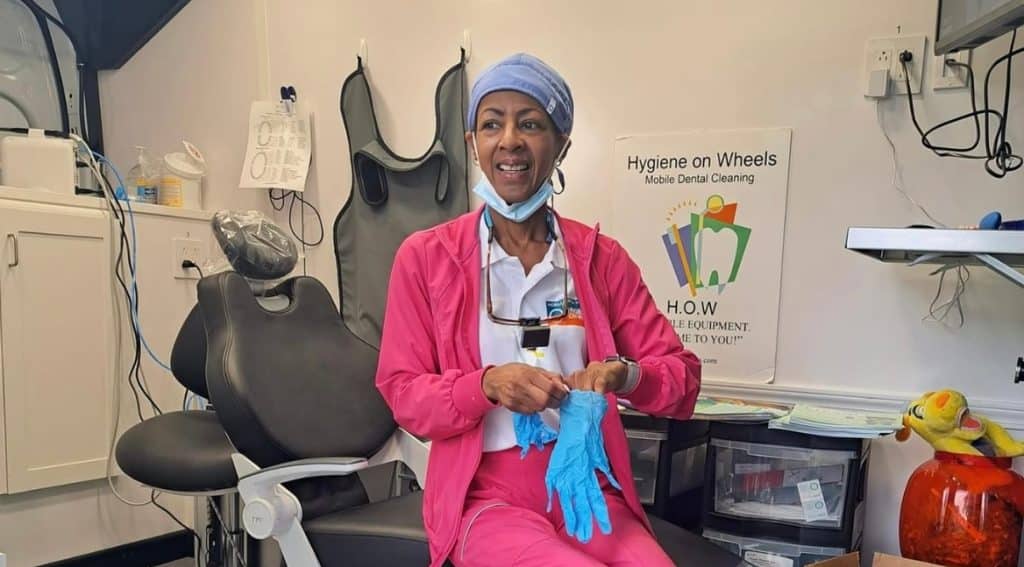
Senior outreach adapts the model to older adults. Strehl’s team traded PowerPoint sessions for conversations, screenings, and brief private counseling.
“They don’t want a presentation,” she says. “They want to be engaged in conversation. We meet them where they are.”
Across the three programs, services are in demand. Participation rates for school fluoride programs are high in Dack’s counties. Sealant consent climbed in Strehl’s region as parents realized access was tight in private offices. Alexander’s calendar reflects steady demand at community stops.
This reflects the shortage of dental care in these communities. Wait lists remain a hurdle. Dack reports delays of up to two years to access Medicaid clinics for some cases. Families without transport need rides or gas cards. In parts of northern Michigan, the nearest pediatric specialist may be hours away.
“The biggest issue we have in northern Michigan is access to care,” Dack says. “We don’t have one pediatric dental specialist in the eight counties we serve. Less than 10% take Medicaid.”
The Public Dental Prevention Program was created to address this shortage. By authorizing preventive services outside of traditional offices, it offers a framework that lets counties and nonprofits create oral care teams, such as these three mobile operations, without building full clinics.
Health departments add reach. They have relationships with superintendents and principals, manage consent processes, and coordinate hearing and vision screenings, immunization clinics, and school nurses.
Foundation offers wide support
The Delta Dental Foundation ties many pieces together. In addition to funding each van, the foundation sent smaller grants for equipment as well as toothbrush and toothpaste kits, distributed alongside school lunches during the pandemic.
“With what the Delta Dental Foundation helped me with — whether it’s Senior Smiles, the vans, little things during COVID – it’s been such a great run,” Strehl says.
Dack’s program draws on that support and on ties to Dental Clinics North to close the loop when kids need a dentist.
“It’s bigger than teeth,” she says. “We get them to a dental home.”
Alexander traces her outreach to her childhood dreams. As a young girl, she imagined an ice cream truck stocked with toothbrushes and floss. The van outside her house today isn’t quite an ice cream truck, but the idea survived.
“I’m excited about it,” she says. “It’s kind of restarted my hygiene passion.”
Dack’s route to her work was shaped by a two-year fight to restore optimal water fluoridation in her hometown, a project that drew state and federal partners and was written up in the Michigan Dental Journal. The experience pulled her from private practice toward public health.
“That part really sparked my interest,” she says.
Strehl’s path started with school screenings and a question to a supportive health officer: What if we placed more sealants? The answer is parked behind her office with bins labeled and ready for the next road day.
“You forget about transportation, but that’s how we put boots on the ground,” she says. “The van was the solution.”
Related Articles
True community mental health: How one county’s CMH board ensures care is relevant
Alice Kelsey shares why she serves and how citizen boards help CMHs provide better care to county residents.
The people behind the system: How community boards shape mental health care
Community mental health boards play a critical role in designing, funding, and delivering mental health services.
Schools on the brink: Centers of small-town life, some districts face financial emergencies
Public schools are sources of pride and launching points for lives and careers. But in Ohio, an arcane, unfair system of funding schools persists.