Where will Michigan’s next governor stand on early childhood education?
Michigan’s many gubernatorial candidates offer a variety of approaches to early childhood education.
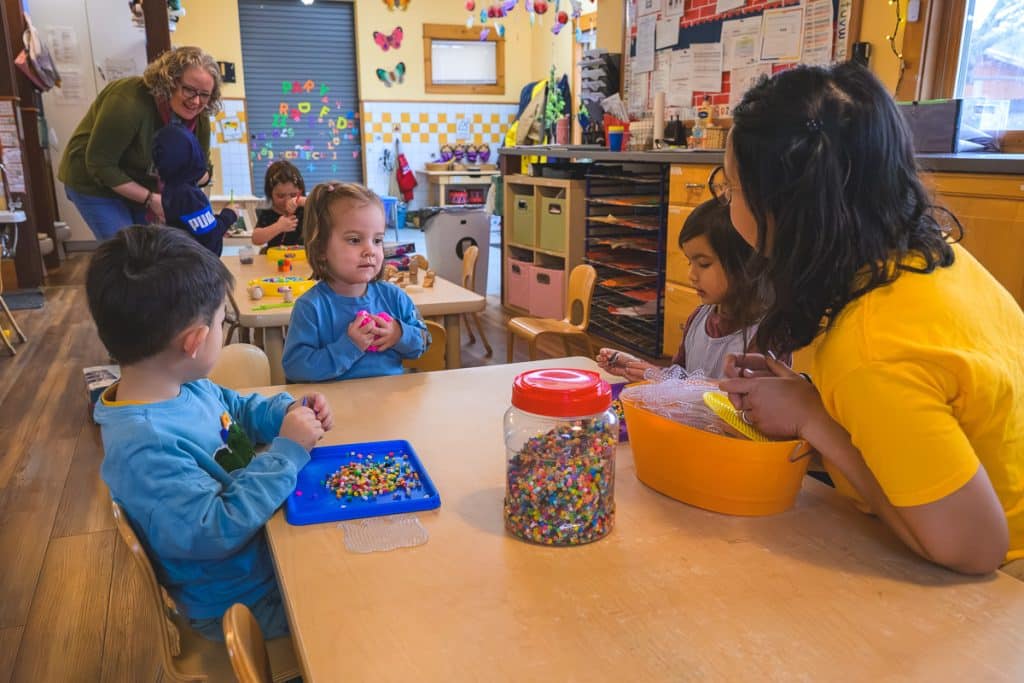
Michigan’s early childhood education ecosystem is likely to see major changes based on who state residents elect as their next governor this November.
Under current Gov. Gretchen Whitmer’s tenure, the state has invested heavily in a variety of early childhood initiatives. Whitmer launched the PreK for All initiative, expanding the Great Start Readiness Program to offer free preschool to all four-year-olds in Michigan. The state has also supported early childhood programs like Child Care Back Office and Nurture Benefits, which work to support child care businesses and the child care workforce. And Rx Kids provides cash assistance to new moms and babies.
Challenges have abounded as well. Michigan child care workers have struggled to make a living wage for their work, while families have contended with increasingly expensive child care costs. Michigan’s many gubernatorial candidates offer a variety of approaches to early childhood education. Early Education Matters set out to break down where they stand on the next four years of policy affecting the littlest Michiganders.
Early Education Matters sought to interview leading Democratic, Republican, and independent candidates for this article. Representatives for candidates John James and Aric Nesbitt did not respond to interview requests. Representatives for candidates Mike Cox and Mike Duggan responded to interview requests but the candidates could not be reached for comment by press time. The following is based on interviews with candidates Jocelyn Benson and Tom Leonard, as well as campaign literature and public statements from the other candidates.
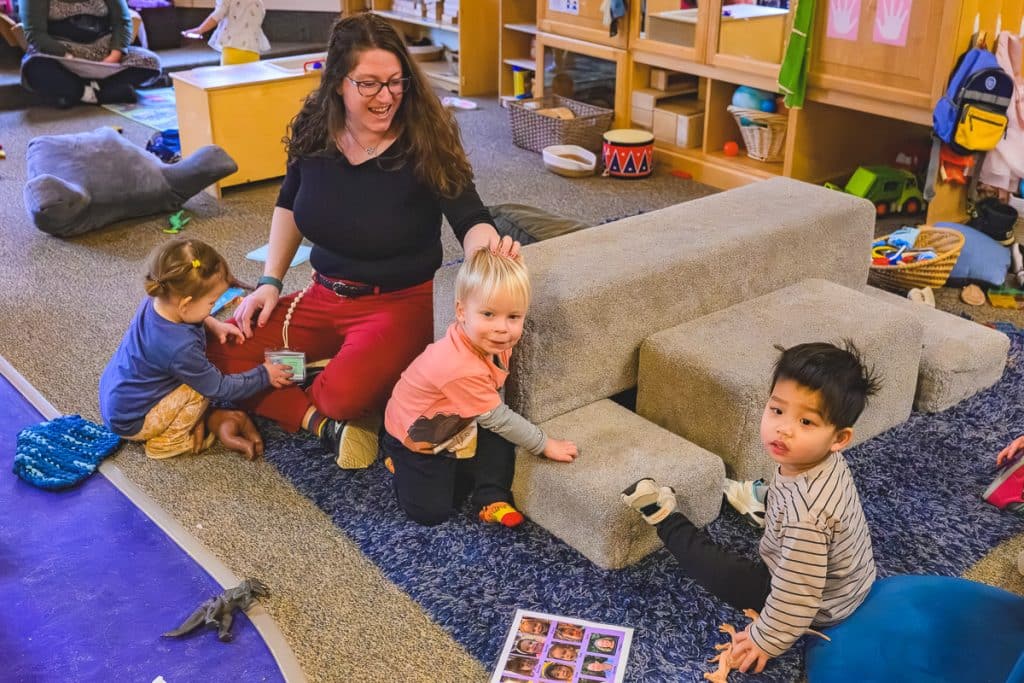
What’s next for PreK for All and other early childhood education initiatives?
Now that PreK for All has been established in Michigan, both Republican and Democratic candidates want to see the initiative go further. Former Speaker of the Michigan House of Representatives and Republican gubernatorial candidate Tom Leonard says that if he could only accomplish one thing as governor, it would be to improve Michigan’s third-grade reading scores. He says early intervention is the way to accomplish that, citing the “Mississippi Miracle” policies that helped dramatically improve educational outcomes for Mississippi students. He says universal pre-K will help give Michigan an edge, but he also would aim to “revamp” it, asserting that pre-K shouldn’t be “a glorified babysitting service.”
“It ought to be completely dedicated to ensuring that these kids are learning to read and educating these teachers that are in these pre-K classrooms on the science of reading, teaching kids phonics at a much earlier level,” Leonard says. “So that way, when they get to kindergarten, first, second, third grade, they’ve got to step up.”
Michigan Secretary of State and Democratic gubernatorial candidate Jocelyn Benson says PreK for All was an important step forward, but it’s also “not enough” to address what she calls Michigan’s “current early literacy and early mathematics crises.” She says she wants to see Michigan move to “a universal full-day, five-day-per-week early childhood education system,” making child care available to all from birth to pre-K. She says the state would provide “initial startup funding” for that initiative through cost-sharing models like Tri-Share, which splits child care expenses between the state, employers, and employees.
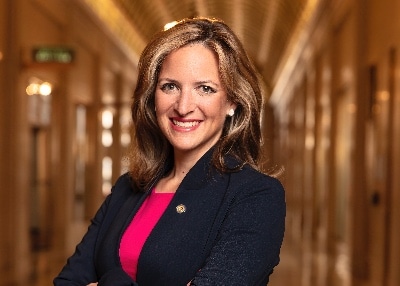
“I recognize that right now it feels like government is showing up everywhere we don’t want it and nowhere where we actually need it,” Benson says. “And this is an area where we actually need government to show up … for our parents, show up for our young people who will inherit everything we do in this moment. And we’re in a moment right now where we have to change our trajectory and build a world-class education system so that Michigan children and our state’s economy all can thrive.”
Former Detroit Mayor and independent gubernatorial candidate Mike Duggan’s campaign website proposes a “Marshall Plan” for early reading, bringing together “teachers, administrators and parents to launch a new early reading program for Michigan students, built around what we actually know works: student tutoring, summer reading, and small group learning.” He also advocated for universal pre-K for Detroit 4-year-olds while he was mayor of Detroit, before the state’s PreK for All push began in earnest.
Michigan Sen. Aric Nesbitt recently called for an audit of the Michigan Department of Lifelong Education, Advancement, and Potential (MiLEAP) Child Development and Care Program, which is intended to provide child care support for low-income families.
“Finding affordable child care is one of the biggest challenges facing families in Michigan,” Nesbitt said in a statement. “We must ensure they aren’t being fleeced by criminals like the taxpayers have been in Minnesota.”
Living wage for child care professionals
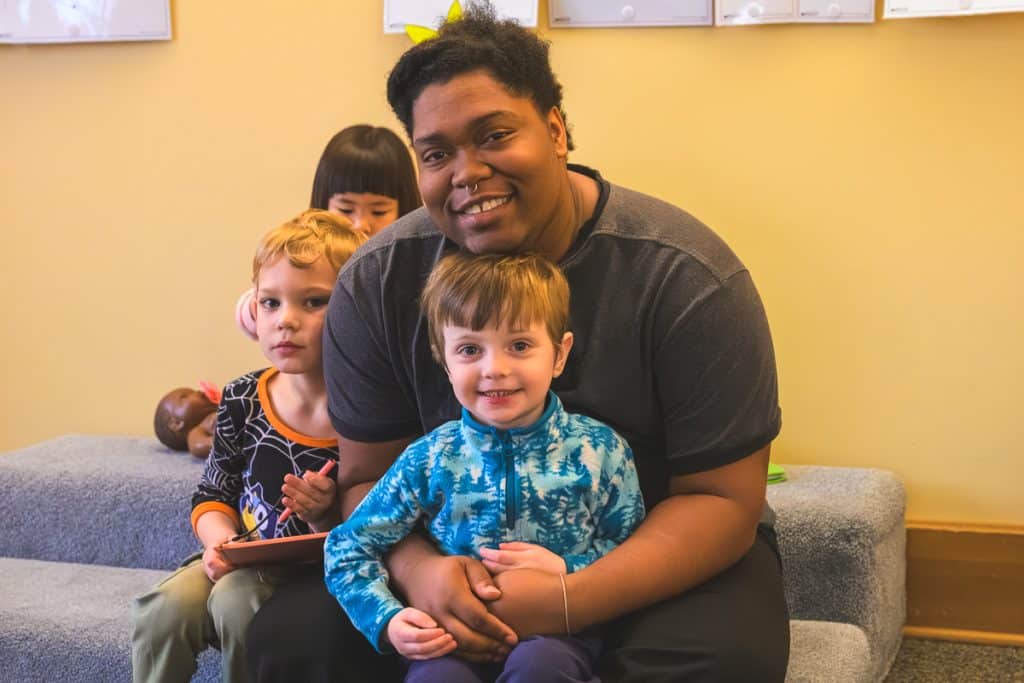
Child care workers in Michigan make an average of $13.88 per hour and preschool teachers make an average $17.65 per hour, both significantly below the statewide median wage of $22.57. Gubernatorial candidates have varying approaches to this issue and its importance. Benson says she would want to provide “startup grants and technical assistance for new child care providers, especially in child care deserts.” She says this would support providers and their employees, “ensuring they’re able to make more for providing the care.”
Asked about possible solutions for low child care wages, Leonard says it’s something he’d “have to look into.”
“This is the first that I’ve heard that that’s an issue,” he says.
Genesee County Sheriff and Democratic gubernatorial candidate Chris Swanson has advocated broadly for living wages in Michigan, although he hasn’t addressed child care wages in particular. Michigan’s other gubernatorial candidates have not made statements on the issue.
State support for early childhood programs
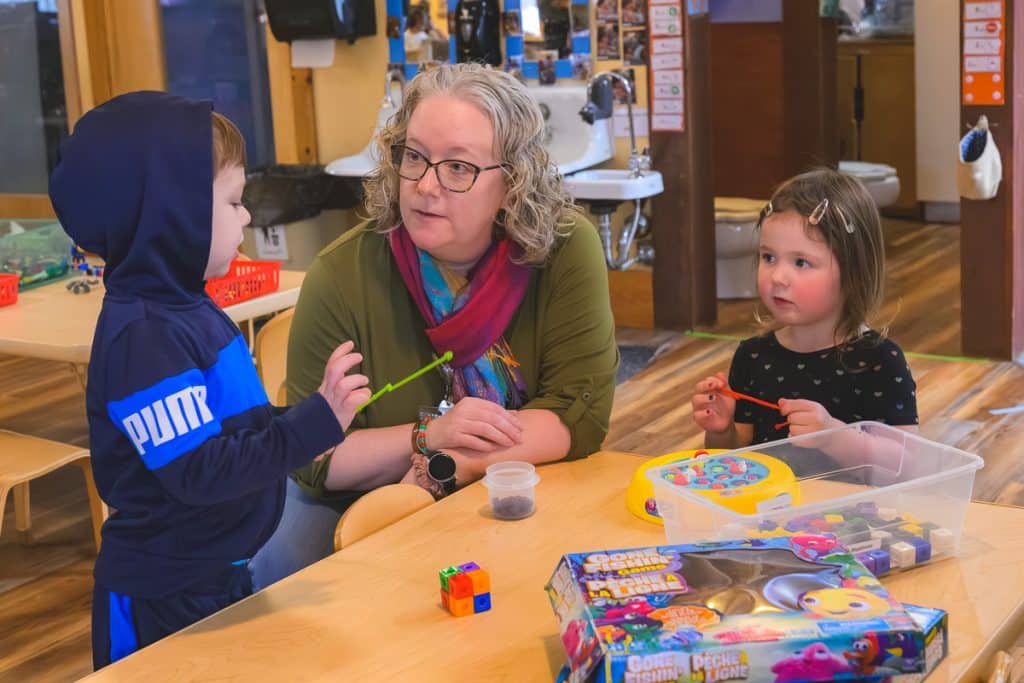
In recent years the state has supported several early-childhood-related programs. Those include Nurture Benefits, which aims to offer affordable and accessible health insurance for child care providers; Child Care Back Office, which provides administrative support for child care businesses; and Rx Kids, which provides cash assistance to new moms and babies.
Benson says she’d want to continue support for all three programs, describing Nurture Benefits and Child Care Back Office as aligned with her goal to “to make Michigan the small business capital of the nation.”
She also says it’s “really important” to her that Rx Kids, which is currently available in 20 Michigan communities, become available statewide. Benson says the program helps families “afford essentials like diapers, food, rent, [and] child care during the most critical and costly stages of life.” In December, the Michigan House Appropriations Committee voted to cut $18.5 million in funding for Rx Kids, although a statement from the program asserts that its work will continue.
“It’s a data-driven program that is yielding results,” Benson says, adding that she was “really proud” to see Detroit Mayor Mary Sheffield announce the program’s launch in Detroit shortly after taking office.
Leonard says he is unfamiliar with any of the three programs and cannot comment on them. Michigan’s other gubernatorial candidates have not made statements on the programs.
Reducing administrative burden for providers
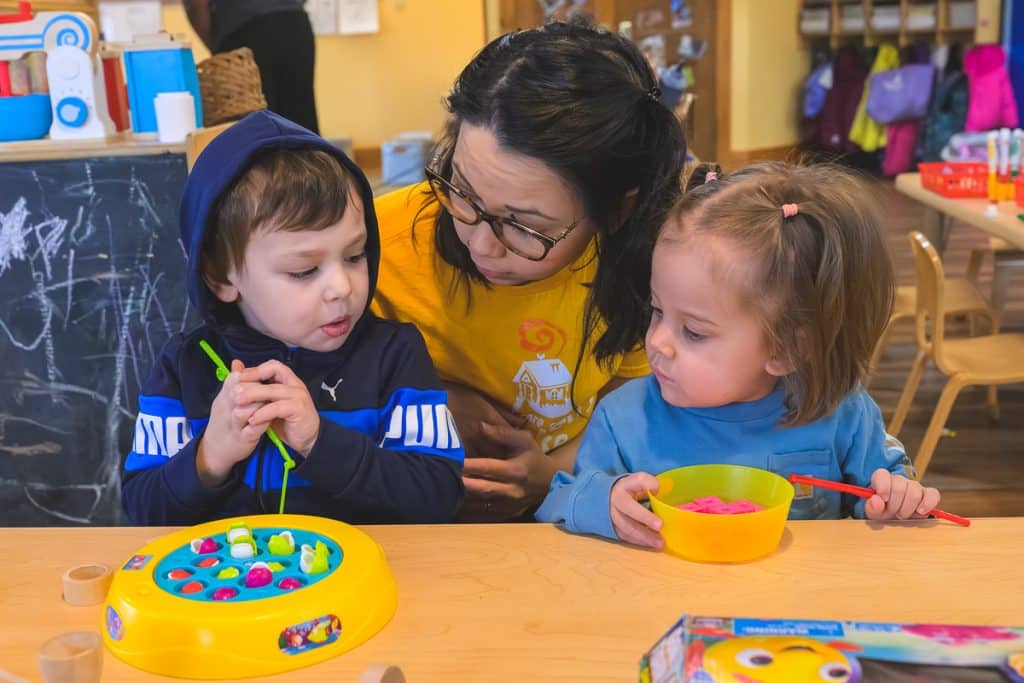
Michigan child care stakeholders like those in the East-Central Michigan Child Care Coalition have described administrative burden and bureaucratic hurdles as major challenges for the state’s child care providers, and gubernatorial candidates agree. Leonard says he’s in favor of child-safety-related regulations, but he’s all for reconsidering “redundant” regulations that are “doing nothing but forcing [providers] to pay a fee to put money in the state’s coffers.”
“I’m all about regulatory reform,” he says. “I’d have to hear exactly what some of the hoops and some of the hurdles are that they’re worried or concerned about.”
Benson says the difficulty of opening a child care business is “one of the reasons why child care in Michigan is unaffordable and often inaccessible and underutilized.” She says that in some states, it can take as little as four to six weeks to open a child care business, while in Michigan, “because of inefficient government operations, it can take almost a year.” Benson says she wants to double or triple the number of state employees involved in that process, making it more efficient.
“We do that by increasing our capacity to support those opening child care centers and also working directly with providers as they seek to open or expand their operations, so that in communities where there are folks who are willing and ready and able to open these centers, we’re a helping hand at the state government, not an obstacle course for bringing them through the process,” she says.
Retired pastor and Republican gubernatorial candidate Ralph Rebandt’s platform says that he wishes to “reduce administrative burdens” for Michigan teachers in general. Michigan’s other gubernatorial candidates have not made statements on the issue.
Child care affordability
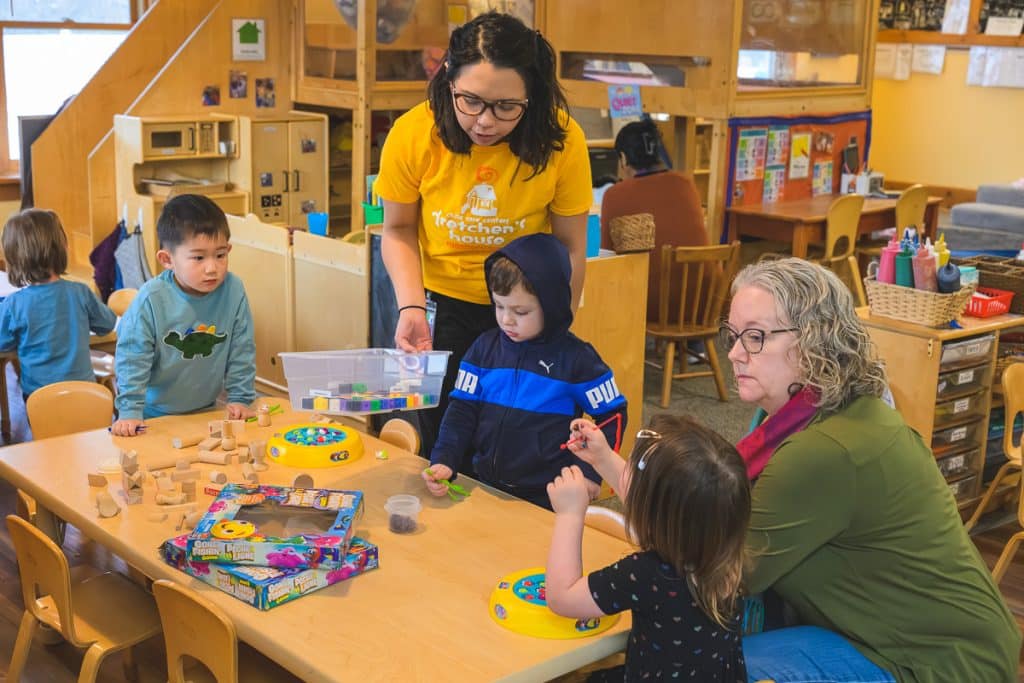
The high cost of child care is a key concern for several gubernatorial candidates. Benson says that when her 9-year-old son is an adult, she wants him to “see Michigan as a place where he could choose to raise his family and call home.”
“We’re not that yet because people are struggling, among other things, … to pay for child care and new parents [are] struggling to identify ways that they can meet the demands of an escalating cost of living with stagnant wages and jobs,” she says.
Benson sees Tri-Share, reduced administrative burden for providers, and programs like Rx Kids as solutions for affordability concerns. U.S. Rep. and Republican gubernatorial candidate John James is in agreement with Benson about the value of Tri-Share, at least; he and Democratic U.S. Rep. Hillary Scholten recently introduced legislation to create a federal version of the program. Michigan’s other gubernatorial candidates have not made statements on the issue.
Photos by Doug Coombe.
Special thanks to Gretchen’s House Dhu Varren in Ann Arbor for allowing Early Education Matters to photograph its teachers and children.
Early Education Matters shares how Michigan parents, child care providers, and early childhood educators are working together to create more early education opportunities for all little Michiganders. It is made possible with funding from the W.K. Kellogg Foundation.
Author

Related Articles
Evictions impact millions of kids. These schools get an alert when it happens to their students.
Evictions impact millions of kids. These schools get an alert when it happens to their students.
Is PreK for All meeting its goals?
Roadmap co-author encouraged by how the state is expanding its Great Start Readiness Program into universal pre-K.
Michigan’s free universal pre-K program could serve 70,000 4-year-olds this school year
Launched in 2023, PreK for All now has no income qualifications.