Farmington’s focus on public art fosters economic growth
The City of Farmington’s collaborations support its vision of leveraging public art as an economic driver.
The small city of Farmington takes collaboration seriously — not only collaboration with nearby municipalities, but with communities around the world. In October 2025, Farmington Mayor Joe LaRussa welcomed four members of Vacri, Italy’s city council — Vacri Mayor Piergiuseppe Mammarella, Council Manager Lucia Di Felice, Councilmembers Cesira Benvenuto and Guglielmo Frani, and artist Marco Mazzei — to the Arts and Amicizia Cultural Exchange, a four-day event that launched an ongoing relationship between the two cities.
“It was really great to see our town through someone else’s eyes,” LaRussa says. “When we’re in the midst of doing the work that we do to make our city better and to attract residents and business owners, it’s really easy to focus on what needs to improve. But to have them visit and lavish us with praise for all of the great stuff that we’ve got in our town that they only wish they could have was really gratifying for us.”
Farmington’s collaboration with sister city Vacri, Italy has fostered economic development, guided policy on historical preservation, and strengthened the focus on public art.
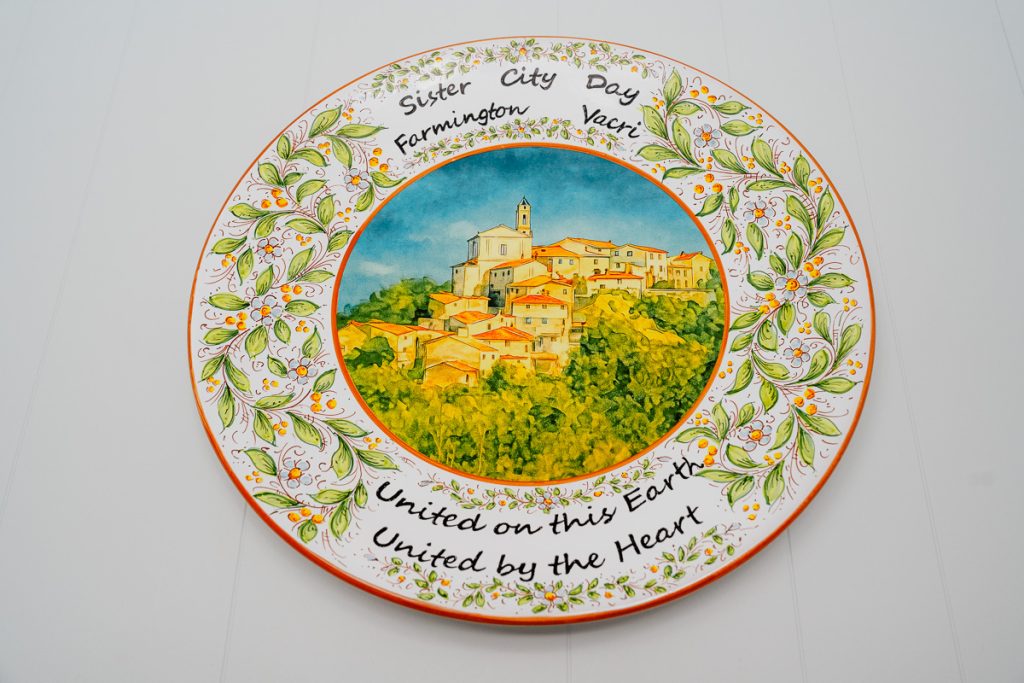
Now sister cities, the two communities enjoy more than a mutual designation. Both are gleaning new ideas for fostering economic development within a small municipality. Farmington leaders also look to Vacri for advice as they continue to develop policy around historical preservation.
“We are learning a lot about historic preservation policies and practices in Italy … how to put a policy framework together and administer that framework for historic preservation but also economic development,” LaRussa says.
And Vacri leaders are learning how to make collaboration happen with their neighboring municipalities in Italy.
“They obviously got a lot from us in terms of business climate, economic development, and regional collaboration,” LaRussa says. “I took them to the Southeast Michigan Council of Governments meeting, and they were amazed at the amount of collaboration among the different cities, villages, and townships here in Michigan.”
Farmington’s DDA leads the charge for public art. A portion of its budget dedicated to public art is multiplied by matching grant opportunities.
The exchange itself generated a lot of economic activity during the visit. Substantial crowds turned up for the special events, which in turn generated revenue for many of Farmington’s small business owners.
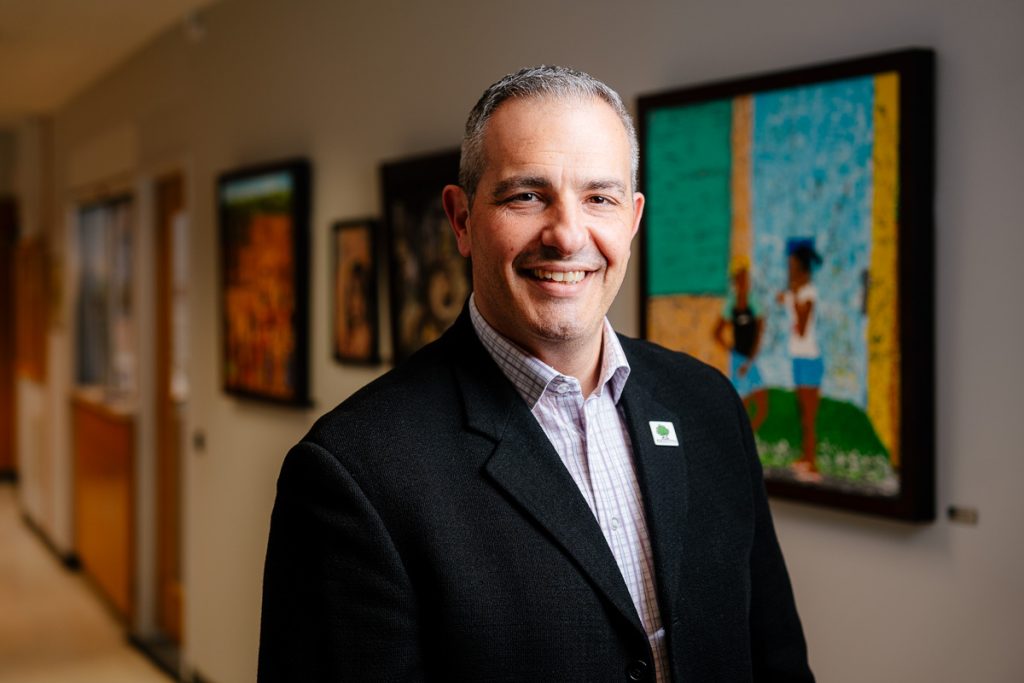
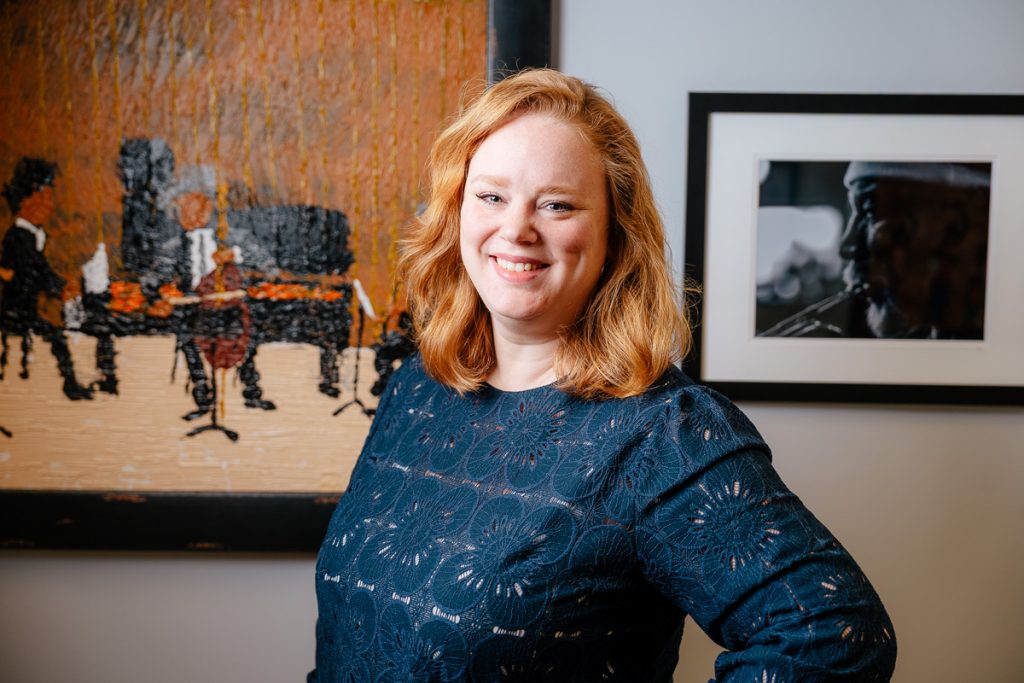
“It’s such a wonderful benefit to connect with other countries and communities. We can really compare notes,” says Jess Westendorf, executive director of the Farmington Downtown Development Authority (DDA). “Even if they’re across the world, we can still collaborate and draw similarities from each other to boost economic development for everyone.”
Since the DDA created its Public Art Blueprint in 2017, seven new murals, several permanent sculptures, and rotating sculpture exhibits have come to Farmington’s downtown.
Public art as an economic driver
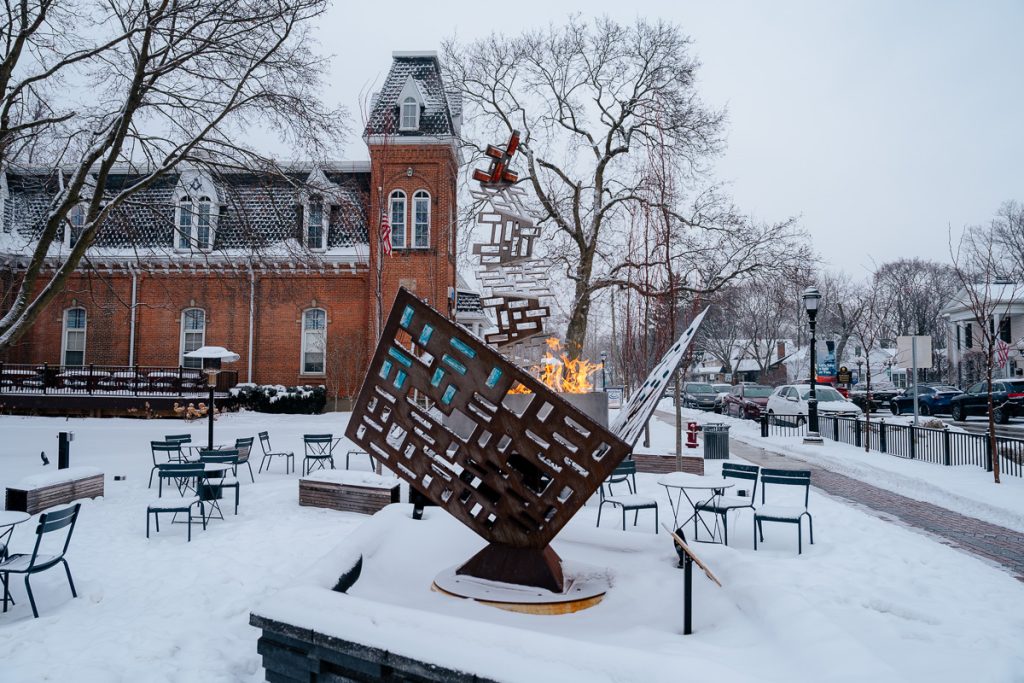
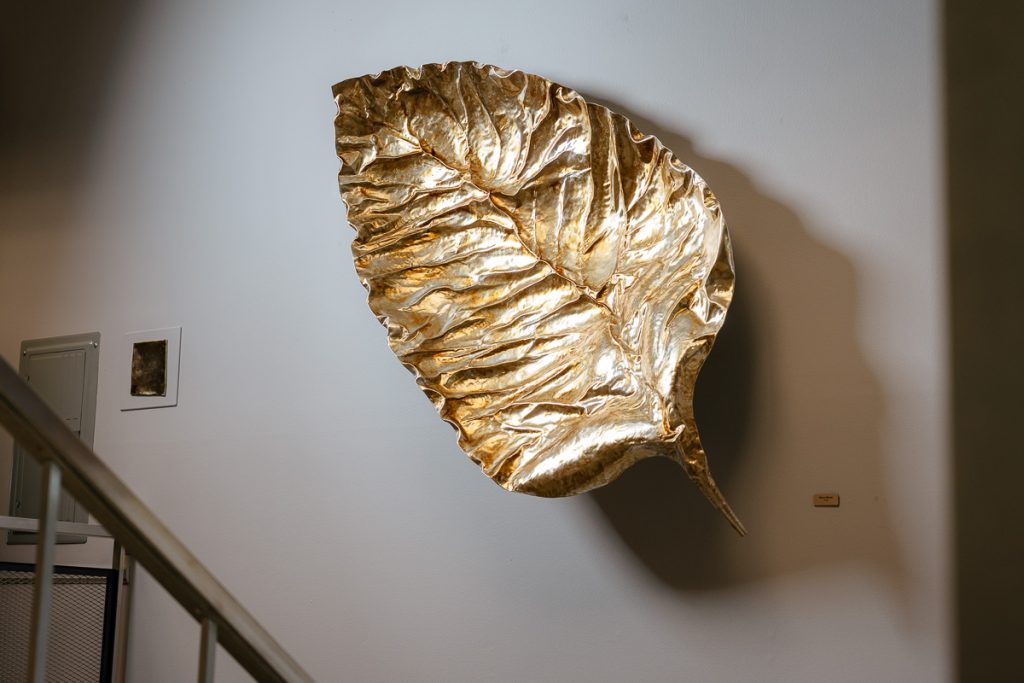
The highlight of the exchange centered on another of Farmington’s fortes: Public art. The delegation joined Farmington’s leaders, business owners, and residents to dedicate a new public sculpture by Mazzei at Farmington City Hall. The Consulate of Italy donated the sculpture as part of Italy’s Ministry of Foreign Affairs’’ “Giornata del Contemporaneo,” which translates to “day of contemporary art” and promotes Italian artists around the world.
“We were absolutely thrilled to host our sister city in downtown Farmington and commemorate that new partnership with the art exchange,” says Westendorf. “Being able to commemorate that sister city relationship through art is incredibly fitting.”
As part of the cultural exchange, Farmington sent a glass sculpture created by one of its own small businesses, Fired and Fused, to Vacri. During their visit, the Italian delegation joined community residents at Fired and Fused to help create glass tiles for yet another public art piece, The Wave, which is scheduled for installation as part of Farmington’s new Art Promenade in spring or summer 2026.
“We are leading the charge for public art in Farmington,” Westendorf says. “We take a portion of our DDA budget every year and dedicate it to public art.”
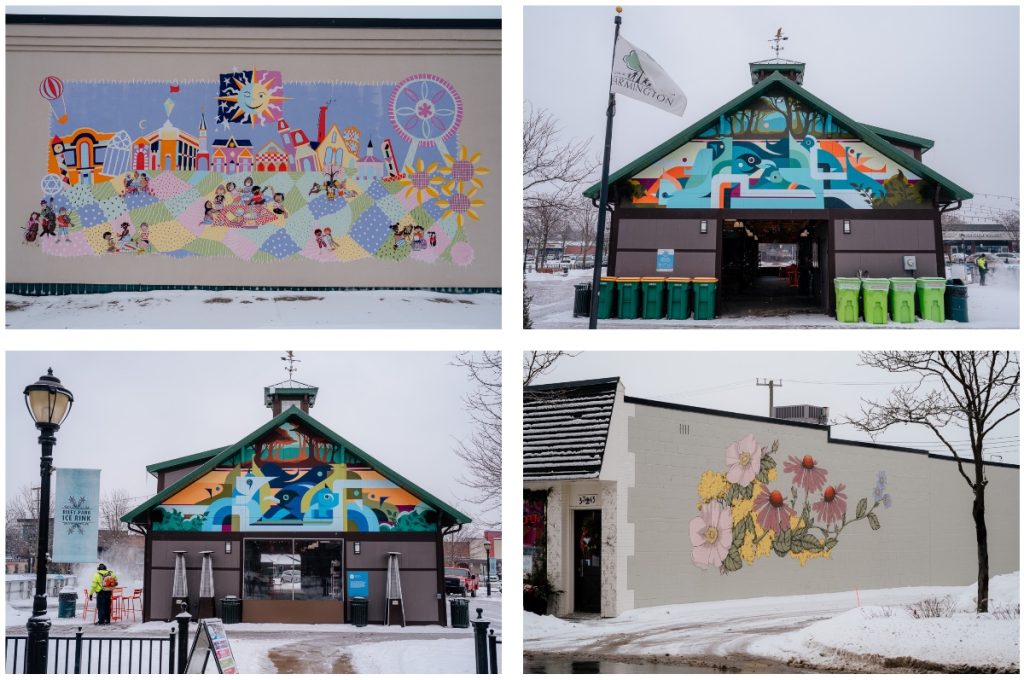
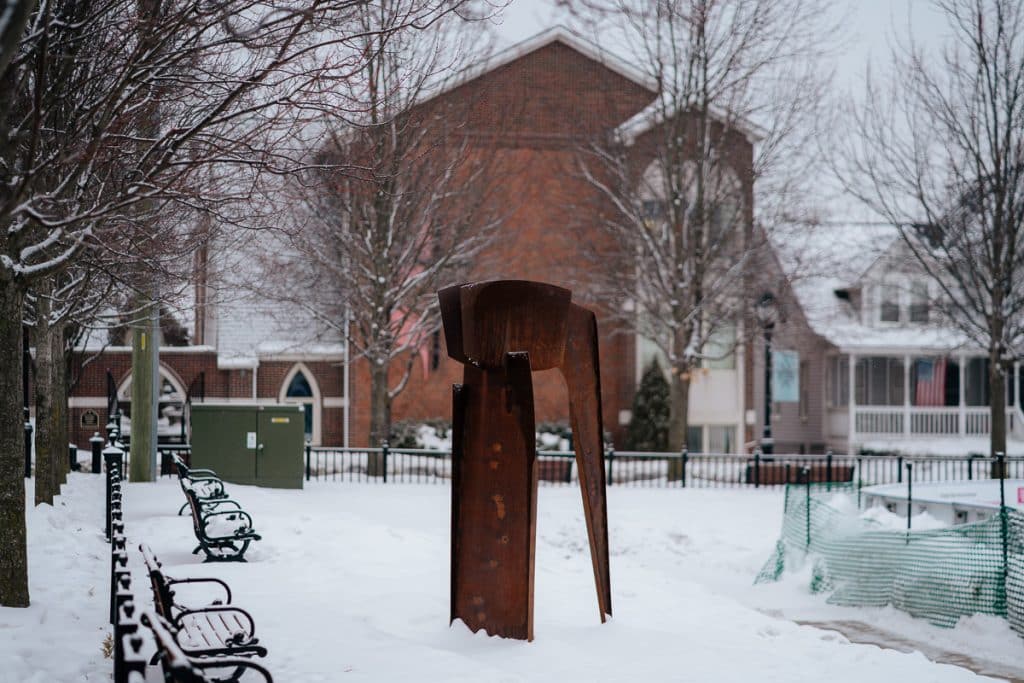
The DDA’s Public Art Blueprint directs acquisition of new pieces and suggests sites where public art should be installed. Since it was implemented in 2017, Farmington has installed seven murals and several permanent sculptures downtown, some with interactive elements. A large sculptural swing invites passersby to take a seat. The Unity Torch has a gas-powered fire that anyone can turn on at any time. The DDA also maintains a rotating sculpture exhibit in Riley Park as well as smaller pieces in rotation within downtown businesses.
Since the DDA created its Public Art Blueprint in 2017, seven new murals, several permanent sculptures, and rotating sculpture exhibits have come to Farmington’s downtown.
Collaboration makes more public art possible
Farmington also collaborates with neighboring Farmington Hills in a joint Arts Commission and has its own dedicated Arts Committee that focuses on procuring public art for its downtown. And the city participates in the Detroit Institute of Arts (DIA) Partners in Public Art program, which brings public art to communities in Macomb, Oakland, and Wayne counties. In 2024, DIA muralist Rick Malt painted “Through Seasons” on two sides of the Walter E. Sundquist Pavilion in Riley Park.
“Art has been a big part of what makes downtown Farmington a special place, and we actually are able to program around it,” LaRussa says. “As a small city of 11,000 people, our business attraction and economic development strategy revolves around driving visitors to our spaces. It’s really tough for the townies to support all of the economic activity that we would like to see.”
To drive this strategy, Farmington hosts a summer concert series, experiments with winter programming, and tests many different programs and events to amplify visitor traffic in its downtown. In addition, the city and DDA offer property redevelopment incentives, for example, facade and signage grants.
“We have programs in place to help business owners who are making an investment in the community benefit … either with grant money or tax increment financing on the backside,” LaRussa says.
Other Farmington arts collaborations include a joint Arts Commission with Farmington Hills in a and participation in the DIA’s Partners in Public Art program.
Westendorf says that businesses located next to Farmington’s new public art spaces have seen an increase in sales.
“We know it’s of economic benefit,” she says. “The DDA also supports the businesses by securing small business grants and with resources through Main Street Oakland County, the Michigan Municipal League, or other organizations that do small business grants.”
The DDA also focuses on development projects.
“We know the ultimate way to increase foot traffic and success for local businesses is by having residents in our downtown,” Westendorf says. “While we’re doing that, we also host year-round cultural programming to drive foot traffic. Last year, we had 3.4 million visitors in our downtown district, which is excellent.”
Photos by Nick Hagen.
Additional photos of Joe LaRussa and Jess Westendorp courtesy subjects.
This story is made possible with funding from the Michigan Municipal League Foundation, a nonprofit association dedicated to making Michigan’s communities better by thoughtfully innovating programs, energetically connecting ideas and people, actively serving members with resources and services, and passionately inspiring positive change for Michigan’s greatest centers of potential: its communities.
Author
Related Articles
Striving for seamless social service system in Tampa Bay
Area nonprofits like Feeding Tampa Bay and Crisis Center of Tampa Bay are weaving a more connected safety net.
How public celebrations quietly remake what it means to be American
Public celebrations – such as parades, festivals and even road races – play a critical role in society, incorporating the newest Americans into the community and creating a greater sense of belonging for everyone.
The wheels on the bus go ’round and ’round: Grand Rapids’ Central Station Early Childhood Center
The Rapid takes mom and dad to work -– and the littles to a brand new daycare opening in September 2026.