Civic Park becomes 15th Flint neighborhood to create action plan for improvements
Civic Park residents are in the midst of a six to eight month process with City of Flint planners to identify their neighborhood priorities and create an action plan for moving forward. It is one of 15 neighborhood collaborations conducted so far as part of the implementation process of the city's master plan.
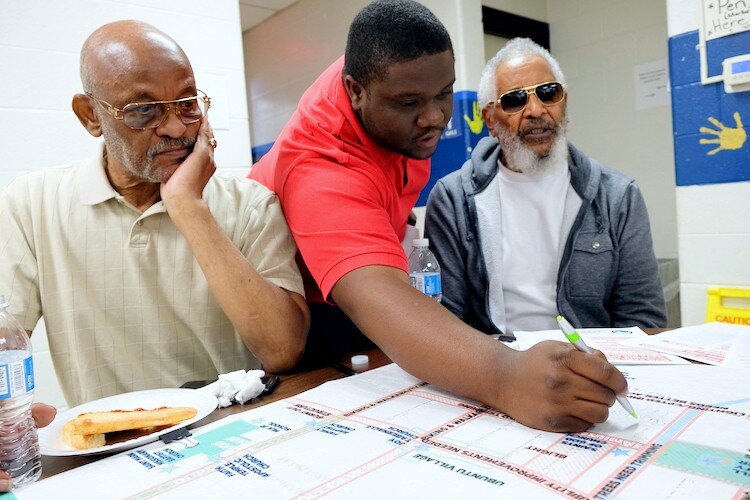
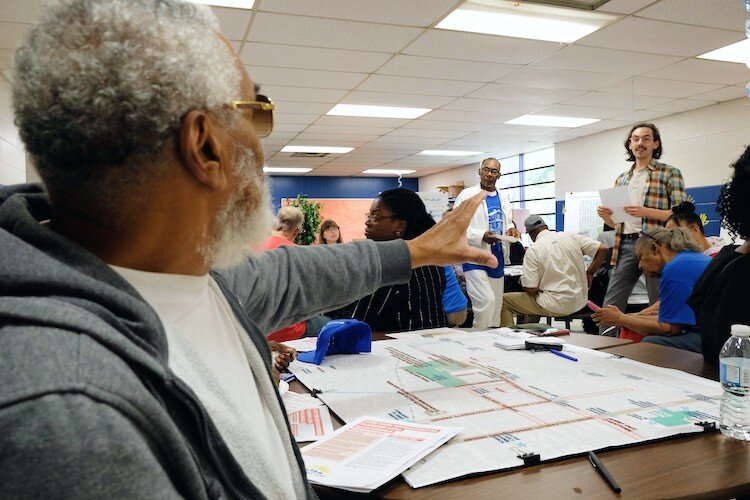
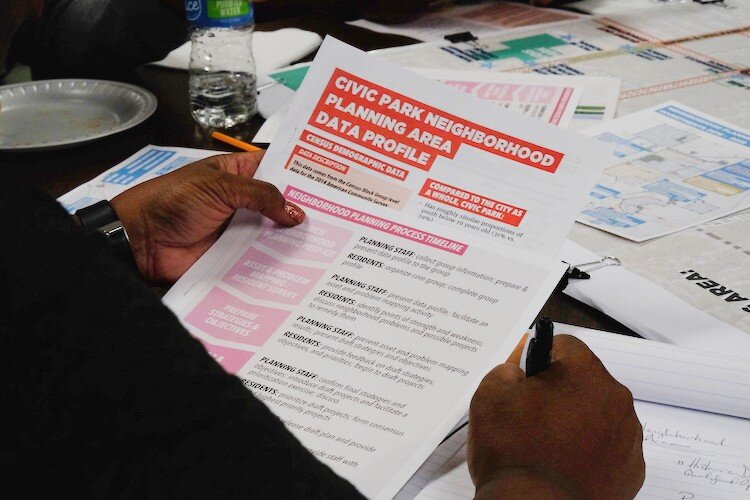
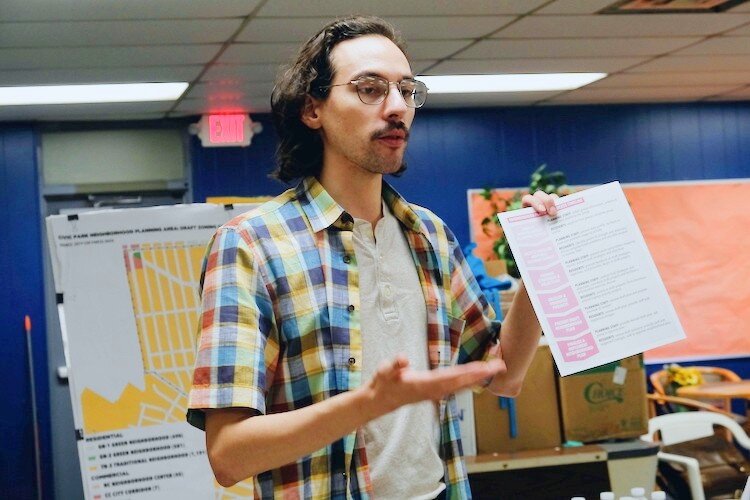
FLINT, Michigan—When Lorraine Boynton, 68, saw posters throughout her neighborhood inviting Civic Park residents to be a part of planning meetings, she made it a point to come.
She’s lived in Civic Park 40 years and the neglect on her street has become harder to ignore. She spends some afternoons cutting lots that do not belong to her, keeping an eye out for tall grass and the critters they hide — but she also sees much more that needs to be done.
“We don’t have a stop sign at the end of our street and I’ve been trying to get a stop sign for almost 40 years to no (avail),” said Boynton, a Walter Street resident. “We need Crime Stoppers posters on our street — or in the neighborhood. We have uneven pavement. Some of these sidewalks are rocking. Somebody could get hurt.”
The meeting on Saturday, Sept.7, was one in a series of meetings with Civic Park residents initiated by the City of Flint Planning Department as part of the second phase of its neighborhood planning initiative, said Michael Lawlor, an urban designer and city employee. Civic Park is the 15th neighborhood collaboration conducted so far as part of the implementation of Imagine Flint, the city’s master plan and redevelopment initiative covering land use, neighborhoods, transportation, the environment, parks, infrastructure, and economic development.
The neighborhood planning process can span six to eight months and is designed for residents to create an action plan for their neighborhoods. Since 2016 the city and neighborhoods have been able to garner a cumulative $900,000 of investment funds to help neighborhoods that have completed the action plan process to implement their priorities.
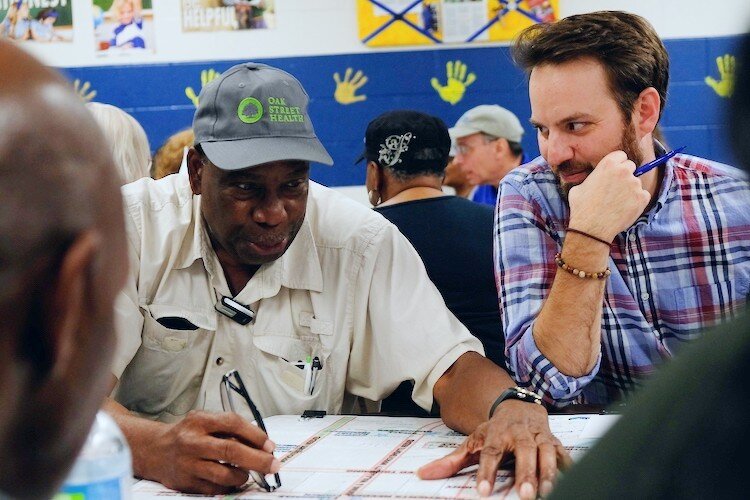
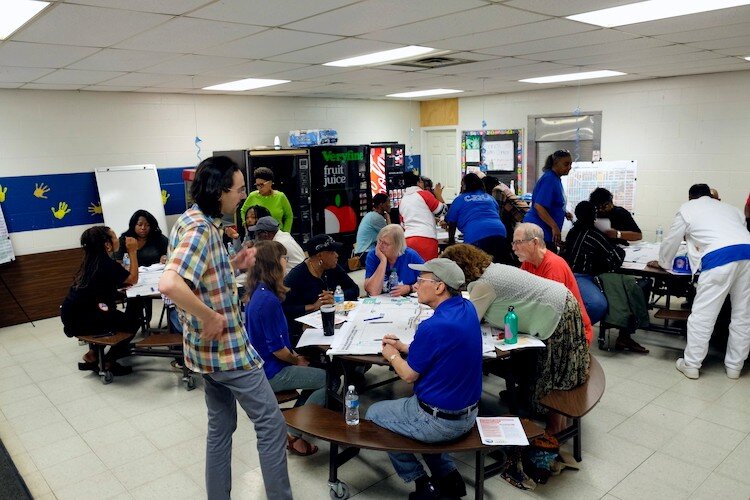
Saturday’s meeting drew about 25 residents who were asked to continue a mapping exercise from the first planning meeting to identify neighborhood assets and deficits. In small groups of five to six, residents and community leaders identified areas of blight, ongoing community projects, and community needs such as bike lanes or bus shuttles.
Like Boyton, many others attending the planning meeting expressed frustration over the needs of the neighborhood and a desire for them to be addressed quickly.
Arthur Port, 77, lives on Chevrolet Avenue next door to a burned out structure that fills the air with an overwhelming stench on warm, rainy days. He said he hopes that meetings like the one Saturday result in concrete actions — ideally consistent incremental change for the better, something he hasn’t seen on his street in a long time.
“You know, they bring us all here to give up information. What good is going to do if they don’t start doing something to make us feel that something is being done. If we don’t see anything being done we get frustrated and say ‘to heck with it,’” said Port.
Longtime Civic Park resident Grace Tucker said these meetings mark the beginning of an overall change for the neighborhood. The residents’ thoughts and input will be paired with surveys to further prioritize neighborhood projects, said Lawlor.
Though many residents expressed confusion over repeated exercises and call for input, Flint’s lead planner Adam Moore assured those in attendance that each meeting builds on the one before it and that it is part of an effort to make sure Civic Park voices guide the work.
“That’s just how this process works: It’s about continuing the same question over and over again,” said Moore. “This isn’t what we felt the problems and assets were — this is what people have told us.”
The next Civic Park planning meeting is set for 2-3:30 p.m. Saturday, Oct. 5, at Haskell Community Center.
For more information on neighborhood planning, contact Dequan Allen at the City of Flint Department of Planning and Development at 810-766-7426 ext. 3006 or dallen@cityofflint.com.
Related Articles

How polling failures, gambling legalization and political gridlock paved the way for the explosive rise of prediction markets
On prediction markets such as Kalshi and Polymarket, users can stake real money on just about anything. But this isn’t simple entertainment: In theory, these wagers serve as a means of collecting the public’s insights into the future.
Pittsburgh’s post-steel economy is a success – and a warning for other cities
One core question is not why the steel industry in Pittsburgh collapsed, but why steel production remained so concentrated in the region for so long.
The quiet engine behind the work: CMH support services
Support services are the connective tissue between operational systems and the clinicians who provide care.