Community leaders work to transform housing in rural communities
CEDAM’s second Rural Real Estate Boot Camp highlights the importance of collaboration among developers, municipal leaders, and state agencies for successful housing development.
Block by Block is a solutions journalism series that is supported by IFF, CEDAM and Invest Detroit, and is focused on community development leaders and initiatives in Michigan, Ohio and Indiana.
In a move to transform the way that rural communities and small towns tackle affordable housing, the Community Economic Development Association of Michigan (CEDAM) hosted their second annual Rural Real Estate Boot Camp. Held September 15-19 in Marquette, the event was attended by local heavy hitters who are now even better-trained to bring change to the Upper Peninsula.
“What encourages me the most is that communities understand it takes collaboration among developers, municipal leaders, the Land Bank Authority, and state agency partners,” says Emily Reyst, CEDAM’s director of communications and housing initiatives. “These communities have wonderful assets and people who are deeply committed to revitalization.”
CEDAM’s rural boot camp replicates their well-established urban development boot camp. Both versions share a vision: equipping participants with practical skills, expert mentorship, and valuable network connections that empowers tangible impact.
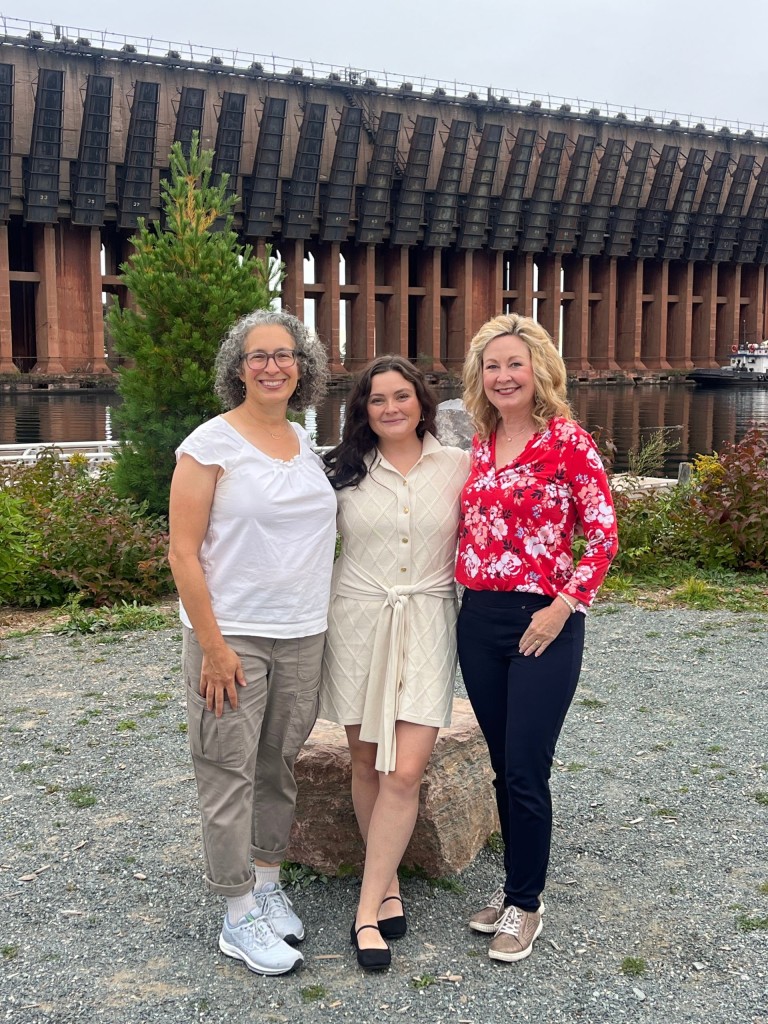
She describes the five-day trainings as “intense.” The curriculum stretches from understanding pro formas to the nuances of community-led zoning solutions. Attendees can bring information on projects for sites or buildings and receive mentorship on moving them forward. They also have opportunities to tour area projects, allowing for an up-close-and-personal look at what’s possible.
“It’s really expensive in rural areas. The margins are super-thin to create quality housing that is affordable to the community while still generating enough revenue to keep operations running,” Reyst says. “Participants learn about the long-term commitment required, especially for projects using low-income housing tax credits, which can span 15 to 30 years.”
Both rural and urban graduates leave with “tangible action steps to take back to their jobs.” For rural leaders, this may mean understanding techniques for crowdfunding infrastructure or rethinking stricter zoning codes. In cities, boot campers often focus on streamlining bureaucratic processes, or tweaking plans to attract institutional investors.
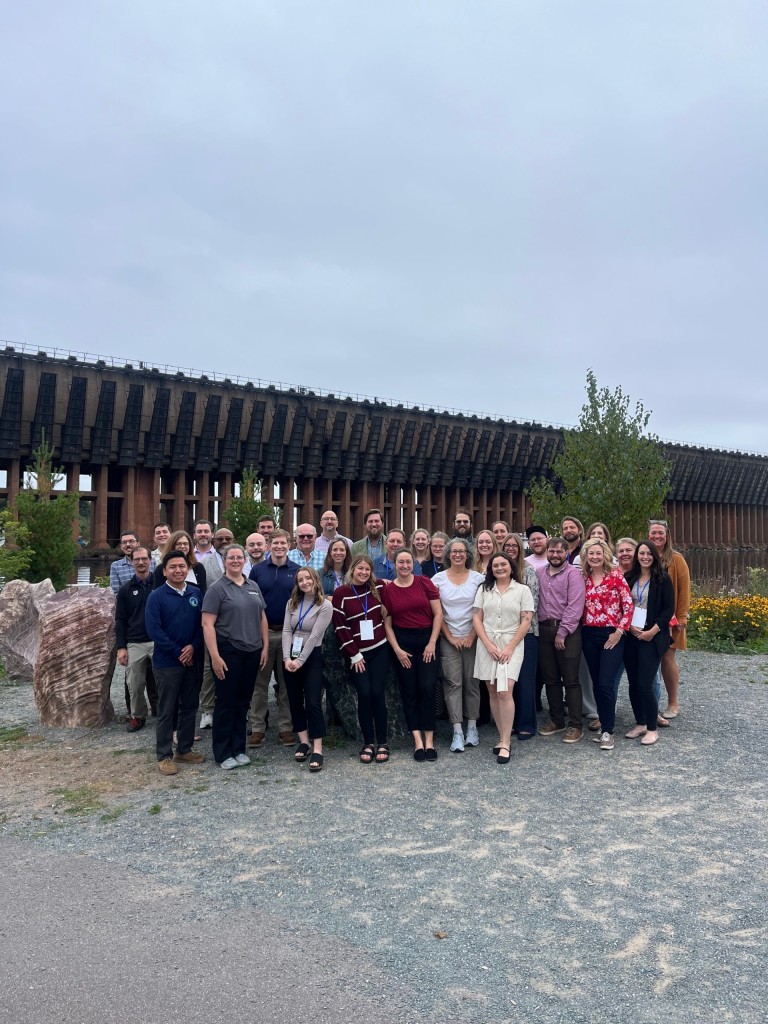
“There’s a lot of overlap in the training, since at the end of the day, infrastructure, financing, and regulatory hurdles challenge everyone — urban or rural,” Reyst says. “We really want our participants to walk away with an understanding of what a pro forma is, how it works, and the different funding resources and site restrictions they might face.”
Her hope is that folks left the Marquette boot camp with feedback on their project, tweaks they can make, or ideas about how to remove barriers to development in their own communities.
“People would be surprised at what’s going on,” Reyst says. “There’s so many assets, and there is a need for housing at every income level, in the same way as in our more urban areas. You just have to spend time in these places to really appreciate what’s possible.”
Building on Possibilities and Opportunities
When Antonio Adan took the helm as director of the Marquette County Land Bank Authority, he brought years of experience managing large commercial portfolios, a personal passion for housing, and a desire to make a difference in Michigan’s Upper Peninsula. He’s responsible for tackling a unique set of real estate hurdles in one of the state’s most rural regions. A shrinking base of investable properties, environmental hurdles, and the pressing need to eliminate blight are major challenges. There is a huge housing crunch to address in rural communities that have not seen a lot of investment in their downtowns.
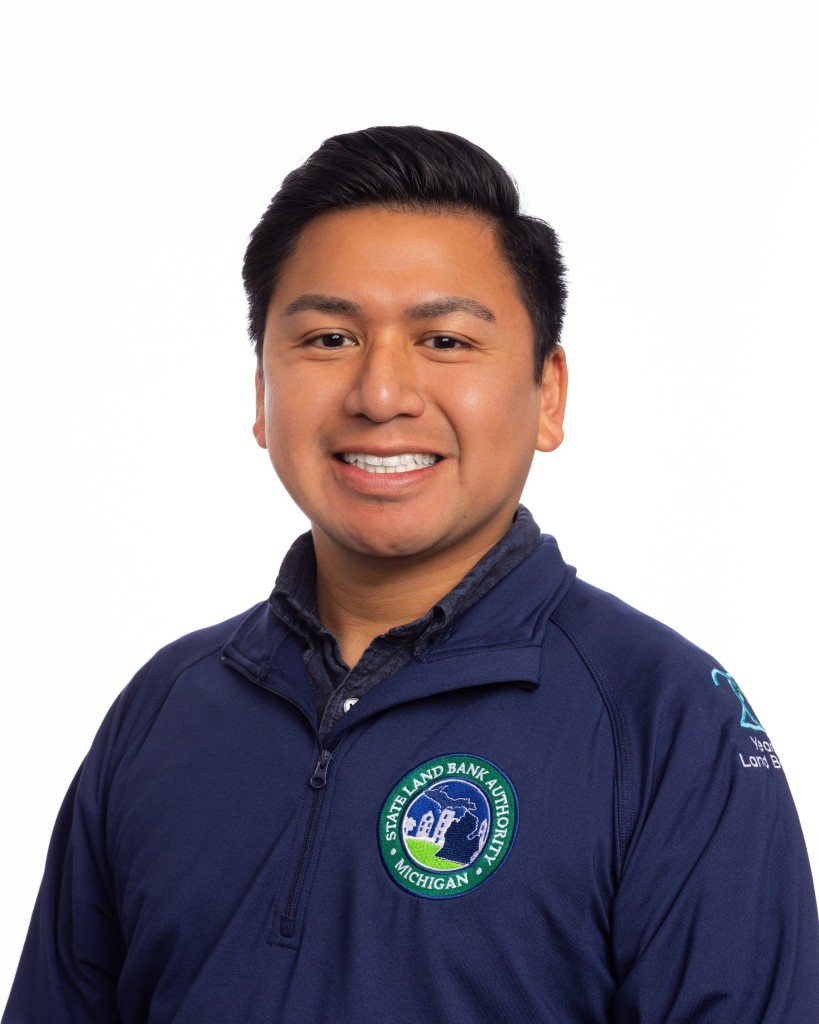
“Marquette County has about 70,000 people and it’s home to Northern Michigan University. The city of Marquette is the largest city in the Upper Peninsula,” Adan says, “The U.P. is very, very large geographically and represents a large mass of Michigan, but only 3% of the population. Tourism is our economic driver, but housing is a real struggle — especially affordable, attainable homes.”
Under the State of Michigan’s Fast Track Act, land banks were created to help communities eliminate blight. The primary goal: to return tax foreclosed properties back to the tax roll. As a quasi-governmental authority, the Marquette County Land Bank focuses on revitalizing properties and building housing. Currently, it owns about 25 empty lots and parcels. The next level of land banking, Adan explains, is either building directly or assisting developers in doing so.
“We’ve been able to figure out how to work with developers and bring in grants so that we can actually build homes that people can afford,” Adan says. “We’ve secured, thankfully, close to $3.1 million of state funding for projects for redevelopment. Next year, we’re going to try to build 10 homes as part of a program that we’re trying to start with grants from the Michigan State Housing Development Authority (MSHDA).”
Adan was integral in helping CEDAM plan for the rural boot camp in Marquette. He helped identify developers to attend the training, oversaw the development tour, and was a partner in a featured development project.
A bootcamp highlight for Adan was leading the two-and-a-half -hour bus tour of developments that covered all different housing types. Among the stops: a rehabbed orphanage, 40 new apartments funded by MSHDA, several single-family home sites, a neighboring town outside Marquette where about 27 homes are being built, and a quadplex renovation.
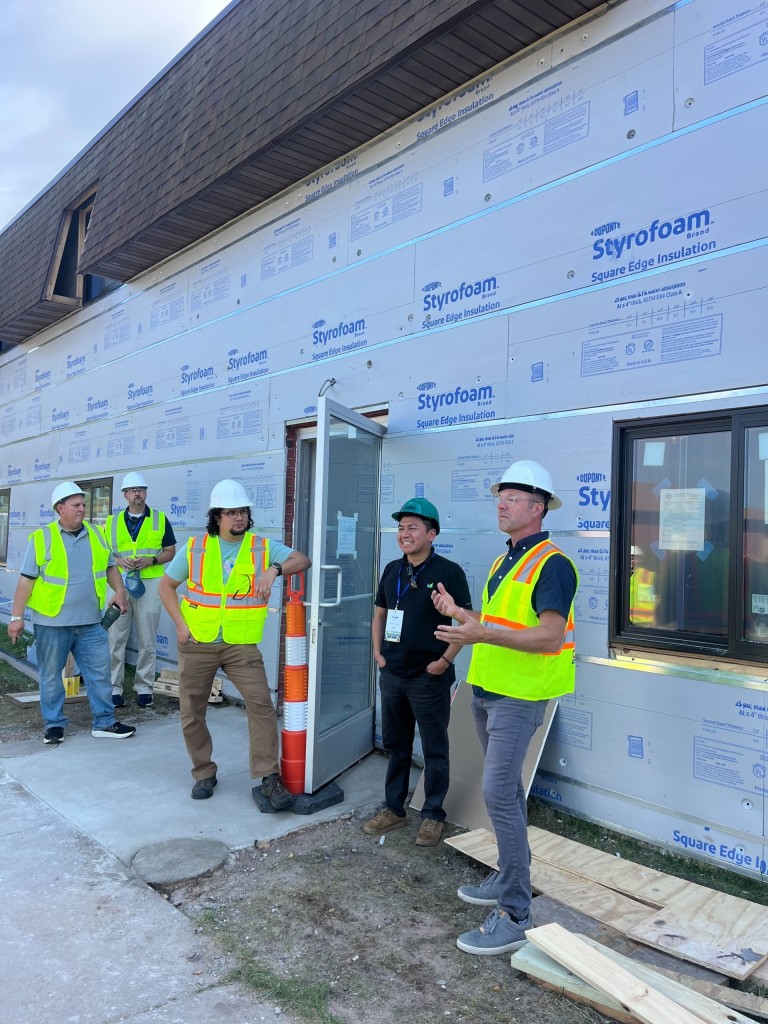
“My biggest boot camp takeaway is that in Marquette, and in the U.P., we are doing all the right things to try to speed up housing production,” Adan says. “A lot of the resources that CEDAM brought are the resources that are going to continue to improve our base of small, emerging developers throughout the area, and that’s exciting.”
Pumped up for Community Change
The first stop on the tour were two duplexes being built by Matt Slaughter. Slaughter participated in the inaugural rural boot camp in 2024 in Frankfort. His development partner at AV Housing Solutions Inc., Kyle Aho, also attended boot camp for a second time.
“Kyle attended this year’s boot camp. I presented, and helped with the tour. We both couldn’t be in the conference. We had to keep the balls rolling on the other side,” Slaughter says. “We were basically drinking from a fire hose for the week. Just like, ‘Holy Smokes. This is awesome.’ We’re both really pumped up after boot camp.”
One of their company’s missions is to be the highest quality affordable housing provider in Marquette County. For his team, that means going above and beyond — including rolling up their own sleeves and using shovels to clear cockroaches out of kitchens.
“There was an apartment complex that was infested with a cockroach infestation, as funny as that is for being in Michigan. And, it was so bad that it was untreatable,” Slaughter says. “At least that was the recommendation. So, we vacated the building, just to basically save the humanitarian aspect of it.”
While presenting and listening to the other boot camp speakers, he was struck by the variety of three small-scale case studies: AV Housing Solutions Inc.’s own duplex project, an 11-unit redevelopment with ground-floor commercial space, and a much larger planned 160-unit development.
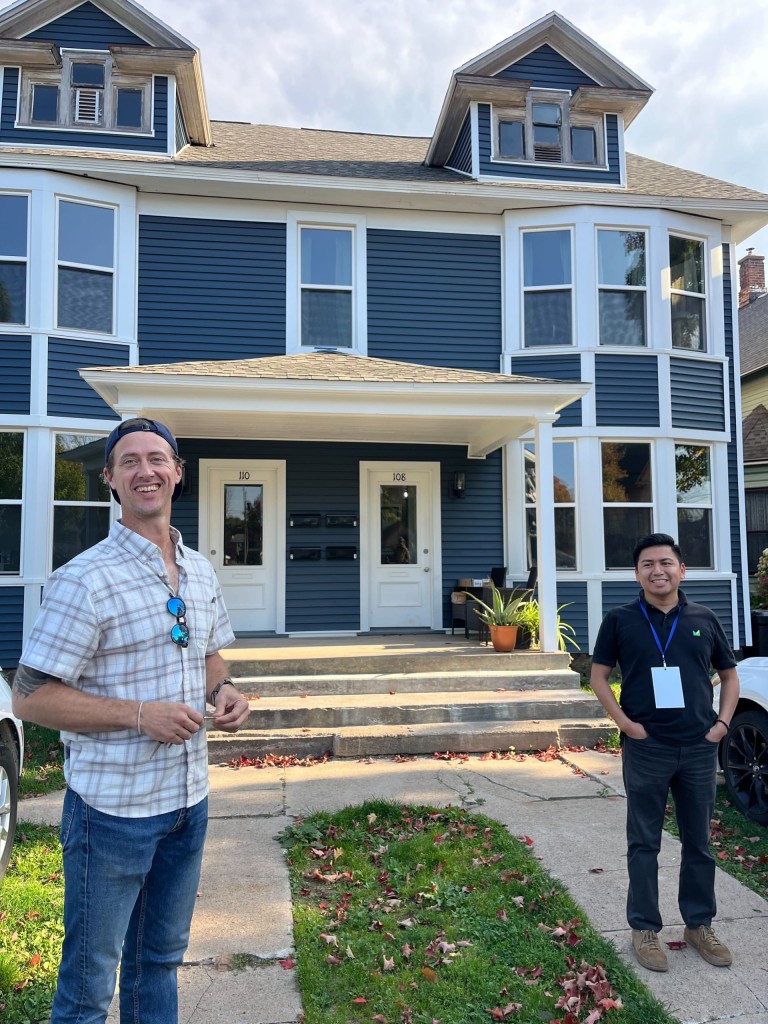
“What I didn’t realize is how impactful it is to have operators operating at all levels of the housing ladder,” Slaughter says. “All three of us companies and entities were providing very different products to the market and I didn’t know this until I was presenting.”
He feels that everybody attending boot camp was surprised, even those who are from the Upper Peninsula but don’t visit Marquette very often. As his company moves forward, people can be certain of their direction.
“We call what we do ‘wife-approved’ housing. So we do everything we possibly can to provide that right there,” Slaughter says. “That is our baseline. It has to be wife-approved. You have to live in it, be comfortable, and it needs to not break the bank.”
Moving Housing Forward
For Jenifer Acosta, community development means more than blueprints and zoning, it’s about human connection. As the lead consultant for Housing Forward in Midland County, and a decade-long developer, she served as a boot camp mentor.
“When CEDAM asked me to be a mentor, it meant taking a week and going and helping all of the participants work on their final projects,” Acosta says. “I enthusiastically said ‘yes’ because it’s something I love to do.”
At the boot camp, she guided teams as they moved projects from concept to reality. Project ideas ranged from housing to hospitality, with some teams already controlling land, others holding purchase options, and several still developing their ideas.
“There were seven project teams with projects from all over the state. Out of the projects that I was able to listen to at the end, there were 139 units,” Acosta says. “And, the projects that they put together would create $28 million in investment.”
She shares that the boot camp also created space for camaraderie in a demanding field.
“On the first day there’s that kind of, like, wide-eyed ‘wow, this is going to be a long week. This is a lot of information,’” Acosta says. “By the end, everyone’s there early and the room is full of laughter. When you are able to work in a collective like that, you’re like, ‘okay, I’m a masochist. It is really hard, but I am not alone.’”
Acosta is candid about ongoing hurdles, underscoring that none of the boot camp projects are possible without programs that help fund housing.
“You can’t produce a workforce housing unit, or anything under $350,000–$400,000, unless you have some of these programmatic elements to somehow make it cheaper for the renter, or for the homeowner,” she says.
Her advice for future CEDAM boot campers: “Anyone can invest in their local community. You don’t need a fancy degree or a title. We just have to teach you how to do it appropriately.”
Marilyn Chrumka, vice president of development at Michigan Community Capital, second’s the boot camp’s value. She leads the nonprofit’s real estate arm, focusing on mission-driven, mixed-income developments — including downtown mixed-use, brownfield, and historic preservation projects.
Her organization has completed eight projects and has two more in the works. Chrumka says Temple Lofts, in Lansing, is a standout. It’s a redevelopment of a former church-turned-nightclub. Called the Temple Building around town, it’s home to their first-floor corporate headquarters, a small business commercial suite, and 31 loft-style apartments on the upper floors.
“That one might be my favorite one so far. It definitely was not boring,” Chrumka says.

She explains that 90% of the 60-foot-tall building was originally designed with an open gathering space including a mezzanine, and huge, arched stained glass windows. It had been tried to be redeveloped by many different developers (as a venue or restaurant) who were always targeting to use historic tax credits. However, the tax credits would have required that the worship area be left intact, which was challenging.
When Chrumka’s team bought the building, they took it in a different direction. They added new floors to the sanctuary and, within that 60-foot building, constructed a separate five-story structure inside the original shell. They preserved many of the original arches and repurposed the stained glass windows as artwork inside the building. Then they added modern touches, including murals painted by a local artist.
“We didn’t do historic tax credits, but we were really thoughtful about trying to keep the spirit of the building intact,” she says. “It’s just a really beautiful merging of old and new, and modern and historic.”
At the boot camp, the mentor led several core sessions, and provided feedback on the funding panel. Chrumka is grateful for the experience, as it allowed her to be a teacher and a student. In particular, she left inspired after an in-depth session where she learned more about green design and renewable energy.
“Solar panels always felt like this extra layer of complexity. But after that, I was like, ‘why doesn’t everybody do solar panels?,’” she says. “I’m excited to share what I’ve learned about sustainability. If it helped shift my perspective, I know it can inspire new ideas in our communities, too.”
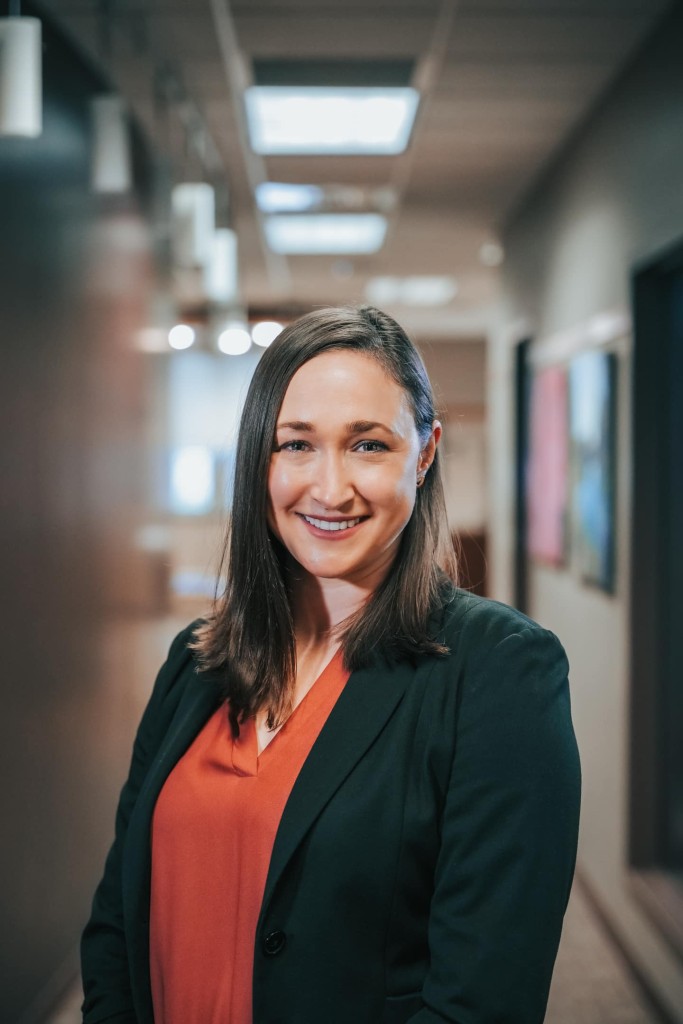
She recommends the boot camp to anyone interested in building stronger communities, and who wants to walk away with real skills, and a network that lasts long after the week is over.
“There’s no other program that covers such a wide range of topics, from real estate finance to hands-on projects, all in one week,” Chrumka says. “It’s more than just a training, it’s an experience that shapes your whole perspective on community development.”
Related Articles
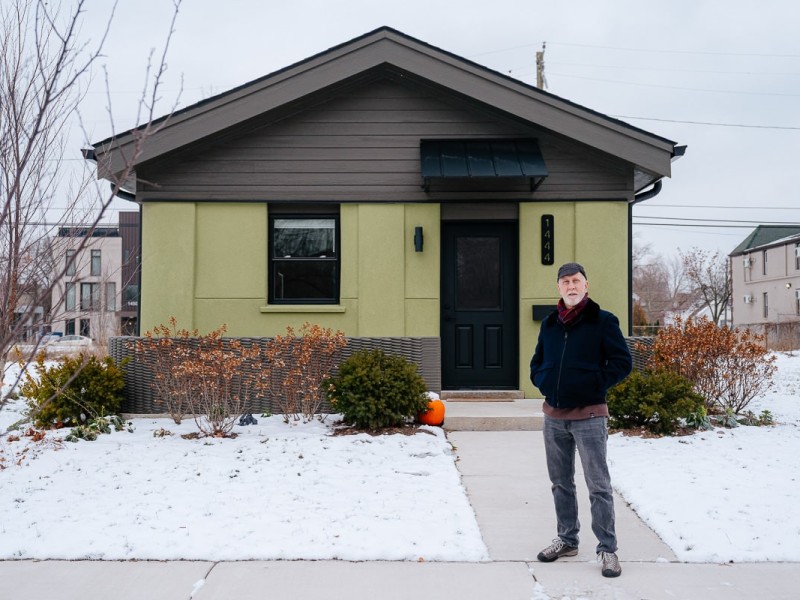
From 3D-printed homes to a ‘pocket neighborhood’: Finding new solutions to affordable housing
Across the Metro Detroit area, innovators are finding new ways to develop the affordable housing that the community desperately needs.
How real estate developers are using predevelopment assistance to revitalize communities
Predevelopment assistance provides local real estate entrepreneurs with a pathway to community investment and growth.
Springfield’s Haitian Community Faces Uncertainty Amid TPS Program Challenges
Haitian individuals and families, who fled violence in their homeland and settled in Springfield, are in a vulnerable position.