How a sisterhood of dentists is expanding public health across Metro Detroit
A collective of African American women dentists delivers public health care, mentorship, and trust to underserved patients across Detroit, Wayne County, and Macomb County.
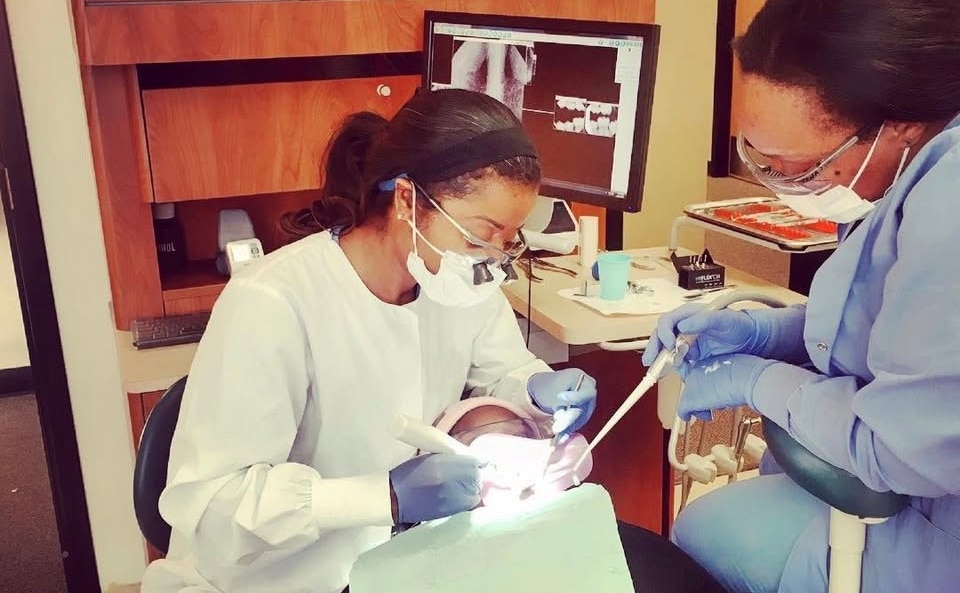
This story is part of a series on the challenges and solutions related to oral health in Michigan, Indiana, and Ohio. It is made possible with funding support from the Delta Dental Foundation.
Dr. Tiffani McElrath still remembers the first patient who followed her across town when she changed jobs. It was a sign, she says, that trust matters as much as treatment.
She is one of nine African American women dentists practicing in public health across Southeast Michigan
The women, who see themselves as a sisterhood supporting each other, share a common mission: to expand access to oral health care in communities that have long been underserved.
Their patients come from across Detroit, Wayne County, and Macomb County, and often rely on Medicaid, lack insurance, or face language and transportation barriers.
Beyond dental care, these dentists are focused on meeting patients where they are, removing financial and emotional barriers, and building trust over time.
‘My own form of ministry’
McElrath, who works at Western Wayne Family Health Centers, often draws patients who have gone years without regular dental care.
“To me, dentistry is like my own form of ministry,” McElrath says. “It’s about giving back and helping improve someone’s life.”
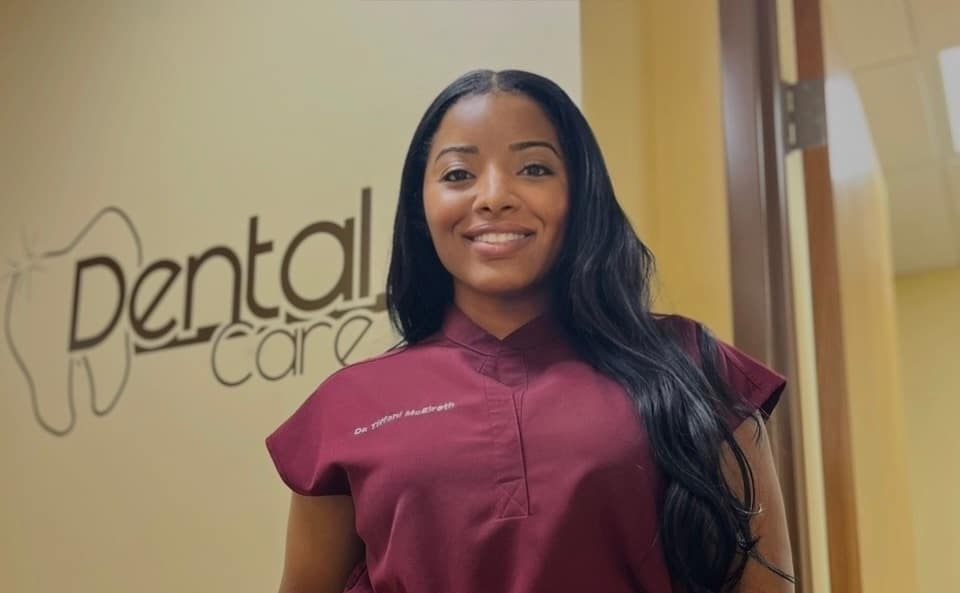
She says her experiences growing up with a single mother influenced her career path. After spending her early years in Detroit, McElrath moved to suburban Southfield by middle school, a change she says shows her mother’s socioeconomic growth and determination to improve the environment for her and her family.
McElrath graduated from the University of Michigan School of Dentistry in 2012 and completed a residency at Howard University. From the start, she knew she wanted to work in public health.
“I wanted to be in spaces where people really needed access to care,” she says.
Western Wayne uses a sliding-fee scale and offers flexible scheduling, such as extended grace periods for late arrivals.
“When people know they won’t be turned away immediately, they’re more likely to keep coming back,” she says. “That consistency is how we prevent bigger problems later.”
The clinic uses real-time translation services so patients who speak languages such as Farsi and Pashto can communicate directly with providers.
“That builds trust,” McElrath says. “Patients leave understanding what’s happening in their own mouth and how to take care of it.”
Her approach centers on education. She walks patients through X-rays, uses mirrors to show areas of concern, and encourages questions.
“This is a no-judgment zone,” she says. “People come in embarrassed because they haven’t seen a dentist in years. I tell them, ‘I’m just glad you’re here.’”
McElrath credits her godmother, Dr. Anita Sykes, with first introducing her to dentistry. Sykes previously ran a private practice in Southfield and now serves as an adjunct professor at Meharry Medical College School of Dentistry in Nashville, Tennessee.
“She was the best mentor I could have had,” McElrath says. “She taught me how to treat patients with compassion and empathy.”
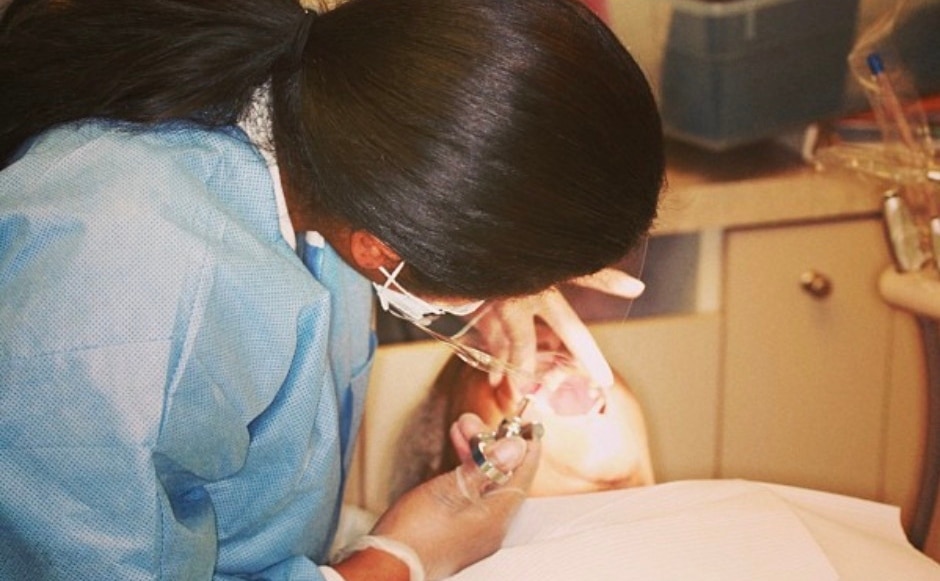
McElrath joined Western Wayne in 2022 after working seven years at a community dental clinic on Detroit’s east side. She moved closer to home in western Wayne County, where she is raising her two children, now in elementary school.
Many of her patients followed her.
“They traveled across the city to keep seeing me,” she says. “That was very rewarding.”
McElrath says she measures her success less in procedures completed than in relationships built.
“I’ve seen people through pregnancies, losses, and new beginnings,” she says. “Now I’m their kids’ dentist too.”
Legacy of service
At MyCare Health Center, Dr. Lauren Rush leads similar efforts as chief dental officer. The organization operates clinics in Center Line and Mount Clemens, areas identified as having shortages of dental providers.
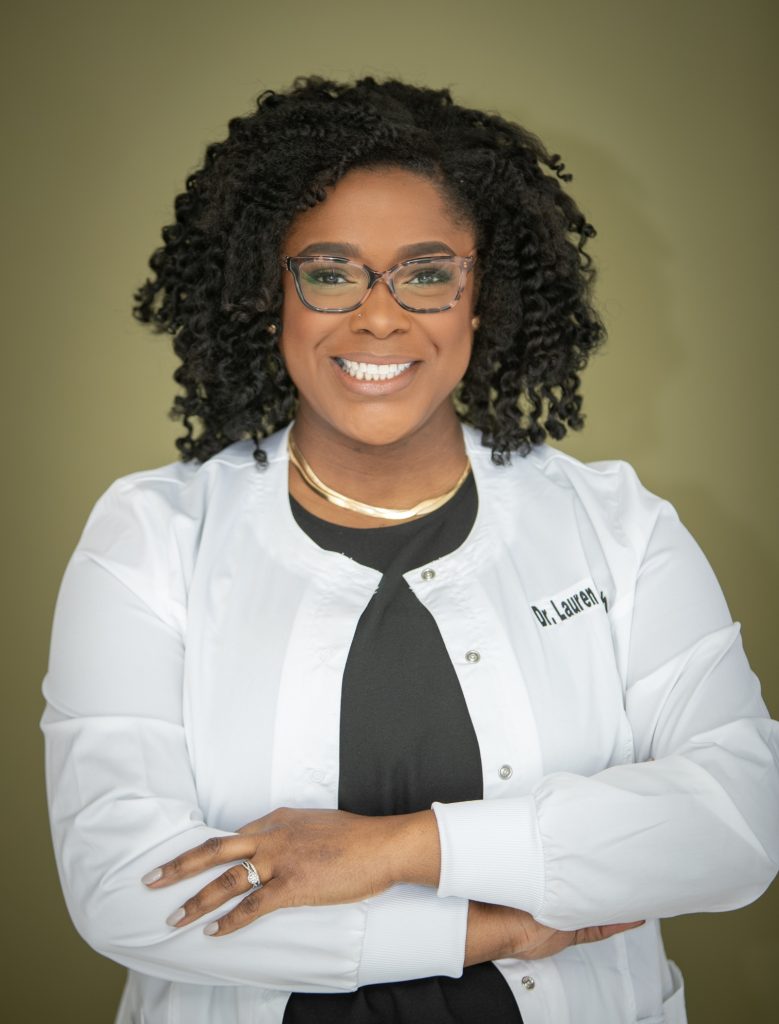
“We did a needs assessment, and both of those communities had a lack of dental access,” Rush says. “That’s why we expanded.”
Rush oversees programs that reduce financial barriers, including sliding-fee discounts and partnerships with the Delta Dental Foundation to bring in patients who rarely use their benefits.
“A lot more people just don’t have access to dental coverage,” she says. “Centers like MyCare allow people to still get care when they otherwise couldn’t.”
Many of Rush’s patients have not seen a dentist in years. Some stopped going during the COVID-19 pandemic. Others stayed away a decade or longer due to cost, lack of transportation, or competing priorities.
“That negatively affects both their medical and mental health,” Rush says. “There’s a direct correlation between uncontrolled dental disease and conditions like diabetes and hypertension.”
Rush works alongside Dr. Taylor Johnson, Dr. Erin Merriweather, and Dr. Saliah Miles — all members of the group of nine African American women dentists in public health.
“I’ve been in spaces where I was the only one who looked like me,” Rush says. “Seeing this many of us together feels comforting.”
Rush says her interest in dentistry began in college.
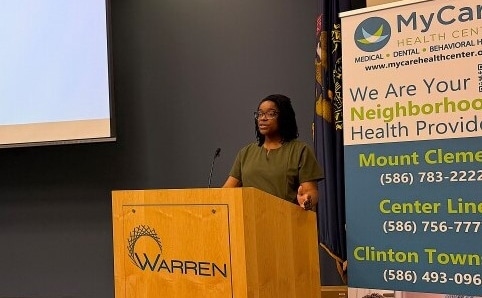
“I was an undergraduate student at Howard University when I completed a summer enrichment program at Howard University College of Dentistry geared towards introducing pre-med students to the field of Dentistry.
Those experiences sparked her interest in the field, while her commitment to public health came from her parents, who stressed the importance of giving back. Rush says those influences continue to guide her career decisions.
Rush grew up in Southfield in a family active in community service. Her father, who died last month, was deeply supportive of her career.
“He believed in giving back,” she says. “I think it was a dream for him to watch me fulfill my dream.”
Giving back
Dr. Chelsea Covington, clinical dental director at the Wellness Plan Medical Centers, is committed to improving access to dental care for underserved patients, including those who rely on Medicaid or lack insurance altogether.
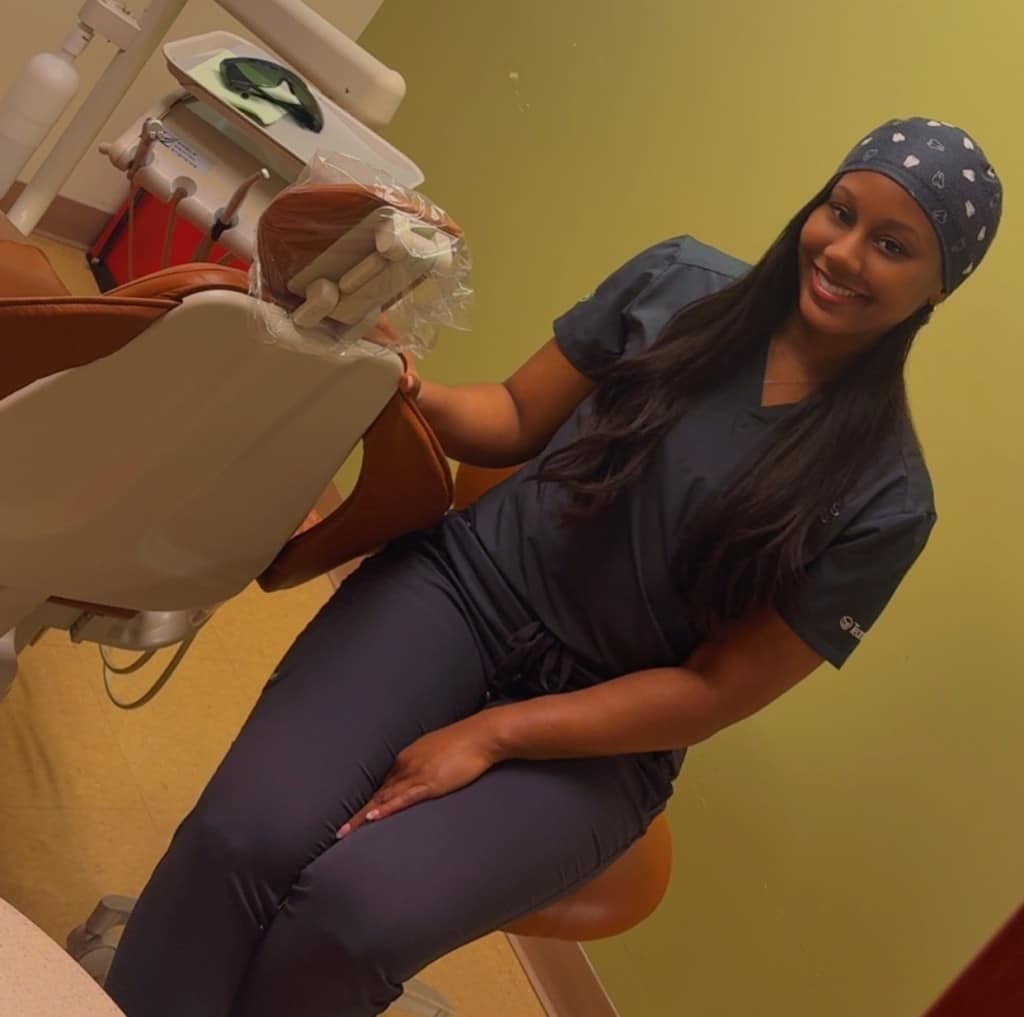
“A lot of them mention they haven’t been in 20 years because no one takes their insurance,” Covington says. “They finally find someplace they can come.”
Covington joined The Wellness Plan in 2020 after receiving a federal Health Resources and Services Administration scholarship that covered dental school in exchange for a commitment to work in underserved communities.
“It was already what I wanted to do,” she says. “So it was a double bonus.”
Covington says many patients arrive with urgent needs after years without preventive care.
“We can pretty much do it all,” she says. “But what I see most are extractions, fillings, and dentures.”
She works closely with Dr. Karra Fox and Dr. Kristen Taylor, also part of the nine-dentist network. Covington says the collaborative environment allows providers to share knowledge and support one another in a demanding field.
“We feed off each other,” she says. “You don’t feel scared to ask questions.”
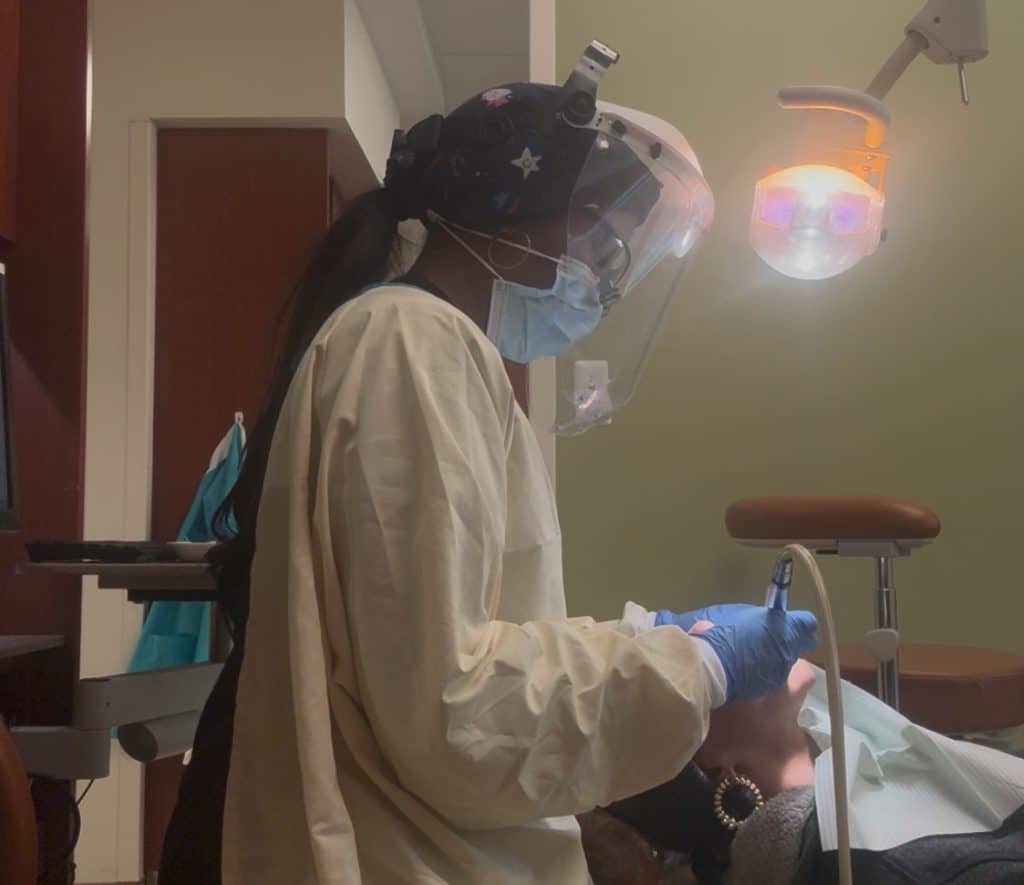
Beyond clinical work, Covington created her own scholarship program in 2020 to support Detroit Public Schools graduates and incoming dental students.
“I had a lot of help,” she says. “I just want to give back.”
Covington, a graduate of Detroit Public Schools, attended the University of Michigan and the University of Detroit Mercy School of Dentistry.
The group also includes Dr. Michele Bloxson, dental director at Corktown Health, a Detroit-based clinic focused on health equity with an emphasis on LGBTQ patients and people living with HIV.
The dentists say the work can be emotionally demanding. Many patients arrive in pain, embarrassed, or skeptical of medical systems that have failed them in the past.
“You can’t rush this work,” McElrath says. “It takes time.”
But the group also sees the long-term impact that comes with patients returning regularly and families establishing care across generations.
They also see the importance of inspiring students in their community to pursue careers in health care because representation in the field is critical.
“If you don’t see people who look like you, you don’t always believe it’s possible,” Covington says.
Photos courtesy of Dr. Tiffani McElrath, Dr. Lauren Rush, and Dr. Chelsea Covington
Related Articles
How Housing First stabilizes mental health
Without stable housing, meaningful mental health treatment is nearly impossible.
Social determinants of health and whole-person care
Mental health care cannot be effective or sustainable unless people to feel safe, stable, and supported.
Children’s mental health: When and where to access care
Local CMHs, CCBHCs, and primary care providers can serve as critical starting points, connecting children to mental health care.