It’s hard for foster kids to get the health care they need, but this project is working to change that
A Grand Valley State University project is working to create an integrated mobile care team to serve foster kids’ complex health needs.
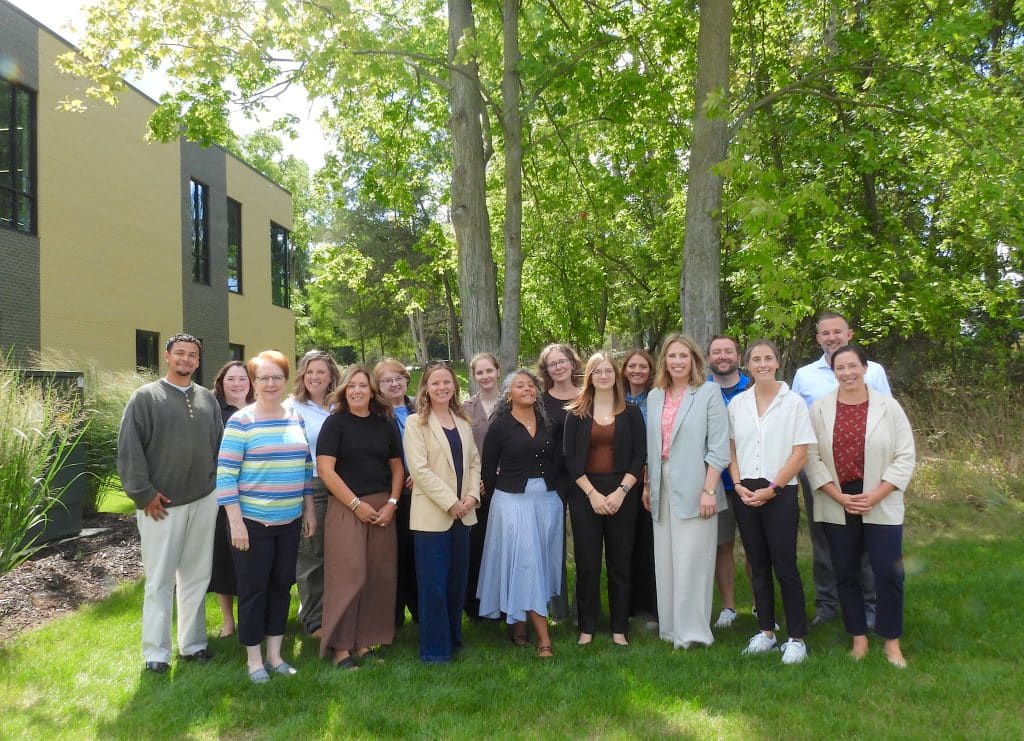
This article is part of State of Health, a series about how Michigan communities are rising to address health challenges. It is made possible with funding from the Michigan Health Endowment Fund.
When Ada, Mich. resident Tramble Tomerlin realized that his foster son, Daniel, was showing symptoms of in utero drug exposure, Tomerlin says he “had no idea what to do.” Tomerlin and his wife Kim had begun fostering Daniel when he was just two days old, and within about six months Tomerlin says he’d noticed Daniel “wasn’t progressing physically like other kids were at his age.” They eventually found help through Early On, a Kent ISD program that provided a blend of occupational therapy and mental health therapy to help Daniel. Tomerlin says the treatment was effective and Daniel, now 4 years old, is doing well. But Tomerlin says the struggle of finding adequate treatment for foster children’s unique health care needs is all too common for foster parents.
“There’s just a lot of things that there’s no manual for,” he says.
Since 2023, Tomerlin has been working to create a more supportive and responsive infrastructure for Kent County foster families as an advisory council member for a Grand Valley State University (GVSU) initiative called Fostering Futures: Partners in Community, Behavior, and Healthcare. The project is the brainchild of Christina Quick, a pediatric nurse practitioner and associate professor of nursing at GVSU. Quick is well versed in the world of children’s health care. But when she and her husband became foster parents, she realized that their foster children experienced challenges in accessing health care that she’d never considered before.
Quick says she observed a “disconnect” between the child welfare and health care systems, a “knowledge gap” among health care providers when it came to her children’s unique needs, and challenges getting behavioral health care for them. To better understand and support her kids’ needs, Quick started getting involved with national organizations that advocate for foster children’s health care.
“I started learning about different health models that are utilized across the country to meet the health care needs of those youth,” she says. “And so I started asking, ‘Why don’t we have that in Michigan? And what does that look like? And how might we have that in Michigan?'”
Those inquiries have led Quick to launch two projects to improve access to integrated physical and behavioral health care for foster children in Kent County. In 2023, with a $195,600 grant from the Michigan Health Endowment Fund, Quirk and her colleagues led the Fostering Futures project, whose main focus was a community assessment of health care needs among foster kids in the greater Grand Rapids area. Last month, they began work on a follow-up project called Healing Beyond Healthcare: Integrated Health and Social Systems for Youth at Risk in Foster Care. That initiative will establish a mobile, interdisciplinary health care team to conduct physical and behavioral screenings for Kent County foster kids within 72 hours of their placement in the foster care system. It is supported by a second Michigan Health Endowment Fund grant of $499,562.
“Having providers that can help support you and put you in the right direction [is] going to support foster families,” Quick says. “It’s going to support the youth. It ultimately supports more stable placements and potentially improves reunification rates. Overall, we just would like to see improved outcomes for youth within Kent County, within Michigan, and – if I had to dream big – globally. But we’ll start small.”
Foster families’ health challenges
The first step of the Fostering Futures project was to assemble an advisory council representing various stakeholders in the foster health care system. It included representatives of Michigan Court Appointed Special Advocates, the Kent County Health Department, and foster care agencies, as well as physical and behavioral health providers, educators, and foster parents like Tomerlin. The group conducted a literature review to determine best practices for foster children’s care, as well as an assessment of existing community health services for foster kids. They also conducted a survey of what Quick refers to as “care providers and care receivers.”
“As we engaged with different people who communicate with or work with foster parents, foster families, or foster youth, there was an overwhelming and collective agreement that there are gaps in the health care services that are offered to youth in foster care,” she says. “The guidelines recommend increased health surveillance. … [Foster children] usually have more chronic conditions, often untreated conditions or other concerns that are untreated when they enter care, [and] a significantly greater need for behavioral and mental health support. And that largely goes unrecognized by the health care sectors when they aren’t familiar with those specific needs of youth in foster care.”
Behavioral health care was one of the biggest gaps Quick and her team identified, and one of the most important, given that foster children are highly likely to have experienced trauma. Amy Rohn, an assistant professor of nursing at GVSU who has collaborated with Quick on both Fostering Futures and Healing Beyond Healthcare, says they learned that many foster children wait as long as five to six months for a mental health appointment.
“This population is at higher risk for mental health disorders and concerns, and so we also understand that earlier intervention can mitigate the effects of their trauma,” she says. “I think we’d all agree that we can’t say enough about how important that is to allow for easier access and to have a model that is just all-encompassing for all of the things that these children need.”
An additional challenge the researchers identified is that some foster kids are missing crucial health checkups despite state requirements. The Michigan Department of Health and Human Services stipulates that foster children receive a “comprehensive medical examination” within 30 days of placement in a foster home. But Quick and her team found that doesn’t always happen, due to provider availability, scheduling, and reimbursement issues.
“The systems are so slow,” says Emily Bemben, a GVSU assistant professor of nursing who has worked on Fostering Futures and Healing Beyond Healthcare. “There’s a lot of moving pieces and policy and a lack of funding and attention. So I think foster kids just kind of receive the shortest end of all of those sticks.”
Building a responsive care team
These findings prompted Quick and her team to move forward with the next stage of their work: creating a knowledgeable, trauma-informed mobile care team that offers integrated physical and behavioral health care to foster children within 72 hours of placement in a new home.
“If you had a heart condition, you would go see a cardiologist,” Quick says. “This is a similar kind of consideration, only in this case, you’re receiving primary care, but they’re specialized in caring for children in foster care. And so we wanted to look at how we could use what we know about the disparities that youth in foster care have, what we know about the needs that they have for increased frequency in care, what are the current expert guidelines, and how could we maybe pilot a project that meets those needs in a more accessible way.”
The team will include a pediatric or family nurse practitioner and a social worker, who will serve as a peer navigator to help families find the health services they need. Rohn says the Healing Beyond Healthcare team is currently working on drawing up job descriptions for the care team, as well as exploring additional funding options to purchase a vehicle for the team. To maximize ease of access to care, the team will be designed to travel to foster families. However, Quick also envisions eventually making the team available to families at partner agencies’ facilities in Kent County.
Quick says the team’s initial focus will be on “urgent health needs” and closing the gap on medical examinations within the first 30 days of a foster child’s placement in a home. She hopes to later expand the team’s scope to serve as longer-term consultants or liaisons to foster families and their health care providers.
“If there’s questions from a health care provider, or they’re encountering barriers or things that they don’t know about caring for a child in foster care, now there’s an expert who they can call, consult, curbside-deliver, or curbside-consult for information or help,” she says.
Tomerlin says he hopes the team “has a lot of quantifiable impact.” He considers himself a “retired foster parent,” having adopted both Daniel and an 8-year-old daughter, Zora, whom the Tomerlins began fostering when she was 4. But Tomerlin says participating in Quick’s work is important to him because he doesn’t want the knowledge he gained as a foster parent to “go to the wayside.”
“I think that’s kind of my share of giving back to the community that’s helped Kim and I for so long,” he says.
Quick, Rohn, and Bemben all say the partnerships they’ve built with Tomerlin and numerous other community advisors have been instrumental to Fostering Futures. Bemben says that community input will continue to be important in shaping Healing Beyond Healthcare.
“We can sit up here and talk all day about what we think we know, but … I don’t know what it’s like to be a foster kid receiving health care in Kent County,” she says. “So we’re really grateful that they’ve taken the time to give us some input as well. And if anyone has not been involved and wants to be, then they can definitely get in touch and we can sign them up for our team. There’s room at this table for everyone who cares.”
Author

Related Articles
In neighborhoods across Greater Cincinnati, a nonviolent resistance begins to organize
Concerned citizens are taking action — making whistle kits, getting a refresher in the U.S. Constitution, and reaching out to immigrant-owned small businesses.
Bay County reduces adult guardianships by 45%, expands guardianship diversion efforts under new program
Since 2024, government officials and community advocates in Bay County have been developing a new model to ensure that all other potential solutions are exhausted before an adult guardianship is granted.
This toolkit is helping to address gaps in youth sexual health care
New online resource provides evidence-based sexual health guidance for youth, families, and clinicians, aiming to reduce misinformation and barriers.