Little Ortonville goes big for small business
Home to 1,351 residents, village measuring one square mile has a thriving downtown.
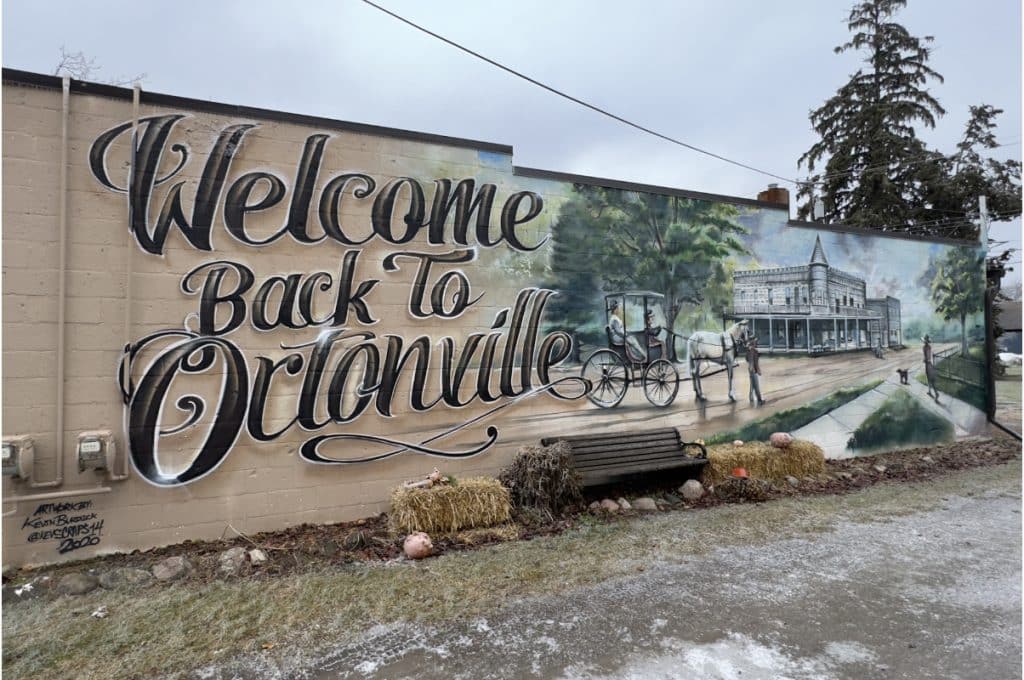
When it comes to small communities making big improvements, the Village of Ortonville is a superstar. The village has made great strides in supporting local businesses as well as perking up its downtown with a new pocket park and major improvements at its existing downtown Heritage Park.

“Ortonville has an all-American, historic, small downtown –– historical buildings, quiet and quaint. And when I say small, the Village of Ortonville is one square mile,” says Matt Jenkins, executive director of the Ortonville Downtown Development Authority (DDA). “The downtown is even smaller. It is primarily two streets, Mill Street and South Street. That’s where the majority of the commercial properties are.”
In the heart of Ortonville’s downtown, Heritage Park is the anchor point of Ortonville’s new walking farmers market. While some of the vendors sell their wares in the designated area of the park, others set up their tables in front of the downtown businesses, creating a nice circuit for patrons to walk.
“Farmers markets are very popular in communities that have implemented them all over the state, all over the country. Ours is a strolling market,” says Jenkins. “Anytime the DDA initiates a project, we always ask ourselves, ‘How can we add commerce-generating components to this activity? How can we engage our existing brick-and-mortar businesses to either participate in the activity or benefit from it?’ The strolling market pushes people by our storefronts.”
What makes Ortonville a good place to do business is the closeness of the community, the connectivity to business resources, and a strong support network thanks to its DDA and Main Street Oakland County.
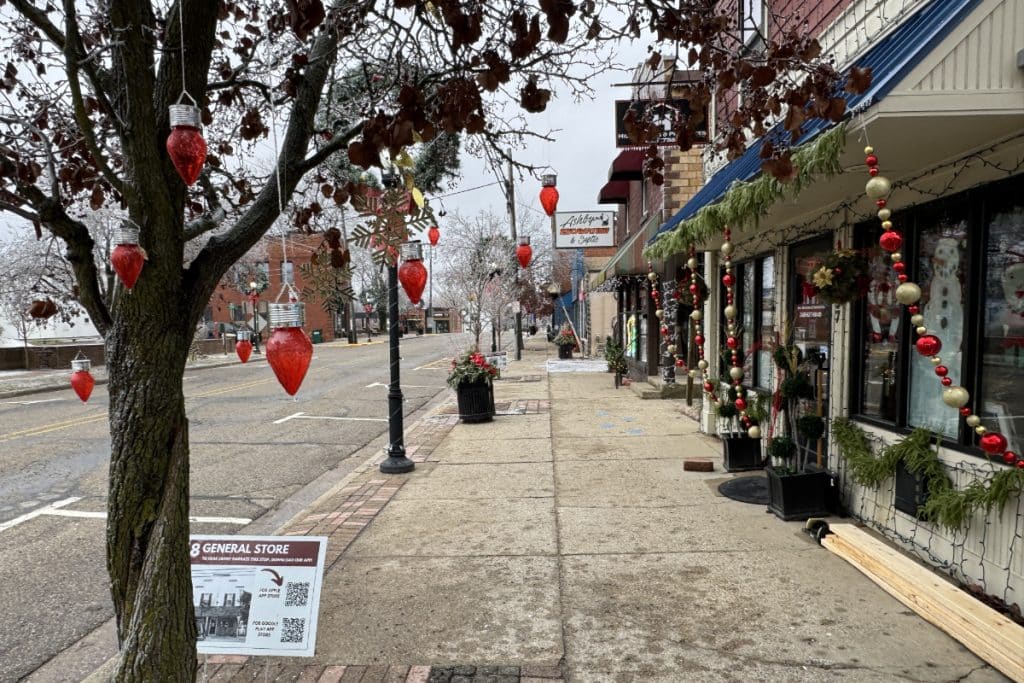
Ortonville also has commercial activity along state highway M-15, which runs along the west side of the village.
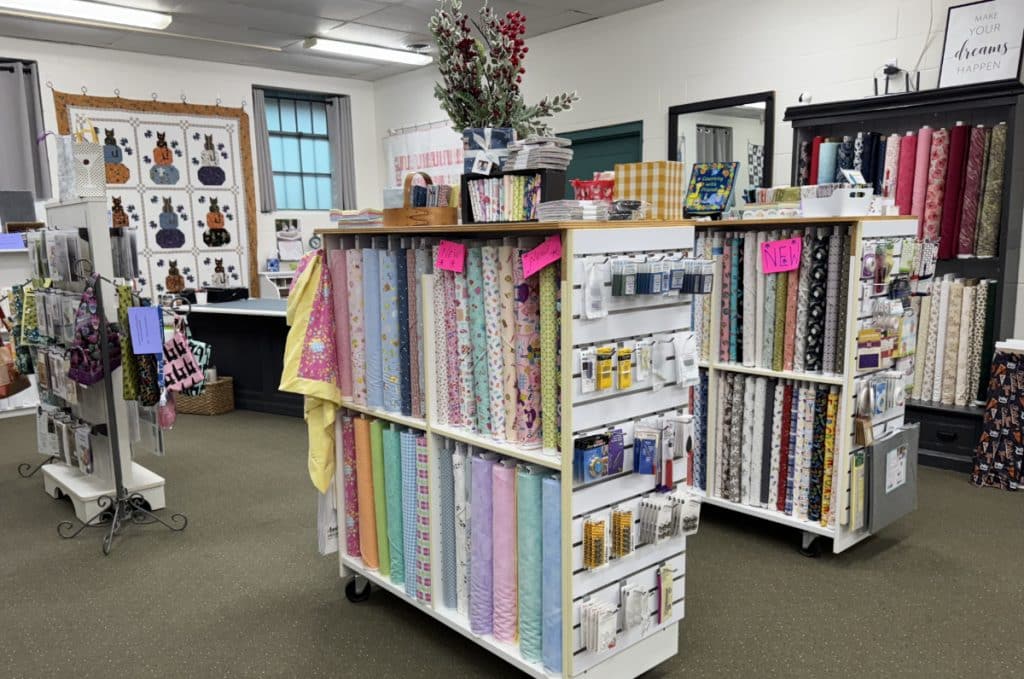
“Our commercial property owners are so willing to work with small businesses that want to take that leap of faith, taking a chance on their dream of opening a small business,” Jenkins says.
The Ortonville DDA has two primary strategies. One is business activation and development — supporting the startup and fostering the growth of the village’s small businesses.
“That includes providing financial assistance, providing small business consulting through other experts, or identifying and helping the small businesses apply for some specific grants that we have available for them,” Jenkins says.
Placemaking in a small place
The Ortonville DDA’s other primary strategy is placemaking.
“We struggle to create a volume of retail shoppers in town,” Jenkins says. “Number one, there’s a limited number of properties, so we can only have so many retail stores and so many service stores. And we only have one sit-down established restaurant, the Village Pub, in our downtown.”
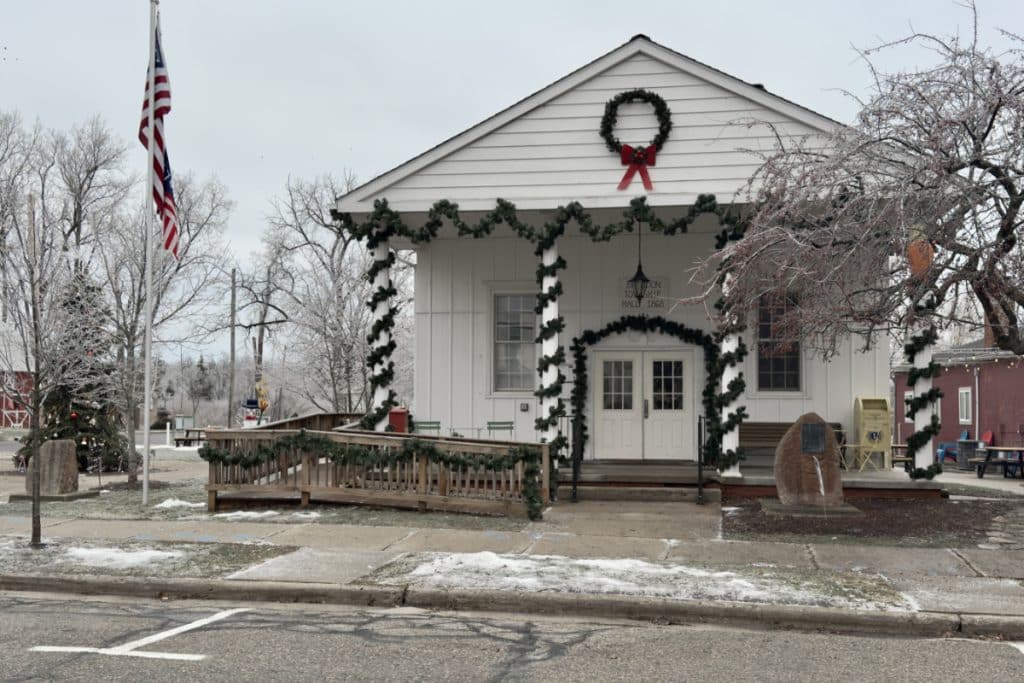
Funded by a Michigan Municipal League Foundation microgrant, Ortonville’s new pocket park occupies a previously underutilized space between the historic Old Town Hall and Village Office, steps from downtown shops and businesses.
“The DDA focus is creating comfortable spaces for people to come to downtown … creating amenities in our downtown,” Jenkins says. “These projects are part of that strategy.”
The Ortonville DDA has two primary strategies. One is business activation and development — supporting the startup and fostering the growth of the village’s small businesses— the other is placemaking.
The pocket park’s green space features picnic tables, lighting, and a game kiosk constructed from a retrofitted newspaper box. The Ortonville Citizen, a local newspaper operating out of a brick-and-mortar downtown Ortonville location, donated the box. And Jake’s Collision Repair & Refinishing, a local business launched by a young entrepreneur, refinished it.
“Yes, we actually have a local newspaper in our community. We reached out to them seeing if they had any old newspaper machines,” Jenkins says. “When people come to the park, they can go to the old-style newspaper machine and take out board games or other things that we have in there.”

Of course, Michigan’s small towns and villages face a variety of challenges when it comes to building local economies. One of Ortonville’s is its lack of a municipal sewer system. This limits the number and types of businesses that the village can welcome.
“We can’t snap our fingers and solve the septic issue, but we can make our downtown very inviting,” Jenkins says. “We can activate certain spaces downtown that make it interesting and bring people downtown to expose them to our existing businesses. The anticipation is that commerce will take place from that.”
John Bry, program coordinator for Main Street Oakland County (MSOC), concurs.
“What makes Ortonville that good place to do business is the closeness of the community, the connectivity, the resources that they are able to provide to a business,” he says. “They provide a strong support network to rural and local businesses.”

Main Street Oakland County: Ortonville and beyond
MSOC supports downtown development efforts in 30 Oakland County communities ranging in population from 600 to 60,000. Ortonville’s population is 1,351.
“Main Street follows a four-point approach, and the four points are design, organization, promotion, and economic vitality,” Bry says. “It’s those four things working together that start to evolve a district.”
Of 47 Main Street coordinating programs in the nation, Oakland County’s is the only one operating at a county level. MSOC provides free architectural design services, market analysis via placer.AI, and technical training to get small businesses on board with e-commerce and other tech-based business essentials.
“That’s all on our dime,” Bry says. “Since we are part of Main Street America, we also provide support to send communities to the national Main Street conference. We have a delegation of about 50 people from Oakland County, including Ortonville, that’s at that conference, and it’s a good time for them to exchange ideas with peers.”
What makes Ortonville a good place to do business is the closeness of the community, the connectivity to business resources, and a strong support network thanks to its DDA and Main Street Oakland County.

Collaborations make big improvements in small communities
Collaborations among Ortonville DDA, MSOC, local business and commercial property owners, and regional, state, and national entities have powered the progress and projects in downtown Ortonville. Some of those projects include Ortonville DDA’s small business gift certificate program, which reimbursed Ortonville’s businesses $40,000 for gift certificates that generated $106,000 in sales. Another program, Holiday Bucks, sold shoppers gift certificates for $50 that were good for $75 in purchases at Ortonville businesses. Facade grants combined with the design services offered by MSOC help local business owners spruce up their building fronts and add new signage. Another project is the restoration of the village grist mill, where the Ortonville Community Historical Society maintains a museum.
Collaborations among the DDA, MSOC, local businesses, and other entities have powered the progress and projects in downtown Ortonville. As its tax base is small, the DDA looks for alternative revenue sources like Michigan Municipal League microgrants.

As its tax base is small, this village DDA has had to be very creative in finding alternative revenue sources to fund projects. Grants and revenue from partners like MSOC, revenue from events like its annual Mistletoe Marketplace, and microgrants from the Michigan Municipal League Foundation are among those that have funded placemaking projects, activated spaces, and supported Ortonville’s businesses.
“We are very lucky to have a Main Street coordinating program that is so local –– to be able to have our liaison here at any given moment is significant,” Jenkins concludes. “It’s partners like that, partners like Michigan Municipal League and Michigan Municipal League Foundation, that make our job a lot easier.”
Photos by Leslie Cieplechowicz.
Photos of John Bry and Matt Jenkins courtesy subjects.
This story is made possible with funding from the Michigan Municipal League Foundation, a nonprofit association dedicated to making Michigan’s communities better by thoughtfully innovating programs, energetically connecting ideas and people, actively serving members with resources and services, and passionately inspiring positive change for Michigan’s greatest centers of potential: its communities.
Author

Related Articles
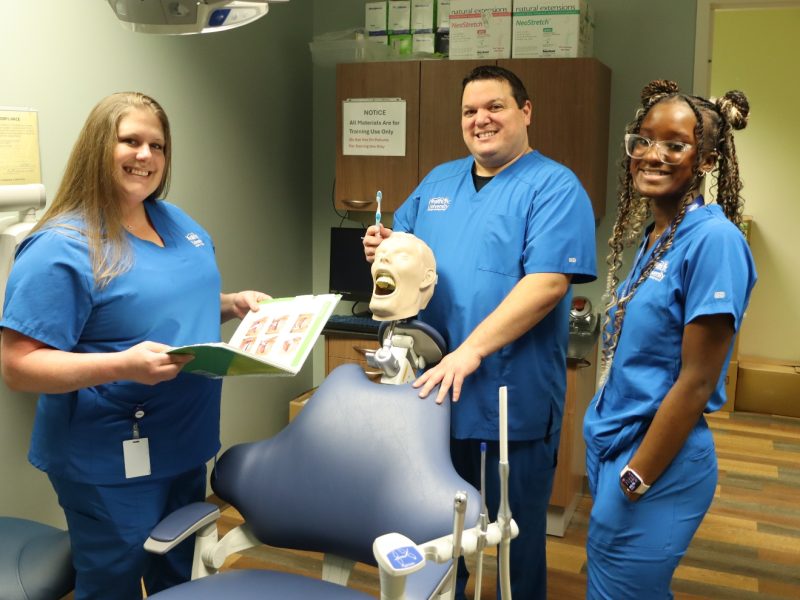
Indiana health center trains local residents as dental assistants to fill workforce gaps
HealthLinc, a federally qualified health center in Valparaiso, covers training costs while preparing local residents for dental assistant jobs, strengthening workforce pipelines and expanding access to care.
Community Loan Centers combat predatory payday lenders
Organizations are working to protect consumers from predatory lending practices by pushing for changes at the statehouse and offering alternatives.

Farmington’s focus on public art fosters economic growth
The City of Farmington’s collaborations support its vision of leveraging public art as an economic driver.