Muskegon’s Best Kept Secret: A hub for inclusive winter sports
The goal is to make Muskegon Luge Adventure Sports Park accessible in as many ways as possible to as many people as possible.
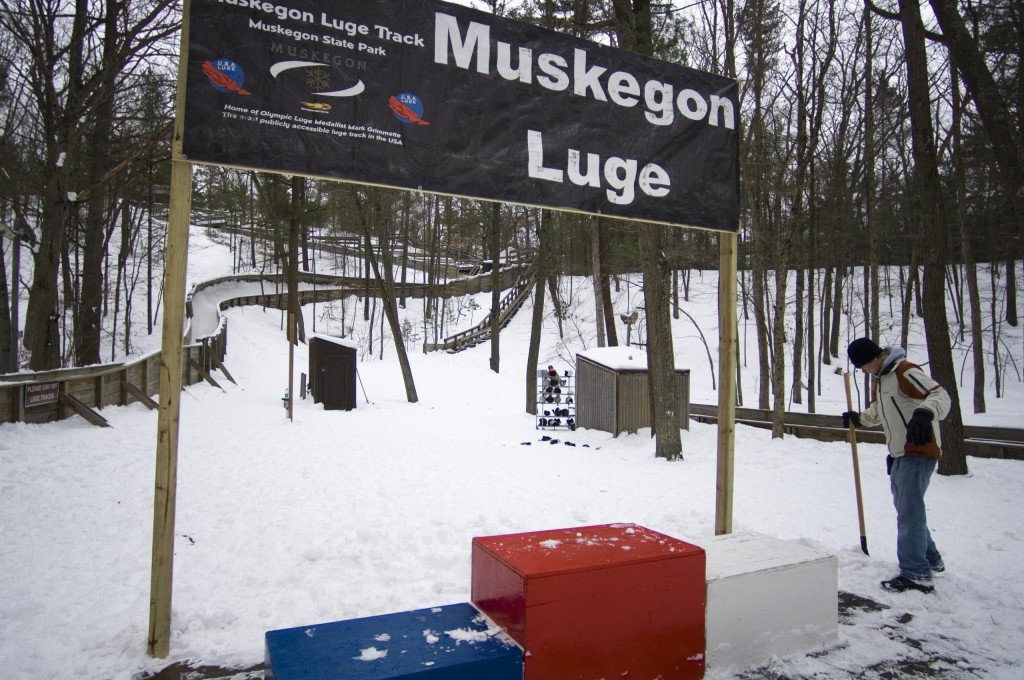
Jamie Spore loves the thrill of racing down a hill or dangling high in the air. One of the places she gets her fix is the Muskegon Luge Adventure Sports Park.
“I’ve always been an adrenaline junkie,” Spore says.
A paraplegic born with Spina Bifida, Spore used to go skydiving every summer. But after having a kidney removed several years ago, she says, doctors advised her to stop skydiving, leaving her searching for new ways to experience speed and motion. She found it in ziplining.
“It gives me that sense of freedom of being up in the air and out of my wheelchair for a little while,” she says.
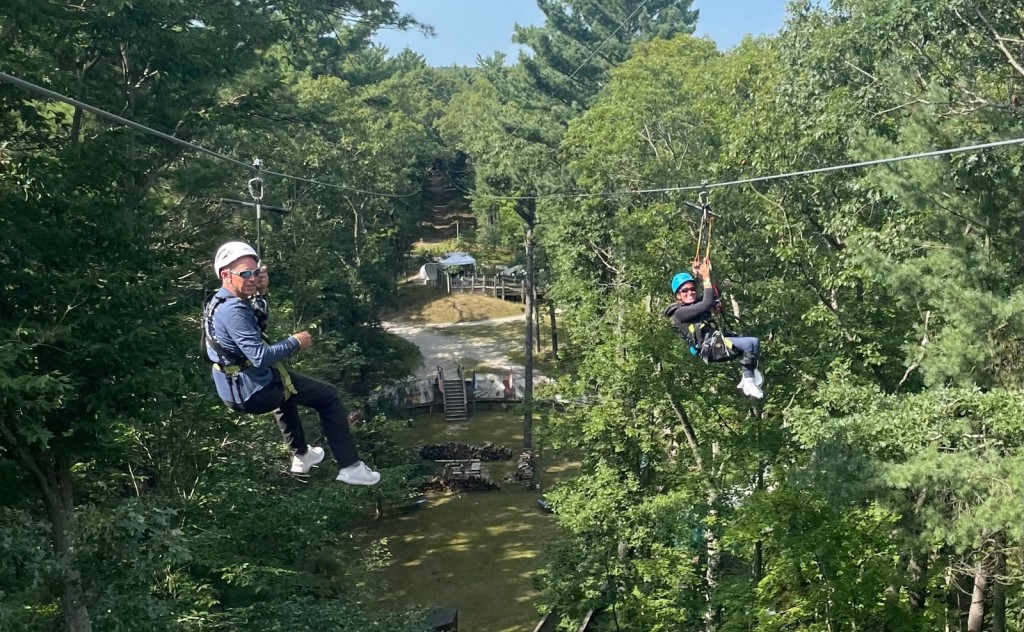
Spore praises the park staff for focusing on adapting activities to broaden participation. “The staff is always like, ‘OK, let’s figure out a way for you to be able to do this,’” she says.
Partners with state park
The park is located within the 1,200-acre Muskegon State Park, which is along Lake Michigan and managed by the Michigan Department of Natural Resources. The sports park has 300 acres dedicated to winter sports and year-round activities. It is operated by the Muskegon Sports Council.
“We have a unique partnership with the state of Michigan and the DNR,” says the Sports Council’s Bill Bailey, a lodge manager at the park. “Everything we develop here is then gifted to the state and becomes part of the park.”
Under an agreement that goes back to the 1980s, the nonprofit Sports Council raises funds, builds facilities, and manages operations, while the permanent infrastructure remains publicly owned.
The park’s centerpiece is a public luge track, one of only four in the United States. Bailey says it was built for beginners, not professional athletes.
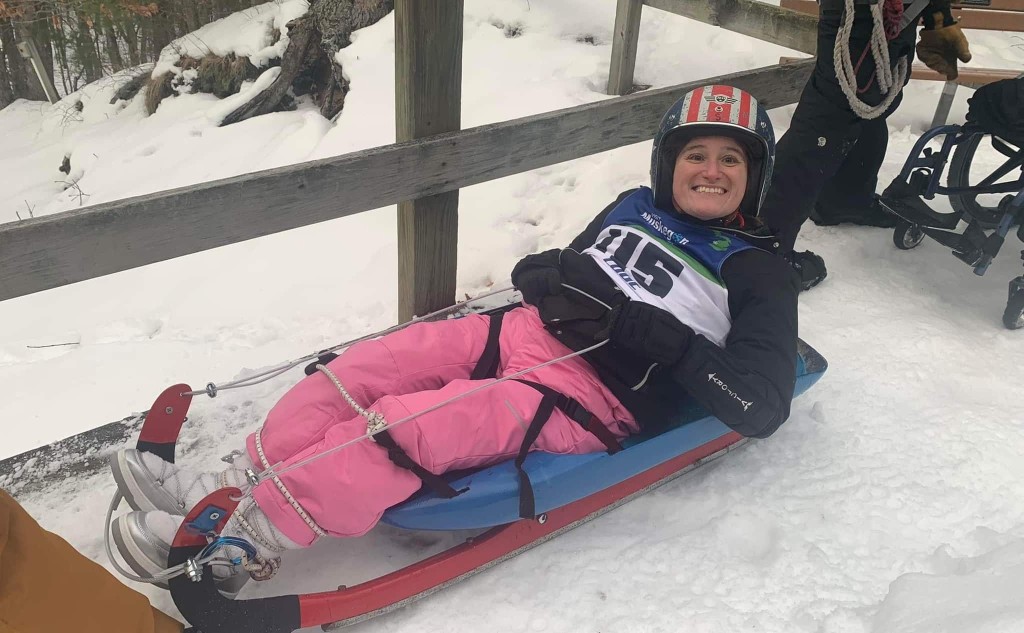
“Most people who come here to luge have never experienced it before,” he says. “It’s designed to be publicly accessible and designed for first-time athletes.”
Visitors book a 2 1/2-hour session that includes instruction, multiple runs, and a race at the end. Luge tickets cost $65, with discounted midweek sessions at $35. Day passes for skating and trails cost $10.
“This has been one of the best winters we’ve seen in a long time,” Bailey says. Last season drew about 40,000 visitors, and Bailey says attendance this year is likely to surpass that number.
“We have folks who have literally traveled across the country to experience it,” he says.
‘Make it work’
Bailey says the goal is to make the park accessible in as many ways as possible to as many people as possible.
Over the past several years, the park has worked with organizations including Disability Network West Michigan, schools and colleges to expand adaptive recreation.
Equipment includes adaptive skate sleds, modified luge seating, assisted climbing systems, and custom ice bikes fitted with skis and blades.
“We just have a conversation with people and figure out how to make it work,” Bailey says. “We’ve worked with people who are completely immobilized, people who are deaf, hearing impaired, or have vision impairment.”
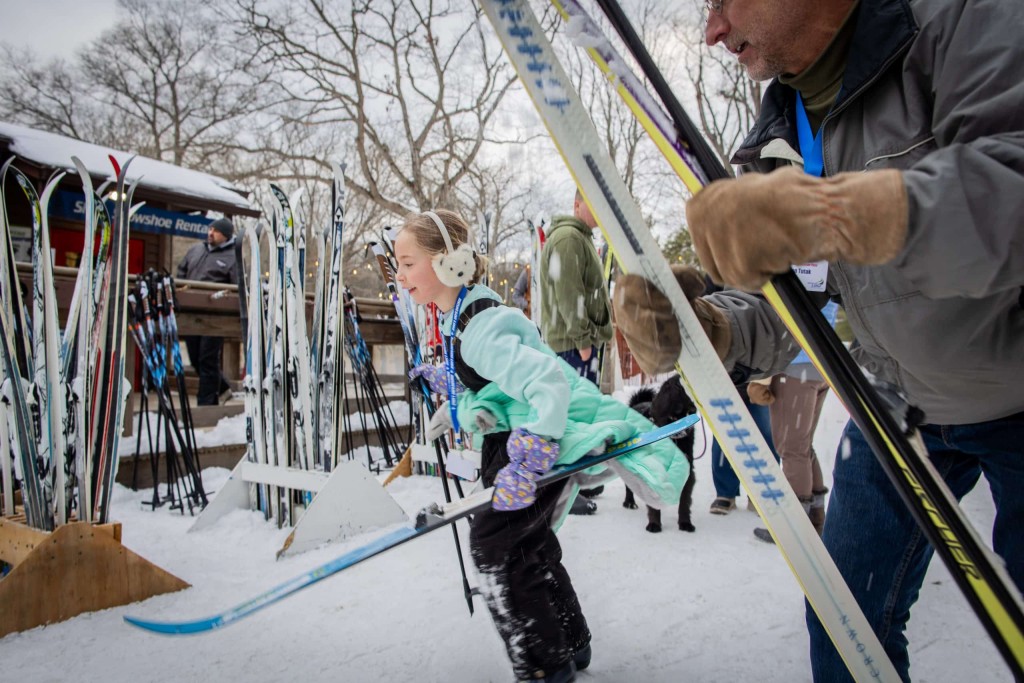
Each season, the park hosts a free accessibility open house where families can try activities using adaptive equipment and trained staff.
“They can see, ‘Oh, it is possible for me to come out here and ski or luge,’” Bailey says.
Spore first visited the park in 2017 and immediately noticed how staff approached accessibility.
“They have a lot of adaptive equipment that makes all of the activities accessible, no matter what your physical abilities are,” she says.
She recalls attempting the summer wheel luge before the sleds had special straps to stabilize riders who could not control their legs.
“At first, the staff member told me that I might not be able to do the luge. But I have a “where there’s a will, there’s a way” attitude. I was like, ‘No, we’ll figure this out. I just need something to hold my feet on the sled,’” she says.
At her request, one staff member took off the shoelaces from his own shoes to tie her feet together so she could ride.
“That’s what I love about Muskegon Luge,” she says. “They’re willing to try new things so that people of all abilities can do all of their activities. Some facilities won’t let you do certain things if you have certain disabilities or physical limitations.”
Such an attitude sets the park apart from other venues she has visited.
Thrills and challenges
Spore says winter luging was initially intimidating.
“You look down this long luge track, and it’s kind of scary at first,” she says.
Staff offered to let her start partway down the track, where speeds would be slower. After the first run, she wanted more.
“The second time, I was like, ‘No, no. I want to go from the top,’” she says. “It was such an exhilarating rush.”
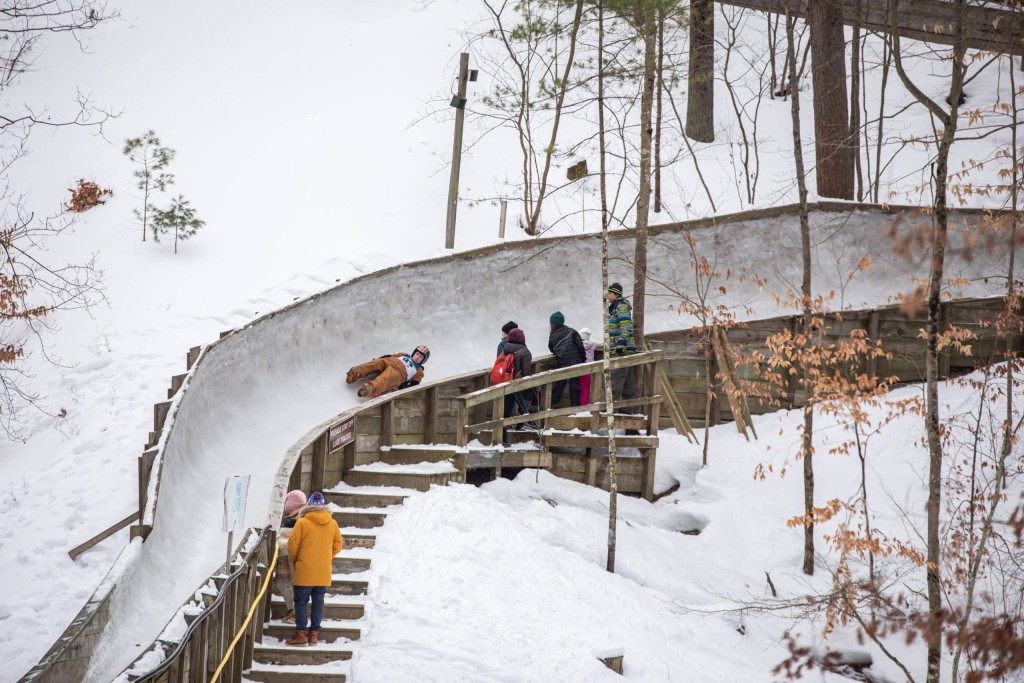
She calls the experience thrilling and empowering.
“I love to go to Muskegon Luge and just play,” she says. “I’m 44 years old, but I’m really just a big kid.”
The park’s climbing wall provided another milestone.
“The rock wall was one of those things where I thought, ‘That would be cool, but I’m never going to be able to do it,’” she says.
Daniel Bonner, adventure specialist at the park, explained to her the assisted pulley system designed to help participants climb safely. Encouraged by instructors, she decided to try.
“It was such a feeling of accomplishment to actually climb to the top,” she says. “I never thought I’d be able to do a rock wall.”
She climbed with her eyes closed, she says, because she feared seeing how far she still had to go and worried she wouldn’t have the arm strength to make it to the top.
“I just kept telling myself, ‘Don’t think about how far you have left to climb. Just keep going. ’” she says. “And then I made it to the top.”
Culture of inclusion
Community partners say the park’s approach goes beyond equipment.
Corinn Hower, an assistive technology consultant with the Muskegon Area Intermediate School District, says inclusion begins long before visitors arrive.
“It starts with design choices, staff culture, and partnerships,” Hower says.
She says she first reached out after discovering the park’s adaptive offerings online. She says staff requested feedback immediately.
Hower adds that the park plans accessibility into new projects from the start.
“They go so far beyond compliance,” she says. “It’s not an afterthought.”
Year-round activities
The park continues expanding its offerings beyond winter sports, adding attractions that include a dual zip line, a 38-foot climbing wall, summer luge, and archery.
“We’ve been working toward offering more year-round recreation opportunities,” Bailey says.
The property’s size helps prevent overcrowding.
“Even when we are busy, there’s so much space that it’s never really too bad,” he says.
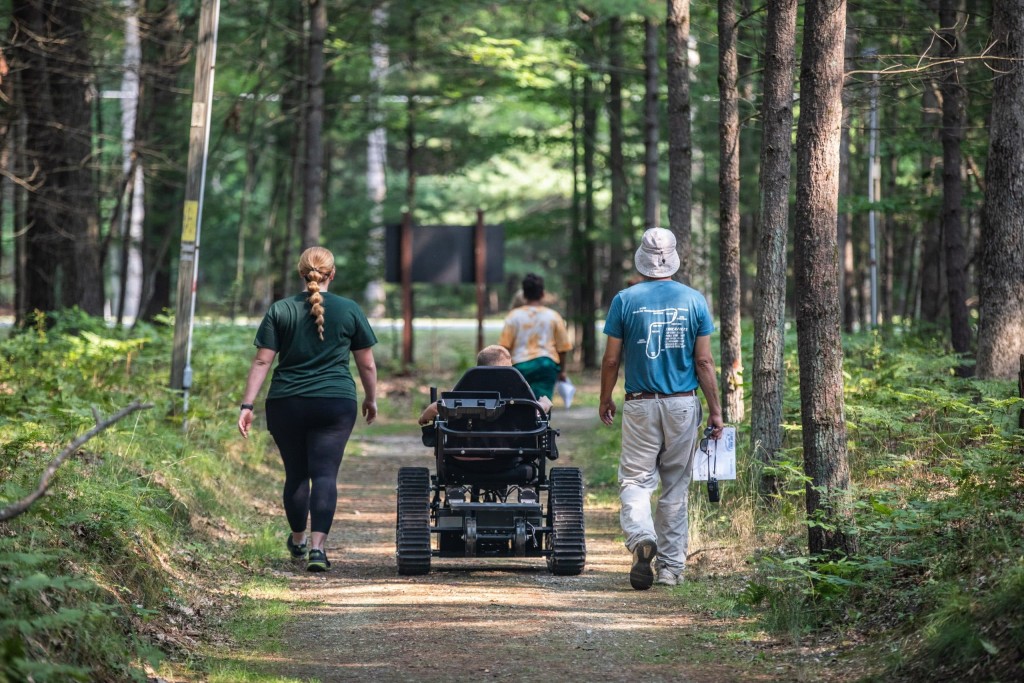
The site has been featured in a tourism campaign by Pure Michigan that included adaptive recreation.
“That representation is really important for people with disabilities who want to travel,” Bailey says.
Hower says that approach helps shift recreation away from separate experiences toward shared participation.
“It’s truly inclusive,” she says. “Everybody gets to do the activities together.”
Spore adds that the park’s willingness to consider adaptations can change how visitors think about their own abilities.
“Anyone with any ability level can do all of the activities at the park,” she says.
Bailey says that vision continues to guide development decisions.
“Everyone should have the opportunity to do these unique recreational things,” he says. “That’s really what we’re trying to build here.”
Spore says the outcome is simple: a place where her need for speed and her need for accessibility meet.
“They’re always willing to try new things,” she says. “That’s why I keep going back.”