Nearly $300K in Seed Awards bolster Michigan’s local food and farming
Nearly $300,000 in Seed Awards from the Michigan Good Food Fund will support 18 food and farm businesses across Michigan, helping small, locally rooted operations grow and improve food access.
The Michigan Good Food Fund has awarded almost $300,000 in its latest round of Seed Awards, recognizing 18 food and farm businesses across the state and expanding its investment footprint in Metro Detroit. The awards mark the second funding round of 2025 and the fourth since the program launched in 2023.
“Michigan’s food entrepreneurs continue to demonstrate resilience, innovation, and a deep commitment to their communities,” says Shakir Bralock, director of the Michigan Good Food Fund at Fair Food Network. “The 2025 Seed Awards not only strengthen our statewide food system but also expand economic mobility and opportunity for locally rooted businesses.”
Michigan Good Food Fund, launched in 2015, is a statewide lending network administered by Fair Food Network that provides financing and tailored business assistance to food and farm entrepreneurs in the state. To date, the collaborative has supported more than 300 businesses with financing, supporting promising entrepreneurs to start or scale their businesses.
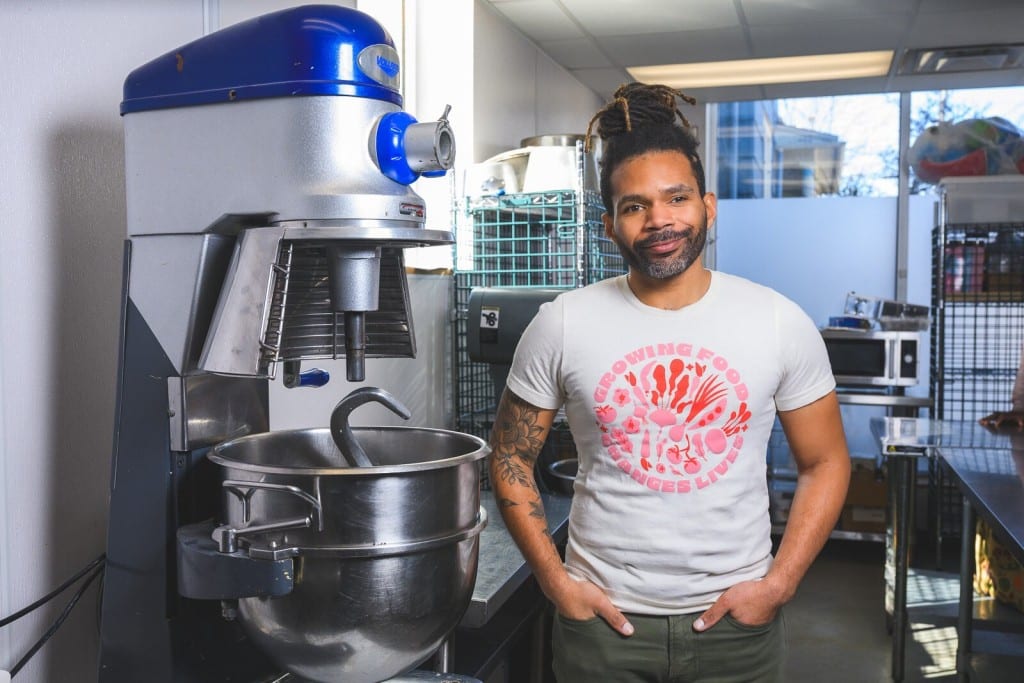
Seed Awardee Growing Hope supports kitchens, markets, and jobs
Among this year’s recipients is Growing Hope, a Ypsilanti-based food systems nonprofit expanding its shared-use kitchen and entrepreneurial support programs. Executive Director Julius Buzzard says the Seed Award came at a pivotal moment.
“We were founded in 2003, and everything we do is about investing in and building food sovereignty in Ypsilanti and Southeast Michigan,” Buzzard says. “At a basic level, that means inviting people into more intimate, enjoyable relationships with food and the food system—whether they’re eating it, growing it, cooking it, buying it or producing it.”
Growing Hope operates an urban farm and the Ypsilanti Farmers Marketplace, which hosts workshops, field trips, seed libraries, tool-sharing programs, and a year-round community farmers market. A major part of its work, Buzzard says, is helping food entrepreneurs launch and grow small businesses.
“We believe change happens at the kitchen table,” Buzzard says. “Community is built when people come together around food.”
That philosophy is front and center in Growing Hope’s approach to community empowerment and entrepreneurship.
Funding will help expand shared-use kitchen program
Growing Hope currently operates an incubator kitchen alongside many other programs that help the community.
“We have about 25 to 27 businesses using our shared-use kitchen right now,” Buzzard says. “People go online, schedule hours, enter with their code, and use the space to make whatever it is they’re creating. We’ve been running some version of this kitchen since 2019, and it’s grown continuously.”
The Seed Award will help Growing Hope renovate a second building on its campus—a former 1970s bank—into an accelerator kitchen for businesses preparing to transition into their own brick-and-mortar locations.
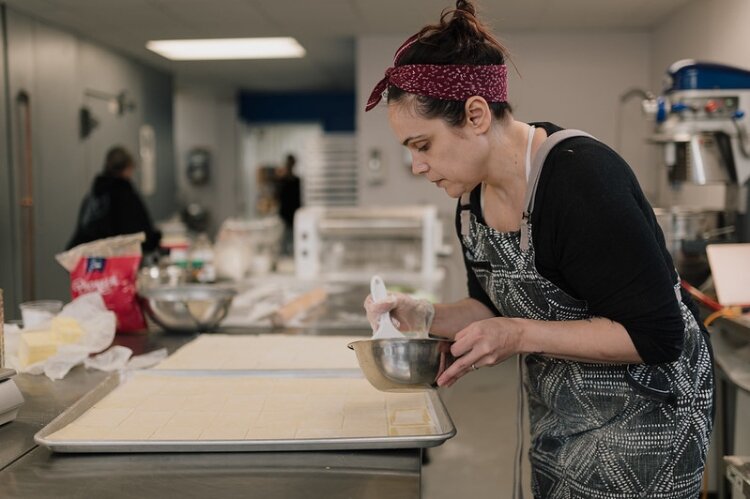
“This will be that in-between space for businesses that have outgrown hourly kitchen rentals,” Buzzard says. “They’ll have keys, consistent access, and a place where customers can stop in. It gives people the chance to build the skills you don’t think about when you start a business—like handling snow removal or dealing with plumbing issues—before they take on their own storefront.”
The accelerator kitchen is expected to open within the next year.
Since 2019, more than 70 businesses have gone through Growing Hope’s incubator program, with about 15 moving on to physical locations—several within walking distance of the marketplace.
“Running a business is always hard, especially at the beginning,” Buzzard says. “We’re giving people the opportunity to lean into the values that made them start their business in the first place. And people show up for them. The community really wants to support these entrepreneurs.”
Growing Hope estimates that businesses emerging from its programs have created 60 to 70 local jobs, not including the owners’ self-employment.
He encourages others to apply in future rounds.
“It’s worth the time, even if you don’t get it,” he says. “And the relationships you build with Fair Food Network matter. They have other programs, low-interest loans, and supports that can make a big difference.”
Addressing food access in the Upper Peninsula
In Michigan’s Upper Peninsula, Seed Award recipient Whispering Wild Market Farm is using its funding to address food access challenges tied to geography and isolation.
“Our community is known as the Copper Country, on the Keweenaw Peninsula,” says Gina Kerr of Whispering Wild Market Farm. “We’re a small but tight-knit community that highly values local farming and local businesses. Being surrounded by water and hours from the nearest interstate brings unique opportunities, but also unique challenges.”
Kerr says food deserts are widespread across the Upper Peninsula, where residents can live 25 miles or more from the nearest grocery store.
“It isn’t uncommon, like us near Misery Bay, to live that far from a store,” she says. “Our farm has become a satellite for fresh produce, meat, and eggs, not just for our nearest neighbors but for folks as far as Twin Lakes, who will often seek us out for their fresh grocery haul.”
Whispering Wild Market Farm is one of the few functional farms in the area, producing vegetables while also stocking meat and eggs. Kerr says the Seed Award will support construction of a farm store designed to better serve the community while improving day-to-day farm operations.
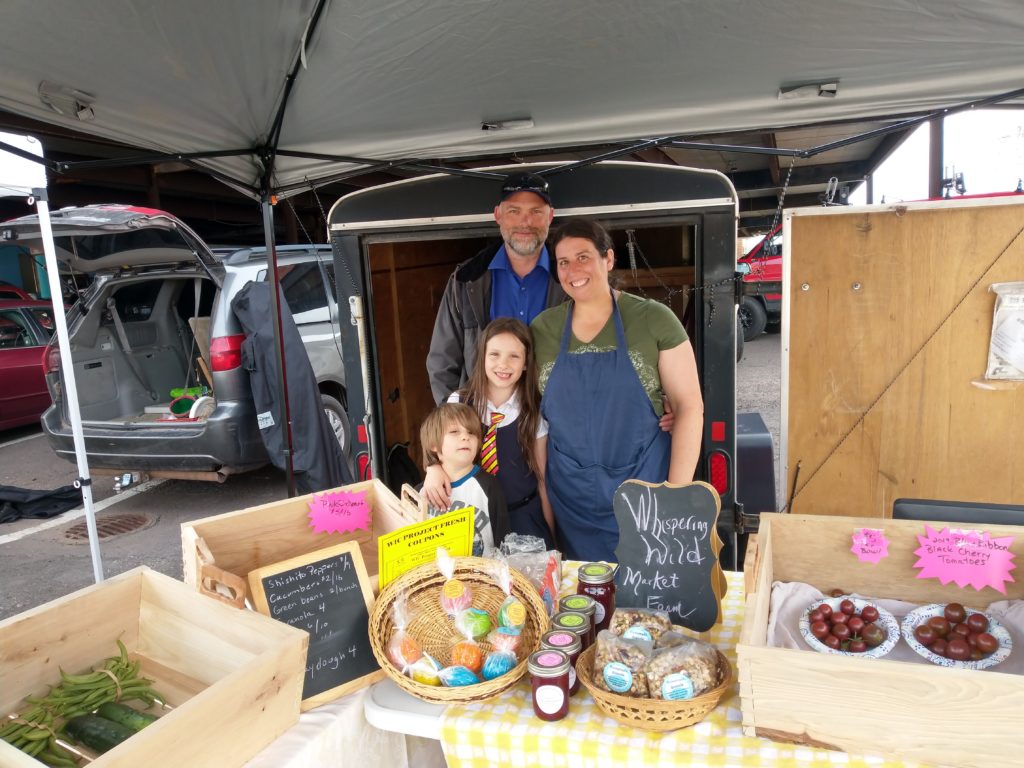
“Right now, when folks come to buy, they have to seek us out in the field, and we have to stop what we’re doing to help them,” Kerr says. “We love being there for our customers, but it’s become such a regular occurrence that it’s impeding productivity.”
The planned farm store will allow customers to shop without disrupting farm work, while also creating part-time, entry-level jobs for local young people who would otherwise face long commutes for employment. The building will also provide much-needed storage space for crops such as tomatoes, potatoes, winter squash, and onions.
“This building will help us continue to expand our production and increase our profitability, which is critical for small farms,” Kerr says.
Kerr says the support from the Michigan Good Food Fund will allow the project to move forward this year.
“We’re very appreciative of the folks at the Michigan Good Food Funds for this generous grant,” she says. “We can’t wait to break ground on the Whispering Wild Market Farm Store in the spring.”
Awardees named across the state
Nearly half of this round of Seed Award funding was directed to Metro Detroit, with additional awards in Southeast Michigan, the Upper Peninsula, and Northwest Michigan. The funding supports entrepreneurs who improve food access, strengthen supply chains, and create jobs in communities where resources are limited.
The 18 businesses receiving funding include farms, co-ops, shared-use kitchens, markets, and food manufacturers:
Bear Creek Organic Farm; Brightmoor Artisans Collective; Dancing Crane Farm, Broke Labor LLC; Grow Moore Produce Coop; Growing Hope; Green Tree Co-op Market; In The Business of Food; Kornr Store LLC; Lakeview Hills Organic Farm LLC; Neighborhood Grocery; Peaches & Greens; PH Country Style Market; Pronko Enterprises LLC; Radical Plants LLC; Stage One Incubator Kitchen; The Culinary Studio LLC; Whispering Wild Market Farm; and Ypsilanti Food Co-op.
Awards totaled $142,862 in Metro Detroit, $36,850 in Southeast Michigan, $40,000 in the Upper Peninsula, and $25,000 in Northwest Michigan.
This latest round reflects the Michigan Good Food Fund’s ongoing work to invest in community-rooted businesses and build a more resilient, equitable food system across Michigan.
“Each of these businesses represents the strength and creativity of Michigan’s local food movement,” says Shakir Bralock. “When we invest in people who are growing and feeding their communities, we’re investing in a healthier, more equitable future for all Michiganders.”
Author

Related Articles
Little Ortonville goes big for small business
Home to 1,351 residents, village measuring one square mile has a thriving downtown.
Partner Partner Content Apprenticeships growing Michigan’s health care workforce
Traditionally used in manufacturing and skilled trades, health care apprenticeships benefit students, employees seeking advancement, and employers.
Michigan Good Food Fund sets 2026 agenda on community engagement, outreach
The Michigan Good Food Fund, is setting its sights on ambitious goals for 2026.