Major city’s growth adds urgency to streetcar expansion discussion
Tampa leaders mull options for TECO Line streetcar extension that could shape future growth.
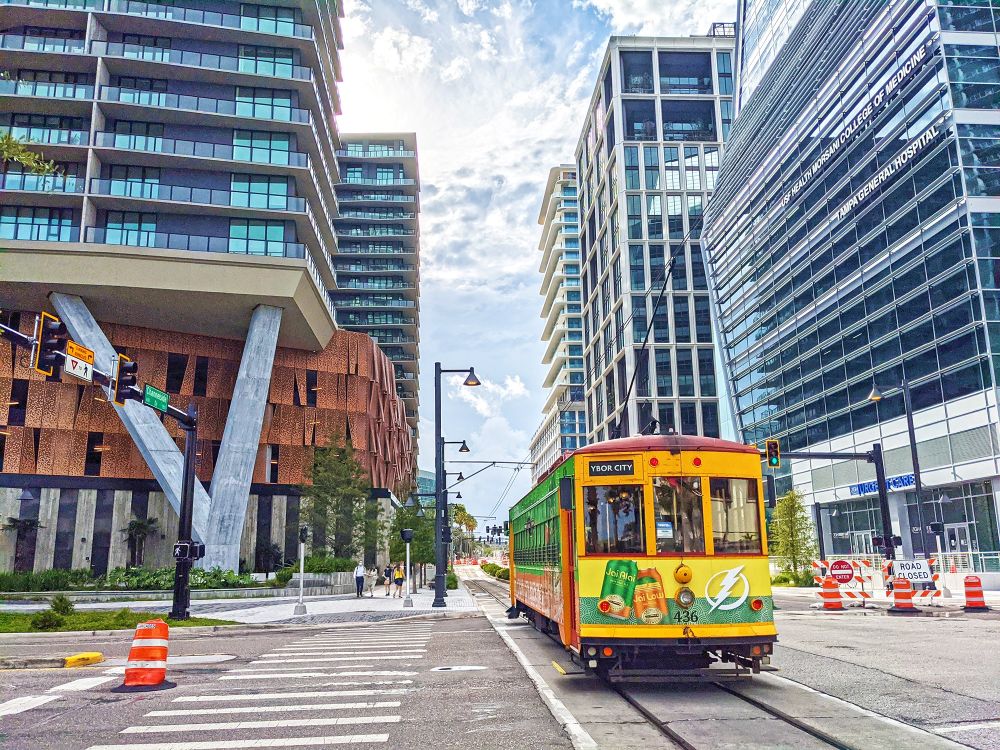
On a recent Friday morning, a westbound TECO Line Streetcar rolled through Ybor City, passing the occasional wandering rooster.
At the front, Connie Cosme, who’s worked with the streetcar system since it launched in 2002, monitors a conductor-in-training.
“It’s a totally different experience from driving a bus,” Cosme says. “You see the city change right outside your window.”
She’s seen just about everything over the last 24 years.

“Late-night weekends can still get very lively,” Cosme says.
When the streetcar started running, it felt like a novelty, a nostalgic trolley linking Ybor City and downtown Tampa. At the time, the Channel District looked very different. Surface parking lots stretched between warehouses and the Port of Tampa. The Florida Aquarium sat on the edge of downtown, surrounded largely by vacant land that felt removed from the city’s center.
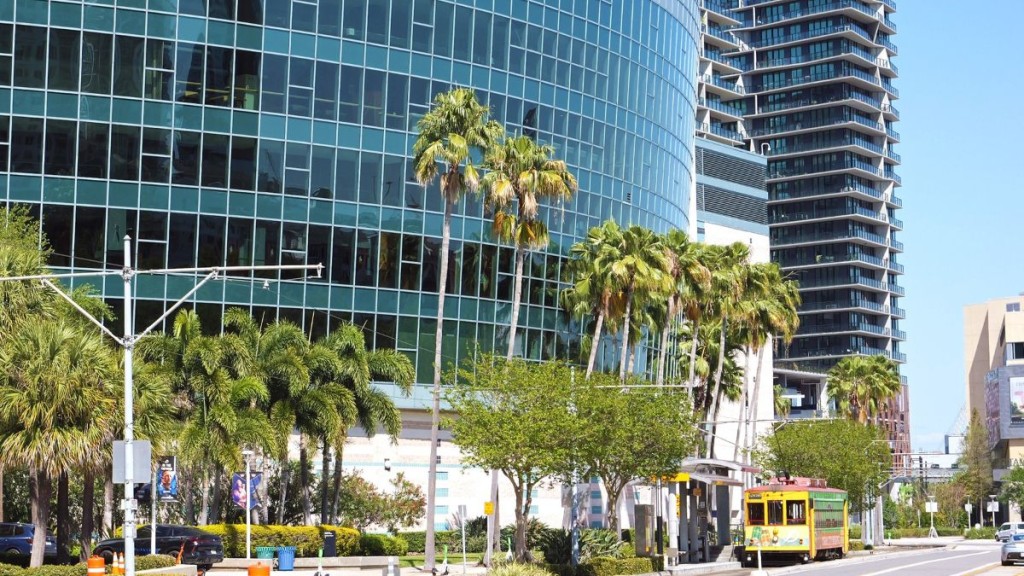
But cities have a way of growing into their infrastructure. Today, the streetcar still follows the same tracks, but the city around it has transformed. The same route passes apartment towers, restaurant patios, and the glass skyline of Water Street. And after years of false starts around transit funding, Tampa may finally be closer to expanding the streetcar system.
Connecting growing neighborhoods
Tampa City Council member Alan Clendenin says the development along the existing streetcar line is proof that “transit-oriented development works.”
“We’ve seen it,” he says.
City leaders are studying potential extensions to enhance the streetcar system as a transportation option in the urban core. It’s background work that could eventually lead to a proposal for city, state, and federal funding. The funding structure under discussion follows a common formula for transit projects: about one-quarter city funding, one-quarter state, and roughly half from the federal government.
One option the city is studying would extend the line north into Tampa Heights. Under that concept, the streetcar would turn west on Whiting Street from the Fort Brooke garage, head north along Florida Avenue, turn west on Amelia Avenue, then loop back south along Tampa Street toward the downtown.
The goal is to strengthen the connection between the districts in Tampa’s urban core: East Ybor, Gasworx, the Channel District, Water Street, Downtown, and Tampa Heights.
More pieces of the puzzle
The northern loop is one piece of a broader transit conversation.
There are also discussions about extending the line deeper into Ybor City to reach the planned TGH Medical Arts District. Another concept would connect the east and west ends of the streetcar system with a rubber-wheel transit link along Palm Avenue.
Looking more long-term, civic and local government leaders increasingly discuss a connection between Downtown, Tampa International Airport (TPA), and the Drew Park area. That conversation is gaining urgency.
The proposed Tampa Bay Rays stadium and mixed-use development on the Hillsborough College Dale Mabry campus in Drew Park could represent a roughly $8 billion investment in the corridor. Meanwhile, reinvestment in the area around HC’s Dale Mabry campus and TPA leadership’s interest in a better connection for traveling back-and-forth between the airport and downtown have put renewed attention on the need to develop a transit spine.
Growth is happening either way. The question is whether infrastructure will keep pace.
Staying fare-free
Thanks first to Florida Department of Transportation grants and then funding from the City of Tampa Community Redevelopment Agency, the TECO Line Streetcar has been fare-free since 2018. It’s driven annual ridership numbers to the range of 1.4 million. City leaders say they want to keep the system fare-free. To help support long-term operations, the city is exploring the creation of a special tax district. Details are still being developed.
“It is the intent of the City Council and the administration to keep the streetcar free,” a legislative aide to Clendenin says. “But we’re unable to provide additional information about the special tax district at the moment.”
Transit and Tallahassee
Transit has long been one of Tampa’s most complicated civic debates.
Voters approved the All for Transportation sales tax in 2018, only to see it struck down in court after years of legal challenges. And under Florida law, the city itself cannot levy a sales tax without state authorization.
At the same time, discussions occasionally surface about restructuring regional transit governance, including proposals involving Hillsborough Area Regional Transit, which operates the TECO Streetcar. Some policymakers have floated the idea of consolidating or reshaping HART into a more Tampa-focused system.
Tampa City Council member Luis Viera, who chairs the HART board and is currently running for the Florida House, says those conversations remain vague.
At the moment, he describes the proposal as “a solution in search of a problem.”
There are areas of unincorporated Hillsborough County, like Town ’n’ Country, Brandon, and around USF, that rely heavily on bus and paratransit service. Any restructuring, Viera argues, would need to address how transit works across the entire county.
“There’s political will to come together on better transit and better roads,” he says. “But we need specifics.”
Infrastructure as a signal
Clendenin often frames the streetcar not just as transportation, but as economic development. He points to decisions made decades ago that helped reshape Tampa’s waterfront and downtown district.
Former Mayor Sandy Freedman championed the Florida Aquarium. Former Mayor Dick Greco pushed for the streetcar system. Former Mayor Pam Iorio completed Curtis Hixon Waterfront Park. And while planning for the Tampa Riverwalk stretched four decades and six mayoral terms, former Mayor Bob Buckhorn is widely credited with making the final push for its completion.
At the time, those investments were controversial. Today, they feel almost inevitable.
But that inevitability came later, after the infrastructure was built. Buses offer flexibility. Routes can change easily. But fixed rail sends a signal of permanence that resonates with developers, investors, and neighborhoods.
“You put tracks in the ground,” Clendenin says, “and development follows.”
For people like Cosme, the changes have unfolded one trip at a time. The tracks haven’t moved in 24 years. But the city around them keeps changing.
Looking ahead
Behind the scenes, city leaders, developers, and neighborhood advocates have been discussing streetcar expansion for years. Clendenin believes the city may be closer than it realizes. As Tampa prepares to elect a new mayor in early 2027, a potential streetcar extension could move from a concept under design to a concrete proposal in the next year. The challenge, as always, will be funding.
Transit projects are expensive and require layers of cooperation between local, state, and federal governments. And the political climate around public investment rarely stays stable for long. Those obstacles are real. But they’re also constant. Cities that wait for perfect political conditions rarely build anything lasting.
For more information, go to InVision Streetcar
Author

Related Articles
From Forest to Pharmacy: Researchers explore maple sap as a lifeline for cancer survivors
Researchers in the U.P., Michigan and beyond are looking into potential health applications for maple sap.
Partner Partner Content How employee retention grows Michigan’s health care workforce
Retaining folks working within the health care sector is a vital strategy in turning around current and projected workforce shortages.
Fresh transit tactics increase ridership
Tampa City Council’s pragmatic approach for improving service and growing ridership on HART Route 1 is producing results.