When everyone is welcome: How Michigan’s CCBHCs are changing care
CCBHCs have been improving access to quality mental health care for Michigan residents since 2021.
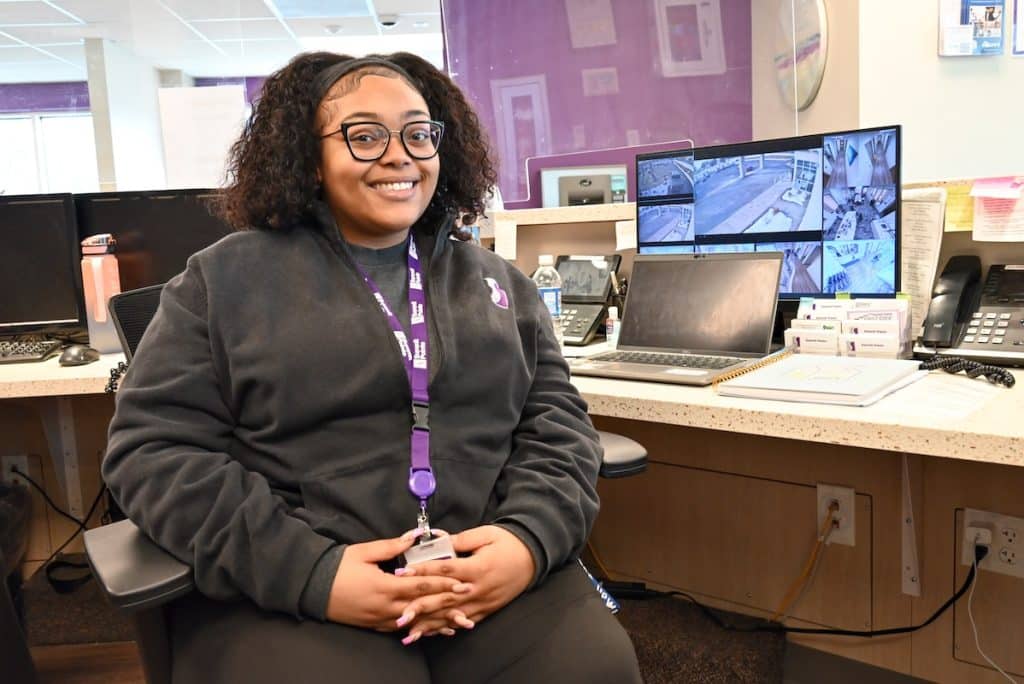
Since 2021, Certified Community Behavioral Health Clinics (CCBHCs) have been improving access to quality mental health care for Michigan residents so much, it’s now “serving all comers,” says Robert Sheehan, chief executive director of the Community Mental Health Association of MI (CMHA).
Many community mental health agencies (CMHs) across the state applied for federal government grant funds to transition into CCBHCs. Prior to CCBHCs, CMHs only treated people with severe mental illness. In contrast, CCBHCs are mandated to serve everyone of any age who shows up at their doors. Consequently, Sheehan says the number of people receiving critical psychiatric care is surging — up 17% from 2023 to 2024. That’s about 20,000 more Michiganders, mostly with mild-to-moderate mental health issues.
“What it means to be a CCBHC is that we are now tasked with serving individuals who not only are severely mentally ill but also people who are mild-to-moderately mentally ill,” says Cassandra Watson, CEO of LifeWays, a CCBHC serving Jackson and Hillsdale counties. “Folks that walk through our door might be having their first anxiety attack, having their first experience of depression. Being a CCBHC has really allowed us to look at people from a continuum.”
Lakeyta Patterson, director of clinical quality at Summit Pointe, a CCBHC serving Calhoun County, reports that the center has been treating a surge of clients since Covid. The center used to treat nine to 15 people per day but now treats 15 to 30. Overall, Summit Pointe now serves about 1,000 more individuals per year since it became a CCBHC in 2022. Many of these people have mild-to-moderate mental health issues.
“We [received] the CCBHC grant, which opened the doors for everyone to the tremendous need after Covid,” says Patterson. “Just like every other mental health provider, probably across the country, we’re seeing an increased need. We see a lot of mild-to-moderate [mental illness], but those mild-to-moderate [clients] may have a more complex presentation.”
Expanded care through more modalities
CCBHCs provide care unavailable in the private sector, offering everything from psychotherapy and home-based respite to crisis and peer services. Care is also more integrated because providers at CCBHCs coordinate with primary care doctors. LifeWays, since it transitioned to the CCBHC model through a SAMHSA grant in February 2021, has been referring more people to primary care, particularly for annual checkups they never received before.
Administrators at LifeWays and Summit Pointe say their clients also are being referred more quickly and efficiently. A medical clinic, Center for Family Health, is located next door to LifeWays. A health center, Grace Health, operates on the same site as Summit Pointe.
“We have this really robust partnership [with Center for Family Health] that allows us to say, ‘This individual hasn’t seen their primary care provider in years, but we have someone on site. Would you be willing to go see them?’ We’ve seen people really embrace that model because they don’t have to get [additional] transportation,” says Watson.
The result of integrated behavioral and physical health care is that CCBHC clients are healthier, and the physical symptoms of their mental health conditions are reduced. According to the Michigan Department of Health & Human Services (MDHHS), outcome data measuring the impacts of the CCBHC model demonstrate significant improvements in rates of diabetes screenings administered to people under treatment with antipsychotics, delivery of tobacco cessation interventions, and screenings and counseling for unhealthy alcohol use, among several indicators.
At Summit Pointe, Nicole DuPont, director of strategic development, says administrators are seeing screening and intervention rates improve, with alcohol screenings increasing by 18% and tobacco interventions by 5% from grant year two to three.
LifeWays and Summit Pointe provide more extensive services as CCBHCs. Summit Pointe opened its First Step Psychiatric Urgent Care Center in September 2020. LifeWays now offers wellness and prevention services like coaching and classes on budgeting, cooking, and healthy shopping. Watson says that services like these help keep people with mild-to-moderate mental illness from developing more severe symptoms.
“Federal grants and state funding have allowed us this opportunity to really look at our communities and increase access to behavioral health services because we’re not constrained to one set of individuals,” says Watson. “It allows to look at things more from a prevention focus of ‘how do I get someone back out the door before they become seriously mentally ill?’”
Proven model has an uncertain future
Future funding for the CCBHC model is uncertain. The SAMHSA grant that funded the establishment of LifeWays as a CCBHC expired in 2023. Administrators received additional funding through the State of Michigan that will continue through 2027. But after that, Watson’s not sure where the funding will come from. CCBHCs across the state face federal cuts to Medicaid funding thanks to HR 1, the “One Big Beautiful Bill,” that will impact their ability to provide critical services.
“HR 1 reduced some of the ways that we currently finance Medicaid across the country and is [putting in place] a work requirement,” Sheehan explains. “A lot of folks are going to drop off.”
Pointing to the critical care CCBHCs provide, Sheehan calls for the Michigan Legislature to codify the model into law. Watson says the state could make up for the cuts with its own funding, but the split between Republicans and Democrats in the State House and Senate creates complexity in negotiations.
Sheehan hopes that the MDHHS will take other action to help people with mild-to-moderate mental illnesses get psychiatric care. One way is by quashing Michigan health plans operating illegal “ghost networks” where practitioners advertise as accepting Medicaid, but then turn away clients on Medicaid when they call.
“Frankly, the department, it seems to us, has not enforced the access to mild-to-moderate care through the health plan’s benefit,” Sheehan says. “We advocate for the department to take action on health plans who run ghost networks.”

Summit Pointe is in the last year of its SAMHSA grant. Administrators there are looking at their ability to bill Medicaid.
“We’ve been trying really hard in the last year, especially when we received the state demonstration grant, to move people over from the staffing grant to a place where we could be Medicaid billable,” says Jeannie Goodrich, CEO of Summit Pointe. “I feel very confident that as the CCBHC staffing grant goes away, there [won’t be] a staffing impact, and we’ll be able to sustain that work.”
Photos by John Grap.
The MI Mental Health series highlights the opportunities that Michigan’s children, teens and adults of all ages have to find the mental health help they need, when and where they need it. It is made possible with funding from the Community Mental Health Association of Michigan, Center for Health and Research Transformation, OnPoint, Sanilac County CMH, St. Clair County CMH, Summit Pointe, and Washtenaw County CMH and Public Safety Preservation Millage.
Related Articles
Indiana health center trains local residents as dental assistants to fill workforce gaps
HealthLinc, a federally qualified health center in Valparaiso, covers training costs while preparing local residents for dental assistant jobs, strengthening workforce pipelines and expanding access to care.
How volunteers are maintaining 160 miles of trails
Fort Wayne Trails counters thin budgets by launching volunteer “soft maintenance” and partnering with local businesses for trail amenities.
Partner Partner Content How employee retention grows Michigan’s health care workforce
Retaining folks working within the health care sector is a vital strategy in turning around current and projected workforce shortages.