Will new MiLEAP policies better support small and home-based child care spaces?
Licensing updates and funding strategies aim to strengthen quality, stabilize providers, and expand access to child care.

Michigan’s early childhood system is undergoing a quiet but consequential transformation. Through the Michigan Department of Lifelong Education, Advancement, and Potential (MiLEAP), the state is advancing a series of licensing updates, funding strategies, and system-building efforts that aim to strengthen quality, stabilize providers, and expand access to care in family and group child care homes.
For policymakers, the changes are about modernization and alignment. For home-based providers — many of whom operate as small businesses out of their own homes — the shifts bring both opportunity and new pressure points.
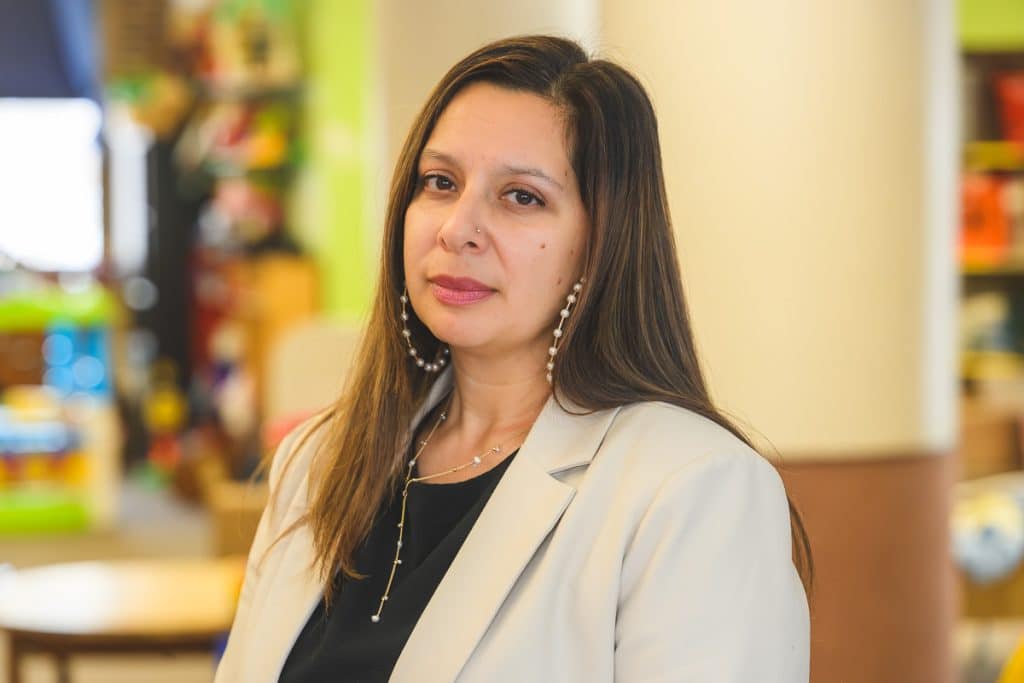
“There’s a lot happening in the child care space right now,” says Alicia Guevara, CEO of The Executive Committee of the Early Childhood Investment Corporation (ECIC). “Some of it is happening at the state level through proposed licensing changes and pilots, and some of it is tied to federal child care funding rules. All of it has a direct impact on family and group child care homes.”

What’s changing in Michigan child care
One of the most visible policy shifts underway involves proposed revisions to Michigan’s child care licensing rules. The changes are intended to clarify expectations around safety, training, and professional practice particularly for home-based providers.
In May 2025, MiLEAP finalized revisions to Michigan’s child care licensing rules, introducing a change officials say will simplify requirements and reduce barriers so early educators can focus on care and education. The changes stemmed from extensive feedback gathered through 63 listening sessions with nearly 600 educators, families, and community partners.
Those changes are backed by new state dollars. In Michigan’s enacted FY 2025–26 budget, lawmakers increased funding for MiLEAP, reinforcing the state’s commitment to early learning and child care as part of its broader education and workforce strategy. The enacted budget includes additional investments to support child care systems, providers, and early learning initiatives statewide.

Jennifer Headley-Nordman, president of First Steps Kent, says the revisions reflect a broader recognition of early childhood education as a profession, not just a service.
“What stands out to me is the intentionality behind elevating the profession,” she says. “Even something as simple as changing the language from ‘child care member’ to ‘teacher’ matters. It acknowledges the training, planning, and instructional work that’s happening in these spaces every day.”
The updated language also provides greater clarity around classroom management and discipline expectations, something Headley-Nordman says many home-based providers are already doing, but that reassures families and providers alike.
“These providers are already incorporating best practices,” she says. “The policy changes help make that work more transparent and consistent.”
Still, even well-intentioned policy updates can feel heavy for small operators.
“Home-based providers are small businesses,” Guevara says. “When we adjust licensing regulations, they have to adapt to new systems and requirements, often without administrative staff or back-office support.”

Why home-based providers feel the impact first
According to Headley-Nordman, while larger child care centers may have dedicated staff handling compliance, payroll, and reporting, many family and group homes are run by one person, sometimes with a single assistant.
“They’re managing licensing requirements, scholarship program participation, taxes, payroll, and daily care all at once,” Guevara says. “Any additional requirement has a much larger impact simply because of their size.”
Financial pressure remains one of the biggest challenges. According to Guevara, many providers operate on profit margins of less than one percent, with some paying themselves last, or not at all. That pressure is mirrored in the broader early childhood workforce: annual earnings for child care providers in Michigan average around $28,860, far below state averages for comparable jobs. This contributes to supply shortages and turnover.
“We have not invested nearly enough in the child care sector,” she says. “Subsidy reimbursement rates are still too low to cover the true cost of providing high-quality care, and payment delays can be devastating for small providers trying to meet payroll.”
Recent federal actions that temporarily slowed child care payments only heightened anxiety across the sector, Guevara adds, emphasizing how fragile the system remains.

How Michigan is trying to support providers
To help offset those pressures, Michigan has invested in new support structures — most notably family child care networks, which connect home-based providers to technical assistance, peer support, and business resources.
“Many home-based providers feel isolated,” Guevara says. “These networks help connect them to each other and to the support they need, whether that’s improving quality or strengthening their small business operations.”
The state has also piloted wage supplements, infant-toddler contracts, and regional child care coalitions aimed at increasing supply and stabilizing the workforce.
A 2021 $1.4 billion investment in child care allowed Michigan to test many of these approaches. Guevara says the data from those pilots showed increased access for families, higher wages for educators, and improved retention, especially in infant and toddler care, where shortages are most severe.
“These systems are interconnected,” she says. “You can’t expand pre-K without protecting infant and toddler care. If you don’t invest across the full birth-to-five continuum, you risk destabilizing the entire system.”

What families and policymakers should know
For families seeking care, Headley-Nordman says the proposed policy changes are unlikely to reduce access. On the contrary, she believes the changes may even improve care stability over time.
In December 2025, MiLEAP announced it would hold a public hearing on proposed updates to the Licensing Rules for Family and Group Child Care Homes. Officials said the changes aim to clarify requirements, improve consistency, and strengthen health and safety protections for home-based care environments.
“I don’t see these changes creating significant barriers for existing providers,” Headley-Nordman says. “Most are already striving toward best practice.”
Instead, she sees opportunity in making policies clearer and more accessible for people considering entering the profession — a critical need as many current home-based providers approach retirement age.
“We need policies that excite people about opening home-based child care businesses,” she says. “That’s how we maintain supply, especially in communities where options are already limited.”
Families often choose home-based care for its proximity, cultural familiarity, and smaller, more personal environments offering incredible benefits that Headley-Nordman says are sometimes overlooked in policy conversations.
Both leaders urge the importance of keeping provider voices at the center as reforms roll out.
“Policies look one way on paper and another in practice,” Headley-Nordman says. “The feedback loop from providers is essential if we want these changes to work as intended.”
Guevara echoes this sentiment, urging policymakers to spend time in child care settings.
“Visit a home-based program. See the day-to-day reality,” she says. “We’re asking providers to do an extraordinary amount of work while being undercompensated. If we value early learning, we have to value the people doing that work.”
Photos by Tommy Allen
Alicia Guevara photo by Doug Coombe
This article is part of Early Education Matters, a series about how Michigan parents, childcare providers, and early childhood educators are working together to create more early education opportunities for all little Michiganders. It is made possible with funding from the W.K. Kellogg Foundation.
Author

Related Articles

Major city’s growth adds urgency to streetcar expansion discussion
Tampa leaders mull options for TECO Line streetcar extension that could shape future growth.

Parent feedback shaping literacy pilot for littles with special needs
How a Kent County alliance centers parents in developing literacy strategies for their kids.

In neighborhoods across Greater Cincinnati, a nonviolent resistance begins to organize
Concerned citizens are taking action — making whistle kits, getting a refresher in the U.S. Constitution, and reaching out to immigrant-owned small businesses.