Hope Starts Here stabilizing early childhood services in wake of policy changes
Long-term perspective keeps Hope Starts Here imperatives relevant despite policy changes.
Recent federal and state policy changes tied to the One, Big, Beautiful Bill Act have created uncertainty for early childhood systems across the country. In Detroit, where many families already face high child care costs and economic strain, adjustments to programs such as SNAP and Medicaid are raising concerns among providers, advocates, and families about access, affordability, and continuity of care.
Leaders involved in Hope Starts Here, Detroit’s citywide early childhood framework, say the city’s response is being shaped by work that began years before the current policy. The initiative is organized around six interrelated imperatives, each championed by a set of lead organizations responsible for advancing progress in specific areas of the early childhood system.
Together, the imperatives function as a coordinated framework rather than a series of standalone efforts. In this moment, Imperative 2, which focuses on expanding access to high-quality early childhood education, and Imperative 4, which emphasizes coordinated and supportive systems for families, are helping stabilize services and guide how organizations respond to shifting conditions.
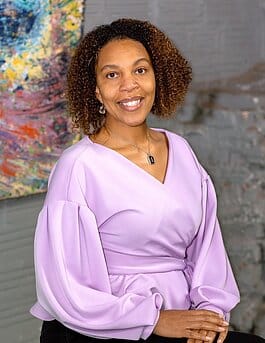
“Policy can change quickly but families’ needs do not,” says Camarrah Morgan, board treasurer for Detroit Champions for HOPE and program partner with the Max M. & Marjorie S. Fisher Foundation.
“Hope Starts Here was created to address long-standing gaps in systems and coordination. Those gaps become more visible during moments like this, and they also clarify why this work is necessary,” says Morgan.
Pressure on household stability
The One Big Beautiful Bill Act includes changes to safety-net programs that affect families with young children. Among these are reductions to SNAP benefits and ongoing uncertainty around Medicaid eligibility and coverage, programs that many Detroit families rely on to meet basic needs.
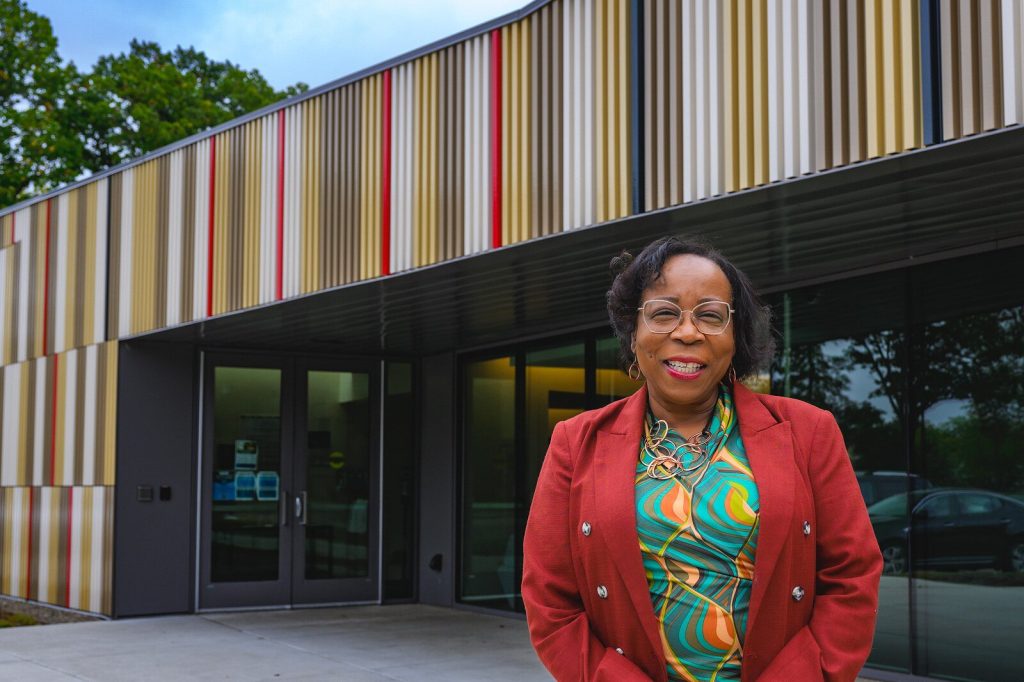
According to Celina Byrd, IFF director of early childhood strategy and former principal of the Marygrove Early Education Center, the timing of these changes is especially concerning given the cost of child care.
“In Detroit, a significant number of families are paying roughly 40% of their annual income on child care,” Byrd says. “Combined with inflation and rising living costs, families have very little room to absorb additional expenses. Programs like SNAP and Medicaid play a critical role in helping parents care for their children and remain in the workforce.”
Community organizations have reported immediate increases in demand for food assistance following changes to SNAP requirements. In some Detroit neighborhoods, food distribution lines expanded by more than 70%, according to data shared by Hope Starts Here partners.
Families with young children who have disabilities are particularly affected. Medicaid access is often a prerequisite for evaluations and early interventions. Disruptions in coverage can delay services during critical developmental windows.
“The system for helping children access developmental support is already slow, especially for children ages three and four who are no longer eligible for Early On,” Morgan says. “Changes to Medicaid eligibility or funding reductions for programs that support children with disabilities increase that risk.”
Coordination as a stabilizing strategy
Rather than responding to policy changes independently, Hope Starts Here partners have focused on strengthening coordination across organizations.
Under Imperative 2, family and parent engagement organizations — including Detroit Parent Network, Brilliant Detroit, Brightmoor Alliance, Congress of Communities, and others — are working with United Way for Southeastern Michigan to streamline referrals through the 211 system. The goal is to connect families more quickly to food assistance, health care, early learning resources, and basic needs supports.
Detroit Champions for HOPE staff are also expanding their capacity through training as community health workers in partnership with Imperative 1, which focuses on health. This cross-imperative collaboration allows frontline staff to support families more holistically while maintaining culturally responsive, community-based approaches.

“These imperatives function as trusted intermediaries,” says Yazeed Moore, director of Michigan programs at the W.K. Kellogg Foundation. “They share information, help families navigate systems, and support providers as federal and state requirements shift. That role becomes especially important during periods of policy uncertainty.”
Moore emphasized that philanthropy’s role during moments like this is to maintain continuity rather than shift direction.
“Our responsibility is to stay the course and continue supporting early childhood leaders who are doing systems-building work,” he says. “That work happens in collaboration with local, regional, and statewide partners, and it’s what allows services to remain accessible even as policies change.”
Infrastructure beyond programs
Hope Starts Here leaders point out that stability is not only about program funding but also about physical and financial infrastructure.
At IFF, investments in early childhood facilities are intended to reduce long-term operating costs for providers and improve sustainability. Byrd says these improvements can help providers manage uncertainty by freeing up resources that might otherwise be spent on emergency repairs or inefficient systems.
“A newer HVAC system, for example, is more energy-efficient, improves health outcomes, and reduces costs over time,” Byrd says. “Those savings matter when providers are navigating unexpected policy or funding challenges.”
IFF is also working with private employers through the Investing in America Child Care Partnership, an initiative designed to expand access to affordable, high-quality child care by engaging businesses as partners. The model helps employers understand the relationship between child care access, workforce stability, and employee retention while creating additional pathways for families to access care.
Marygrove Early Education Center, Byrd added, illustrates how integrated early childhood environments can operate within this broader framework.
“Marygrove brings education, health, wellness, and family support together in one place,” she says. “It demonstrates what child care can look like when facility design and programming are aligned with the needs of children and families.”
Community input shaping response
Another central component of Hope Starts Here’s approach is the role of parents and caregivers in shaping strategies.
Parents participate in monthly statewide communities of practice, serve on local and state task forces, and engage regularly with city agencies, including the mayor’s office and Detroit City Council. Their input helps determine how information is shared, what types of workshops are offered, and how organizations respond to policy changes.
“Community voice has always been part of this work,” Morgan says. “Parents and caregivers help identify what information is needed, how services should be delivered, and where gaps remain.”
That structure, leaders say, allows Hope Starts Here partners to adapt more quickly when policies change, while keeping families informed and connected to resources.

Long-term considerations
While the current policy environment presents challenges, Hope Starts Here leaders stress the importance of maintaining a long-term perspective.
Moore pointed to three priorities that remain central regardless of political shifts: increasing provider capacity, strengthening system coordination, and improving child and family well-being.
“When early childhood systems are coordinated and well-resourced, families are better positioned to navigate change,” Moore says. “That’s what allows communities to avoid losing ground.”
Morgan emphasizes the need for continuity across administrations and funding cycles, suggesting that Detroit’s early childhood system would benefit from clearer long-term alignment within city government.
“Early childhood requires sustained commitment,” she says. “The needs don’t change based on election cycles and neither should the systems designed to support families.”
Byrd framed the issue in broader economic terms, noting that early childhood infrastructure supports not only families but also employers and communities.
“Early childhood infrastructure is workforce and economic infrastructure,” she says. “When families don’t have reliable child care, parents can’t work consistently, businesses can’t grow, and communities are affected. Hope Starts Here’s imperatives exist to protect the system as a whole — access, quality, facilities, workforce, and sustainability.”
As Detroit continues to navigate the effects of federal and state policy changes, leaders involved in Hope Starts Here say the framework’s emphasis on coordination, infrastructure, and community engagement is helping the city respond in a measured and organized way, one that prioritizes continuity for children and families while adapting to an evolving policy landscape.
Photos by Nick Hagen.
Celina Byrd photo by Doug Coombe.
Yazeed Moore and Cammarah Morgon Photos courtesy subjects.
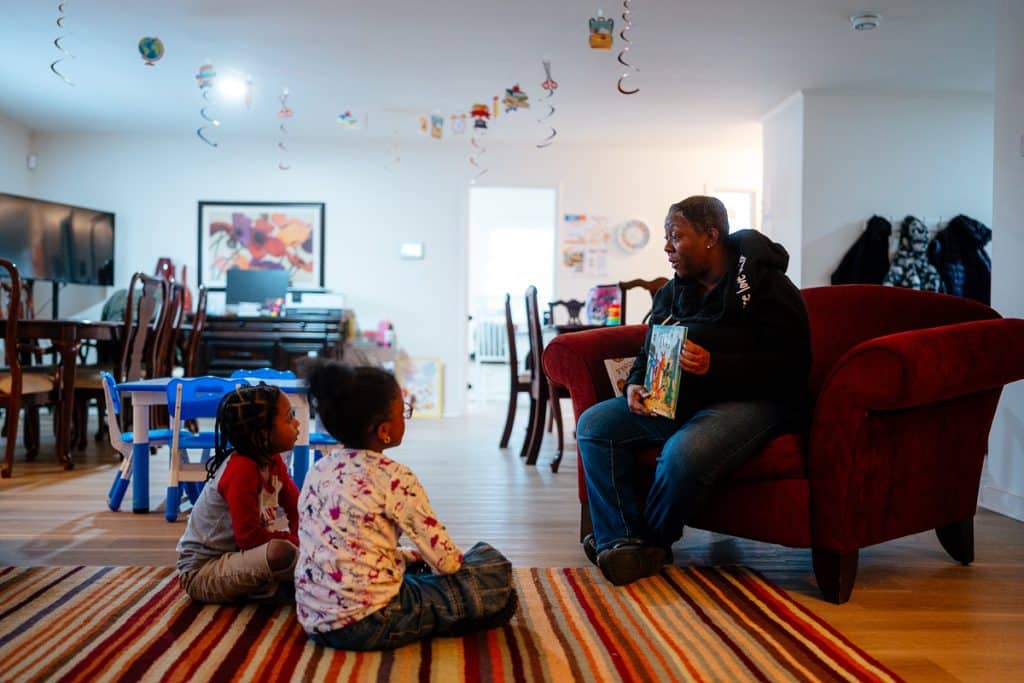
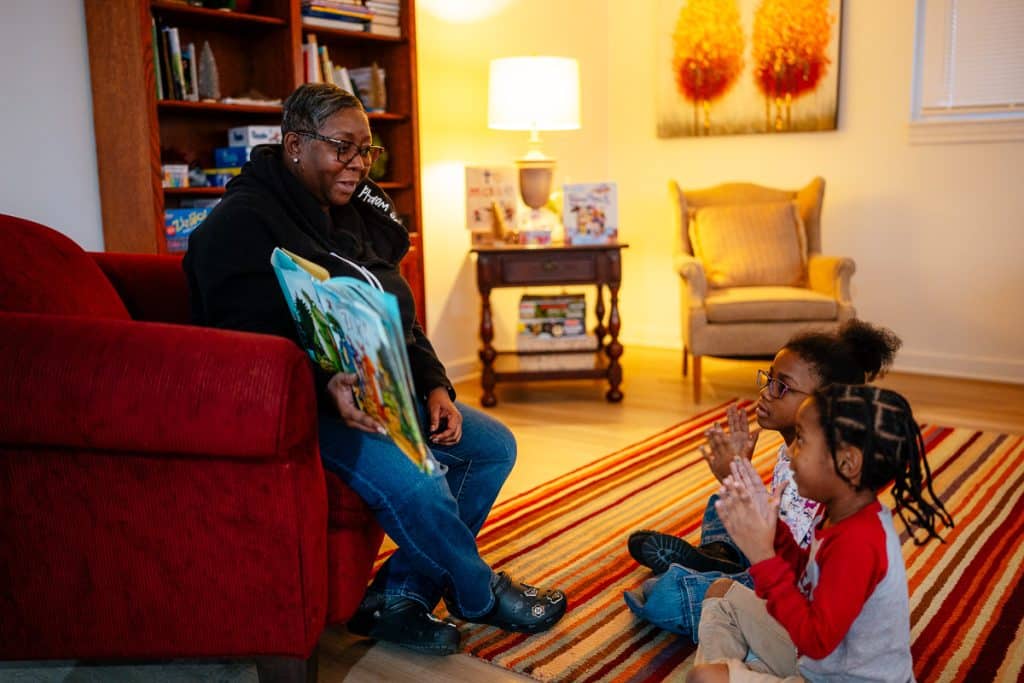
Special thanks to Brilliant Detroit for allowing Early Education Matters to photograph its Raising a Reader Outer Drive-Hayes Hub program. Brilliant Detroit aims to operate 24 hubs across the city in order to affect population-level change with, for, and by children and families.
Early Education Matters is a series of stories about the implementation of Pre-K for All throughout the State of Michigan. It is made possible with funding from the W.K. Kellogg Foundation.
Author

Related Articles
Evictions impact millions of kids. These schools get an alert when it happens to their students.
Evictions impact millions of kids. These schools get an alert when it happens to their students.

Is PreK for All meeting its goals?
Roadmap co-author encouraged by how the state is expanding its Great Start Readiness Program into universal pre-K.
Michigan’s free universal pre-K program could serve 70,000 4-year-olds this school year
Launched in 2023, PreK for All now has no income qualifications.