Partner Partner Content Apprenticeships growing Michigan’s health care workforce
Traditionally used in manufacturing and skilled trades, health care apprenticeships benefit students, employees seeking advancement, and employers.
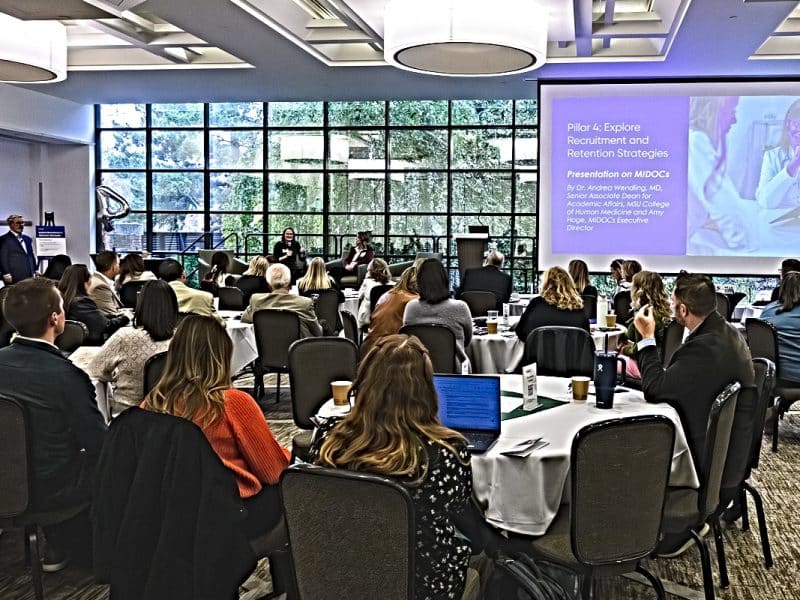
The Michigan Health Council’s 2025 Michigan Healthcare Workforce Plan aims to guide implementation of data-driven solutions to grow Michigan’s health care workforce. The plan creates a framework based on four pillars: Grow interest in health care careers; improve access to health care education; increase experiential education capacity; and explore recruitment and retention strategies.
Michigan agencies, educational institutions, and health care systems are addressing the last three of these four pillars with apprenticeship programs in health care careers.
“Registered apprenticeship has been a proven workforce strategy in the skilled trades and manufacturing for decades,” says Janis Karazim, Ed.D, program manager with the Workforce Intelligence Network (WIN). “Health care industries missed out. Now, they’re starting to leverage that proven strategy of registered apprenticeship for those same reasons, attraction and retention.”

Funded by the U.S. Department of Labor, WIN’s Advance Michigan Center for Apprenticeship Innovation develops registered apprenticeship programs and serves as an intermediary between employers, community colleges, and Michigan Works agencies–– all of whom can access WIN’s programs at MiApprenticeship.org.
“We are what’s called an intermediary, which serves the role between the employer and the U.S. Department of Labor,” Karazim says. “We set up apprenticeship programs for them, and then we manage them. We also help Michigan Works agencies and other entities become intermediaries.”
In health care fields, WIN’s apprenticeship programs include radiologic technologist, surgical technologist, registered nursing (RN), and licensed practical nursing (LPN). These apprenticeships help Michiganders achieve career advancement and increased earning potential while incurring reduced student debt. Apprenticeships not only address Michigan’s health care workforce shortages but also promote equity by providing opportunity for underserved populations to access higher-skilled, higher-paying careers.
“We also developed an LPN training program specifically for employers who wanted to advance their nurse aides. There were employers that had a need for more LPNs. There aren’t a lot of LPN programs in Michigan,” Karazim says. “WIN pulled together a group of colleges, community colleges, and chief nursing officers representing the employers across the state to develop an LPN training program.”
This apprenticeship program not only advances certified nurse aides (CNAs) into LPNs, it also serves as a stepping stone for those LPNs to become RNs. Nursing apprenticeships like these are one important way Michigan can address the looming shortage of nurses.
“The number of nurses planning to retire or leave the profession in the near future exceeds the number entering the workforce,” says Casey Klein, section manager Michigan Department of Health and Human Services (MDHHS) Office of Nursing Programs (ONP). “This imbalance poses a serious threat to the stability of the health care system, particularly as Michigan’s population ages and presents increasingly complex health needs.”
Klein explains that the shortage of nurses directly contributes to reduced health care access. This, in turn, disproportionately impacts vulnerable populations.
“Without targeted interventions to strengthen the nursing workforce, Michigan risks widening this existing health disparity and compromising the quality and equity of care across communities,” Klein says.
One way the MDHHS ONP supports nurse clinical education and apprenticeships, its Virtual Nursing Clinical Education Resources support clinical education and practice with materials and simulations.
“The materials aim to support culturally sensitive care, enhance alternative clinical experiences, and provide professional development for nursing educators and students in a variety of health care settings,” Myers says.
MDHHS ONP also provides resources for internationally educated nurses and transition to practice modules offering free nursing continuing education as well as grants and pilot projects to support Michigan’s nurse workforce.
“These resources being publicly available on our platform allows not only educators and students to utilize the content, but also nurses who may be getting back into practice after some time away or getting into a different field of nursing,” Myers says.
Growing nurses on the job: Henry Ford Health
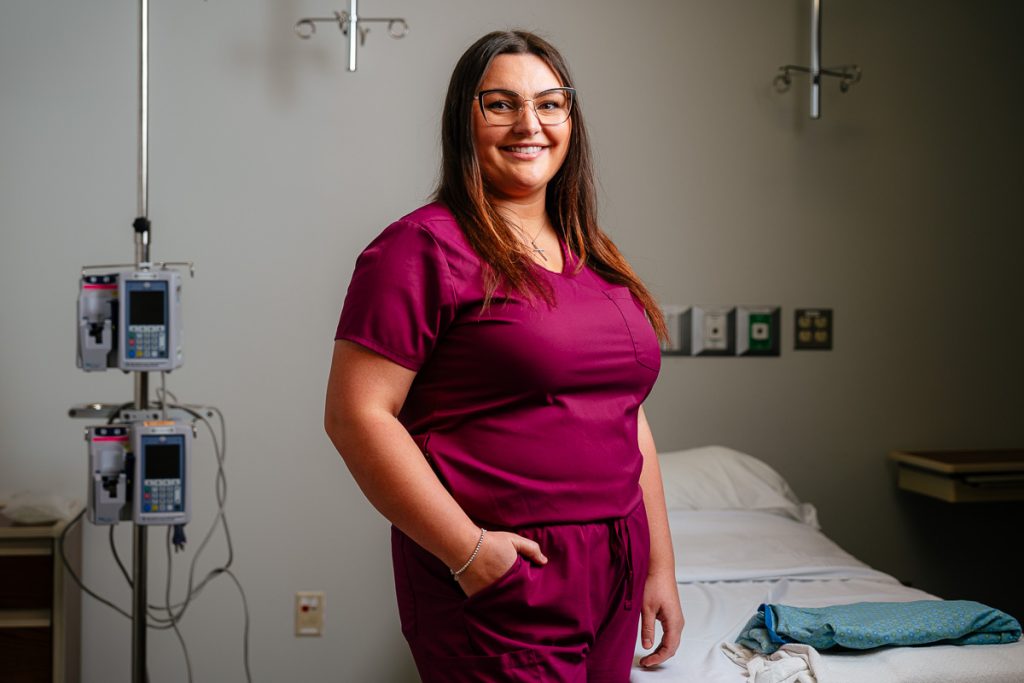
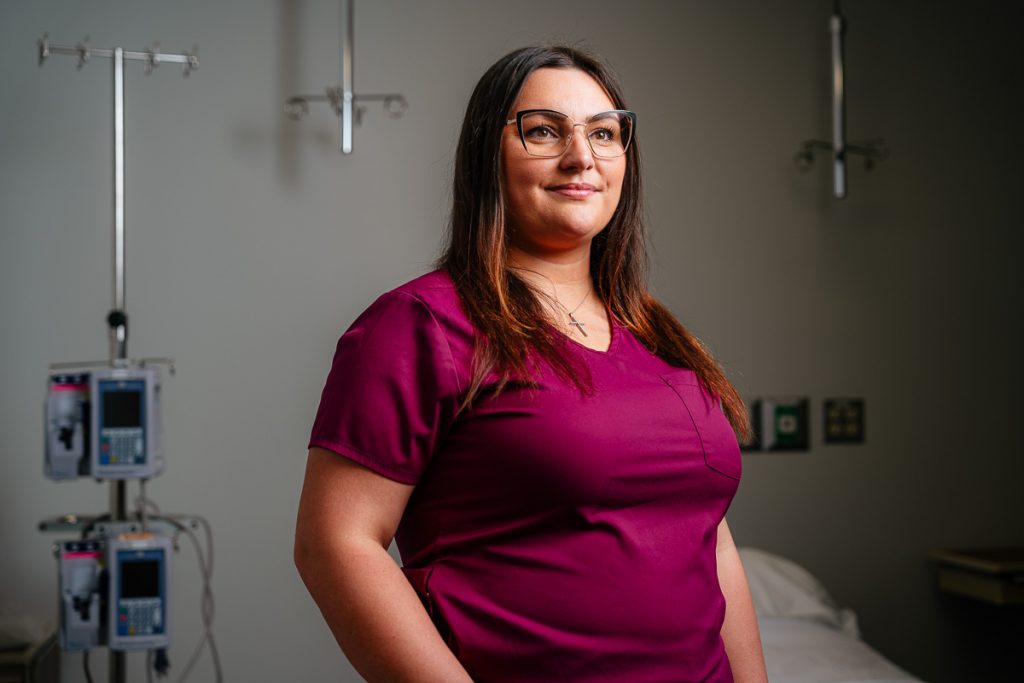
Olivia Cassette is a nurse assistant apprentice at Henry Ford Wyandotte Hospital. She has always had a desire to work in health care. After 11 years as a dental assistant, she decided to advance her career. The Henry Ford Health (HFH) apprenticeship program empowered her to take the leap. She’ll be starting a nursing program in the fall.
HFH has clinical and non-clinical apprenticeships for multiple roles. Medical assistant and nursing assistant programs are pathways to becoming a registered nurse. Other apprenticeships available are pharmacy, radiology and surgical technoligist, eye care assistant, and ophthalmology assistant. All of these create pathways to more advanced careers.

“We have a very close relationship with our Michigan Works partners, and so we recruit apprentices from Michigan Works and active job seekers,” says Catherine Susko, HFH vice president of HR planning, development and belonging. “We also have internal development opportunities … It’s quite common for us to take a nurse assistant and put them through our nursing apprenticeship, which will get them to an RN.”
According to the MHC 2025 Michigan Healthcare Workforce Index, Michigan is projected to have a shortage of more than 60,000 nurses, including RNs, LPNs, and CNAs, by 2034. HFH is using apprenticeships as a way of building its nursing workforce to meet this projected demand from within.
“Instead of providing only a job, we provide access and an onramp to a career, access, funding and support for advanced development,” she says. “It also provides an opportunity for full-time team members –– on day one –– to receive competitive wages while attending classes while reducing the cost of recruitment and advancing our desire to build our own talent.”
A win/win for students and employers
In West Michigan, Grand Rapids Community College (GRCC) collaborates with Corewell Health, Trinity Health, University of Michigan Health-West, and intermediary Michigan Works to provide apprenticeship opportunities for people seeking health care careers. Statewide, GRCC also has collaborations providing on-site clinical training opportunities with HFH, Bronson, Holland Hospital, McClaren, and Munson Healthcare.
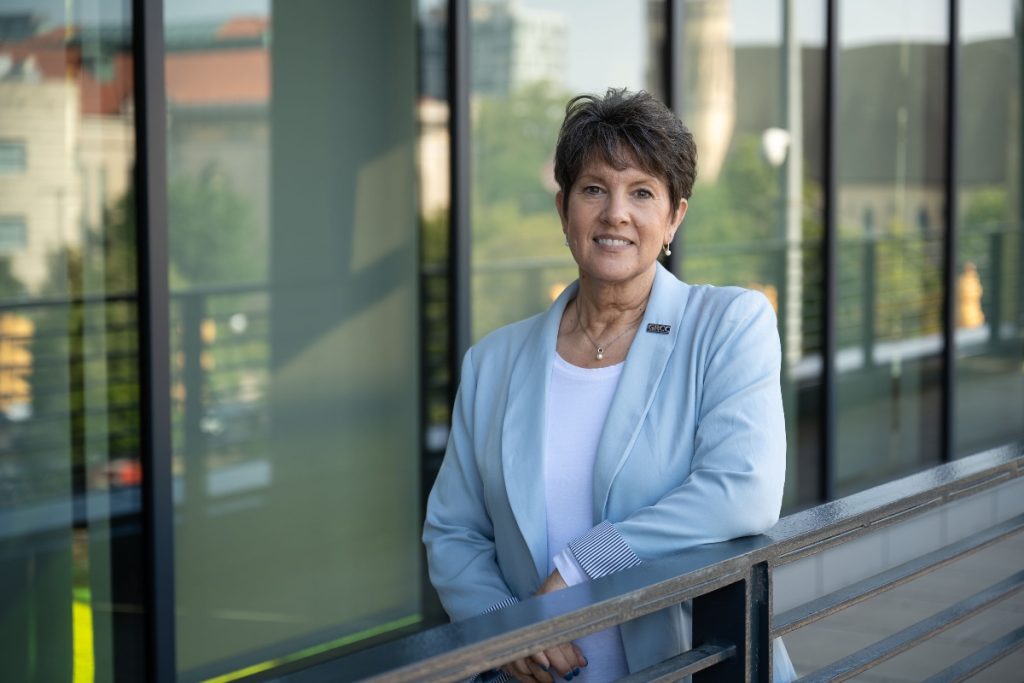
“GRCC was actually the first accredited program for medical assisting offered with an apprenticeship option,” says Lisa Radak, dean of the GRCC School of Health Sciences. “All of our accredited health programs have clinical opportunities or requirements where students have to complete competencies.”
GRCC’s current apprenticeship programs include medical assistant and neurodiagnostics. The community college also offers non-apprenticed on-the-job clinical training in specialized care and rehabilitation, senior living and long-term care, and dental care.
“Apprenticeships offer a distinct advantage over traditional clinical rotations,” Radak says. “While nearly all health care programs at GRCC require some form of work experience or clinical practice, the apprenticeship model provides a more integrated, financially supportive, and accelerated path to a professional career.”
Radak notes that apprenticeships reduce many of the financial barriers to seeking a health care career. Apprentices earn while they learn and enjoy accelerated access to benefits if they stay with their apprenticing employer after graduation. They accrue less student debt. And balancing school, work, and family is much easier because time spent in an apprenticeship counts both as educational training and a paying job.
“In many cases, the students have a one-on-one mentorship,” Radak says. “And statistics show that students who train using the apprenticeship model typically have higher job satisfaction. Apprenticeship is like testing out to see if this is a profession you really want.”
When apprentices complete their program, employers benefit from new employees who are already fully integrated into the team culture, workflows, and electronic health record (EHR) systems. Health care employers who invest in apprenticeships see a healthy return on their investment.
“Statistics show that students who train via apprenticeships have higher retention rates,” Radak says. “Recruitment costs are extremely expensive. Employers can grow their own and save thousands of dollars on headhunter fees, labor contracts, and traveling labor.”
Susko agrees.
“I think the traditional method of relying on K through 12 programming, then college programming, and then hoping that industry gets what they need hasn’t really fared well for Michiganders,” she concludes. “Understanding that there is such a need for health care professionals, this is our way to step up to the plate and be co-collaborators and cooperators in this ecosystem of building and expanding talent pools.”
Olivia Cassette photos by Nick Hagen.
Other photos courtesy subjects.
This story is made possible with funding from the Michigan Health Council, a solutions-oriented nonprofit organization working to ensure the future of the health care workforce by connecting health care leaders, professionals, employers, educators, and students to various products and services spanning the education-to-practice continuum.
Author

Related Articles
Partner Partner Content How employee retention grows Michigan’s health care workforce
Retaining folks working within the health care sector is a vital strategy in turning around current and projected workforce shortages.

Transportation: An overlooked barrier to mental health care
Collaboration ensures Allegan County residents get mental health care when they need it.
From market to the clinic: two sisters and lessons learned from a community care model
Awatef and Ayah Ayesh are training within a community-based medical school model that encourages future physicians to consider the whole person and to view listening as a vital form of care.