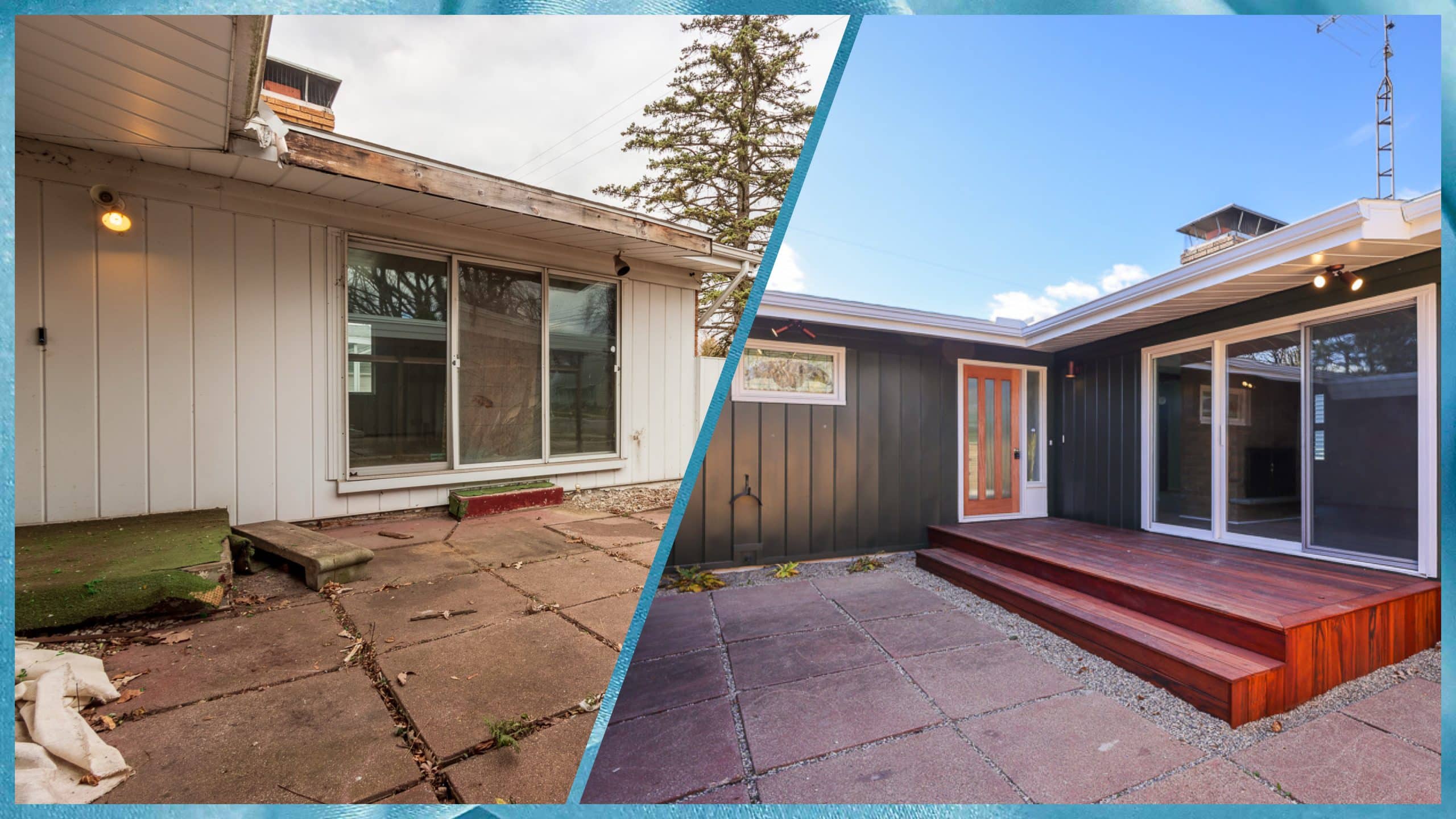
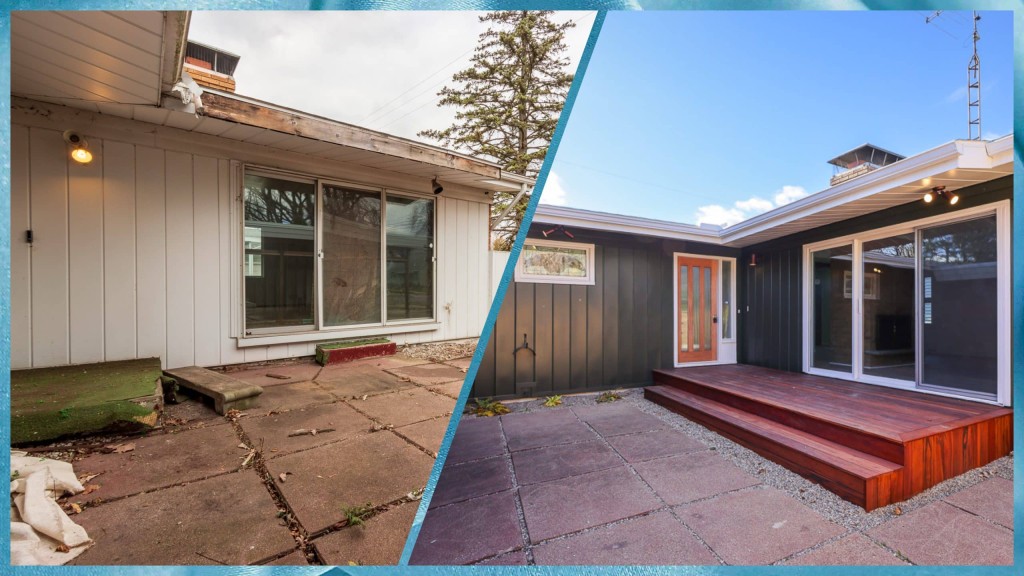
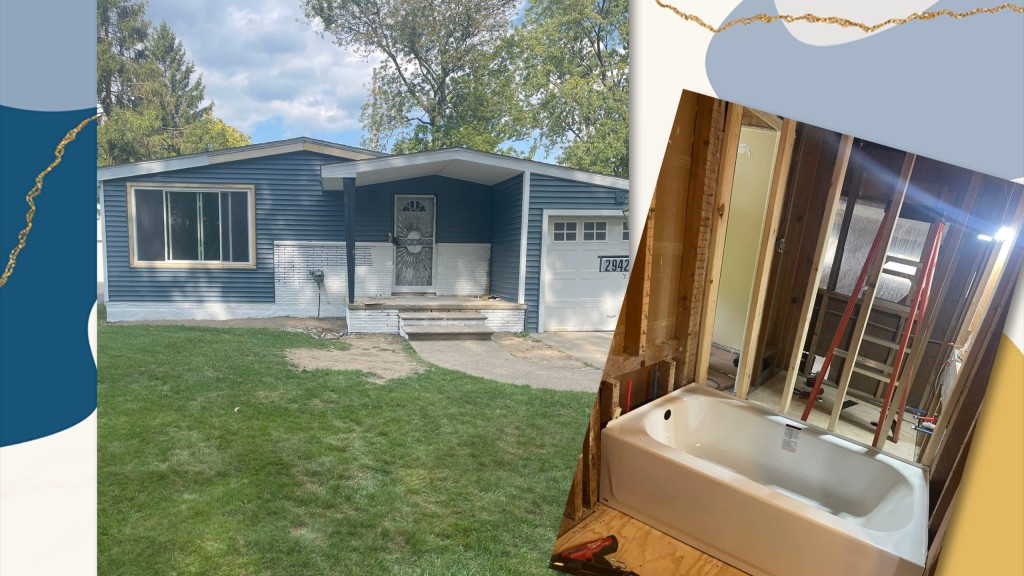
FLINT, Michigan — As soon as Dreshon Burks clocked out from his day job of mowing other people’s yards, he went to work on the house he’d just bought. He went up and down the walls with fresh coats of paint, covered the outdated flooring with modern vinyl, and updated the kitchen and bathrooms to look more 21st-century.
Finally, after five months of hard work, Burks moved in at the beginning of the year with his wife, their two kids, and a list of renovations to complete before the house is to their liking.
“It’s still sinking in. I really own it,” Burks said of his three-bedroom-two-bath home near Lapeer and Center roads. “Every morning I wake up, it feels better. I have a level of peace now….we would never get no value out of just renting.”
A wave of new homeowners like Burks, along with private landlords and the Genesee County Land Bank Authority, are fixing up dilapidated homes to live in, rent, or sell. The spruced-up homes are raising property values and slowly replacing the roughly 24,000 vacant properties across the city. The investments have raised Flint’s homeownership rate to three percentage points above the national average of 65.7%, according to Census data.
“Making that investment…we’re able to establish a new comparable for that entire neighborhood,” said Michael Freeman, the Executive Director of the Genesee County Land Bank Authority. “Everybody has the ability now to go into the bank and say, ‘Look at that comp that just sold,’ and now their equity position increases significantly. The work we do goes beyond just renovating the house. It’s more about restoring value in these neighborhoods.”
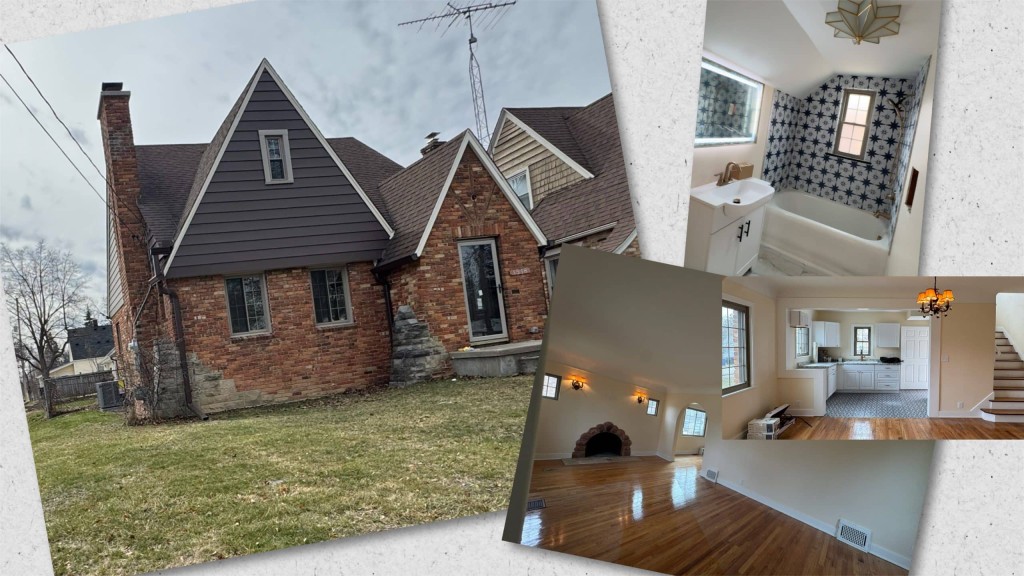
The land bank invested $80,000 into flipping a historic, three-bedroom, two-bath home on Mackin Road in 2023. It soon sold for $158,000. Other homes on Mackin are estimated to be $119,000,$54,400, and $65,000, according to Zillow.
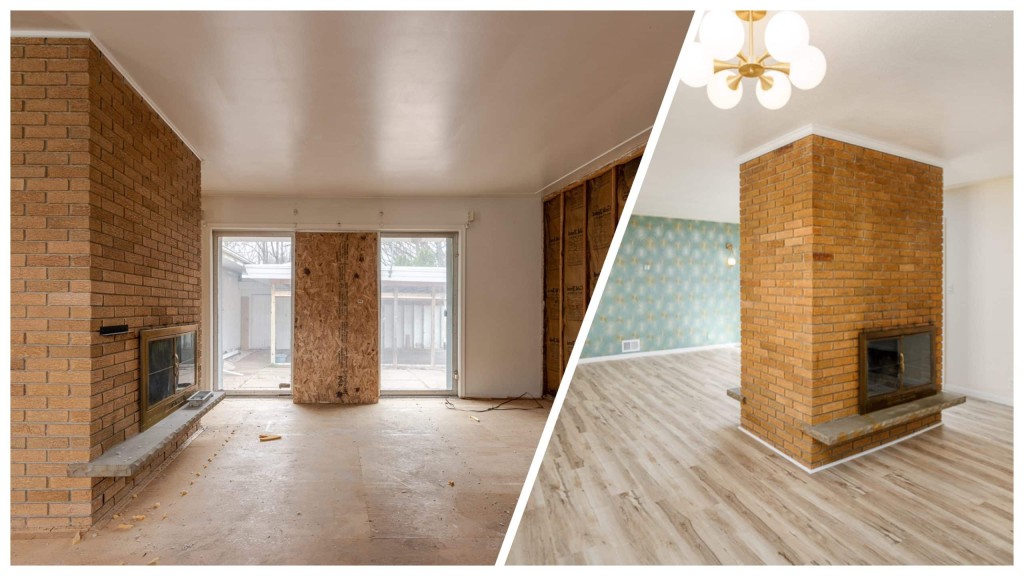
Affording a home in Flint has been a battle over the years, open only to those who remained employed after General Motors’ factory closures, population declines, the great recession of 2008, Flint’s water crisis, and the pandemic, experts say, resulting in properties sitting desolate for decades and dragging the city’s value down with it. Now, property owners are trying to flip Flint back to its heyday, when homeownership was more accessible.
RELATED: How beautification efforts bring generations together to improve Flint neighborhoods
‘Decades of divestment‘
After Flint lost roughly 30,000 jobs between 1970 and 2006, residents lost their homes, and some moved out of the City. This downturn hit the hardest in neighborhoods like Carriage Town and Grand Traverse, where 60% of housing units were abandoned; More than a quarter of them in Max Brandon Park became vacant, according to a 2010 paper published in the journal Cityscape.
Between 1950 and 2000, Flint’s population decreased by one-third to just over 112,000, the paper said. Property defaults more than doubled between 2004 and 2006, the Flint Journal reported.
“It became a less desirable place to live, and that hasn’t reversed,” said Justin B. Hollander, a professor of urban planning at Tufts University who wrote the 2010 paper.
RELATED: How urban blight affects Flint residents’ health, and what the city is doing to change that
The 2008 recession compounded decades of decline. The assessed value of residential properties in Flint fell from nearly $1 billion in 2008 to $363 million by 2013, according to the city’s annual comprehensive financial report.
Nate Williams, a landlord at the time, lost 15 homes when he could no longer make the mortgage payments. “After losing the houses and going through bankruptcy for five years, it [garnished] half of my check and half of my wife’s check for five years,” he said.
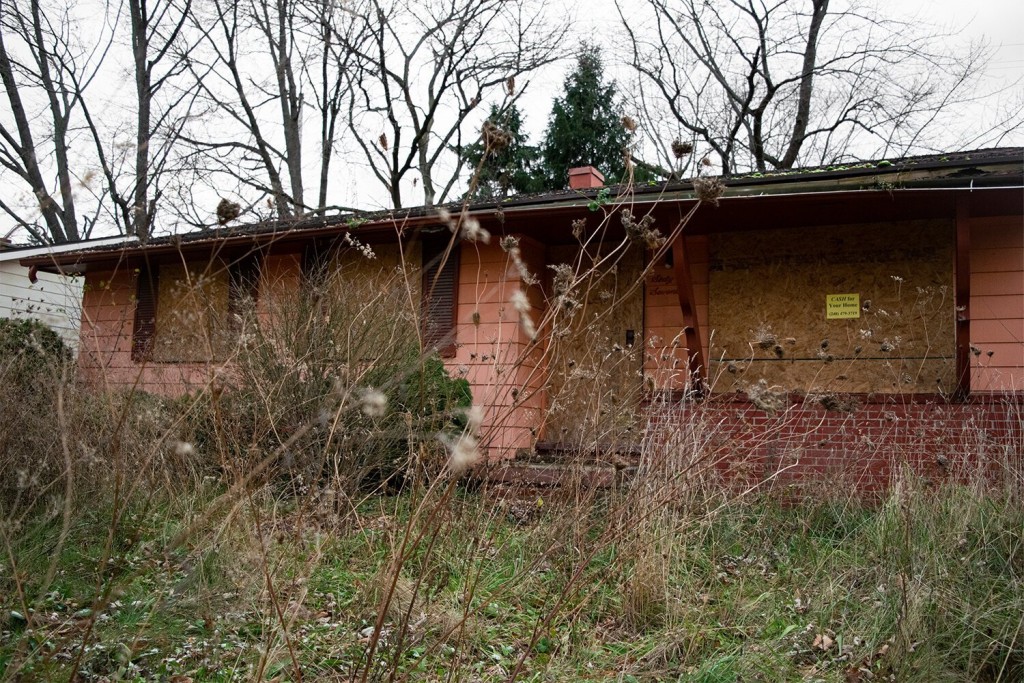
Property values bottomed out at $345 million in 2020, the report said, and many vacant homes are still standing — if they have not been demolished yet. Each abandoned property lowers the sale prices of nearby homes — limiting the amount banks are willing to lend for mortgages and blocking this avenue to homeownership.
“Flint has suffered decades of disinvestment,” Freeman said. “When you go into a bank, and you attempt to get a home equity loan, the equity — many times — isn’t fair. They’re unwilling to invest in these properties or provide people with the resources that they need to improve their properties.”
‘Bring the jobs back’
Williams descended a ladder after installing a new roof on one of his rental properties. He also replaced the windows and siding. He and his team executed this type of work on the 30 rental homes he now owns.
“I was blessed to get back in about 10 years ago,” he said. “When it was time to recover, I began to buy [in] cash so if something were to happen in the market again, it won’t affect me like that again.”
The value of Flint’s residential properties had risen to $463 million by 2024, the city’s report said. Flint’s population has held steady around 80,000 since 2020, census data shows. Hundreds of Latines and people from southern states are moving to Flint each year, Freeman said, adding that Flint’s affordable houses make it a destination city.
“We are one of the most affordable cities in our state to purchase a home — and even in the country,” Freeman said. “Home ownership is the pathway for many families out of poverty because they can start building equity that’s not going into somebody else’s pocket. You can get a great house for your money in this community.” He recommended the Mott Park or Carriage Town areas.
RELATED: Brownell-Holmes resident turned a vacant lot into a community staple
Maintaining and expanding population growth and property values hinges on job availability, Burks, Williams, and Freeman said in separate interviews.
“Until we bring the jobs back where people can make an honest living — we got to get those companies back into the area – and then we got to get to homeownership,” Williams said.
There are about 145,000 jobs in the city as of December 2025, with trade, transportation, and utilities as the top industries, according to the Bureau of Labor Statistics. Flint’s documented unemployment rate is 5.8% — a bit higher than the national average of 4.4% — but the lack of employment is likely higher in the area.
“The low unemployment rate gives a slightly optimistic view of the employment situation in Flint, just given that any job counts as being employed, such as part-time, hourly, and temp work,” said Chris Douglas, an economics professor at the University of Michigan – Flint.
VIDEO: Tour a newly renovated home with Flintside’s Randi Richardson
“The heyday of Flint was the 1950s and 1960s with the auto industry; You could get a job at a car factory and earn an honest living, and those days have been long gone…it’s been very difficult to find full-time work in the city of Flint unless you have some specialized skill…in many ways, [Flint] hasn’t recovered from that massive job loss, and there’s nothing that really stepped in to replace those jobs.”
Jobs have been trickling in over the years, but there’s more work to do, Douglas said. Since 2020, more than 400 jobs have been created in Flint, according to a 2022 economic development strategy report issued by the city. The land bank has been hiring crews to execute renovations. Nanograf, a car battery manufacturer, announced plans in 2024 to open a plant in Flint, creating 250 jobs.
RELATED: Removing barriers is a key to helping people re-enter the job market
‘It doesn’t happen overnight’
Burks said buying a home was more affordable than he expected. His house cost about $65,000. He and his wife, who is a registered nurse, applied for up to $25,000 in funding from the state’s first-time homebuyer assistance program. They only received $10,000, and that was difficult to secure, Burks said. They ended up securing the rest of the money from their savings and a mortgage lender.
“It was really the hardest part because they just screened us a little too hard and too difficult,” he said. “My wife was saying some people at her job — they white — didn’t have those challenges.” Racial profiling and redlining — steering Black homebuyers away from more affluent neighborhoods — still pose problems.
Freeman said the land bank is working to make housing more accessible, selling about 70% of their homes to Black and Latine purchasers last year, according to the land bank’s annual report.
Orrendo Embry, a retired construction worker who rents a home near Ballenger and Flushing roads, remains skeptical of the housing market in Flint. He sold his house in the early 2000s and moved to Birch Run when he saw Flint’s downward spiral. He said he would “never” buy a home in Flint again out of fear of market instability.
“The economy here is [in] decline. I’m not that type of person that’s trying to pay for something for the next 25 years,” he said, adding that “they’re tearing down and burning down these houses all around Flint. I want to know what are they going to do to replace the houses.”
RELATED: A Mott Park family creatively reused a vacant lot to add beauty to neighborhood
There were 24,000 vacant properties in 2023, Flintside previously reported. About 7,000 are vacant homes, and 17,000 are empty lots. The land bank currently owns more than 13,500 properties; 90% are in Flint, and 80% are vacant.
“It doesn’t happen overnight — it could take 10 years or 20 years — but eventually there’s enough of a market pressure that they do get reused for something else [or torn down],” Hollander said.
Freeman said his team is on track to flip 20 homes this year and 30 next year. They also sell homes as-is for the buyers to renovate. The Land Bank helped demolish 1449 properties by October 2025 and 675 in its 2025 fiscal year. Since 2004, they have demolished 9940 properties in Genesee County. In addition, they maintain the yards of 86,000 vacant properties, according to its annual report.
The goal of these beautification efforts is to clean up the city enough for banks to back mortgages again, making it easier for residents to purchase homes. The land bank reinvests profits from its flips and receives money from state grants, the Charles and Ruth Mott Foundations, and the Environmental Protection Agency to fund projects.
RELATED: Mapping Flint Vacant Land
Building equity
Flint has been invested in and developed across the board in recent years. Flint Community Schools received a $7 million grant last month from the Charles Stewart Mott Foundation to transform elementary school playgrounds. The National Park Service gave Flint a $5 million federal grant last year to overhaul Riverbank Park downtown.
Bishop Airport received a $5 million grant last year from the U.S. Department of Transportation for infrastructure repairs and development. The City of Flint received a $4 million grant in 2022 from the Department of Justice for public safety initiatives. The city also received $94.7 million in 2021 from the American Rescue Plan.
“If Flint was a dump, I don’t think people would be pouring a lot of money into it,” Burks said. “It’s a good place to me. You got a lot of people. You got a lot of adventures. It’s a lot of investing — a lot of money being given to Flint — to build things ourselves.”
Burks advised aspiring home buyers to look in neighborhoods that have held their value over the decades and have received investment, such as the south side or downtown.
Author

Related Articles
Michigan city to achieve ambitious goals through sustainability energy utility
This spring the city of Ann Arbor will take sustainability goals into its own hands by launching a Sustainable Energy Utility that will generate its own renewable power for residents.
From Pews to Pints: Why some rural Michigan churches are reopening as breweries
The desire to keep existing churches and historical buildings intact has motivated and inspired a number of Michigan’s 400 licensed brewery owners.

Leadership program helps dental directors improve care in underserved communities
Program supports dental leaders in Ohio, Michigan, and Indiana with skills to manage clinics, improve care, and advocate for underserved patients.