UTHSC gets $1 million for Tourette’s and Parkinson’s research
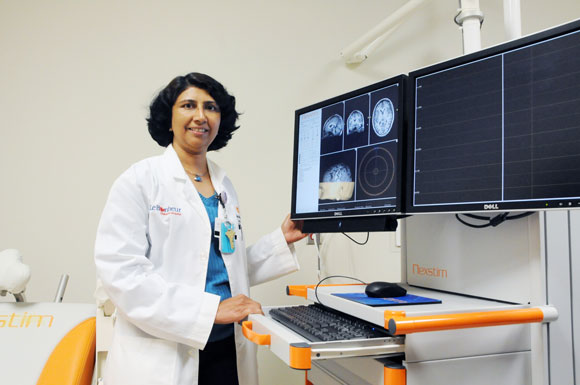
The University of Tennessee Health Science Center (UTHSC) will be able to delve deeper into the mysteries surrounding two neurological diseases, thanks to two recent grants totaling more than $1 million. The school received $340,000 from TicTocStop, Inc. to conduct an innovative clinical study on Tourette’s syndrome, along with $680,000 from the Michael J. Fox Foundation for research into Parkinson’s disease.
Dr. Timothy L. Hottel, Dean of the UTHSC College of Dentistry, will serve as principal investigator for the Tourette’s study, which will enroll 65 participants (adults ages 18 to 45 and children and adolescents ages 7 to 17) who suffer from either simple or complex tics.
Hottel and his team will fit each person with a specially modified oral appliance, much like a modified mouth guard for lower teeth, and then determine whether the appliance lessens the severity and frequency of the patients’ symptoms.
“This is the first time in medical history that a multi-site study of this type has been done,” says Hottel. “We are proud to be part of this forward-thinking research initiative to determine the viability of the TicTocStop appliance. This device may have the potential to help tens of thousands of people who suffer from motor and vocal tics.”
The study will run through next year.
Dr. Shalini Narayana, Assistant Professor in the UTHSC Department of Pediatrics and Department of Anatomy and Neurobiology, will lead research to determine if non-invasive brain stimulation can improve the effectiveness of voice therapy for patients with Parkinson’s disease. Narayana and her team will use $677,385 over a three-year period to examine speech and voice quality, voice box function and brain activity before and after patients receive voice therapy and brain stimulation or voice therapy alone.
Non-invasive brain stimulation is gaining acceptance as a useful treatment tool and is approved by the U.S. Food and Drug Administration for treating depression and migraine. Researchers expect that non-invasive brain stimulation will improve voice box function as well as strengthen the connections between brain areas that are engaged during speaking.
“I am very excited about this research project,” says Narayana. “This research demonstrates a great collaboration between neurologists, speech pathologists and neuroscientists as well as between two major institutions in Memphis, UTHSC and University of Memphis.”
By Michael Waddell
Author

Related Articles

Pilot in two Michigan cities will guide strategies for lead pipe replacement across the nation
New project help municipalities secure funding for lead service line replacement.
Grand Haven among first U.S. cities to implement Zimbabwean program training residents to provide basic talk therapy
The Grand Haven-based Momentum Center’s Friendship Bench program will train volunteers to provide basic mental health support in public places.

As parents seek out ‘vaccine friendly’ clinics, pediatricians worry about eroding trust
Most pediatricians support childhood vaccinations. Here’s why they’re seeing unvaccinated kids anyway.