As housing costs rise, CEDAM’s TIF guide frames the way for communities to utilize and personalize tax incentives to meet housing needs
CEDAM has released a new housing TIF guide to help Michigan communities understand and apply tax increment financing as a tool to support local housing development and affordability goals.
The statewide housing crisis is impacting every community in Michigan, and municipalities and developers are working hard to address the rising cost of housing. By utilizing different strategies, tools, and resources, the goal is to create and sustain varied styles and sizes of affordable, accessible housing across the board.
One of these tools is housing tax increment financing, or TIF. According to the Community Economic Development Association of Michigan (CEDAM), this project-based tool enables local units of government to help equalize the cost of infrastructure, site development activities and below-market rents and sales prices.
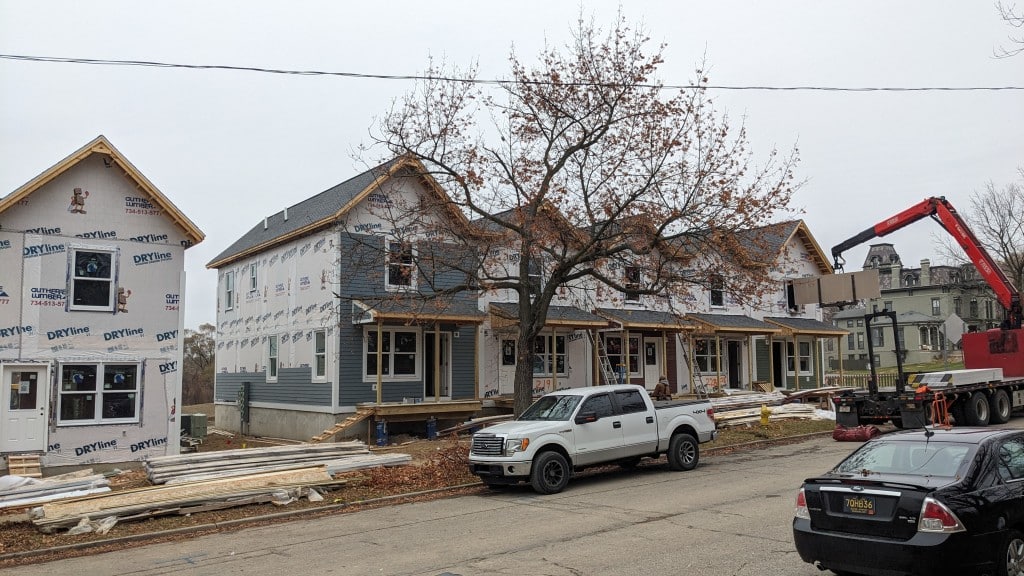
Communities like Ypsilanti are facing similar pressures, with local leaders exploring ways to expand housing options and improve affordability. One example is Dorsey Estates, which used Brownfield and housing TIF. Renovare developed the project featuring 46 cottage, duplex and townhomes just a walk away from historic Depot Town. The units are selling below construction costs, and offer down payment assistance to those who quality.
Housing TIF was formalized in 2023 through an amendment to the state’s Brownfield Redevelopment Financing Act (Act 381), originally passed in 1996, housing TIF is a tool readily available to any Michigan community. Together, these two tools can work hand-in-hand for new developments or housing rehabilitation.
CEDAM has put together a housing TIF guide for local governments to encourage them to think about how this tool can benefit their individual goals within their communities.
Teresa Gillotti is the real estate program manager at CEDAM, and is part of the housing team — helping develop the developer ecosystem. Gillotti helps run CEDAM bootcamps twice a year, and helps support regional housing partnerships across the state.

“Housing TIF is a tool that helps position any local unit of government through the use of their local brownfield redevelopment authority to incentivize housing development,” she says. “For any new development that has housing units in it that would be eligible, they can reimburse over a period of up to 30 years parts of the taxes collected to help cover the cost of development.”
Gillotti says the cost of development deals have increased due to higher labor costs, climbing material costs, rising oil prices and changing tariffs.
“It’s just been very hard for housing deals to be financially feasible, so this is another incentive or tool available to help try and bridge any gaps to make it possible to build,” she says. According to data from MSHDA, shared by the Michigan Municipal League, since the housing TIF was created two years ago, there have been more than 59 projects approved, including over 4,500 new or rehabbed homes. Across 38 communities from Detroit to Petoskey to Newaygo, there has been $130 million of state TIF revenue captured and over $1.2 billion in housing investment.
Previously, only larger core communities had the TIF tool at their disposal, but now with its availability to all, CEDAM saw a need to put together a guide to help folks understand the tool. They heard from local developers and units of government about their hesitation or uncertainty to try using TIF since they were unsure how to use it for the first time.
“With that in mind, we thought we could help create a guide for local units of government to review their goals around housing, compare it to the need in the community, and establish ahead-of-the-game what they’re willing to provide in exchange for a certain benefit — maybe more affordable, accessible housing or certain types needed in the market. The idea is that the community can set the tone of when they would use housing TIF in order to get specific benefits in meeting their housing needs.”
CEDAM pulled together a working group of folks including developers, environmental consultants, local units of government, and statewide partners. The group met a number of times last year discussing what information to include in the guide.
“We want as many people to use this information as possible,” Gillotti says. “We also wanted to create the guide for folks to establish the policy. We came up with a number of checklists so they can go through their various community plans and goals to see what might fit, and pull it all together in a policy they can adopt. They can be consistent in their review and be clear about what their goals are in talking with developers. We thought this would help with clarity and intention on both sides.”
The guide was released after a CEDAM webinar recording hosted back in February with more than 140 in attendance. The document is broken down into 10 sections, covering everything from framing, defining goals, service delivery, mechanics, translating goals to TIF policy, an example policy, the application, evaluation, administration, and a summary of resources.
Gillotti says the guide can even be a helpful educational resource for the general public, too.
“I think it’s important for local folks to understand how it works, especially the cost of development,” she says. “I think there’s this idea that if a developer is going to be asking a local unit of government for incentive, it’s like, ‘whoa, what are they trying to get out of us?’ as opposed to helping them out since they otherwise wouldn’t be able to do the project and make it work because of interest rates and costs. It’s important for the average person to understand that right now, in our economy, if we want more affordable housing and different types of housing, and affordable housing, a lot of people are going to have to be involved — including local units forgoing some taxes through housing TIF to make sure the project is financially feasible.”
Whether it’s a specific need for more senior housing, workforce development housing, or more housing for essential employees like hospital workers, nurses and doctors, the TIF tool can be beneficial for communities, says Gillotti.
“Using the TIF guide is how help people can be very clear about what they’re trying to achieve around housing, the types of housing, affordability and deliberately say, ‘yeah we’re willing to forgo our taxes because we know this is a need we have, it’s going to be good for our overall economic development, community growth, and it’s worth it.’”
Emily Reyst, CEDAM director of external affairs, is proud of the guide and the response from the webinar.

“We surveyed our Housing TIF webinar participants to gauge how folks will utilize the guide,” Reyst says. “The most common responses were that they planned to: educate themselves about housing TIF from a developer perspective, share with their municipal leaders as an educational tool, and use the guide to create a TIF policy. As CEDAM continues to engage with more partners and local units of government, we hope more folks will be able to put it to use to create their own policy.”
Author

Related Articles
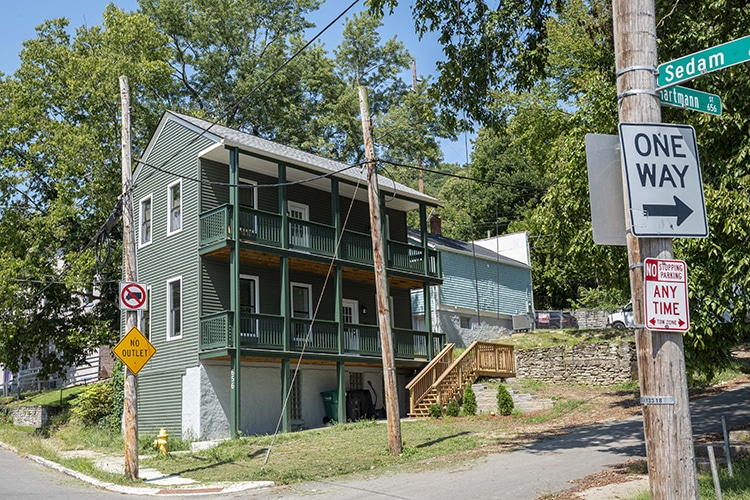
Restoring a Cincinnati neighborhood one historic home at a time
An $8.4 million investment is bringing homeownership and a renewed sense of possibility to one of Cincinnati’s smallest neighborhoods.

Minock Park Place provides new affordable senior housing for Detroit’s older residents
In the heart of Detroit’s Grandmont Rosedale neighborhood, a 42-unit, mixed-use development has given senior citizens brand-new affordable housing. Minock Park Place was seven years in the making, and marks the first affordable senior housing community in the neighborhood, located at 19505 Grand River Ave. — a vital commercial and cultural artery.

Detroit Housing for the Future Fund returns to drive affordable housing, stable neighborhoods
The second phase of the Detroit Housing for the Future Fund (DHFF) returns, offering communities across the city the opportunity for more affordable, stable neighborhoods.