Collaboration with justice system reshaping mental health response
Communities benefit when law enforcement, courts, and jails work alongside mental health providers.
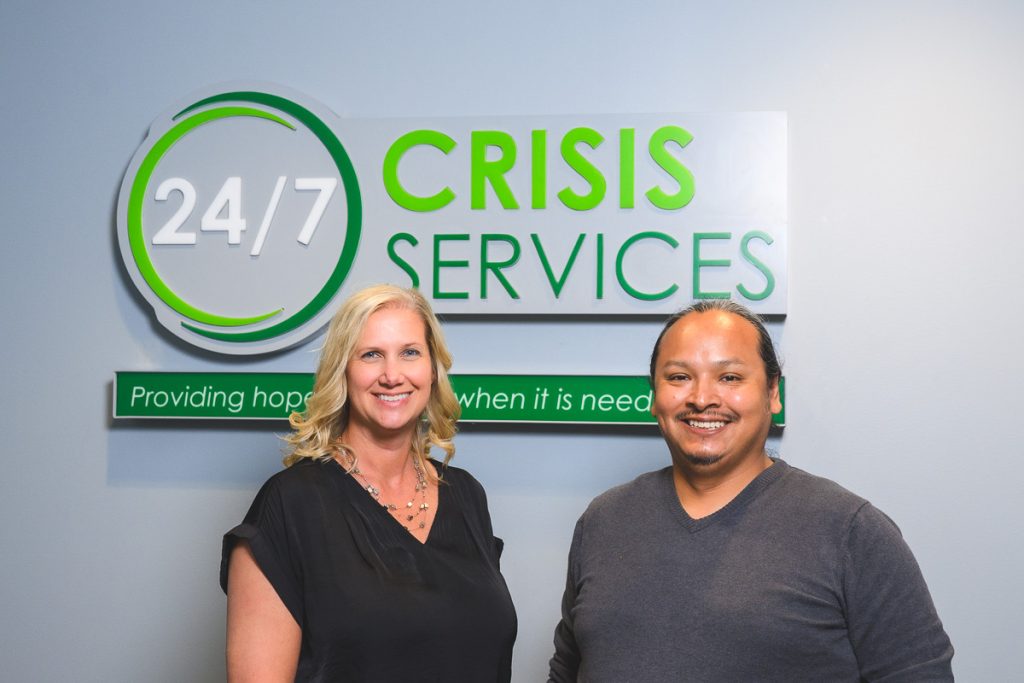
For many communities, the intersection between mental health and the criminal justice system is reactive and limited. But in Jackson and Hillsdale counties, leaders at LifeWays have spent years building a coordinated continuum of forensic mental health services designed to support recovery, strengthen accountability, and improve community safety.
The continuum spans multiple points of contact within the justice system, from first responder interactions during mental health crises to jail-based services, clinicians working alongside law enforcement, treatment courts, and voluntary programs that help emergency personnel better understand individuals’ unique needs before a crisis occurs.
“Our communities have many systems working together to improve the lives of citizens who touch parts of our justice system,” says Emily Morrison, director of community-based services. “It takes all of these systems’ — law enforcement, court systems, jails, juvenile facilities, mental health providers — willingness to engage in hard conversations, broaden understanding of the intersection among various systems, and come to the table with new ideas about how to serve and promote recovery in meaningful ways.”
According to Morrison, those collaborations are essential not only for helping individuals experiencing mental health challenges, but also for improving safety and accountability across communities.
Responding differently during crisis situations
One key component of LifeWays’ forensic continuum is its Crisis Intervention Training (CIT) program. CIT helps law enforcement officers safely respond to individuals experiencing mental health crises. Fred Delos Santos, crisis services supervisor, says CIT training focuses heavily on de-escalation techniques and helping officers recognize behaviors connected to mental illness.
“One of the primary functions of CIT is teaching officers effective de-escalation skills, including verbal communication techniques designed to calm highly agitated individuals and reduce the likelihood of confrontation,” Delos Santos says.
The training also emphasizes diverting individuals toward psychiatric treatment and community-based services instead of unnecessarily involving the criminal justice system. Delos Santos shared one example involving a man diagnosed with schizophrenia who was experiencing severe paranoia in public while holding a large stick and shouting at perceived threats.
“An untrained officer might view the stick strictly as a weapon and the shouting as non-compliance,” Delos Santos says. “A trained officer recognized the behavior as a symptom of psychosis rather than aggression.”
Instead of escalating the situation, the officer maintained a safe distance, lowered his tone of voice, and focused on calming the individual. LifeWays has also expanded that approach through an embedded clinician partnership with the Jackson Police Department. The model places a mental health professional directly within police operations to assist officers during calls involving behavioral health crises, substance use, homelessness, or trauma.
“Day to day, this partnership functions as a co-response model,” Delos Santos says. “Officers encountering someone in behavioral crisis can immediately involve the clinician, who helps assess mental status, communicates with the individual using trauma-informed and de-escalation techniques, and identifies appropriate treatment options.”
Nikki Winans, the embedded clinician working alongside the Jackson Police Department, says the partnership allows officers to request immediate mental health support during calls instead of repeatedly responding to the same situations without long-term solutions.
“Law enforcement does not receive extensive training for mental health,” Winans says. “Our partnership has improved the quality of calls to service and outcomes by being able to navigate the form of services needed.”
Winans says those services can include connecting individuals with homeless shelters, domestic violence shelters, substance use disorder programming, outpatient behavioral health care, inpatient evaluations, or LifeWays’ Crisis Residential Unit.
“This is in real time and prevents delay for care,” she says.
According to Delos Santos, the model has created calmer and more supportive interactions for individuals in crisis while helping officers better navigate complex behavioral health situations.
“For people experiencing mental health emergencies, the presence of a clinician often creates a calmer and more supportive interaction, reducing fear and increasing the likelihood that they will accept services voluntarily,” he says.
Building support systems inside and outside jail walls
LifeWays’ continuum also includes jail mental health services designed to address the factors that often contribute to repeated incarceration. Forensic services supervisor Shirley Wilson says the organization provides daily groups within the jail system focused on substance use disorder, trauma, anger management, coping skills, parenting, housing, employment opportunities, accountability, and overall wellness. The programs are designed to address causes of recidivism while preparing individuals for successful reentry into the community. Wilson says long-term recovery begins before release by helping individuals establish connections with support systems and resources while they are still incarcerated.
“Long-term recovery is supported through community coordination prior to release,” Wilson says. “Mental health supports, rehabs when needed, employment opportunities, housing, substance use disorder services, and identification cards are in place at the time of release.”
Another growing component of the continuum is Jackson County’s Mental Health Treatment Court, a certified problem-solving court designed to provide treatment-focused alternatives to incarceration for individuals living with serious mental illness. The court serves Jackson County residents charged with misdemeanor or felony offenses when mental illness played a role in the offense. The program is specifically designed for nonviolent offenders and focuses on recovery, accountability, and connection to services. Unlike traditional court systems, participants have more frequent contact with both court supports and mental health providers to help identify barriers, strengthen engagement in services, and support recovery goals.
“It celebrates steps forward in recovery in the court setting,” Morrison says.
Although the Jackson County Mental Health Treatment Court is still within its first year, Morrison says several participants have already begun engaging positively with community supports, therapy, employment opportunities, and medical care.
“Several participants have moved on to level two because of their participation in services, meeting reporting requirements, and engagement in life-enhancing activities,” she says.
Participants’ achievements are publicly acknowledged during court reviews, where they receive certificates recognizing their progress.
Helping first responders understand individuals before crises happen
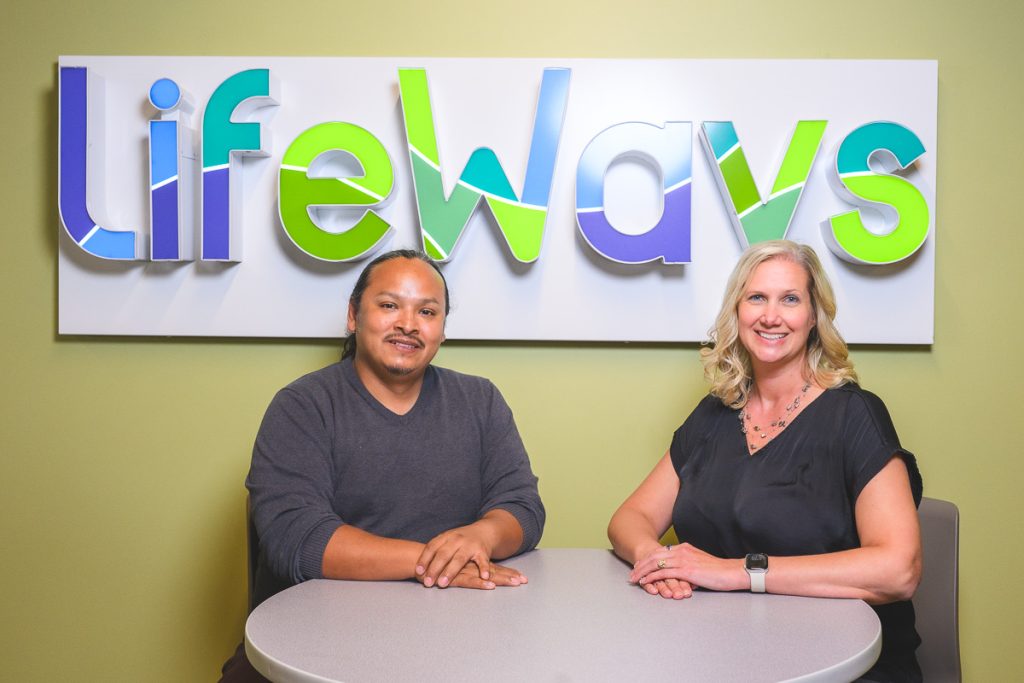
LifeWays and the Jackson County Sheriff’s Office have also partnered on the SAFE Program, a voluntary initiative that allows families to proactively share important information about loved ones with first responders. SAFE, which stands for Special Assistance for Emergencies, is designed to support individuals with disabilities, developmental disorders, mental health conditions, communication challenges, or significant medical needs. Families can voluntarily provide information about diagnoses, behavioral triggers, communication styles, calming strategies, and medical concerns. That information is then securely entered into the emergency dispatch system so responders can access it before arriving on scene.
“Crises are often chaotic, fast-moving, and stressful for everyone involved,” Delos Santos says. “First responders typically have only seconds to assess a situation and make decisions related to safety.”
Without background information, behaviors connected to disabilities or mental health conditions can easily be misunderstood. LifeWays officials say programs like SAFE, CIT, treatment courts, embedded clinicians, and jail-based mental health services all work together to create a more coordinated response system centered on recovery and safety rather than punishment alone. For Morrison, that collaboration is ultimately what makes the continuum work.
She concludes, “It truly takes all of these systems engaging with one another in authentic and productive ways to make movement in communities.”
Photos by Doug Coombe.
The MI Mental Health series highlights the opportunities that Michigan’s children, teens and adults of all ages have to find the mental health help they need, when and where they need it. It is made possible with funding from the Community Mental Health Association of Michigan, Center for Health and Research Transformation, OnPoint, Sanilac County CMH, St. Clair County CMH, Summit Pointe, and Washtenaw County CMH and Public Safety Preservation Millage.
Author

Related Articles
How one dentist and a multitude of volunteers built Cleveland’s biggest day of smiles
TeamSmile’s Cleveland program shows how local volunteers, sports teams and community partners connect children with dental care and healthier smiles.
LifeWays: In Jackson and Hillsdale counties, the road to recovery starts here
Like many Michigan Certified Community Behavioral Health Clinics and community mental health agencies, LifeWays supports people in recovery.
Recovery: Michigan offers many options outside of residential care.
Michigan professionals providing SUD services contend that Michigan’s far from being a rehab desert.