How rethinking the rulebook on rezoning can encourage development
Proactive rezoning removes some of the burden previously placed on residents, while helping shape and preserve neighborhood development.
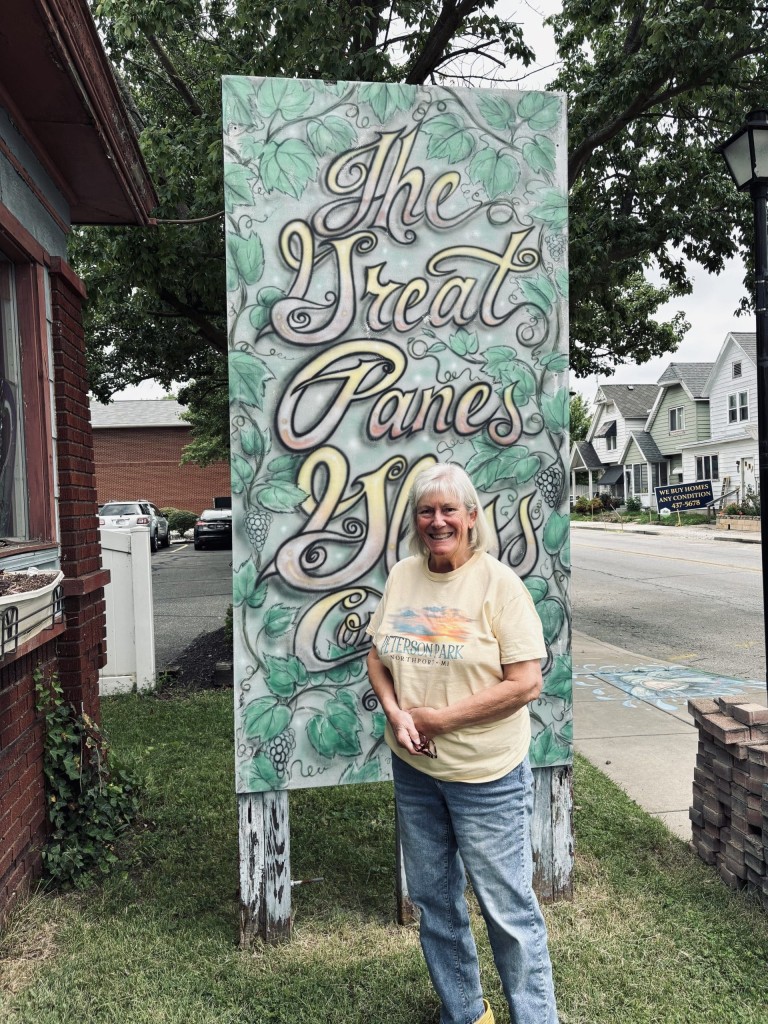
Fort Wayne, IN. – About 15 years ago, Great Panes Glass Company Owner Judi Wire went door-to-door on Wells Street to collect signatures, with the hopes of changing the zoning to an Urban Corridor (UC) District. The idea was to allow mixed-use development while preserving pedestrian-friendly neighborhoods. Think: restaurants, boutiques, and other small, mom-and-pop retailers that can accommodate a broad range of mobility options.
As the Wells Street area became more commercialized, business owners and residents were concerned about maintaining its signature sense of place. For example, certain enterprises would have met the previous Commercial 2 (C2) zoning classification, but they might not have gelled with the area’s existing identity, historic character, urban development patterns, or relationship to the surrounding neighborhood.
Facing this reality, Wire and other concerned community members with ties to the area sought to shape the corridor’s future.
“In C2 zoning, at that point in time, gas stations were allowed,” she says. “Well, putting a gas station on Wells Street would not be a nice thing to happen.”
It turns out other stakeholders felt similarly and wanted safeguards in place to protect the corridor’s look and feel. In face-to-face outreach, Wire and a team made the case for the UC designation and what it might mean for the area.
Wire says the petition process took about three months, but the group was ultimately successful in securing enough signatures to file an application for rezoning with the Department of Planning Services (DPS). The request went through public hearings before the Plan Commission for recommendations, before final approval or denial by the Fort Wayne City Council.
From the perspective of residents or property owners — and admittedly city officials — this process was slow, exhausting, and perhaps most frustratingly, often fruitless. Then, in 2022, the city tried something new.
Enter proactive rezoning. This approach has already reshaped how Fort Wayne’s commercial corridors grow, according to Senior Planner Russ Garriott. He says the city has rezoned more than 213 acres across seven areas from city-adopted plans in the last four years. Currently underway, the South Calhoun corridor will add roughly 61 more acres to this figure. Waynedale and South Calhoun rank among the largest projects tackled so far. The ultimate goal is to carve out a more appropriate zoning district based on actual land uses and to encourage more compatible land uses and development patterns.
The results speak for themselves, especially on the efficiency front. Per Garriott, his department accomplishes roughly two rezonings a year.
“Previously, we were lucky to get one done every two or two and a half years,” he says.
Generally speaking, zoning sets the rules for what can be built on a piece of land and how. Changing those rules used to fall almost entirely on residents. Under the old system, neighborhoods had to gather signatures from at least 50% of property owners in an area just to start a rezoning. City staff helped build the petition, but volunteers shouldered most of the burden.
“With volunteer efforts, they were experiencing the same struggles that we all experience in trying to contact property owners,” Senior Planner Sherese Fortriede says.
The problems stacked up fast. Petitions expired after two years. Out-of-state owners and rental-heavy blocks made signatures hard to collect. Property sometimes changed hands mid-process.
“It was just taking these neighborhoods a really long time to accomplish this task, and it was a lot of legwork for them,” she says. “We really weren’t seeing a lot of the zoning recommendations implemented.”
So a city-county mechanism was introduced to fix it. The Proactive Rezoning Work Group pulls together staff from the Planning and Policy Department and the Department of Planning Services, which handles zoning for both the city and the county. The group’s process is methodical, studying every property before proposing a single change.
City Planning and Department of Planning Services staff have collaborated on rezoning efforts for decades, but the formation of a formal work group emerged from the All in Allen Comprehensive Plan.
In Garriott’s words, “the joint City-County plan highlights the need to align zoning with land uses and to proactively rezone key areas to ensure the development envisioned for those locations.”
The work group now does the legwork itself, then asks the Fort Wayne Plan Commission to formally initiate each rezoning request. Fortreide explains that under state law, rezonings can also be requested by a plan commission or by City Council. The Plan Commission formally initiates the rezoning once that project has been vetted through the Planning & Policy Department. Then, staff proposes the maps and works with the property owners.
“We go down the street on Google Street View,” Fortriede says. “We try to look at all the properties and uses to try to make sure that the zoning aligns with the land uses, and then we will come up with a map of the area to rezone.”
Draft map in hand, the outreach phase begins. Instead of people like Wire having to own this leg of the process, Fortreide’s team contacts neighborhood associations and business groups. Then public input is gathered via open houses. Postcards and flyers follow. That last step matters more than it sounds.
“We will have one-on-one engagement with many of the property owners during that period as we drop off flyers,” Fortriede says. “That really helps too with situations where you have an owner that rents out a building, so we’re able to talk with the tenants.”
There’s also a digital front door. Every project gets its own page on Engage Fort Wayne, with a map of existing and proposed zoning, a timeline, and contact details. Residents can weigh in twice in the process, once at the open house and again at the public hearing.
One principle guides every decision: protect what’s already there.
“Our goal has always been to really try not to do any harm,” Fortriede says. “We don’t want to zone existing uses out of existence unless they agree that they’re okay with that zoning change.”
Year of the Neighborhood Reader Survey
Hey! We could really use your help making sure we can continue producing journalism that informs and inspires. Taking a few seconds to answer these questions will ensure we’re on the right track and that our funders understand our impact.
That belief shapes how the team handles property owners they can’t reach. When a change clearly helps an owner, the team moves forward after exhausting every contact method. When it might create problems, they hold back.
“If it’s the opposite, where we know that this maybe would create a nonconformity… then we may not include that property in the rezoning,” Fortriede says. “Our goal is to do no harm. So we don’t want to have a negative impact on a business.”
Proactive rezoning doesn’t change a neighborhood overnight. Instead, it sets the stage for what comes next.
“As new businesses come in, as properties get rebuilt, that’s when the zoning really starts to take effect,” she says.
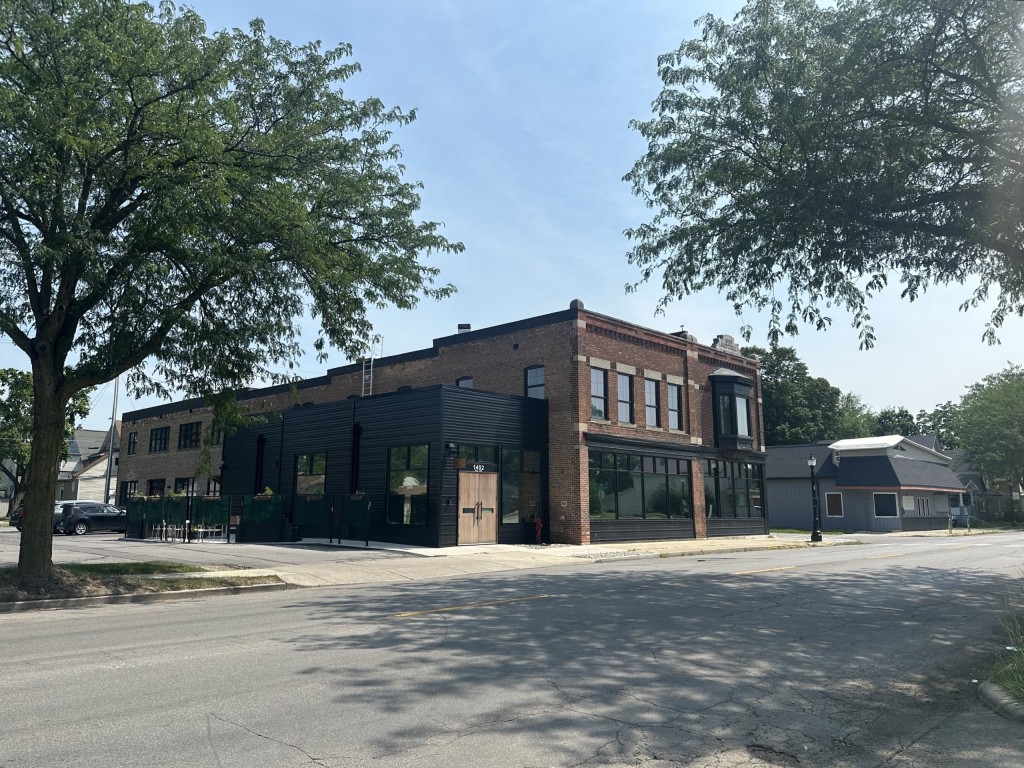
Many of the team’s targets are neighborhood commercial corridors, the streets that give an area its sense of place. Take, for example, Spoke + Ivy, a New American restaurant on West Main Street. The building already stood vacant when the rezoning wrapped up. The new zoning supported exactly the kind of business that moved in.
“Those are the types of businesses that we really like to see in these neighborhoods — something that’s going to attract others to visit the area, or perhaps live in that area of the city,” Garriott says.
Related Articles
MI CDFI Coalition members, collaborators help create connections and collective identity in communities
In order to create sustainable economic and community development, it takes a village, or in this case — an entire ecosystem of organizations, advisors, coalitions, CDFIs, and other collaborators to help foster a sense of place.
Restoring a Cincinnati neighborhood one historic home at a time
An $8.4 million investment is bringing homeownership and a renewed sense of possibility to one of Cincinnati’s smallest neighborhoods.
Minock Park Place provides new affordable senior housing for Detroit’s older residents
In the heart of Detroit’s Grandmont Rosedale neighborhood, a 42-unit, mixed-use development has given senior citizens brand-new affordable housing. Minock Park Place was seven years in the making, and marks the first affordable senior housing community in the neighborhood, located at 19505 Grand River Ave. — a vital commercial and cultural artery.