Improved child care spaces building stronger beginnings for Detroit families
Stronger ECE Spaces is helping child care providers stabilize and improve facilities.
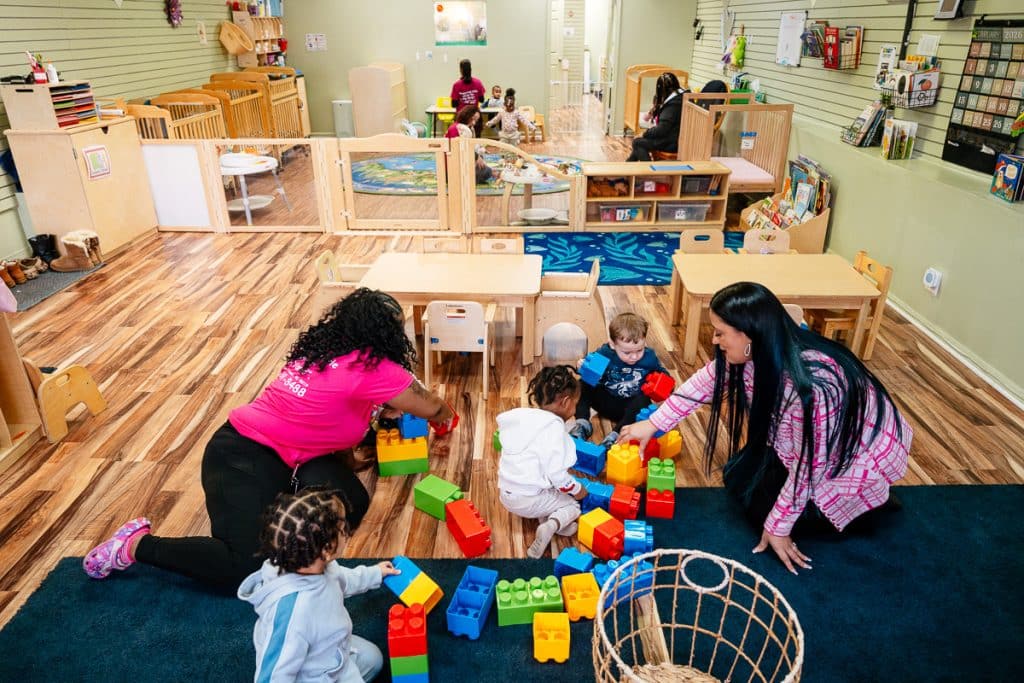
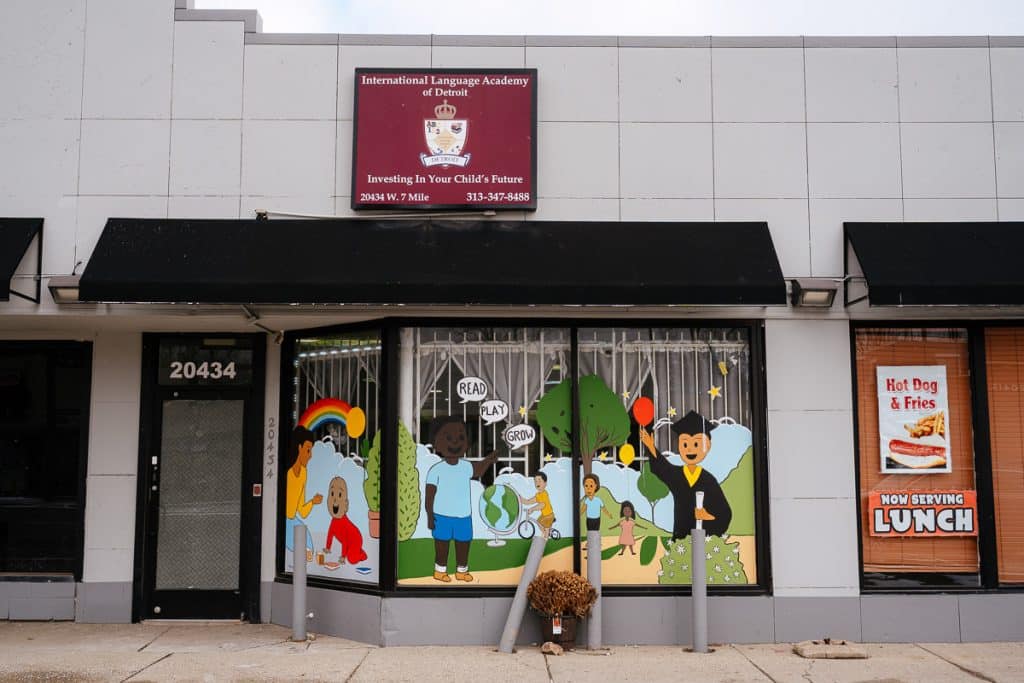
Inside a classroom designed for infants and toddlers on Detroit’s west side, small changes are making a big difference. At the International Language Academy of Detroit (ILA Detroit), CEO Vanessa Traylor has been rethinking everything from classroom layout to lighting — seemingly small but intentional shifts that shape how children feel, explore, and learn.
“The physical environment matters a lot,” Traylor says. “The lighting, the quiet spaces — they need room for exploration. All of these things play a large role in their development.”
Those changes are part of a broader effort underway across the city through Stronger ECE Spaces: A Stronger Nonprofits Initiative Program, an initiative led by IFF and funded by JPMorgan Chase that is helping child care providers stabilize and improve facilities-related challenges that can affect operations, costs, and program quality.
The program brings together a cohort of Detroit-based providers for a yearlong experience that blends group learning with individualized support. Recognizing that many providers share similar challenges, each site has its own set of needs. Participants engage in sessions focused on facility planning, financial management, and accessing capital.
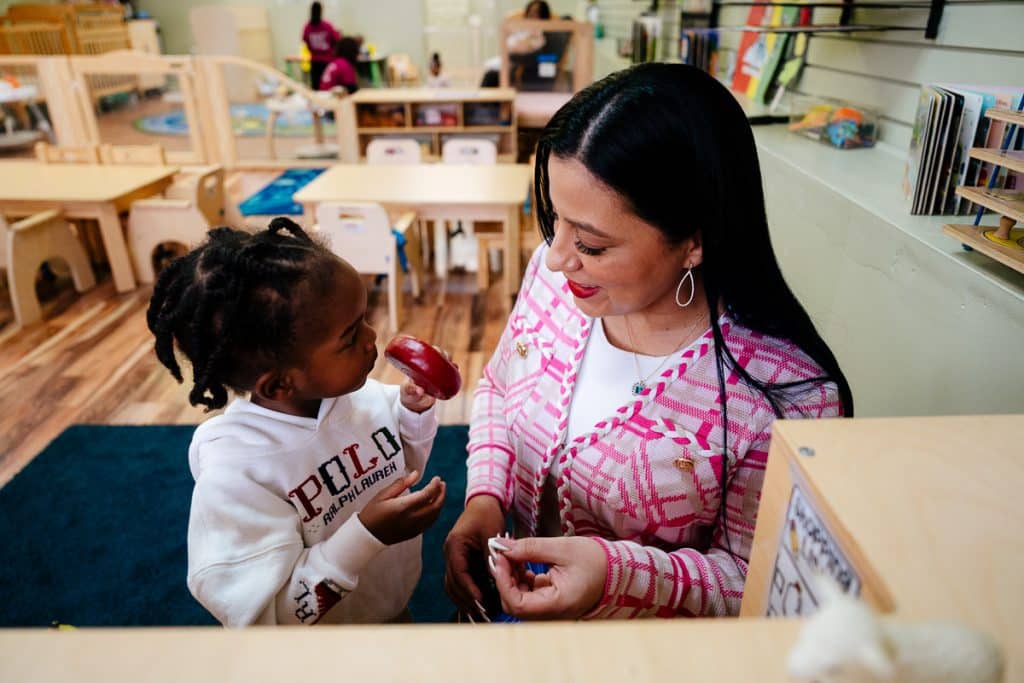
In addition to group sessions, providers receive one-on-one support from IFF facilities experts and financial specialists from First Children’s Finance that helps them move from ideas to implementation. The goal is not only to improve physical spaces, but also ensure those improvements are financially viable over time. For Traylor, that combination of technical guidance and peer connection has been essential.
“The cohort has been valuable because it connects providers who are working toward similar goals,” she says.
Traylor says the program has created space to both troubleshoot challenges and think more strategically about how her center can grow and evolve. This has led to updates in classroom layout and design that help the program better align with licensing requirements while supporting children’s developmental needs.
“These changes help children feel more comfortable and support their interactions and communication,” Traylor says.
Even small adjustments, like how materials are arranged or how space is divided, can influence how children move through the classroom, interact with peers, and engage in learning.
Designing spaces that support learning
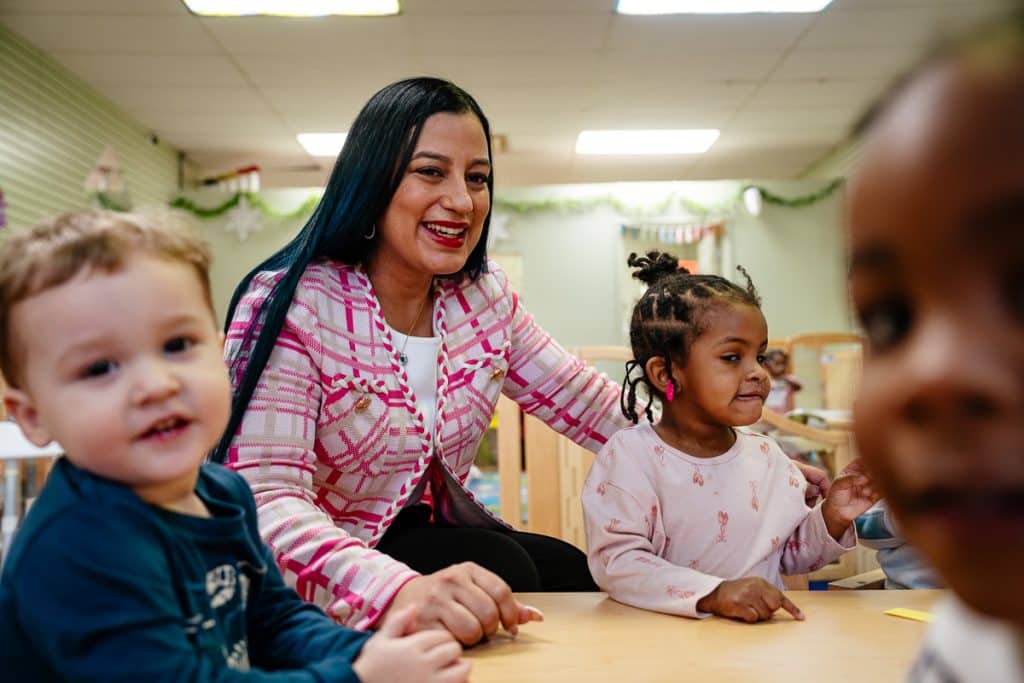
Early childhood experts say those types of changes are foundational to quality. Celina Byrd, director of early childhood strategy at IFF, describes the environment as “a third teacher,” explaining that it shapes how children explore, interact, and make sense of the world around them.
“Well-designed spaces support not only cognitive development, but also social-emotional growth and a sense of belonging,” Byrd says.
Too often conversations about quality center curriculum and instruction while the physical space is treated as secondary — despite its role in setting the conditions for how learning happens. Still, for many providers, creating those environments comes with significant barriers. Aging buildings, rising construction costs, and limited access to capital can make even modest improvements difficult to achieve.
“Providers often know exactly what their spaces need,” Byrd says. “The challenge is having the resources and support to make those changes possible.”
Helping facilities and finances intersect
For Michael-John Myette of First Children’s Finance, the financial realities of the child care sector are central to understanding why these gaps persist. Facilities are one of the largest cost drivers for providers, and decisions about space are deeply tied to a program’s overall financial health.
“Child care doesn’t have big profits,” Myette says. “That can create challenges when it comes to accessing loans or other forms of capital, even when those resources exist.”
Myette emphasizes that many providers operate with limited margins, making it difficult to take on large projects or qualify for traditional financing. At the same time, they are often balancing multiple roles within their businesses. Many providers are managing classrooms, overseeing operations, and handling finances all at once.
“They’re often doing everything,” Myette says. “They’re the teacher, the administrator, the financial manager.”
That reality creates both financial and logistical barriers, limiting the time and capacity needed to plan for long-term improvements. Through the program, First Children’s Finance works alongside IFF to help providers better understand the financial side of facility improvements.
“We look at the full picture — the cost of a project, the revenue potential, and how it affects long-term sustainability,” Myette says.
Rather than focusing only on completing a project, the goal is to ensure those investments strengthen the business over time. As a community development financial institution, the organization also provides access to flexible financing tailored to the child care sector. But funding alone is not enough.
“Access to capital is important, but access to the right capital paired with support is what really makes the difference,” Myette says.
More broadly, Myette points to the need for sustained investment in the sector. He also emphasizes the importance of how child care is understood at a systems level.
“One-time funding is helpful, but it’s hard for businesses to plan around,” Myette says. “Child care businesses are making long-term decisions, and they need consistent, reliable investment to support those decisions. Child care is economic infrastructure. It allows parents to work, and it’s made up of small businesses that are contributing to the economy themselves.”
That framing has the potential to shape more effective policies and funding approaches, ultimately influencing what providers are able to build and sustain.
A program built for long-term stability
As in many communities, child care providers in Detroit operate within financial constraints that can make facility improvements difficult. According to IFF, families in some areas are spending a significant portion of their income on child care, while providers often operate on narrow margins. These conditions can limit the ability to invest in building maintenance, upgrades, or expansion.
Thomas Marzetti, communications manager at IFF, says providers often bring deep expertise in early education and working with families but may not have the same level of experience navigating facilities planning or financial systems critical to long-term sustainability.
Stronger ECE Spaces was developed in response to those gaps, building on IFF’s broader work to expand access to high-quality child care. In Detroit, the program is intentionally focused on supporting providers serving low- to moderate-income families in high-need communities where access to stable, high-quality care is often most limited.
The current cohort includes a select group of Detroit-based providers chosen through an application and interview process. This allows IFF and its partners to tailor support to each site’s specific facility and financial needs.
In the second phase, providers receive one-on-one support from facilities experts at IFF and financial specialists from First Children’s Finance. These consultations are tailored to each provider’s needs, helping address challenges such as space constraints, financial planning, and preparing to access funding.
Traylor drives the point home. She concludes, “When you invest in the environment, you’re investing in how children experience learning every day.”
Photos by Nick Hagen.
Early Education Matters shares how Michigan parents, child care providers, and early childhood educators are working together to create more early education opportunities for all little Michiganders. It is made possible with funding from the W.K. Kellogg Foundation.
Author

Related Articles

Evictions impact millions of kids. These schools get an alert when it happens to their students.
Evictions impact millions of kids. These schools get an alert when it happens to their students.
Is PreK for All meeting its goals?
Roadmap co-author encouraged by how the state is expanding its Great Start Readiness Program into universal pre-K.
Michigan’s free universal pre-K program could serve 70,000 4-year-olds this school year
Launched in 2023, PreK for All now has no income qualifications.