May We Help is solving everyday mobility challenges one person at a time
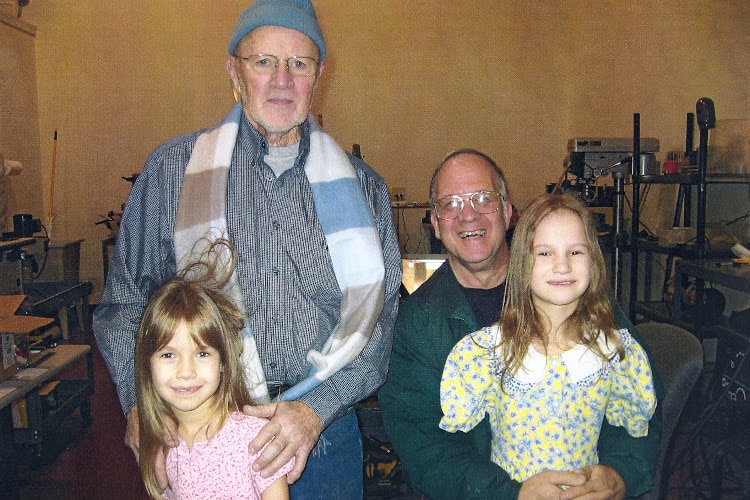
Three guys named Bill had an idea.
At a recent social hour, Beau Bramer introduced himself as a project manager with an organization called May We Help. The name provokes some questions. It didn’t take long to understand the unique mission of this 501c3. Volunteers from various walks of life design, build, and deliver custom solutions to individuals who are challenged in everyday mobility.
A maze of offices, a meeting room, a cupboard stocked with toys, a supply room, and a machine shop, fill the building that was the original office of Tire Discounters. The organization is a fully functional site to service the disability community. Bill Wood, one of the three Bills, was the father of Chip Wood, founder of the tire company. Through his generosity, May We Help has had use of the building while going through growing pains.
Bramer says that the organization is projected to reach 2000 requests for design solutions in 2026. Engineers, industrial designers, inventors, welders, woodworkers, seamstresses, physical therapists, occupational therapists, and doctors, assess and provide commercial-grade products designed upon request making lives a bit easier with well-thought-out project plans.
A staff of three full-time and two part-time employees support volunteers and manage requests. An internal project management system gives volunteers the scope of projects. Once a project is picked up, a site visit is scheduled and the process of creating products begins. Staff and volunteers gather once a month to celebrate the help they have provided in the previous month. To say this is a community of generous people is an understatement.
A meeting of the Bills
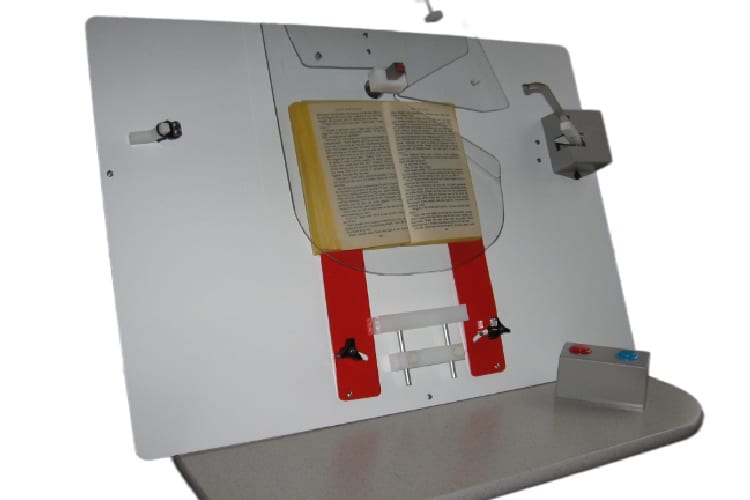
In 2003, a young woman with cerebral palsy loved to read. She was using the eraser end of a pencil in her mouth to flip pages. Bill Wood found out about the young woman’s plight and devised a pre-Kindle platform with a button that made it easier for the woman to turn a page.
Bill Sand, who went to night school for ten years to become an engineer, learned about a quadriplegic person whose mouthpiece wore out with such frequency that it needed to be replaced once a month. Without the mouthpiece he could not steer his wheelchair on his own. The monthly cost was $130 for each replacement. Tapping into his long career as an industrial designer, Sand found that the commercial mouthpiece made of wood swelled over time and wore out. He came up with a design for a mouthpiece made of aluminum. Bill Deimling, a business associate for forty years, suggested that Sand cover the mouthpiece in plastic. The original piece continues to be used twenty years later.
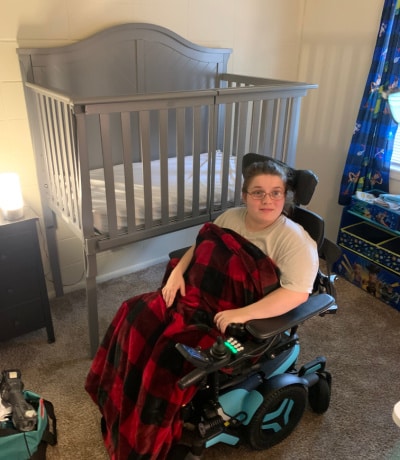
Meanwhile, Deimling, creator and president of DEIMLING/Jeliho Plastics, Inc., was working on a solution for another quadriplegic person who needed to drink water every five-to-ten minutes. Deimling and Wood had already met and started trading creative solutions for a number of projects. As Deimling says, he studied landing gear on airplanes and found a connection between it and what he wanted to achieve for the young man whose plight was the result of an accident with a drunk driver. He called on both Wood and Sand to help with a mechanism to deliver a glass of water to the man’s mouth. It is navigated by the man with an instrument called “star gaze” which is controlled by his eyesight.
At first, the three Bills traded ideas, but word travels fast in the disability community and the number of requests grew. Before long, they found, as Deimling put it, a box of a workshop. In 2010, Bill Wood learned that he was dying of cancer and approached the other two Bills. “We really need to carry this forward,” he said. He created the William H. Wood Foundation in order to give back to the Greater Cincinnati area.
With partial funding from the foundation, May We Help was created as a 501c3, the name attributed to Wood’s sense of fulfilling dreams one at a time. Deimling, now sixteen years and one (literal) stroke since that day in 2010, says, “It really is our legacy.” And Sand nods his head in agreement. They are surprised by the reach of the organization.
The many faces of May We Help
Requests come through the website. Each request requires a determination of how May We Help can do just that. It is vital that the recipient be involved in the solution, not just be delivered a product. Bramer recounts how the organization has grown. They served one hundred people in 2019. Then COVID hit and Zoom opened a world of challenges and growth. The organization moved from serving the Cincinnati region to providing projects in 44 states along with countries around the world. Each request is honored with what is called a discovery visit.
What they learned and developed during the pandemic has allowed broader reach, no matter where the request comes from. Now, if someone in the state of Wyoming needs help, it is like helping people in the city of Wyoming. Being in the same place isn’t necessary, however it does make it easier. COVID forced the organization to pivot to an online system during the pandemic, but the organization is now back to in-person visits.
In 2017, Impact 100, a women-funded grant resource in Cincinnati, awarded May We Help $117,000 to furnish the machine shop with state-of-the-art tools. The grant specified that funding could be used only for the purpose of purchasing machines and tools. Tom Hanson, shop manager, says he doesn’t complete projects but rather builds a particular part that someone may need to complete a project, which is indicative of how many of the volunteers design. As shop manager, Hanson’s focus is two-fold: keep the machine shop in great condition and keep volunteers safe through proper education on use of the equipment.
The day I visited, Bob Woolf worked on a façade of a playhouse. He explains a twelve-year-old autistic girl has developmental skills that align more closely with those of a five-year-old. Her dream is to have a kitchen set like other children have. Woolf describes her as being in the body of a pre-adolescent. Mass-produced playhouses with kitchen sets wouldn’t work. Woolf will deliver the completed project soon. He has found measuring and creating such a project has it’s own challenges. A pink and gray facade will likely make the girl very happy.
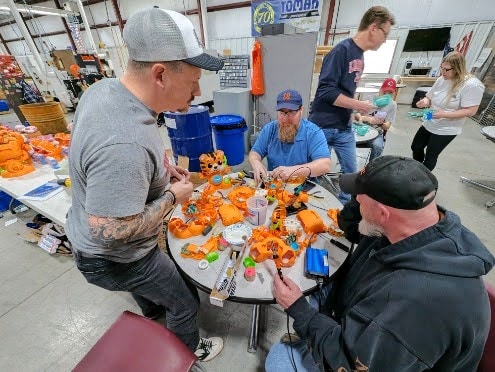
In a storage room, automated, battery-operated toys that require fine motor skills when sold on a commercial basis, are stacked as if Christmas is just around the corner. Because of one request, a 3-D printed button is installed in each of these toys for children who struggle with fine motor skills. May We Help collaborates with Kaleidoscope Innovation, University of Cincinnati engineering school, and Milford High School to design and produce the 3-D switches.
Build days give one-time volunteers training on how to adapt the toys, which is a simple but important part of the organization’s mission. Companies such as Fifth/Third, Ethicon, AtriCure, American Fan, Tomak, University of Cincinnati, and many more groups have come for one-day service opportunities.
Each month, May We Help holds several adaptive equipment donation events. They accept clean and functional equipment at these events. Also, during these hours a physical therapist is on site, providing guidance for individuals who visit during the events. Mechanically savvy volunteers are on hand to adjust equipment or to figure out what is necessary to make the equipment functional for the person.
A dream becomes music to the ear
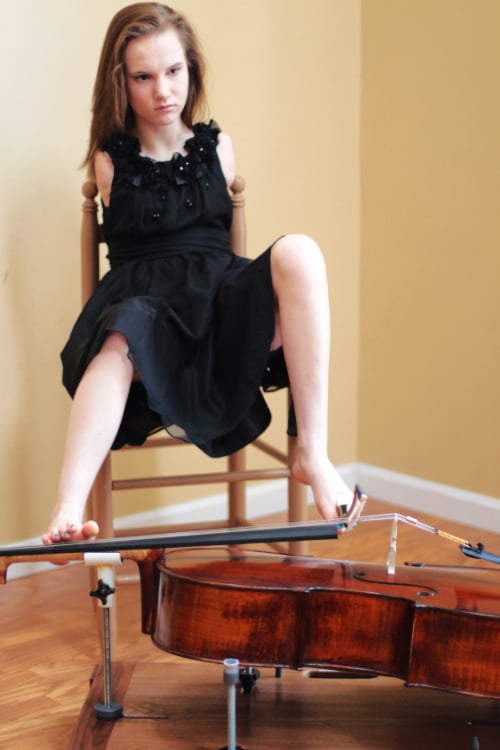
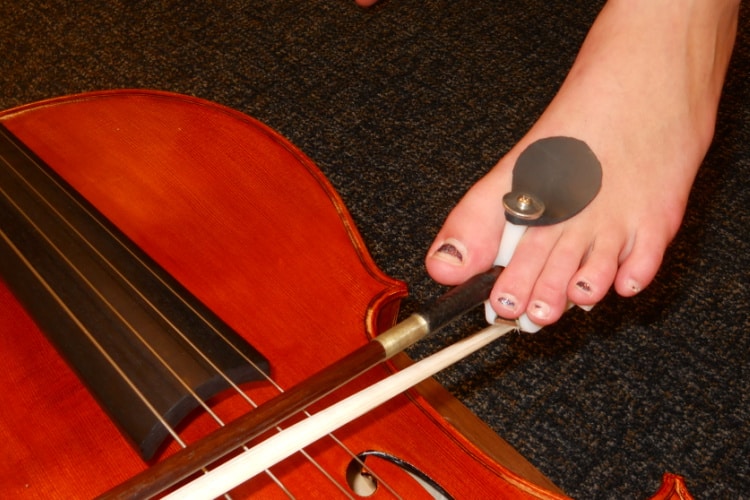
Sand relates a story from early in the organization’s life. Sisters, Elena and Inga, adopted from Russia, both had dreams of playing the cello. Both had been born without arms. However, their desire to play the cello was fueled by their mother, who is a cellist herself and teaches the instrument.
For Sand, it is a poignant moment to recall how the project began. He says, “I worked with Bill Wood at first. I didn’t know anything about the cello or playing a musical instrument.”
The learning curve was steep. Cellos come in various sizes, and the stands or gimbals must fit the size of the cello. Wood’s original design was made of aluminum. Sand worked with that design until he was asked to design a collapsible stand that had to be shipped to Palestine. That’s when he got the idea to use black walnut wood.
Sand machined forty custom parts for the gimbal, which must move in order to assimilate the movements typical of a cellist who played with their hands. With Sand’s design. Elena and Inga could reach their bows with their left foot and toes and maneuver the gimbal with their right feet to create the richness of sound. Elena won a music competition, attended New York University, and will be performing in New York in November.
Born out of that one project, May We Help, Sand and other volunteers held a music camp at Northern Kentucky University this summer for the first time in ten years. The intention is to make it an annual event.
Moving forward and moving up
Dreams of a new space are coming to fruition. In the next few months, work will be completed on a temporary facility with a three-year lease. A capital campaign will begin soon to raise money for a more permanent home in the not-too-distant future. A permanent home will give the hundreds of volunteers the ability to maximize their talents and provide key help to individuals. From last year’s number of over 1,700 people served to today, when the projection is for over 2,000 in 2026, it’s evident that this work is vital. From a moment when a man named Bill had the bright idea to help a woman turn a page, the organization continues to turn pages in the lives others.
Here’s a way to learn more and support May We Help:
What: 2026 Engineering Dreams Gala
Where: Cincinnati Music Hall Ballroom, 1243 Elm St., Cincinnati
When: Sept. 11, 2026, from 6:30-10:30 p.m.
Reserve tickets and learn about sponsorships at the May We Help Gala page.
Author

Related Articles

A new collaborative funding effort for arts in Florida
Art Everywhere awarded close to 30 arts organizations a combined $350,000 in grants for events that can establish Pinellas County as a cultural destination.
Rx Kids expansion to 60 Michigan communities is balancing family budgets and birthing healthier babies
The Michigan program is the largest unconditional cash transfer program for expectant parents in the country.
Is this the solution to your city’s broken sidewalks?
Los Angeles is partnering with nonprofits to fix sidewalks near LA28 Olympic and Paralympic venues, cutting costs and speeding up repairs.