Past, present, future: Orange Mound residents discuss a need for community development
Discussions spread to the types of housing available in the community with some saying that the housing type isn’t the primary problem, but people not being able to afford to become homeowners is a problem.
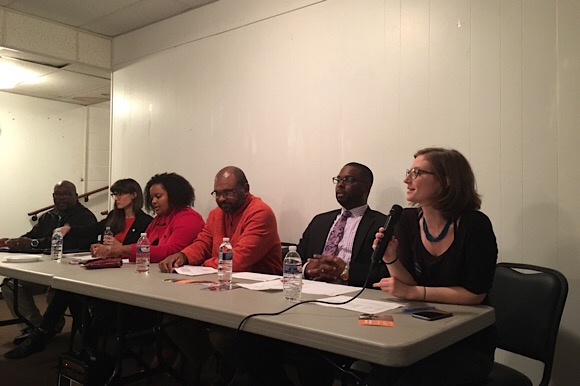
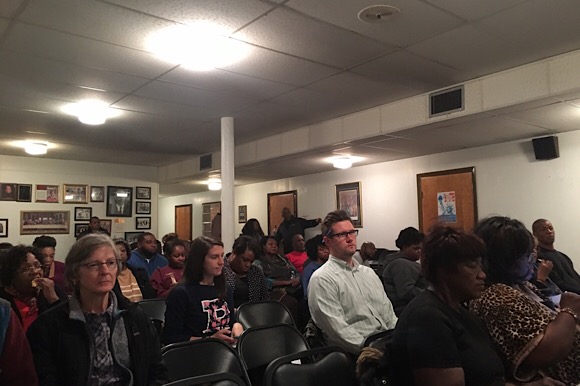
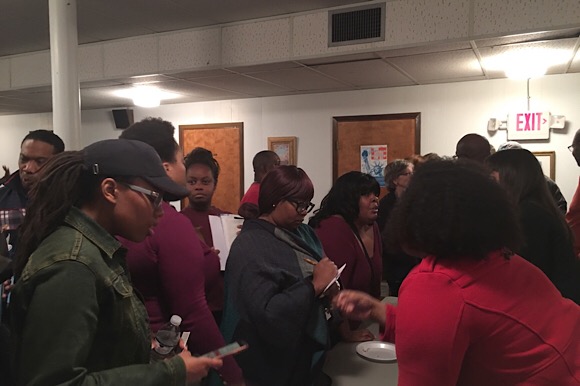
Almost 100 people attended Housing in Orange Mound: A Community Conversation on Tuesday Night in Beulah Baptist Church on Douglass Avenue.
Panelists included Howard Eddings with Neighborhood Housing Opportunities, Dwayne Jones a general contractor in Orange Mound, Amy Shaftlein with the Tennessee Housing Development Agency, Britney Thornton with JUICE Orange Mound, and Paul Young with the City of Memphis Division of Housing and Community Development.
Event-goers discussed homeownership, a need for better infrastructure in Orange Mound, and other development desires for the community. Founded as a community built on black homeownership and entrepreneurism just 25 years after the abolition of slavery, Orange Mound was once a thriving area for families.
Recognized as a Preserve America Community two years ago, the pieced-off Deaderick plantation has history and tradition on nearly every corner. But, as one panelist pointed out in the evening discussion, dwelling on the past of Orange Mound may not be the best as residents and community stakeholders decided how to move forward with ideas for neighborhood revitalization.
“We have to become attractive to people that may want to live in Orange Mound. How do we do that? We have to address the infrastructure. We have to be about change from a holistic perspective,” Howard Eddings said. “We have education issues, transportation issues—those are important when considering development and changes in Orange Mound.”
Paul Young suggested that the vision for Tourism Development Zone (TDZ) funds being allocated towards Old Melrose High School and recent plans for a sports complex at the Coliseum, will help make Orange Mound a more desirable destination.
Alumni and community advocates fought to keep Old Melrose High School, which was closed in 1979, from being demolished. In 2001, it was placed on the National Register for Historic Places and now stands empty and dilapidated on 843 Dallas Street between the Orange Mound Senior Center on Park Avenue and the Church Health Center on Douglass Avenue.
“It’s important to build a destination—something that people want to come to and in that regard, with its history, Orange Mound is unmatched,” Young said.
Discussions spread to the types of housing available in the community with some saying that the housing type isn’t the primary problem, but people not being able to afford to become homeowners is a problem.
Amy Shaftlein posed the questions of building better relationships with banks. A number of factors make it difficult for potential homebuyers to obtain home loans in Orange Mound, such as low sales prices and the lack of comparable sales to support the mortgage amounts.
Dwayne Jones insisted that there needed to be more advocacy surrounding improving home-ownership and blight in the community.
“We need to get a core group of people to advocate not only for what we don’t want, but for the things we do want to change,” Jones said. “We need to get engaged in policy making.”
Britney Thornton emphasized that with the amount of empty lots in the community and the increasing number of investors buying blighted homes that Orange Mound is, “in danger of becoming a gentrified community.”
According to US Census data gathered for the Orange Mound Community Development Corporation, in 2015, approximately 87 percent of Orange Mound residents made less than $50,000 annually.
“My sincere hope for Orange Mound is that we do not want to displace poor black people,” she said.
As the panel event wrapped up and more people posed questions, the audience agreed that the discussion was the first of many and that progress in the community will take time and a collective, organized effort.
Housing in Orange Mound: A Community Conversation was produced in partnership with the Tennessee Housing Development Agency, the City of Memphis Division of Housing and Community Development, the Melrose Center for Cultural Enrichment, and High Ground News.
Author

Related Articles
This neighborhood accelerator strengthens community in the digital age
The FORT-ify Neighborhood Accelerator empowers local associations with connections to funding, resources, and face-to-face engagement opportunities to build stronger communities.
From abandoned slope to natural sanctuary: Sugar Loaf opens a vibrant new chapter in Northern Michigan
The former ski resort begins a new life with the unveiling of its brand-new Summit Trail and breathtaking 360-degree autumn views.
MI CDFI Coalition members, collaborators help create connections and collective identity in communities
In order to create sustainable economic and community development, it takes a village, or in this case — an entire ecosystem of organizations, advisors, coalitions, CDFIs, and other collaborators to help foster a sense of place.