The Farm Bill, SNAP, and the childcare connection
SNAP helps families meet all basic needs, including childcare.

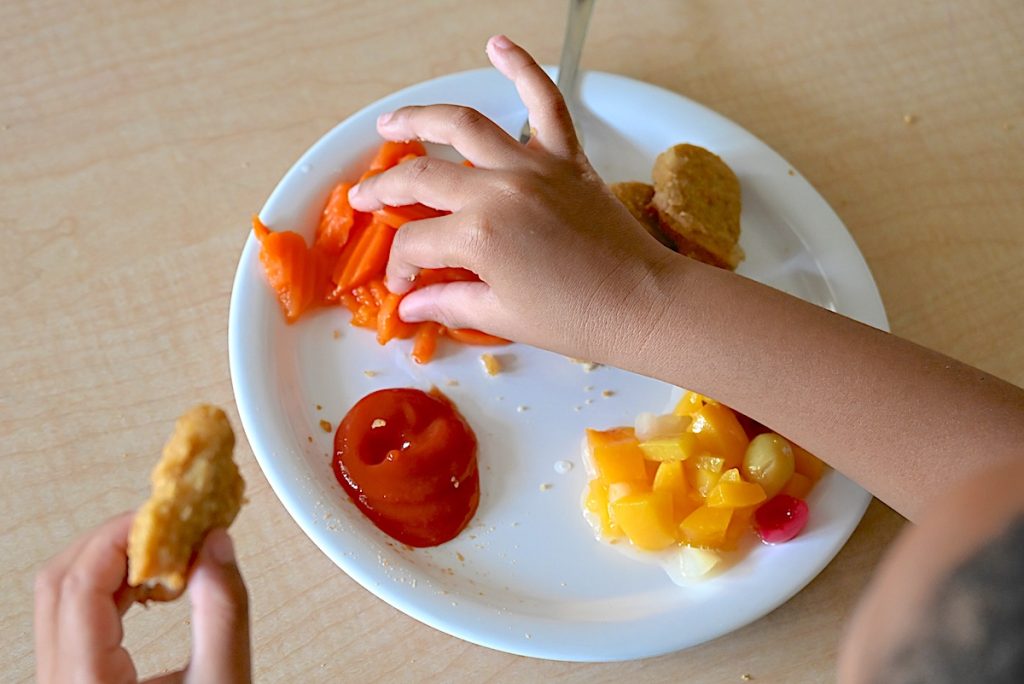
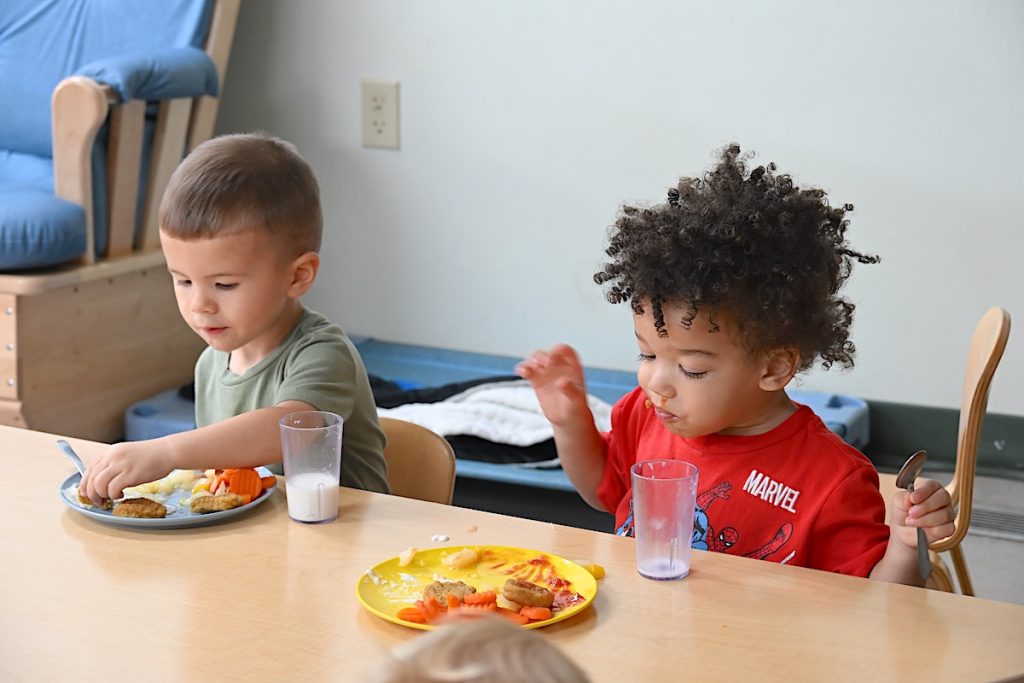
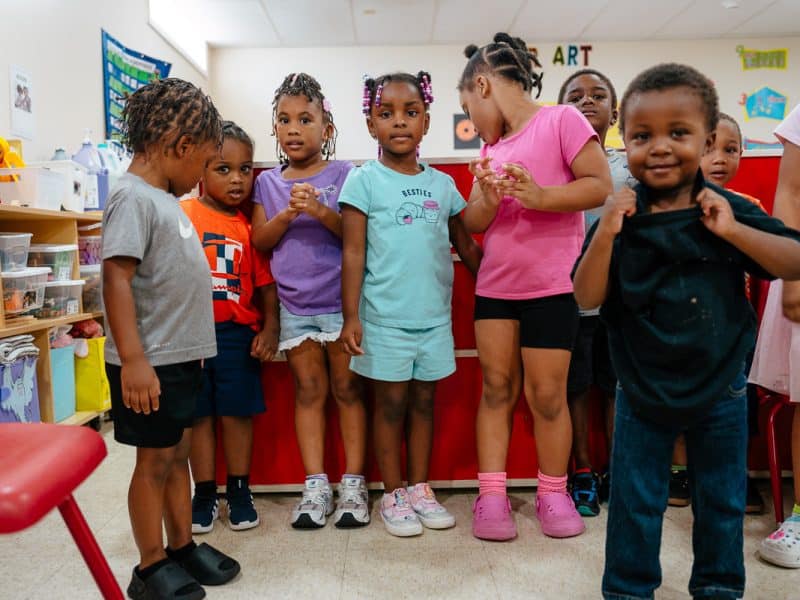
Pictured: 3-year-old at Stars and Stripes Learning Station in Battle Creek.
For many Michigan families, the Supplemental Nutrition Assistance Program (SNAP) does far more than help put food on the table. It can mean the difference between paying for groceries or childcare, staying in the workforce or cutting back on hours, and maintaining financial stability or facing impossible choices.
Although SNAP is commonly associated with reducing hunger, officials at the Michigan Department of Health and Human Services (MDHHS) and advocates at Groundwork Center for Resilient Communities say its impact extends well beyond the grocery store. By helping families cover the cost of food, the program allows many parents and caregivers to redirect limited income toward other essentials, including childcare, housing, transportation and healthcare.
Researchers say that when nutrition assistance is weakened, those financial tradeoffs become even more difficult, creating ripple effects for children, families and Michigan’s early childhood system.
Those concerns have taken on renewed urgency as Congress considers changes to federal nutrition spending through the Farm Bill. Reauthorized about every five years, the Farm Bill establishes federal funding priorities for agriculture and nutrition programs, including SNAP, the nation’s largest food assistance program. Advocates say its impact extends well beyond grocery budgets, influencing children’s healthy development, parents’ ability to remain employed, and the financial stability of the early childhood workforce.
“The Supplemental Nutrition Assistance Program supports families by increasing their food purchasing power, allowing them to stretch household resources to meet other essential needs such as childcare, housing, and transportation,” says Lynn Sutfin, public information officer for the MDHHS.
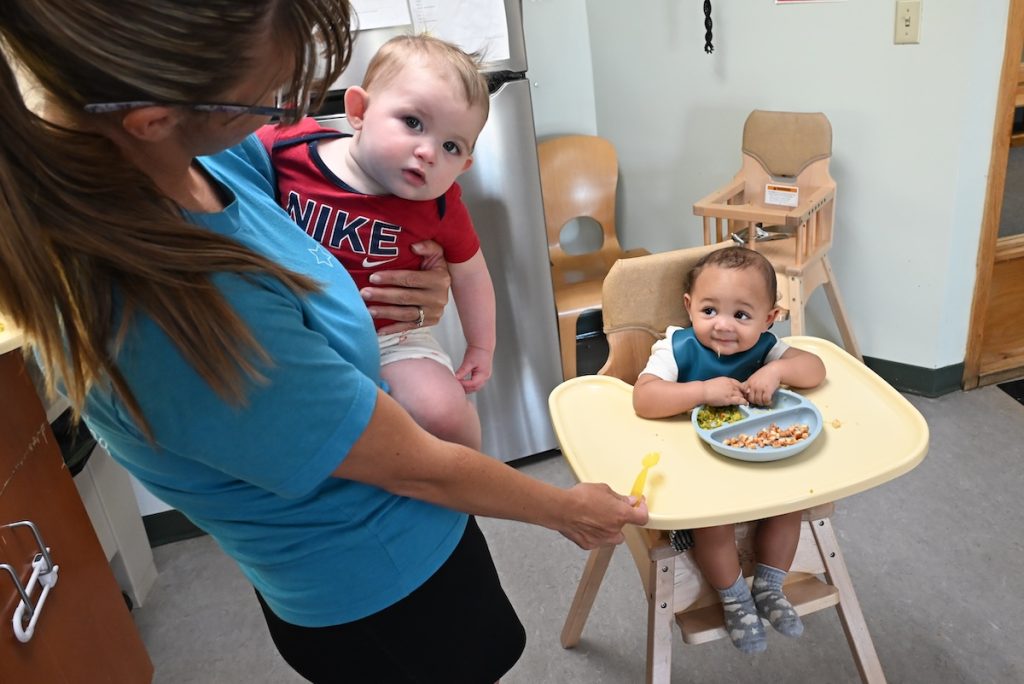
Pictured: Jessica Steele and toddlers at Stars and Stripes.
A connected system
For most Michigan families, groceries and childcare are covered by the same household budget. When grocery costs consume a larger share of a family’s income, less is available for childcare costs, housing, transportation, and other necessities. MDHHS says SNAP helps ease those pressures. In addition, SNAP helps relieve the financial strain within the workforce responsible for caring for Michigan’s youngest children.
MDHHS says SNAP helps ease those pressures by allowing working families to stretch their food budgets and redirect limited income toward other necessities, including childcare. The department also notes that SNAP eligibility can simplify access to school meal benefits, creating another layer of support for children beyond the home. In addition, SNAP helps relieve the financial strain within the workforce responsible for caring for Michigan’s youngest children, a workforce that is vastly underpaid.
In fiscal year 2024, more than 492,000 Michigan children received SNAP benefits, and children were part of 43% of all SNAP households. Nearly eight in 10 Michigan SNAP households included at least one employed adult, underscoring that many recipients are working families whose wages do not fully cover basic living expenses.
More than food assistance
“When families can’t afford childcare, healthcare, food or housing, one or more of these things need to be bolstered,” says Jen Schaap of Groundwork Center for Resilient Communities. “If families are not earning enough at work, it makes sense we would have to supplement elsewhere.”
The rising cost of childcare has made those tradeoffs increasingly difficult.
“Quality childcare is expensive,” Schaap said. “You need trained staff, and to keep them you need to pay them enough. It’s a hard job and there’s lots of turnover. The time it takes to comply with licensing requirements makes it impossible to charge an affordable rate to families.”
Schaap says those realities force many families into impossible choices. She recalls one Michigan mother whose husband died while she was raising a child with disabilities. Although she worked in food service at a community college, her income exceeded the eligibility threshold for childcare assistance. Without additional support, she was forced to remove her child from an early learning program.
“She made too much money to qualify,” Schaap says.
Advocates say stories like this illustrate how families can fall into a gap where earnings are too high to qualify for assistance but too low to afford necessities.
Supporting children’s earliest years
Research shows nutrition during pregnancy and the first five years of life lays a foundation for children’s physical growth, brain development, and long-term health. For many Michigan families, programs such as SNAP and WIC help provide that nutritional foundation during children’s earliest years.
“By helping families afford nutritious food, SNAP can support children’s healthy development while allowing families to devote more of their limited income to other necessities such as housing and childcare,” Sutfin says.
But SNAP is only one piece of the federal nutrition safety net. Paula Martin, nutrition specialist at Groundwork Center for Resilient Communities, says the conversation extends beyond SNAP to include the Special Supplemental Nutrition Program for Women, Infants and Children (WIC), which provides nutrition support during pregnancy and through age five.
“WIC requires meeting with a nutritionist, and the food packages focus on key nutrients that are vital for healthy pregnancies and fetal development through birth to age 5,” Martin says.
The proposed WIC cuts would take away more than $141 million in fruit and vegetable benefits from nearly 5.4 million toddlers, preschoolers, and pregnant and postpartum WIC participants. Martin is concerned that these proposed reductions to WIC benefits could make it harder for families to purchase fruits and vegetables rich in nutrients such as folate and iron. Reducing monthly produce benefits could push families toward less expensive options while limiting dietary diversity during critical stages of child development. She also warned that eliminating virtual certification appointments could reduce participation among rural families that rely on telehealth services.
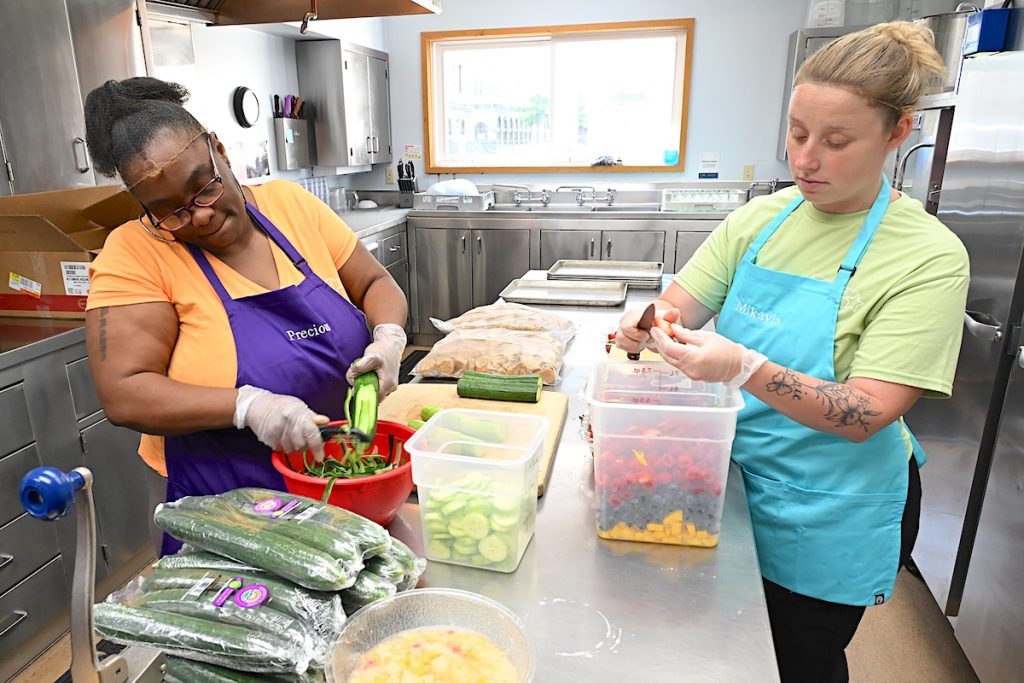
Precious Coleman, left, and Mikayla Davis, prepare food for Stars and Stripes Learning Station children.
More than a Farm Bill
Although the Farm Bill is often discussed as legislation that shapes agriculture and food assistance, its effects reach into places many people may not immediately recognize — childcare centers, classrooms, and family kitchens.
For children, access to nutritious food during pregnancy and the first five years of life supports healthy development. For parents, nutrition assistance can help make it possible to remain in the workforce while paying for childcare. And for many early childhood educators, those same programs help supplement wages that often fail to keep pace with the rising cost of living.
Together, those realities illustrate why advocates say food assistance should not be viewed in isolation. Programs like SNAP and WIC are part of a broader network of supports that help families meet basic needs while giving young children the opportunity to arrive at school healthy, nourished, and ready to learn. Martin believes preserving those supports is essential.
“This program is a national treasure and should be preserved and not cut,” she says of WIC.
As Congress debates the future of federal nutrition programs, advocates hope lawmakers weigh more than the cost of providing food assistance. They argue these investments also support family stability, workforce participation, and the healthy development of Michigan’s youngest children.
Photos by John Grap.
Early Education Matters shares how Michigan parents, childcare providers, and early childhood educators are working together to create more early education opportunities for all little Michiganders. It is made possible with funding from the W.K. Kellogg Foundation.
Author

Related Articles

Is PreK for All meeting its goals?
Roadmap co-author encouraged by how the state is expanding its Great Start Readiness Program into universal pre-K.
Michigan’s free universal pre-K program could serve 70,000 4-year-olds this school year
Launched in 2023, PreK for All now has no income qualifications.
Free Wonderschool platform will help Michigan families find childcare faster
Scheduled to launch early 2027, the platform will connect parents to available childcare and preschool spaces with one application.