University of Michigan program offers expensive denture treatment for free
The University of Michigan’s Senior Implant Overdenture Restorative (SenIOR) program offers implant overdentures for free and is aiming to improve insurance coverage for the treatment.
This article is part of State of Health, a series about how Michigan communities are rising to address health challenges. It is made possible with funding from the Michigan Health Endowment Fund.
Dentures don’t work the way they’re supposed to for 59-year-old Lansing resident Diane R.*, and the resulting impact on her life has been extremely challenging. She started wearing dentures about a year ago, but her bottom dentures don’t stay in correctly.
“With the top denture, you automatically get that suction at the top of your mouth, but at the bottom, you don’t get that,” Diane says. “So you have to rely on a lot of adhesives and things like that to keep it in place, and that only works so well.”
As a result, she’s found herself too embarrassed to participate in social activities, which are important to her as someone who experiences depression. She’s also struggled to get the nutrition she needs while being unable to chew most foods. So it was a major relief for her to discover the University of Michigan’s (U-M) Senior Implant Overdenture Restorative (SenIOR) program, which offers an expensive denture stabilization treatment for free.
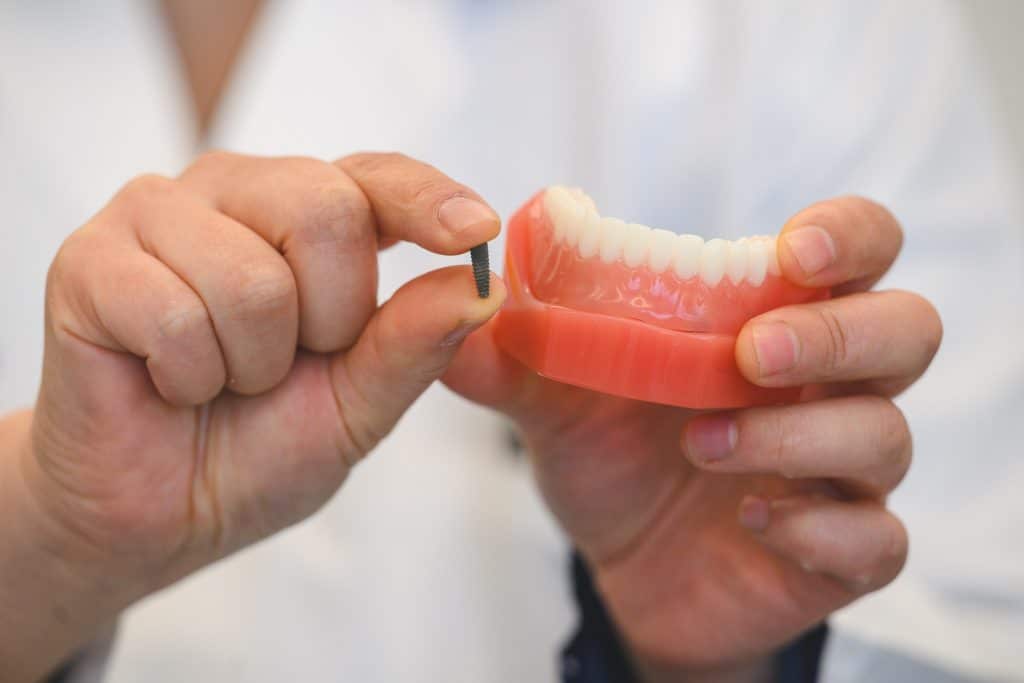
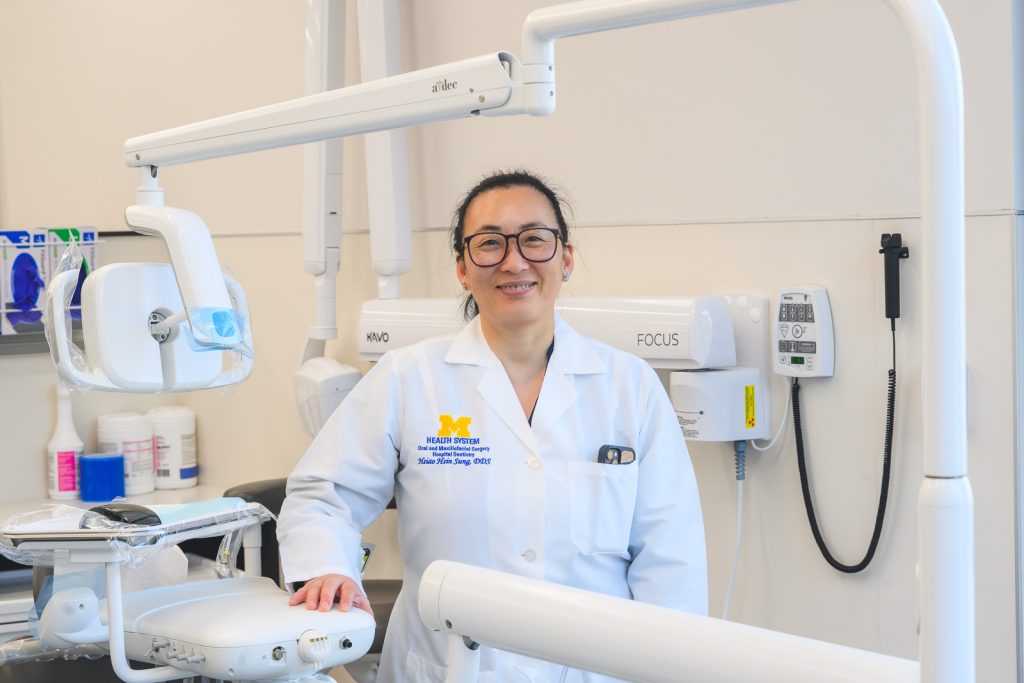
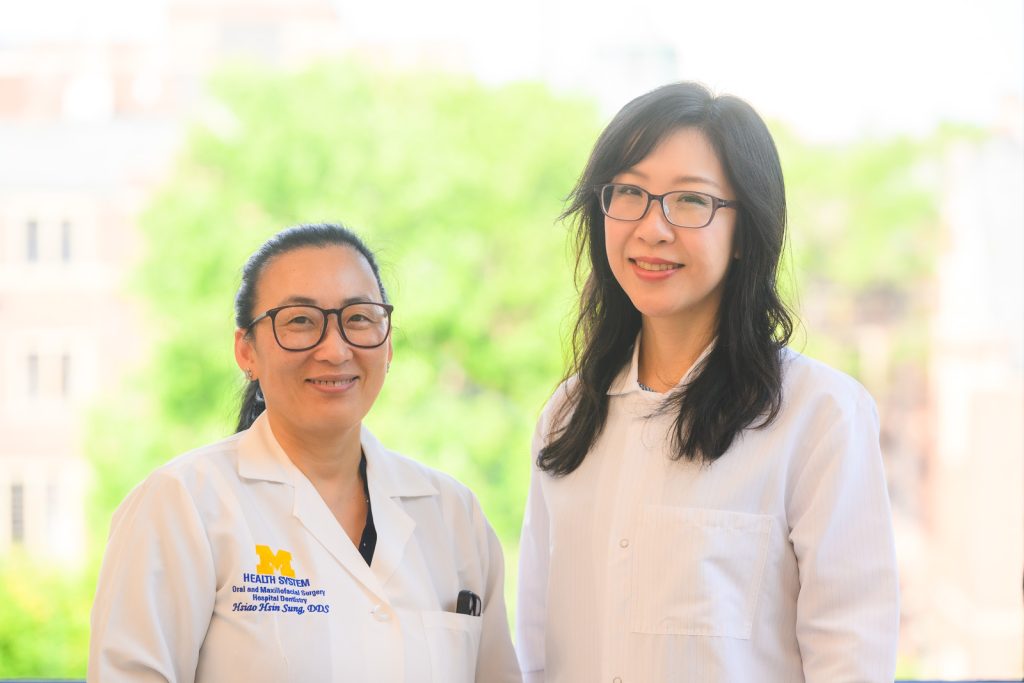
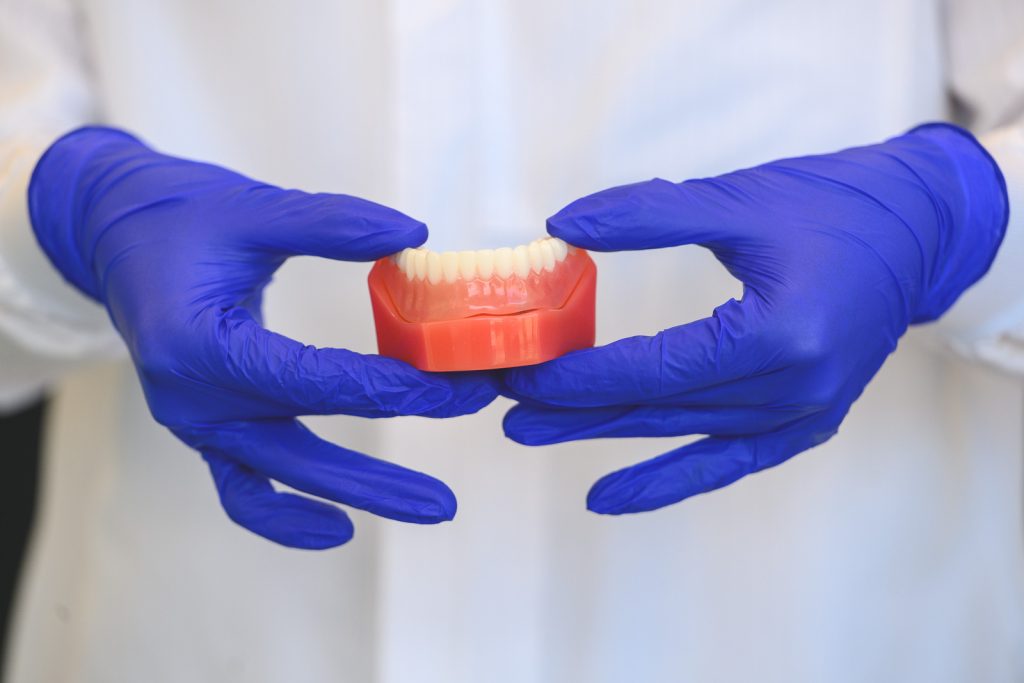
The program is led by Dr. Hsiao Hsin Sung, a clinical associate professor of dentistry at U-M, and funded by the Michigan Health Endowment Fund. The program will provide implant overdentures to 100 patients over a two-year period that began last year and will run through 2027. The procedure, which takes several months, involves surgically inserting small metal posts into the patient’s jaw, providing a stable, permanent structure to securely hold dentures in place.
Sung says loss of bone structure in the jaw is the most common reason that many patients have trouble keeping traditional dentures in place. That bone loss is also quite common and unavoidable after people lose teeth.
“When the denture is not stable, it’s not retained well. Usually they are mobile inside the mouth,” Sung says. “And that makes the patient feel very uncomfortable because they cause pain, because they are not able to eat. They are not able to talk and of course they lose their confidence because they are not able to go out to socialize with people.”
Unfortunately, implant overdentures are quite expensive; Diane says hers would have cost $8,000 to $10,000 out of pocket. What’s more, insurance companies usually provide little or no coverage for implant overdentures, generally categorizing them as a cosmetic procedure.
Prior to joining the SenIOR program, 72-year-old Muskegon resident Christine Nicholes says she’d spent three years trying to find a way to get implant overdentures. She’s had periodontal disease since childhood and used to grind her teeth at night, spending thousands of dollars on bridges, crowns, and other treatments that didn’t work. When she looked into implant overdentures, she says she was “simply floored” to find prices ranging from $16,000 to $25,000.
“I was just so disheartened by everything that … I gave up for a while, but my heart was still wanting to get this done,” she says.
The SenIOR program’s short-term impact entails providing free implant overdentures to Nicholes, Diane, and numerous other patients like them. But Sung is also working to ensure the program has much bigger long-term outcomes. The program will study implant overdentures’ impact on patients’ well-being, resulting in research that Sung hopes will influence insurance companies to improve their coverage for the procedure. She says patients will be surveyed on their eating and social habits before and after receiving overdentures, aiming to measure improvements in the patients’ quality of life.
“What we are trying to do is to expand this coverage to seniors, to patients older than 65 years who don’t have any teeth,” she says. “They need to improve the food intake to improve their overall well-being. … We think that this type of implant should be covered by the insurance because it’s a medical necessity.”
Nicholes says the SenIOR program’s potential for bigger-picture impact is just as important to her as the more immediate impact on her own life.
“I want to prove to the medical and the dental companies that this is not cosmetic,” she says.
A final component of the SenIOR program will pursue another new avenue for improving access to implant overdentures. While the program is currently available to patients all over Michigan, they must travel to U-M in Ann Arbor to receive their overdentures. Sung and her colleagues plan to experiment with 3-D printing overdentures so that they can be made available anywhere in the state.
“Our patient population [is] elderly, so for them to travel here is a little challenging,” Sung says. “… Sometimes they need to have a caregiver who can be available to bring them here. So it’s a lot of limitations for our patient population.”
Sung says she hopes for the SenIOR program to continue beyond the two years it’s currently funded for, and is currently seeking additional grant funding to make that possible. That’s an exciting prospect for patients like Diane, who is now about five months into the process of receiving implant overdentures. Diane is looking forward to major, positive life changes once the process is complete.
“I’m so excited I’ll be able to go out and eat with friends now, because I’ve been avoiding that,” she says. “I’m excited to be able to eat good food, nutritious foods. … Can you imagine going through life without being able to eat nuts, or bite into an apple, or eat raw broccoli? It’s a really big deal.”
*surname abbreviated at her request to protect her privacy.
Author
Related Articles
Column: Medicaid Changes and the Potential Impact
Recent actions in Indiana, Nebraska, and other states to come, put at risk those personal choices of the disabled who are dependent on Medicaid, about where and how to live their lives.

How are Michigan’s families doing?
Rising costs, child care shortages and barriers to health care are straining Michigan families. What could help?
In memory care deserts, senior centers can help close the gap in brain-related healthcare
The aging populace has already led to an unprecedented rise in the prevalence of Alzheimer’s disease and related dementias.