Home-based providers call for flexibility as Michigan expands Pre-K for All
Home-based providers could be significant to making Pre-K for All available to more children.
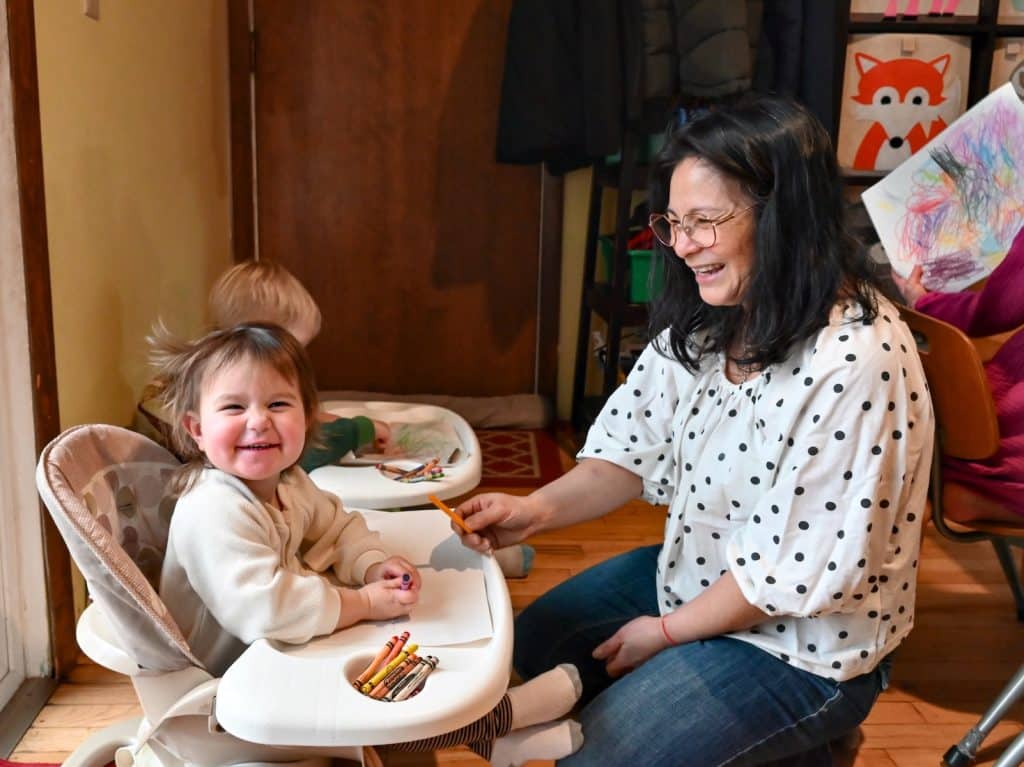
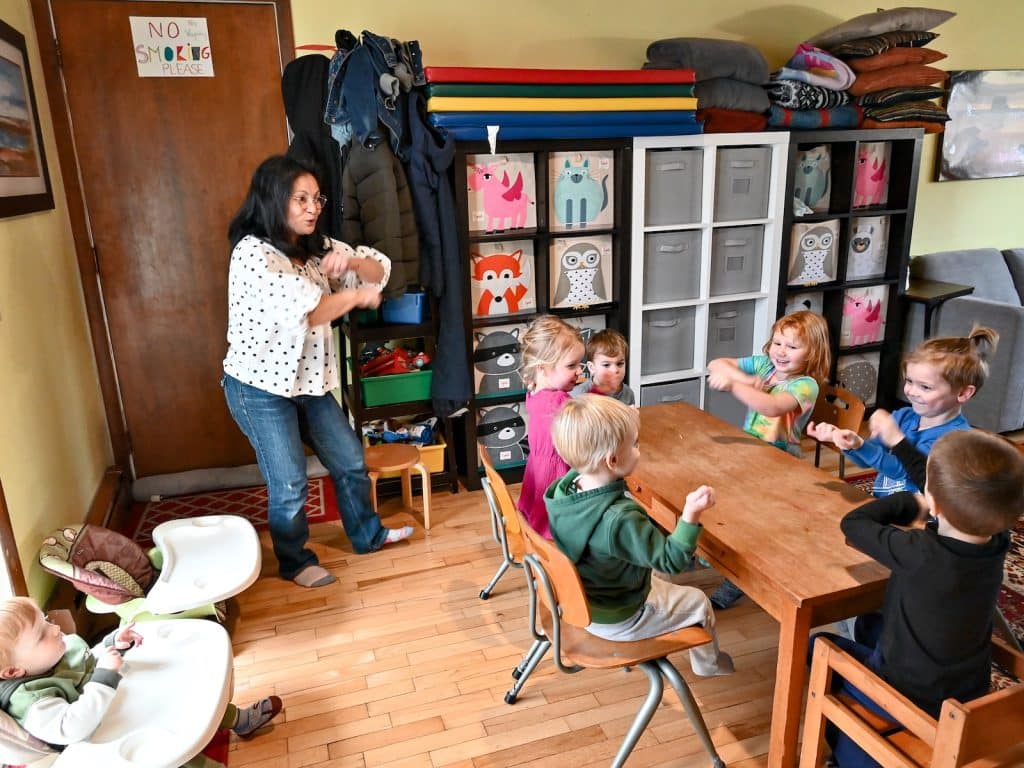
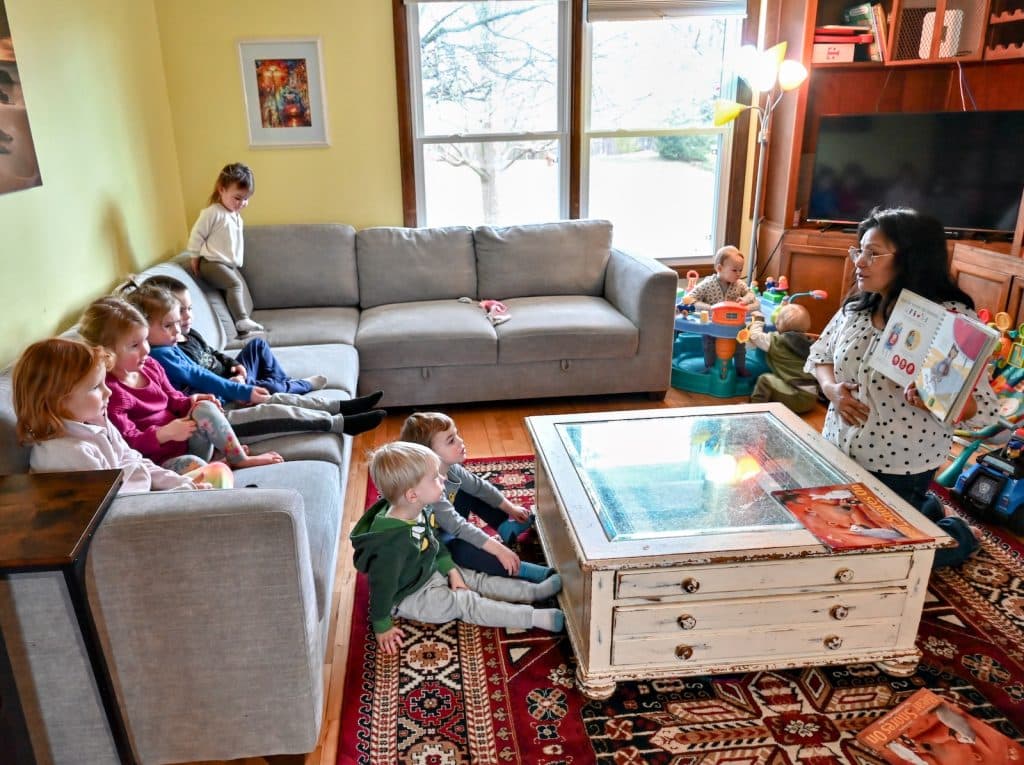
On any afternoon in Kalamazoo, the sounds of early learning fill Quoc Trinh Glover’s home-based learning center, Adorable Bebes Day Care. A small group of children gather for a lesson, switching easily between English and French. In another room, younger children build with blocks while an older child practices writing at the table.
For Glover, who runs the bilingual home-based child care program, moments like these capture what makes home-based care different: learning happens in close relationships, across ages, and in environments that feel more like family than classroom.
One child’s story in particular stays with her.
He arrived in the United States from France just months before the COVID-19 pandemic began, grieving the loss of his mother and speaking no English. Over time, Glover worked with him every day — teaching him the English language and helping him rebuild confidence in a new nurturing environment.
Today, he is thriving in school and still returns to her program before and after the school day.
“It’s one of the examples of how you can help a child achieve whatever he needs if you are there to nurture and guide him,” Glover says.
Stories like this were at the center of a series of focus groups conducted by Policy Equity Group to better understand how Michigan’s expanding Pre-K for All initiative could work in home-based settings.
The focus groups, which include more than 80 providers across the state, were designed to gather feedback on proposed policies, implementation challenges, and the kinds of support home-based educators need to participate successfully.
A critical part of the child care system
Home-based providers are a significant but often overlooked part of the early childhood landscape. Across the United States, over 7 million children ages 0–5 receive care in home-based settings particularly children whose families need flexible or extended hours of care. In many communities, especially rural and low-income areas, they are often the only licensed care available.
Melissa Dahlin, senior director at Policy Equity Group, says engaging home-based providers directly is essential as the state expands preschool access.
“Providers are the ones implementing policies,” Dahlin says. “They’re the ones who can tell you what will work, what won’t, and what supports are needed.”
Focus group participants express strong enthusiasm about the opportunity to participate in Pre-K for All, Dahlin says, but also raise concerns about whether current requirements reflect the realities of home-based care.

A different kind of classroom for young learners
Home-based programs often look very different from traditional early learning centers.
At Luna’s Daycare, owner Lubna Atwah serves infants through preschool-aged children in Ypsilanti in a home environment designed to feel safe, structured, and supportive. Children engage in language development, early math, social-emotional learning, and hands-on activities while families benefit from close, trusting relationships with caregivers.
“The biggest benefit of home-based early learning is the environment,” Atwah says. “Children receive more individual attention, which helps them feel safe, confident, and comfortable.”
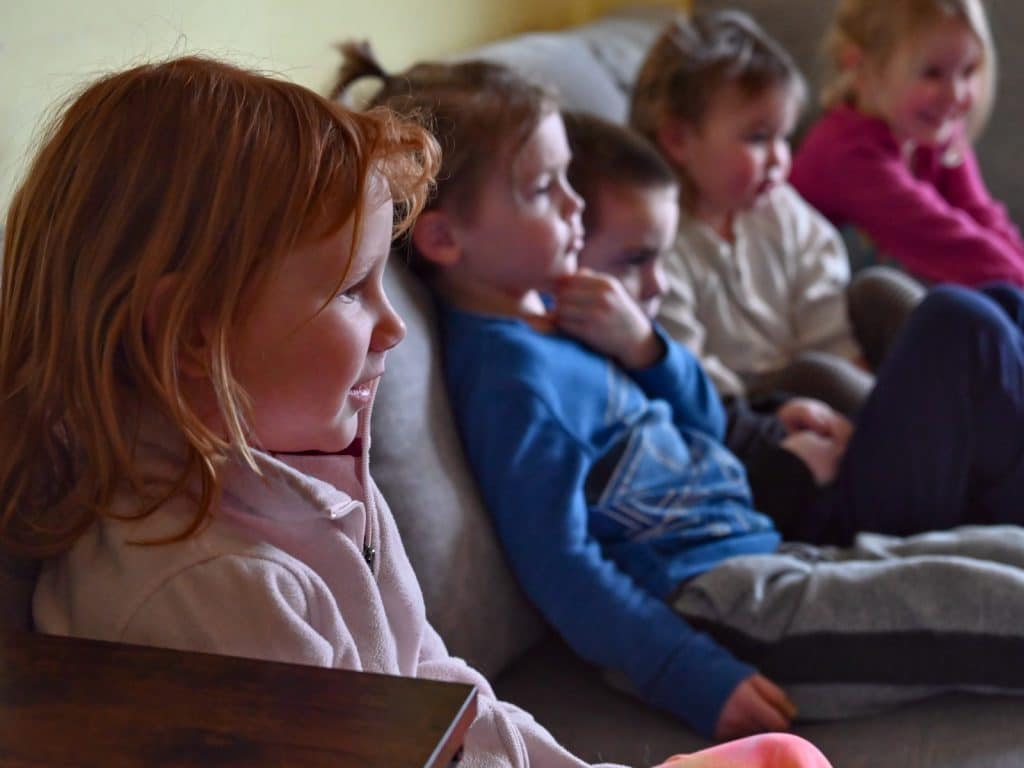
Providers also describe the importance of mixed-age learning, cultural diversity, and flexible teaching methods tailored to each child’s needs.
Glover says her bilingual program attracts families seeking both individualized instruction and exposure to multiple languages and cultures.
That flexibility, however, is one of the aspects providers worry could be lost if policies are too rigid. In focus groups conducted by Policy Equity Group, home-based providers describe a range of challenges tied to that concern, including regulations and requirements that are often designed for larger centers rather than small programs run by one or two people.
“We wear many hats,” Glover says. “We are educators, administrators, cooks, cleaners, and small business owners all at the same time.”
Staffing is another persistent issue. Dahlin says recruiting and retaining staff is difficult across the early childhood sector, particularly given low wages and demanding work.
Administrative requirements and paperwork also emerge as a concern, with providers emphasizing the need for systems that are easy to use and minimally burdensome.
Financial pressures compound these challenges. When families move children to free pre-K programs offered elsewhere, home-based providers can lose both enrollment and income, Dahlin says.
Atwah says rising costs — from food and supplies to utilities and insurance — are also straining small programs.
Recommendations for making participation possible
Based on focus group findings, Policy Equity Group developed several recommendations to help make participation in Pre-K for All more feasible for home-based providers.
One key recommendation is greater flexibility in curriculum requirements. Many home-based programs serve mixed-age groups, making curricula designed for single-age classrooms difficult to implement effectively. Another recommendation involves recognizing alternative credentialing pathways, such as the Child Development Associate (CDA) credential, which measures core early childhood competencies and is more accessible for many providers. Additional recommendations include reducing administrative burdens, allowing funding to support staffing needs, and evaluating programs based on the conditions that help providers succeed rather than one-size-fits-all metrics.
For many providers, the work extends far beyond education. Atwah recalls helping a family navigate housing assistance, employment, and child care support programs.
“Being able to link families to the community and resources they need not only helps them thrive but also strengthens their trust in our program,” she says.
Providers say these relationships are part of what makes home-based care unique.
“They’re not just babysitters,” Dahlin says. “They are doing incredible work supporting children and families, and it’s important that the early learning system reflects that.”

The path forward for home-base providers
As Michigan continues to pilot and refine its Pre-K for All expansion, providers say they are hopeful, but emphasize that meaningful inclusion will require policies designed with their realities in mind. Glover believes home-based programs play a critical role in both early education and the broader workforce.
“We are the backbone,” she says. “Families depend on us.”
For policymakers, the message from focus groups is clear: Ensuring that Pre-K for All truly serves all children will require listening closely to the educators who care for many of them first.
Photos by John Grap.
Early Education Matters shares how Michigan parents, child care providers, and early childhood educators are working together to create more early education opportunities for all little Michiganders. It is made possible with funding from the W.K. Kellogg Foundation.
Author

Related Articles

Evictions impact millions of kids. These schools get an alert when it happens to their students.
Evictions impact millions of kids. These schools get an alert when it happens to their students.

Is PreK for All meeting its goals?
Roadmap co-author encouraged by how the state is expanding its Great Start Readiness Program into universal pre-K.
Michigan’s free universal pre-K program could serve 70,000 4-year-olds this school year
Launched in 2023, PreK for All now has no income qualifications.