True community mental health: How one county’s CMH board ensures care is relevant
Alice Kelsey shares why she serves and how citizen boards help CMHs provide better care to county residents.
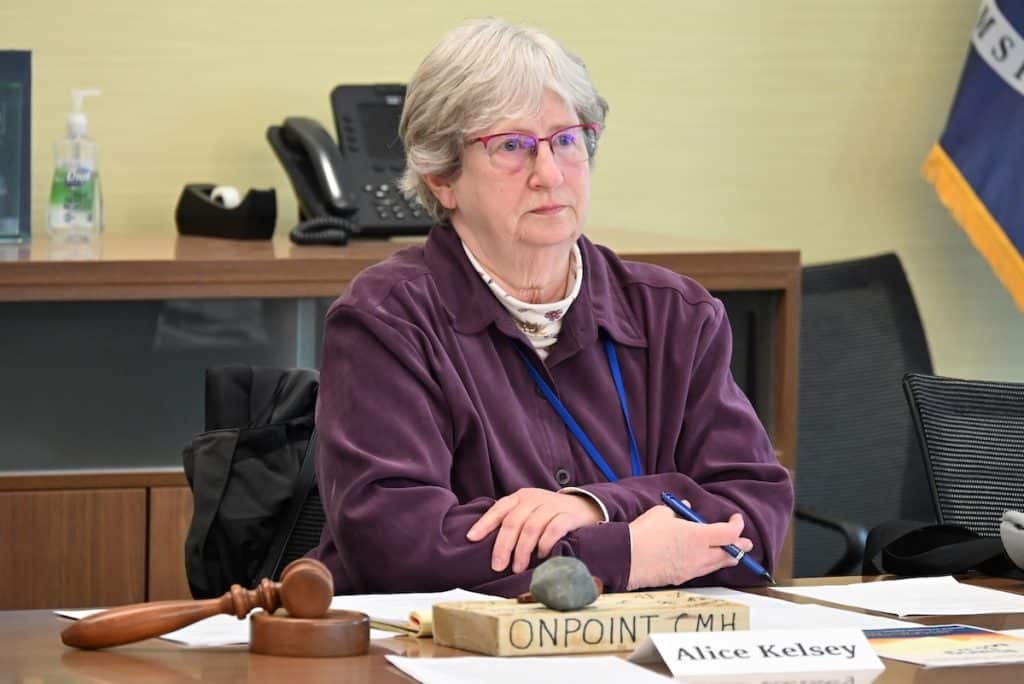
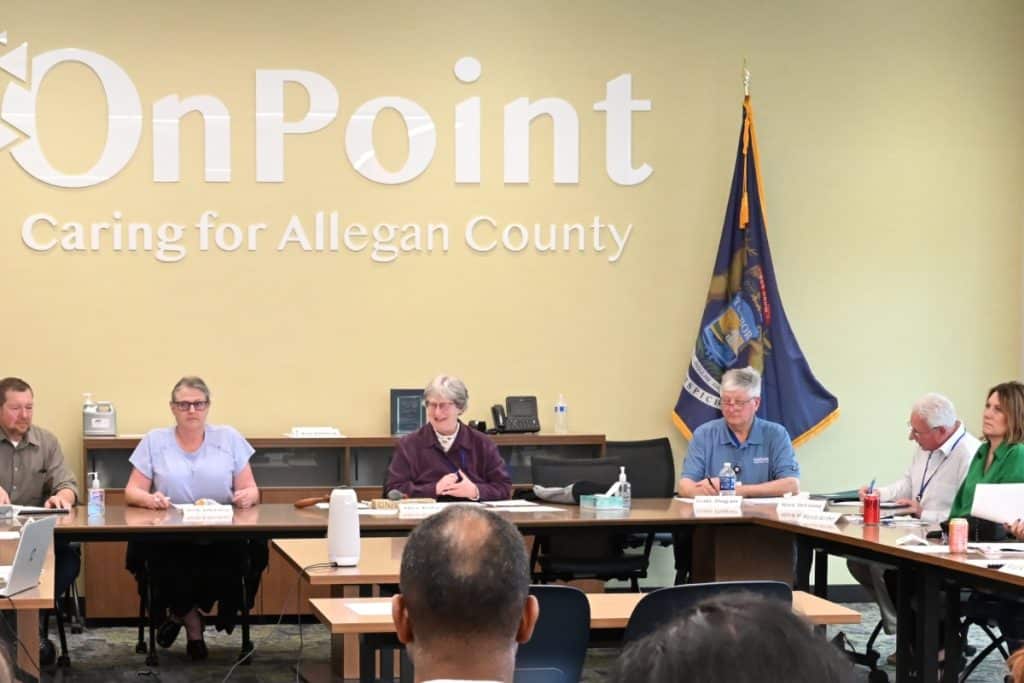
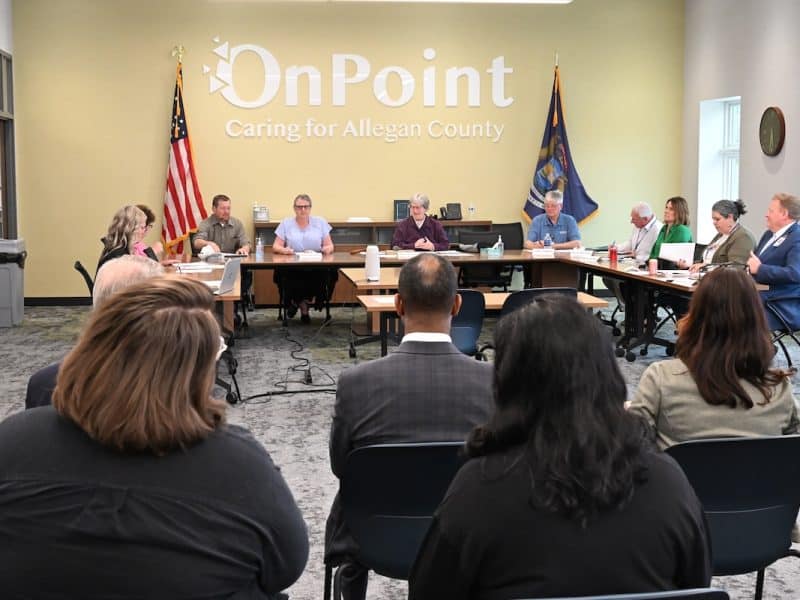
Like all of Michigan’s community mental health (CMH) agencies, OnPoint, the CMH serving Allegan County, operates under the guidance of an independent board of directors. Appointed by the Allegan County Board of Commissioners, the board administers OnPoint’s governance policies and oversees its daily operations.
“All of Michigan‘s community mental health centers are public organizations linked to local elected officials. Those local elected officials, county commissioners, appoint the members of the boards of directors of the state’s 46 CMHs,” says Robert Sheehan, CEO, Community Mental Health Association of Michigan. “To ensure a direct connection with those served by the CMH, 1/3 of the CMH board directors must be persons served by the CMH system or their families.”
MI Mental Health recently spoke with OnPoint board chair Alice Kelsey about how her board makes OnPoint’s work more relevant for Allegan residents and why she chose to serve.
This interview has been condensed for length and clarity.
Q. Why did you say “yes” when the Allegan County Board of Commissioners appointed you to the OnPoint board?
A. My educational background is social work, but I’m semi-retired. This gave me an opportunity to feel like I was still contributing to the county and helping provide services for fellow residents. My nephew was an OnPoint consumer in the past, so this also allows me to show my gratitude for the help that he received.
Q. What do your responsibilities as a board member and board leader involve?
A. Well, I chair the full board meetings. And we are in the process of choosing a new CEO, so I’m on the CEO search committee. OnPoint is part of the Lakeshore Regional Entity (LRE). Each of the five CMHs that are in the region send three representatives to their board. So, I’m on the LRE board as well.
Q. Why is it important to have a citizen board overseeing a community mental health agency’s daily operations?
A. One, the local citizens on the board provide a lot of input from the different professions and different communities they come from, or different organizations that they work with or work for within the county. They are a good feedback loop. They let OnPoint know the public’s perception of the agency. They often share anecdotes about what they hear from the public regarding our performance.
Two, local citizens are aware of their own family’s, friends’ and neighbors’ behavioral health needs. I think that is really important, especially with mental health because people don’t always want to speak up.
Q. How else does the board influence OnPoint’s service to Allegan’s communities?
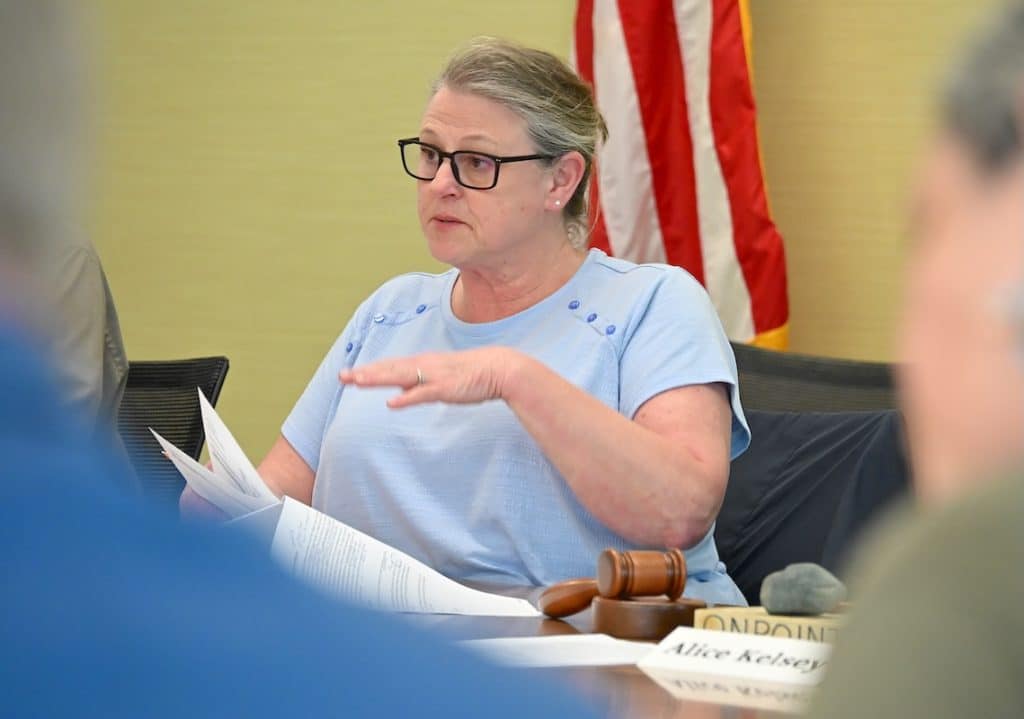
A. Well, one thing that I like about being on the board is that I see everything from all perspectives. I’m not employed there, so I can be an advocate for all parties involved in OnPoint’s operations: Consumers, the staff, and the public. I think it really helps to have that community and local participation and to have a board that’s from the community –– not from some state department.
Q. How does it feel knowing your involvement helps people in your community to access the mental health care they need?
A. It’s really gratifying. I’ll see people that I know at Meijer [supermarket], and they’ll ask, “How can I help? My neighbor –– or cousin or grandchild –– needs help.” I can be that person that says, “Well, you just need to go here. Did you know this service is available?” I love it when people tell me, “Yeah, I just told her to call Alice. She knows what to do. She knows how to get help.”
That really makes me feel like there’s so much that we can fix in this world. This little that I can do for the people who I know and don’t know in little Allegan County and the state of Michigan, it helps me to plod on.”
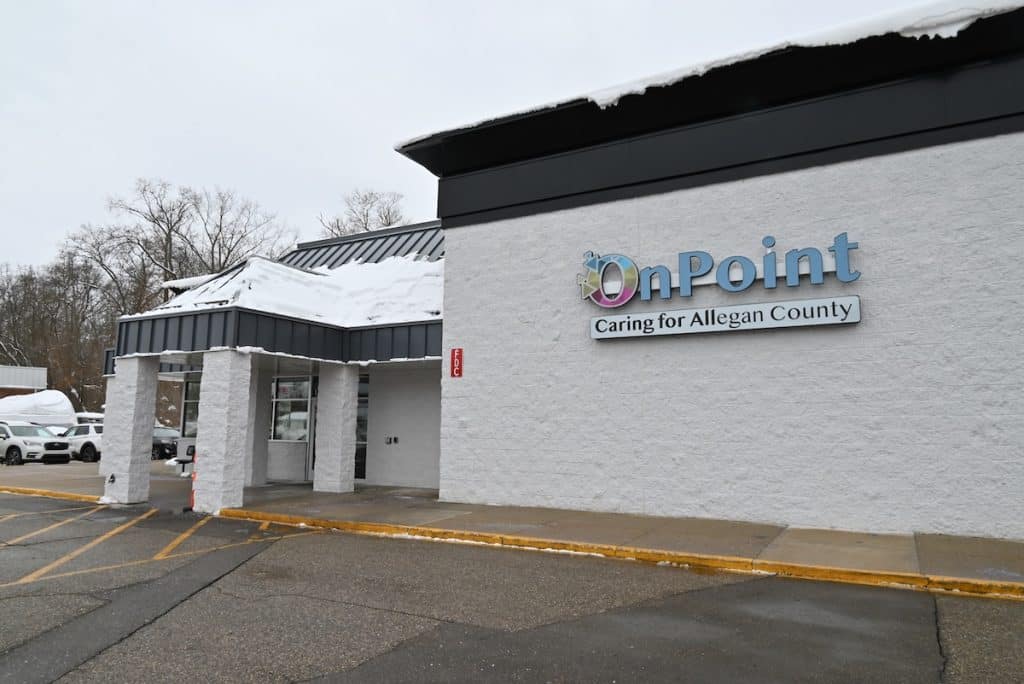
As a Certified Community Behavioral Healthcare Clinic (CCBHC), OnPoint’s services are available to all regardless of insurance coverage or ability to pay. By combining mental health and substance use disorder services, OnPoint can coordinate care across a network of integrated health care settings and providers.

In addition to mental health screening, assessment, and diagnosis, OnPoint’s 24-hour mobile crisis teams offer emergency crisis intervention and crisis stabilization. The agency provides case management, psychiatric rehabilitation, peer support, counselor services, and family supports. OnPoint also offers intensive, community-based mental health care for members of the armed forces and veterans.
CMH board meetings are open to the public and must comply with the freedom of information act (FOIA). And unlike private providers, CMHs do not have a profit motive.
“Because CMHs are public bodies, there are no profits drawn away from the service delivery system,” Sheehan says. “Any dollars saved by a CMH must be reinvested in service delivery or in ensuring the clinical and fiscal soundness of the organization.”
For 24 Hour Crisis services in Allegan County, call 269-673-6617 or 888-354-0596.
Photos by John Grap.
Robert Sheehan photo by Doug Combe.
The MI Mental Health series highlights the opportunities that Michigan’s children, teens and adults of all ages have to find the mental health help they need, when and where they need it. It is made possible with funding from the Community Mental Health Association of Michigan, Center for Health and Research Transformation, OnPoint, Sanilac County CMH, St. Clair County CMH, Summit Pointe, and Washtenaw County CMH and Public Safety Preservation Millage.
Author

Related Articles
The people behind the system: How community boards shape mental health care
Community mental health boards play a critical role in designing, funding, and delivering mental health services.

Child Abuse Prevention Month spotlights year-round efforts to support parents, protect children
Bay Area hospital systems, community nonprofits have array of research-backed programs and resources to prevent child abuse.
Seeking help: What the mental health care journey looks like
More Michiganders are receiving mental health treatment for mental illness than ever before.