LifeWays: In Jackson and Hillsdale counties, the road to recovery starts here
Like many Michigan Certified Community Behavioral Health Clinics and community mental health agencies, LifeWays supports people in recovery.
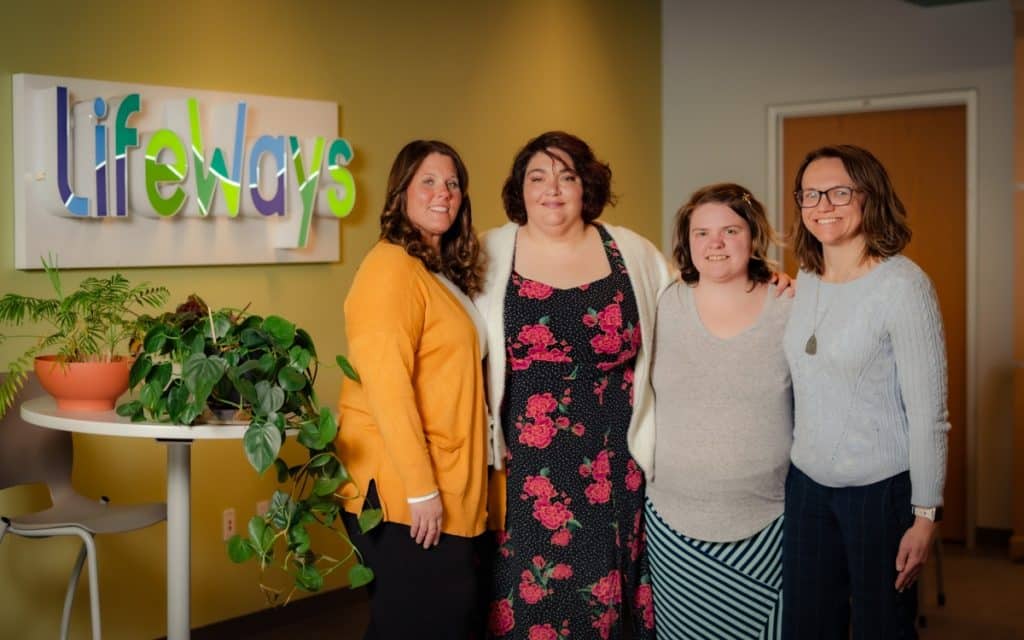
For Katelynn Miller, working with a genuine group of people to help clients improve their lives is one of the best things about her job. As the outpatient and SUD supervisor at LifeWays — a CMH and Certified Community Behavioral Health Clinic (CCBHC) with locations in Hillsdale and Jackson — she’s proud of the life-changing services offered.
“I get the privilege of being able to work with some talented therapists. My staff are amazing. They care about their clients,” she says. “They have a passion for helping them, and they have a desire to do good work, really solid clinical work that clients will benefit from.”
Miller oversees both mental health and substance use services and therapists. She also has her own caseload. This month, one of Miller’s clients crossed the one-year sobriety milestone. It’s one of many success stories that proves the impact of LifeWays’ comprehensive services and care.
“Watching someone succeed and meet their goals is so fulfilling. I always say to people, it’s not me, it’s them,” she says. “As a therapist, yes, I have tools. All I’m doing is holding them for you. They’re the ones picking up the tools and doing the work.”
Miller is most proud of Lifeways’ dialectical behavior therapy (DBT) program. DBT was designed for individuals with borderline personality disorder. However, individuals who don’t have borderline personality disorder also benefit. Lifeways’ program serves adults and families with adolescents who struggle with substance use problems, managing emotions, risky behaviors and self-harm.
“It’s exciting to watch our program grow, because I know how much it benefits all of our clients,” Miller says. “It’s exciting to be able to have a program that helps our clients who are struggling with all of those things.”
The client celebrating one-year of sobriety benefited from LifeWays’ connection to the Hillsdale Drug Treatment Court and Family Treatment Court. LifeWays helps clients who are experiencing legal issues to access therapy and will “wrap around them in a super-supportive team environment.”
“My client has been able to use several of our services and different programs,” Miller says. “Watching her engage in the tools, use the tools, use the support, is just so cool and so very fulfilling.”
Evidence-based therapies
The clients’ pathway to success begins in LifeWays’ access department. Staff here ask them questions about what’s going on, what services they’re interested in, and what substance use issues they have. A further assessment determines the appropriate level of care required. Lifeways provides outpatient therapy, but also helps clients connect with rehabs or withdrawal treatments. A provider in LifeWays’ network can also provide intensive outpatient therapy and care, a service that is “a step up” from regular outpatient care as clients can access additional support groups and individual counseling.
“We really want to make sure that our clients are being served and getting the services that they need to meet what they have going on in their life,” Miller says.
LifeWays also offers medication assisted treatment (MAT) services where clients benefit from combining medication with support and, hopefully, counseling. According to Miller, MAT has been a great way to help clients get “that extra boost and support.”
“We know that the addiction cycle can be really hard,” she says. “So sometimes adding a medication can really help somebody get that leg up and find that handhold in their recovery.”
LifeWays has recently begun offering the Michigan Recovery Incentives Pilot Program (MRIP) in its Jackson office. MRIP uses evidence-based treatment and motivational incentives. Clients with a stimulant or opiate use disorder can earn up to $599 over the 24-week program. Looking forward, Miller hopes that the program will expand to Hillsdale.
“It’s contingency management. Basically, they can come in if they have one of these substance use disorders,” Miller says. “They can do urine drops, and we’re testing them to see if the test is positive or negative. If it’s negative, they earn an incentive for it.”

Community and peer supports
Miller highlights that different social services in the community sometimes encourage their clients to get simultaneous service from Lifeways, such as case management or therapy. As an example, LifeWays maintains a good relationship with Andy’s Place, a sober living community in Jackson.
“Sometimes we get referrals from them of people who are down their path of sobriety and having an extra hard time,” Miller says. “We can make referrals over there for apartments and things like that, which is really nice.”
LifeWays is also working to increase peer supports and recovery coaching services. Clients have greatly benefited from having a recovery coach with lived experience as “a touchstone.” LifeWays is also working hard on building a team approach with case management services.
“We have supervisors, therapists, and case managers meet together to talk about cases,” Miller says. “It’s bringing together their combined minds, and that has benefited clients.”
For Miller, what makes Lifeways unique is her team and the depth of care and support they provide clients and each other.
“When you go into any place that says they’re offering help, you want it to feel open and welcome,” she says. “I feel like Lifeways is working really hard to do that.”
LifeWays tagline is “Hope and help begin here.” Miller feels that the name itself serves as a positive, bright beacon for people in need.
“I hope our community is seeing it that way, too. I’ve been able to see clients come in and have great experiences,” she says. “I do think that people are starting to look at LifeWays, and go, ‘You know, help does begin here.'”
Photos by Doug Coombe.
The MI Mental Health series highlights the opportunities that Michigan’s children, teens and adults of all ages have to find the mental health help they need, when and where they need it. It is made possible with funding from the Community Mental Health Association of Michigan, Center for Health and Research Transformation, Lifeways, OnPoint, Sanilac County CMH, Summit Pointe, Michigan Health and Hospital Association, Washtenaw CMH, and Public Safety Preservation Millage.
Related Articles

More than miles: How run clubs are building community
Run clubs are gaining momentum. By prioritizing social connection over competition, these groups are building community one mile at a time.

COVID kids and mental health: How are pandemic littles doing today?
Mental health challenges have surfaced but kids also benefited from increased family time and less hectic schedules.
Micro forests attract not only birds and bees but Metro Detroiters, too
Whether you call them micro, mini, or pocket forests, they are taking root around the world — and in metro Detroit. They help the environment, provide refuge to native species, and respite to people seeking green spaces — especially in urban areas.