As SNAP cuts take effect, Michigan families and food banks brace for growing need
Consequences will reach far beyond the dinner table, affecting family stability, children’s health, and their ability to learn.
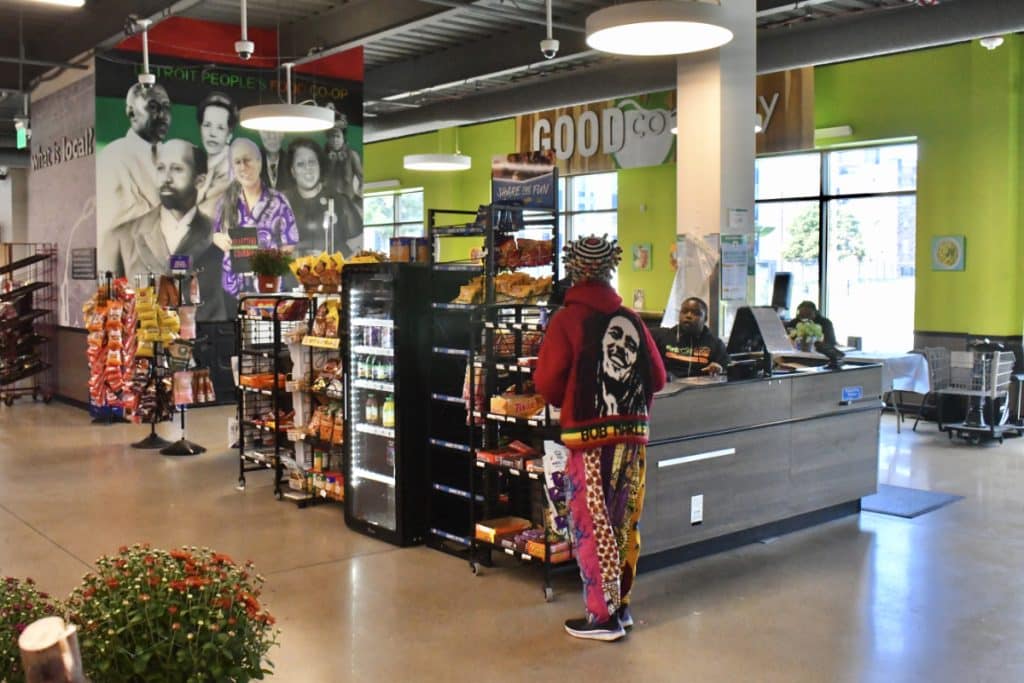
Pictured: Community-owned Detroit People’s Food Co-op increases access to healthy food.
Changes to the nation’s largest food assistance program could deepen food insecurity for Michigan families while placing greater pressure on schools, food banks, and other nutrition programs.
For Michigan families already struggling to afford groceries, housing, utilities and other necessities, changes to the Supplemental Nutrition Assistance Program (SNAP), known as the Food Assistance Program (FAP) in Michigan, could create another layer of financial pressure. More than 1.4 million low-income Michiganders rely on the program to help put food on the table. Food security and education leaders warn that changes to eligibility, work requirements and federal funding could have consequences that reach far beyond the dinner table, affecting family stability, children’s health, and their ability to learn.

For Phillip Knight, executive director of the Food Bank Council of Michigan, conversations about SNAP should begin with the realities facing the people who depend on it.
“The families that are being served are not the problem. They’re navigating the problem,” Knight says. “These families are some of the most resilient people that you will ever meet.”
Knight says food banks are already experiencing the consequences of an affordability crisis that extends beyond groceries.
For families with young children, however, SNAP is more than a household budget supplement. Deanne Kelleher, director of the Office of Nutrition Services at Michigan Department of Education, describes SNAP as a foundational support for children’s health and development.
“When families have consistent access to nutritious foods, children are ready to learn,” Kelleher says. “They can concentrate and fully participate in all the educational activities.”
Nutrition, she adds, is connected not only to children’s physical growth, but also to cognitive development and emotional regulation.
“For many Michigan families, especially those with young children, SNAP provides stability to the household resources,” Kelleher says, noting that rising food and gasoline prices have made that assistance increasingly important.

Food insecurity becoming a family crisis in Michigan
For households already stretching limited resources, losing even a portion of their food assistance can force difficult decisions about which basic needs to prioritize. Kristin Sokul, of Gleaners Community Food Bank of Southeastern Michigan says many families are already making significant financial sacrifices to keep food on the table.

According to survey findings Sokul cited from the Food Bank Council of Michigan, 63% of food-insecure households reported choosing between purchasing food and paying utility bills. For some families, those tradeoffs can mean postponing medical care, purchasing cheaper food or relying more heavily on relatives and community organizations. Parents may also sacrifice their own nutrition to protect their children.
“We’re seeing parents, for example, who may skip meals or eat less to make sure that their kids have more,” Sokul says. “It’s a chain reaction that ripples across communities.”
Kelleher says reductions in SNAP participation could intensify food insecurity among households already struggling, including some families who do not qualify for other federal food assistance.
“Young children are the most vulnerable when they have inconsistent access to food,” Kelleher says. “Even a short period will impact growth, behavior, and learning.”
Those effects can become visible inside classrooms and early learning environments.
“A hungry child can only think about one thing: Being hungry,” Kelleher says.
Young children may not always have the vocabulary to explain that they are hungry. Instead, hunger can appear as frustration, difficulty following directions, or behavior that adults may mistake for disciplinary problems.
Knight summarized the connection simply: “If they’re not well fed, they’ll never be well read.”
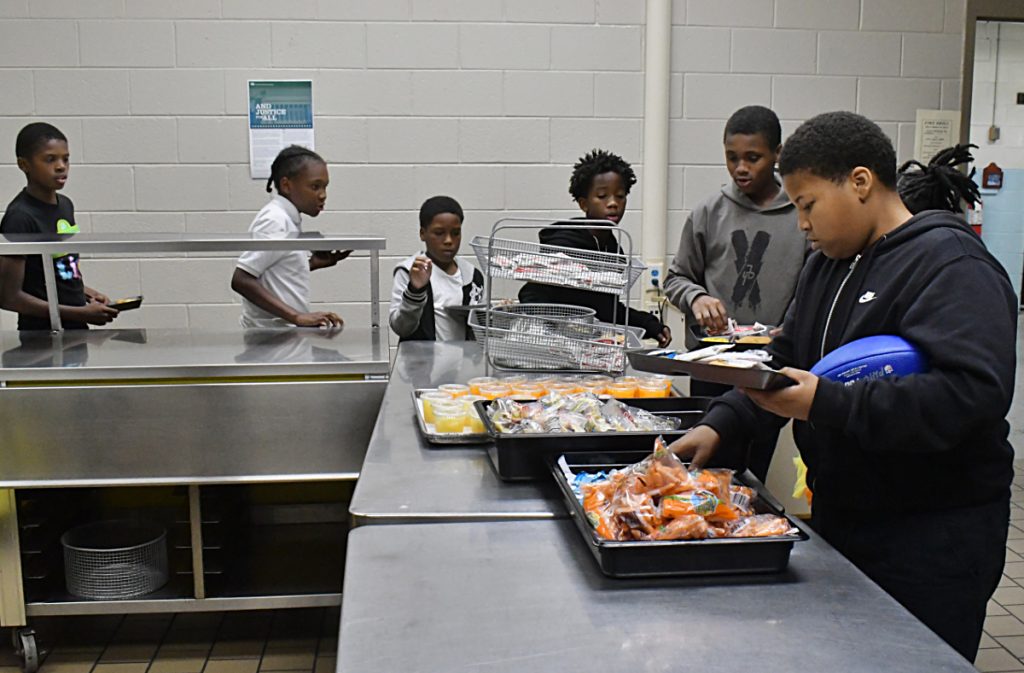
SNAP changes reach school cafeterias, too
Through Michigan School Meals, students in participating public school districts can receive breakfast and lunch at no cost. Kelleher says access to meals at school has benefits extending beyond nutrition.

“When there are meals at school, we do see improved attendance and decrease in chronic absenteeism,” she says.
Educators have reported students being better able to concentrate and learn when meals are readily available. That makes school and early childhood nutrition programs particularly important if families experience SNAP reductions.
“When families are losing access to SNAP or have that reduction in monthly benefits, the food programs in early childhood and school, such as Child and Adult Care Food Program and the National School Lunch and School Breakfast programs, we definitely see an increase in demand,” Kelleher says.
SNAP participation is also connected to eligibility and funding mechanisms for federal school nutrition programs, meaning declining participation can have consequences beyond a family’s monthly grocery benefit.
Michigan’s universal school meal program means students currently retain access to free breakfast and lunch regardless of these SNAP changes. But Kelleher cautions that declining SNAP participation can still create downstream effects within the broader federal school nutrition system.
“A small change definitely does have a snowball effect,” she says.
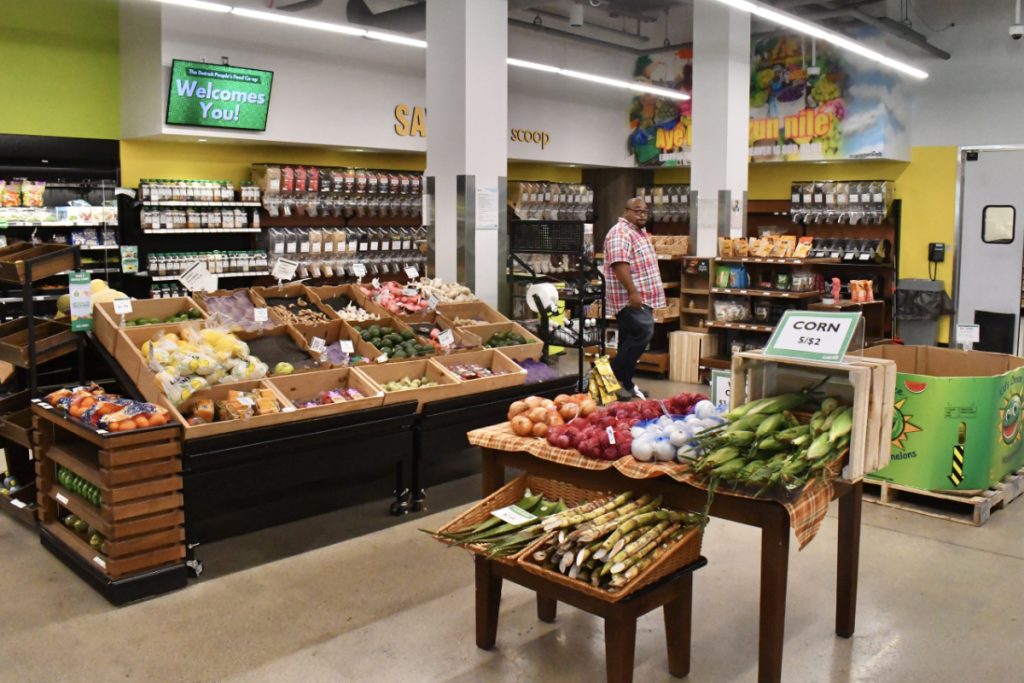
Food banks cannot replace SNAP
As eligibility rules change, Michigan’s charitable food network is preparing for the possibility that more households will need help. But food banks are facing their own pressures. Sokul says Gleaners received approximately 7 million pounds of food from the U.S. Department of Agriculture during fiscal year 2026, compared with 14.7 million pounds two fiscal years earlier — a decline of roughly half.
That reduction has forced Gleaners to purchase more of the food it distributes, even as households face higher costs and potentially greater barriers to federal assistance. That shift is happening at the same time households are confronting higher costs and potentially greater barriers to federal assistance.
“Food banks and pantries weren’t designed or positioned to be the sole provider of emergency food,” Sokul says.
Knight was even more explicit about the limits of the charitable food system. “No charity can scale to replace a government program. None,” he says.
The same is true for schools. While school breakfast and lunch programs can ensure children have food during the school day, they do not replace the groceries families need at night, on weekends and during school breaks.

Preparing for what comes next
“We know that we’re not going to be able to spend our way out of this gap, so our goal is to provide as much as we can for as long as we can,” Sokul says.
Knight believes the policy conversation ultimately needs to move beyond the immediate cost of SNAP and toward what happens when families do not have adequate support. For Sokul, failing to adequately support those families has consequences for Michigan’s future.
“It is robbing the future of its richness if we don’t take care of our families so that households, communities, economies can thrive,” she says.
Ensuring children have reliable access to nutritious food is ultimately inseparable from ensuring they have the opportunity to learn.
“When families have consistent access to nutritious foods,” Kelleher says, “… children are ready to learn.”
Photos by Leslie Cieplelowcz. Thank you, Detroit People’s Food Co-op, for hosting the Mi Families photoshoot for this story.
Photos of Phil Knight, Kristen Sokul, and Deanna Kelleher courtesy subjects.
MI Families shares the work of community organizations, healthcare providers, educators, employers, and other Michiganders as they work to create better health, educational access, and economic security for all Michigan families. It is made possible with funding from the W.K. Kellogg Foundation.
Author

Related Articles

Detroit Public Schools intent on feeding kids healthy meals in face of impending SNAP cuts
Changing federal policy impacting qualifications for SNAP benefits means more Michigan families will not be able to afford food.

How are Michigan’s families doing?
Rising costs, child care shortages and barriers to health care are straining Michigan families. What could help?
Strategies for expanding CCBHCs in Northern Michigan
Three Certified Community Behavioral Health Centers serving rural counties share how other rural counties can gain this vital certification.