A tale of three cities: How small businesses foster U.P. local economies
Rich histories and tight-knit, hard-working communities drive the U.P.’s economic development.
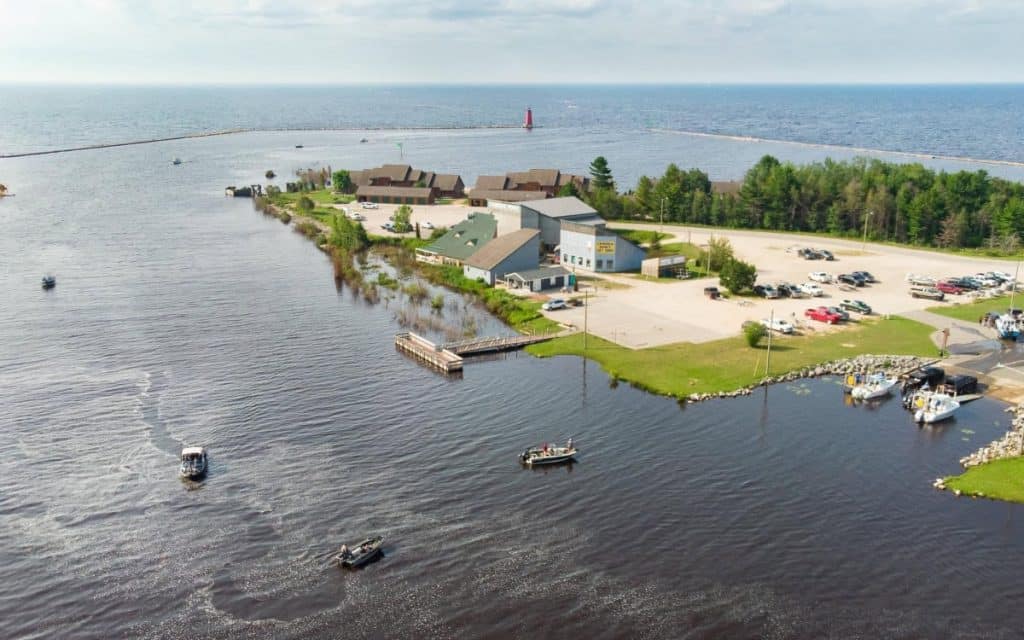
Across the state, Lana Minor works with folks in three Upper Peninsula (U.P.) counties: Delta, Schoolcraft, and Alger. She’s a small business resource navigator for the Michigan Economic Development Corporation (MEDC) Central Upper Peninsula Small Business Support Hub (The Hub).

“We have a large span of land and a smaller population, so we really have to work together,” she says.
What does she see as the biggest challenge? Many small U.P. businesses do not know how to obtain capital. The Hub helps them figure that out.
“We see a lot of businesses who would be able to scale so much quicker with that capital,” Minor says. “Another challenge is getting new talent to the area because there’s a lack of housing –– especially for short-term housing. There’s very few apartments.”
Minor also sees opportunity. Municipalities and economic partners provide “unprecedented support” for small businesses. And U.P. communities are close-knit and tightly networked.
“So many different economic development partners across the whole U.P. are all in it to help small businesses and see the communities thrive,” Minor says. “You don’t always see that in bigger areas. We work together here so well because we have to.”
Minor notes another opportunity: People from outside of the U.P. tend to think of the entire peninsula as one big state park –– and the region’s businesses are doing a good job of incorporating the outdoors into their ventures.
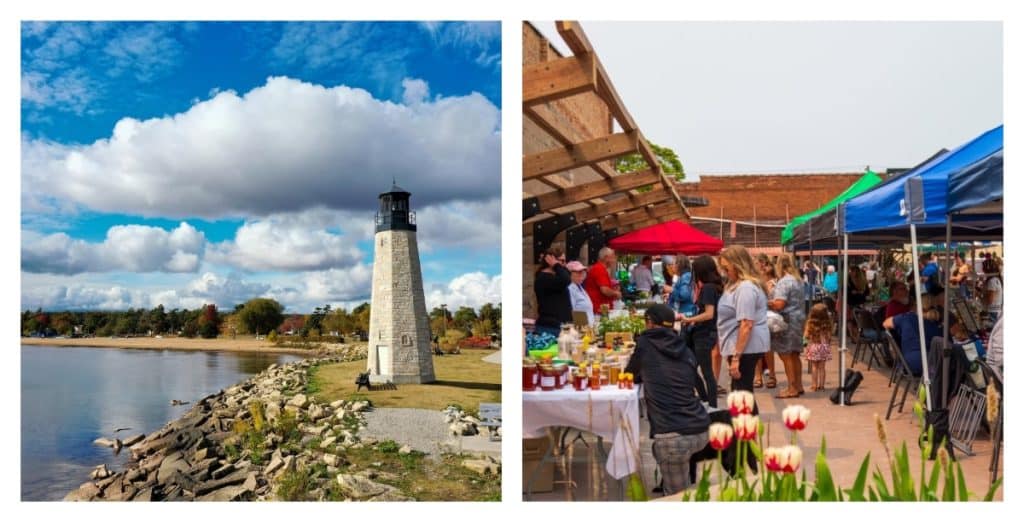
Gladstone: History inspires the future
Founded in Delta County as a shipping center that evolved into a railway hub, the history of Gladstone has shaped its story and laid a foundation for subsequent economic development.

“Gladstone’s story is one of connection, adaptation, and community pride,” says Patricia West, director, City of Gladstone Downtown Development Authority (DDA). “The city played a vital role in connecting the Upper Peninsula’s natural resources and industries to broader markets. While the economy has evolved, that identity as a place of connection remains central.”
Gladstone’s historic role as a connector continues. Located on the shores of Little Bay de Noc on the northern shores of Lake Michigan, this deep-water port’s rich heritage, railroad, highway access, and waterfront amenities foster small businesses focused on outdoor recreation and tourism.
“By continuing to tell its story and invest in its unique sense of place, Gladstone can leverage its history as a catalyst for future growth,” West says.
Gladstone’s population of 5,200 continues to embrace its history through projects like a railroad-themed Market Square farmers market and a proposed train-themed pocket park. Businesses here preserve local heritage by weaving community history into their branding and customer experiences.
“The strong sense of civic pride has shaped Gladstone for generations,” West says. “Residents regularly invest in placemaking and preservation efforts, from maintaining historic landmarks to enhancing public spaces. This culture of stewardship strengthens the city’s identity and quality of life.”
Manistique: Family on tap
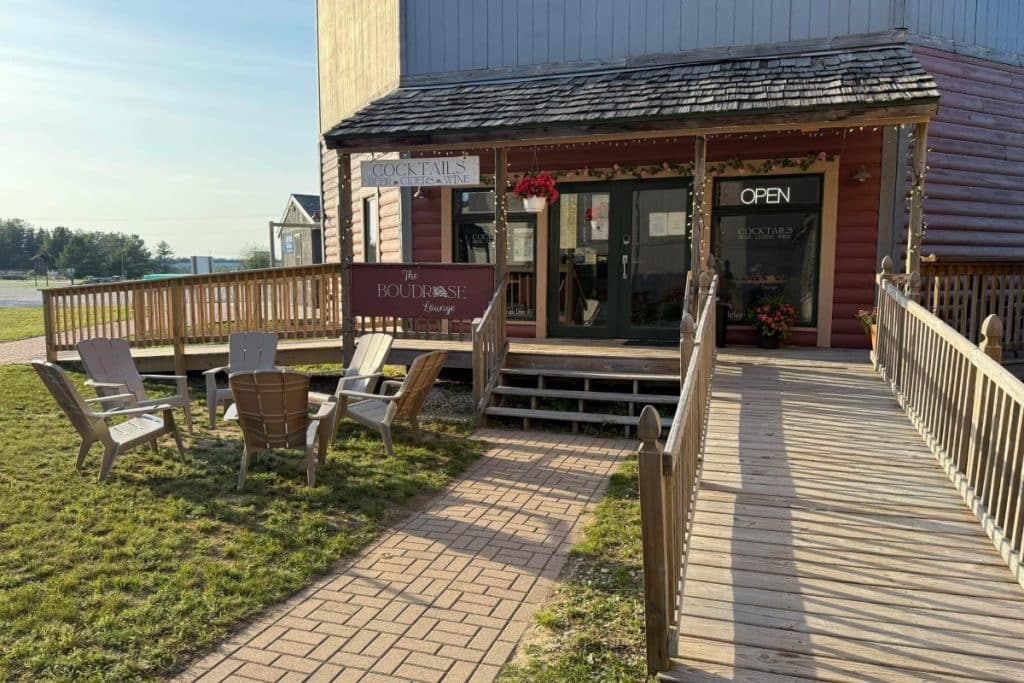
About 50 miles east of Gladstone, Manistique is the only city in Schoolcraft County, population 2,863. Family businesses are the norm here. Its Trader’s Point neighborhood is home to two businesses owned by members of the same family: Flatiron Brewery and Boudrose Lounge.
When Hannah Boudreau and her mother Lisa were helping her brother Jake get the brewery up and running, they decided to open a business of their own.
“My mom and I always wanted to do something. We had talked about a wine bar or an event space,” she says. “When we were helping my brother put his place together, we’d actually seen the building we are in. It was an old salon, abandoned for a while. We thought it had so much charm.”
After a lot of thought and a little research, Boudreau and her mother decided to open a cocktail lounge, The Boudrose Lounge. The two traveled to Flint for bartending classes, completed mixology classes online, and began renovating the space.
“It became a cute little cocktail place where you can relax, take in the views of the river, and enjoy the atmosphere with a really nice cocktail and a small bite,” Boudreau says. “I’ve been making drinks for my family forever, and I guess I didn’t realize I had a knack for it.”
Since opening, Hannah’s sister Lily has signed on as a third co-owner.
“She’s been hugely helpful with helping us out with labor because we are pretty much our only employees,” Boudreau says.
While the lounge has developed a healthy local following, sales cool down along with the weather –– a challenge that many U.P. businesses face.
“Manistique is quite a tourist location. You really have to knock out a lot of your business for the year in those summer months,” Boudreau says. “Any business around here is heavily reliant on the tourist season, because winter times are so hard.”
Boudreau serves on the Manistique DDA board. One of her goals is to make Trader’s Point more walkable, a difficult endeavor as the highway passing through Manistique is controlled by the state, not the city. Overall, she is excited about the success The Boudrose Lounge enjoys.
“Being part of Manistique, it’s something to be proud of,” Boudreau says. “The growth that I’ve seen –– so many people take so much pride in our little town –– I can’t wait to see what comes next.”
Ishpeming: Can-do, blue-collar work ethic
One-hundred miles northwest of Manistique –– and 15 miles from the shores of Lake Superior –– the city of Ishpeming, population 6,207, is a historic iron mining town with a can-do work ethic.

“Our history and our heritage is very much based in mining and Yooper ingenuity –– no problem is insurmountable,” says Brice Sturmer, Ishpeming DDA board member. “People are willing to work hard and do whatever needs to be done in order to make something happen. In terms of revitalizing our downtown, I think everyone’s going to put a large amount of effort into it.”
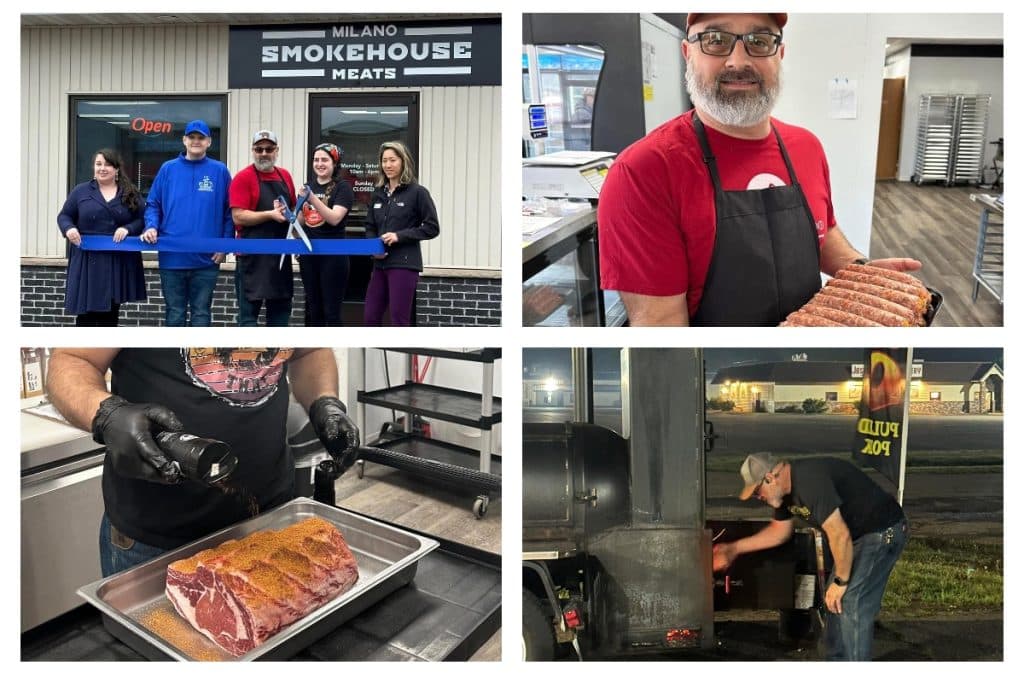
That’s what Timothy and Kelly Milano did when they transformed a former butcher shop into Milano Smoke House Meats, a family business that the couple operates with their children. Timothy Milano smokes all the meat –– locals love his brats and jerky. On the weekends, the smokehouse hosts community meal events featuring different smoked meats.
Most Ishpeming residents have a connection to the mines. They either work at them or have parents or grandparents who worked at them.
“Ishpeming has a very, very strong identity of who it is, and it doesn’t try to be like the other towns. It likes to keep its own cultural identity,” Milano says. “It’s a major blue-collar sort of town, very hard working. A business like the Smoke House works really well, because the miners grab some jerky, grab a sandwich.”

After starting the Smokehouse, Milano saw a need for a farmers market. Three years ago, she began inviting local bakers and farmers to sell their wares at the Smokehouse once a month.
“The community is really ripe for that type of growth,” Milano says. “That hard working, blue collar identity very, very much fits into that kind of growth. That’s why this town is so great.”
Sturmer notes that Ishpeming has the square-footage to support growth, as well. Beautiful historic buildings are waiting to be rehabbed and repurposed. And thanks to Brownfield Tax Increment Financing (TIF) programs, housing for new residents is on the horizon.
“There’s a need for housing. There’s a need for more small businesses and jobs. There’s people here to work for them,” he says. “If people are able to make development happen, the time is ripe.”
That’s why MEDC small business hubs like The Hub, Chippewa County Economic Development Corporation, and MTEC SmartZone and nonprofits like the Michigan Municipal League work hard to connect U.P. municipalities to the resources they need to support small business development.
“When businesses thrive, we all thrive,” Minor concludes. “Thriving downtowns tend to support population growth. They tend to support specialized services like dentists or new doctors coming into areas. That is why it’s key that we’re supporting our downtown businesses, the people who are really the face of our communities.”
Top photo by Shampine Photography.
Other photos courtesy subjects.
This story is made possible with funding from the Michigan Municipal League Foundation, a nonprofit association dedicated to making Michigan’s communities better by thoughtfully innovating programs, energetically connecting ideas and people, actively serving members with resources and services, and passionately inspiring positive change for Michigan’s greatest centers of potential: its communities.
Author

Related Articles

Under Mamdani, New York will be the first to open a free childcare center for city workers
The center, called The Little Apple, could be a model for other cities exploring ways to make life more affordable for workers.

Gobioff Foundation artist microgrants make major impact
Over five years, Gobioff Foundation has awarded $32,000 in microgrants to 64 artist projects.
U.P. tour helps historical communities build a stronger economic future
Michigan Municipal League travels north to share resources for small business development.