Parents are first teachers, and, with resources, they can be the best teachers
Kent County’s millage-funded programs step up when state funding steps out.
The State of Michigan’s 2026 budget eliminated all $19.4 million in funding for Great Start Collaboratives and Family Coalitions across the state. These organizations not only coordinated early childhood services but also helped young parents learn how to excel in their role as their children’s first teachers.
Jayme Vosovic, community engagement director at the Michigan League for Public Policy, and Allison Keessen, coordinator, Great Start Collaborative of Muskegon County, wrote in a December 2025 Michigan League of Public Policy blog post, “The unexpected elimination of their funding has thrown the 54 collaboratives and family coalitions in Michigan into limbo. Many have already abruptly ended and others are relying on organizational and philanthropic support to remain temporarily operational. Only a few will be able to continue in a scaled-back capacity through the end of the school year in June.”
The Kent County Great Start Collaborative was one of those organizations that abruptly shut down in 2026. As one of only two counties in the state with a dedicated early childhood millage, other early childhood programming remains to fill some of the gaps left by the state funding cuts.
Under the leadership of its president Jennifer Headley-Nordman, First Steps Kent distributes that funding to Kent County organizations providing early childhood services. A board of residents –– including parents, early childhood stakeholders, and county officials –– reviews proposals and decides how funds should be allocated. First Steps Kent’s website also connects families to local early childhood resources.
Early Education Matters recently spoke with Headley-Nordman about other ways parents can succeed as their children’s first teachers.
This interview has been condensed for length and clarity.
Q. How can parents be more intentional about teaching their children skills that carry over to kindergarten?
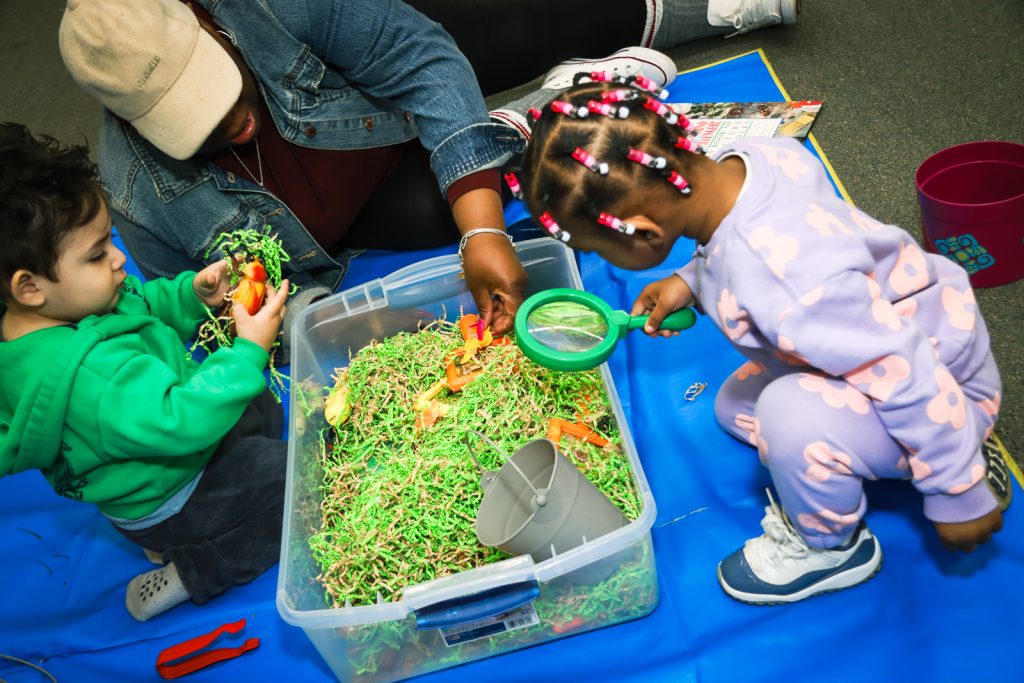
A. The great thing is, parents are often already doing the types of things that we would encourage. Parents do serve as first teachers. Daily interactions with your children, looking in the same direction, pointing at different things that you see, talking about what you’re doing as you go about your day –– just doing normal activities –– are already great ways to engage and build that social, emotional connection with your child as well as introduce them to concepts like language, literacy, or numeracy.
Q. What activities can parents engage infants or toddlers in to spark learning?
A. Things like singing to your child or when you’re cooking or doing chores around the house, talk the child through what you’re doing and why. You can also interact with your child to convey emotions so they build understanding as they begin to interact with toys and objects that are valuable to them in their space. They can start to make those connections as well.
Q. Why is it important to listen and talk to children as early as infancy,
A. Children are eager and hungry to learn. From the moment children are born, they are really taking everything in in their environment. That information builds connections within the brain. We know that those connections serve as the foundation for connections with each other, also for foundations for learning –– things like language as well as understanding communication structure, social norms within the environment where you live, and things like categorization, which is important not only for verbal but also for mathematics and other learning.
Q. Why is interaction with the parent or trusted adult a better teacher than a phone or a tablet?
A. I’ve always felt that, as parents, you get just as much out of the interaction as your child does. When you think about concepts like early relational health –– how do you create an environment where your infant or young child feels safe and nurtured –– there’s so much give and take in that relationship that you are not able to recreate through a tablet or a screen. You know, there are times that you can be tired and exhausted, but there’s nothing like getting that smile, that giggle, or that interaction and eye contact from your child. You get just as much emotional wellbeing out of that interaction, and it helps reduce stress for both you and your child.
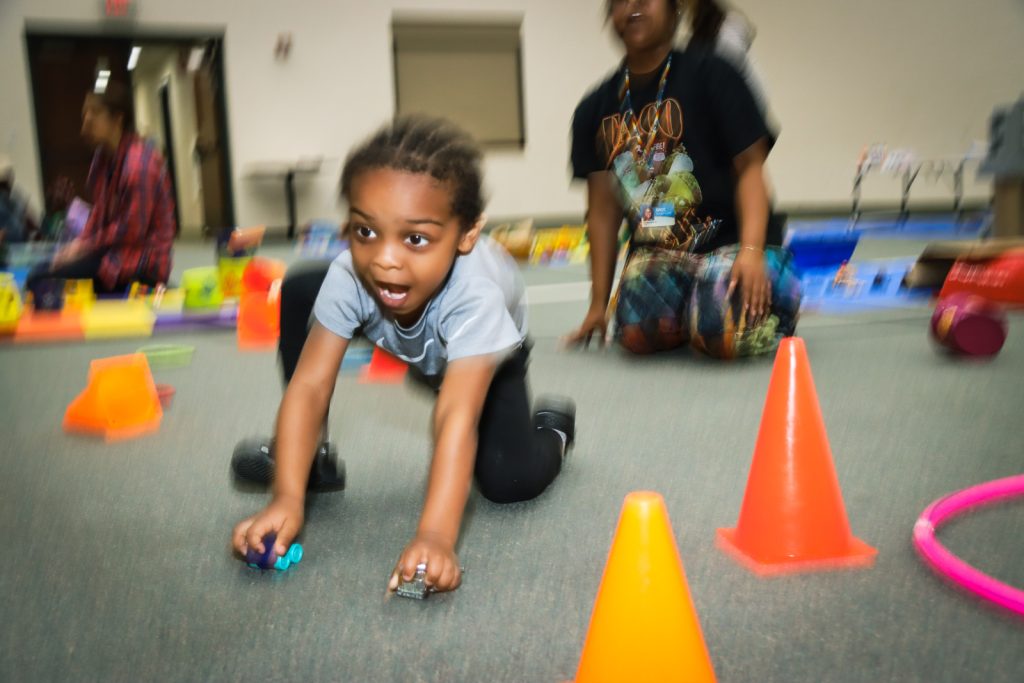
Q. With state funding cut for the Great Start Collaborative in Kent County and similar programs across the state, what are some no- or low-cost resources that parents can access to do better in their role as first teachers?
A. In Kent County, the Ready by Five Early Childhood Millage sponsors a lot of services and programs for things like home visiting, play-and-learn groups, and other activities that parents can get involved in to access educational resources. Also things in your own community, like local public libraries or parks, often have a variety of activities that are either scheduled or drop-in that parents can expose their children to. Things like nature, things like reading, things like interacting and playtime, and all of those fine motor and gross motor activities that you can find within those spaces are also really important. Also, a website called The Power of Early Play has a variety of resources that parents can look up and sample. That’s another great free resource that’s available.
Photos by Tommy Allen.
Early Education Matters shares how Michigan parents, child care providers, and early childhood educators are working together to create more early education opportunities for all little Michiganders. It is made possible with funding from the W.K. Kellogg Foundation.
Author

Related Articles

Schools on the brink: Centers of small-town life, some districts face financial emergencies
Public schools are sources of pride and launching points for lives and careers. But in Ohio, an arcane, unfair system of funding schools persists.

Metro Detroit schools see progress in reducing chronic absenteeism. Here’s how they’re doing it
Statewide chronic absenteeism rates remain above pre-COVID-19-pandemic levels, but Metro Detroit schools are tackling chronic absenteeism by removing barriers to attendance and creating enriching, fun school experiences for students.