Can proximity solve a transportation problem?
Some developers, planners, and neighborhood advocates believe bringing destinations closer together could expand transportation choices.
This story is part of Moving Fort Wayne Forward, a year-long reporting effort to engage residents, employers, and community leaders of Greater Fort Wayne around the possibility of a more modern, multimodal transportation system. Read the full series here.
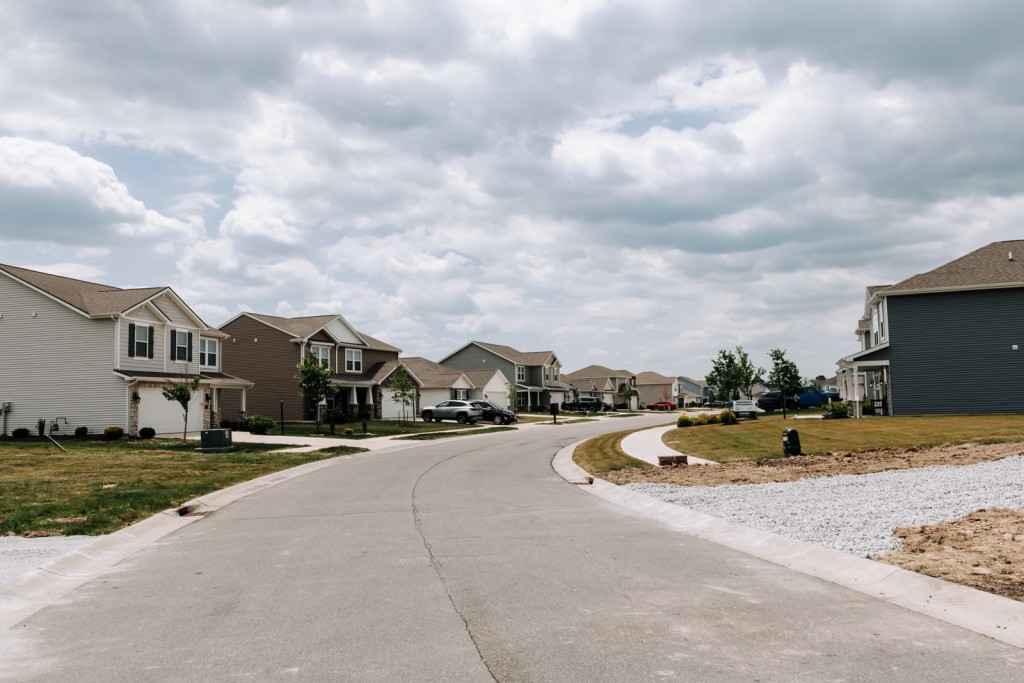
Over the last century, Fort Wayne, Ind. has increasingly fit its infrastructure around the automobile. This development grew from the convergence of technological and economic shifts, as well as a boom in population growth and construction efficiency. Building developments on the outskirts of the city made homebuilding more affordable for residents, and the automobile enabled commerce despite the growing distance between housing and retail.
What was once a 15-minute walk became a 15-minute drive that can reach greater distances, carry more goods, and transport families more efficiently. But, despite this innovation, putting the car at the center of residential transportation appears to have eliminated the ability to walk anywhere meaningful within a reasonable time almost entirely. With less density, the car was no longer a convenience, but rather a necessity: people could no longer walk to the store. Closed-off neighborhood plats — developers’ planned designs for neighborhoods — that became popular in the past century forced drivers onto a few busy and widening arterial roads.
Pursuing transit and walkability solutions remains difficult in lower-density development. With a growing interest in bringing commercial and residential properties closer together, what is Fort Wayne doing to solve modern problems from its century-old design choices?
James Kahn, a Fort Wayne native who owns BakerStreet Steakhouse, Proximo and The Hoppy Gnome, grew up with the car-centric mindset shared by many in the city. This mindset faced some dissonance, though, when the TinCaps moved downtown in the late 2000s. At first, Khan balked at the idea.
“I just thought it was so dumb, and you know, couldn’t have been more wrong,” Khan says. “I just didn’t realize what I didn’t know — that putting it down there would create just a whole different environment, and then create other ancillary businesses that would want to be around that.”
Now, nearly two decades after that epiphany, Khan is pursuing one of the city’s most ambitious mixed-use developments in decades. In July 2024, he broke ground on the Villages of Arneo, a mixed-use project tucked between Interstate 469 and the St. Joe River. Construction is underway and will feature 240 apartments, 60 villas/townhomes, and 80,000 square feet of commercial and retail space. In addition, it will offer several miles of wooded walking and trails along the river, as well as cart trails, several parks, and a commercial town square.
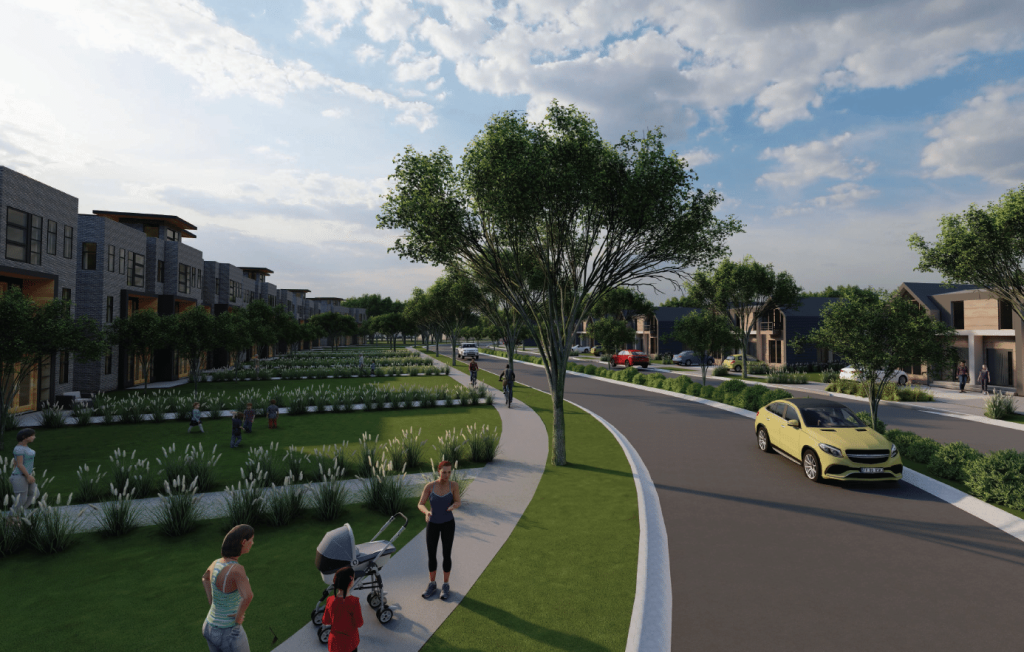
Using alternative modes of transportation in dense developments like the Villages of Arneo becomes feasible because meaningful destinations like restaurants and markets are accessible after a short walk or bike ride. Applying the same standards to other new developments in Fort Wayne could make it easier for people to choose modes of transportation other than personal vehicles, addressing a density issue that consistently limits the viability and impact of transportation solutions.
By mixing residential and commercial spaces accessibly and densely, Khan is pushing against the grain of around a century of local development. The key to doing it now, he says, is simply that someone was willing to do so.
“I think it’s becoming viable in Fort Wayne because someone’s doing it. I think that it’s been a viable development for years in other places … I don’t think we’re any different than the people that live in New York, Chicago, Indianapolis — we all want proximity to the things that we do. Nobody really loves driving 30, 40 or 20 minutes to get to a destination. It’s just what we’ve been accustomed to for decades here.”
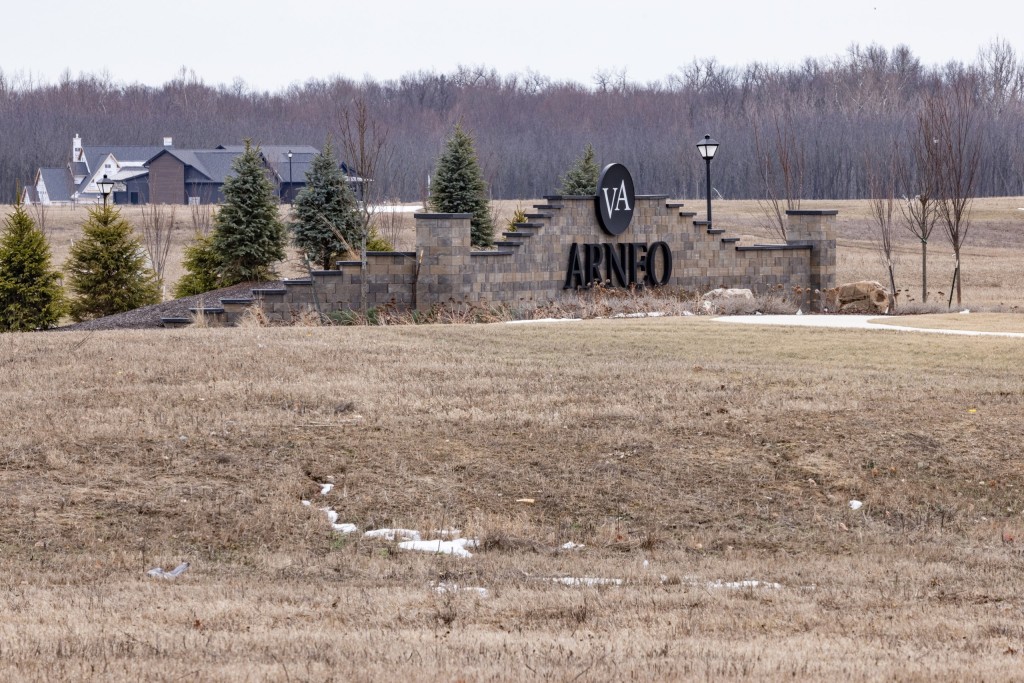
Bringing more developments like the Villages of Arneo to Allen County might still face hurdles, especially considering the increased investment risks involved. While Khan believes strongly in the project, he acknowledges that developments of this scale require extensive coordination among investors, tenants, and financing partners. He believes that if Fort Wayne wants to remain competitive with peer cities, and if residents want the city to grow, these dense, community-centered mixed-use developments are vital, and he is willing to put his time and money on the line in that pursuit.
“My goal from the beginning,” he explained, “has been if my investors can make a profit, if I can break even, and if this development can be successful, then to me — if this development can fill out — then that’s a huge success.”
He added that he hopes that the Villages of Arneo will inspire others that this type of development can happen in Fort Wayne and be successful.
Part of the limitations that Khan faces comes from that upfront investment. Greenfield development — residential-only developments often occurring in open fields on the peripheries of the city — tends to be more cost-effective for builders than focusing on infill or mixed-use development. The cost of a home weighs heavily on consumer demand, and proximity to retail and community might take a backseat, especially given that residents can access both with a vehicle, albeit less intimately.
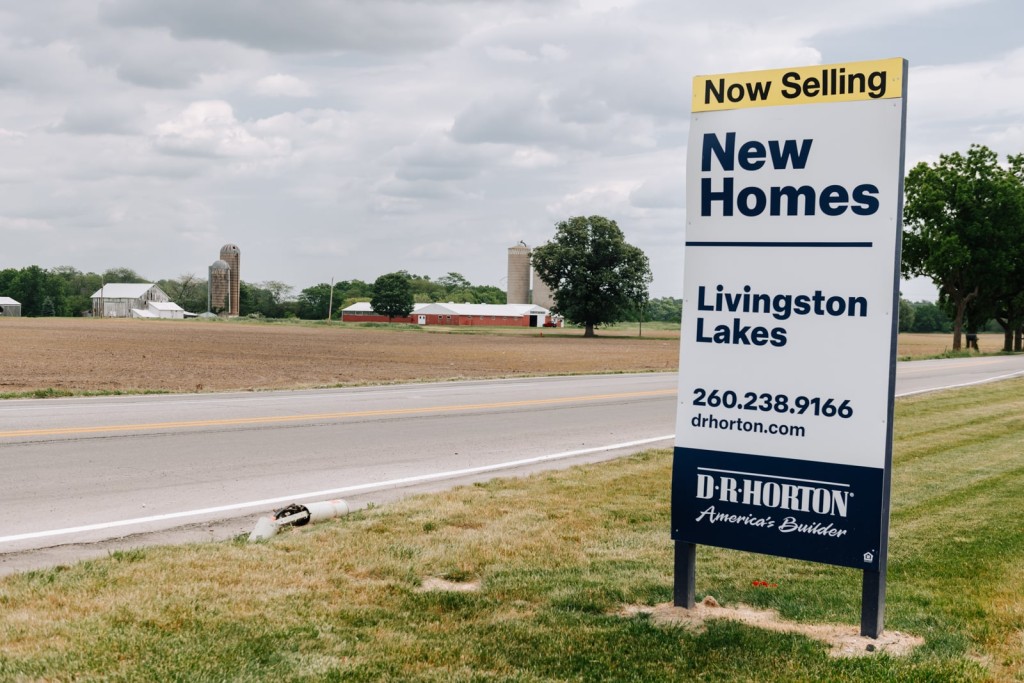
While developments like Arneo illustrate one possible response, city officials acknowledge that replicating those development patterns elsewhere in Allen County is not always straightforward. Jonathan Leist, community development division director for the City of Fort Wayne, says that increasing density, more specifically through infill and redevelopment, often comes with challenges that do not exist on undeveloped land — challenges that can cost developers and consumers more in a housing market where consumers feel increasingly pessimistic.
“The easiest-to-develop lots have already been developed for many years,” he explains, “so, many of those infill lots that were never developed had some kind of challenge — they’re particularly low ground or something that made development there more challenging. The infill lots that have been built on before often have challenges related to whatever was there before. Maybe demolition specs 20 years ago weren’t as stringent as they are now, and then that makes redevelopment of those sites more expensive than greenfield.”
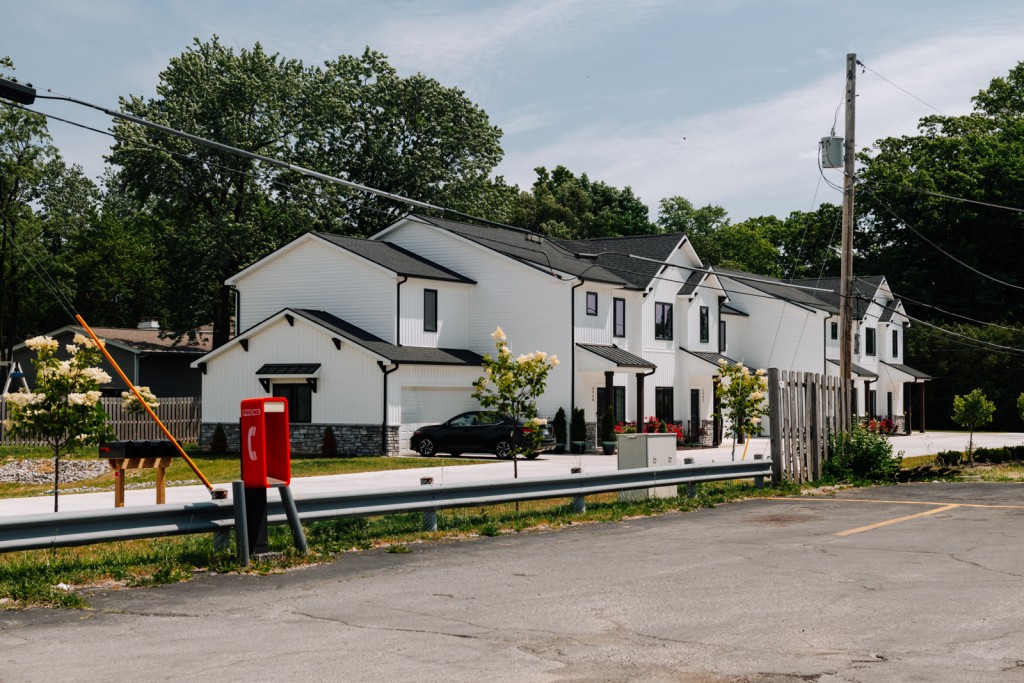
Leist says that he has seen “a little more experimentation” with the sizes and other specifications for developments in the Waynedale area and in the far northern part of Fort Wayne, a trend he says is linked to consumer demand for diverse housing styles driven by affordability.
“A lot of buyers and renters have concerns about what price they can pay for their home, for their rent,” he says, “and I think that has required or encouraged developers to try new products in our market, which to me is exciting.”
These realities help explain why greenfield development continues to dominate much of the housing market despite growing interest in alternative development patterns. While developments like the Villages of Arneo are not necessarily infill, the investment and risks involved can make traditional greenfield development a more attractive option for some builders.
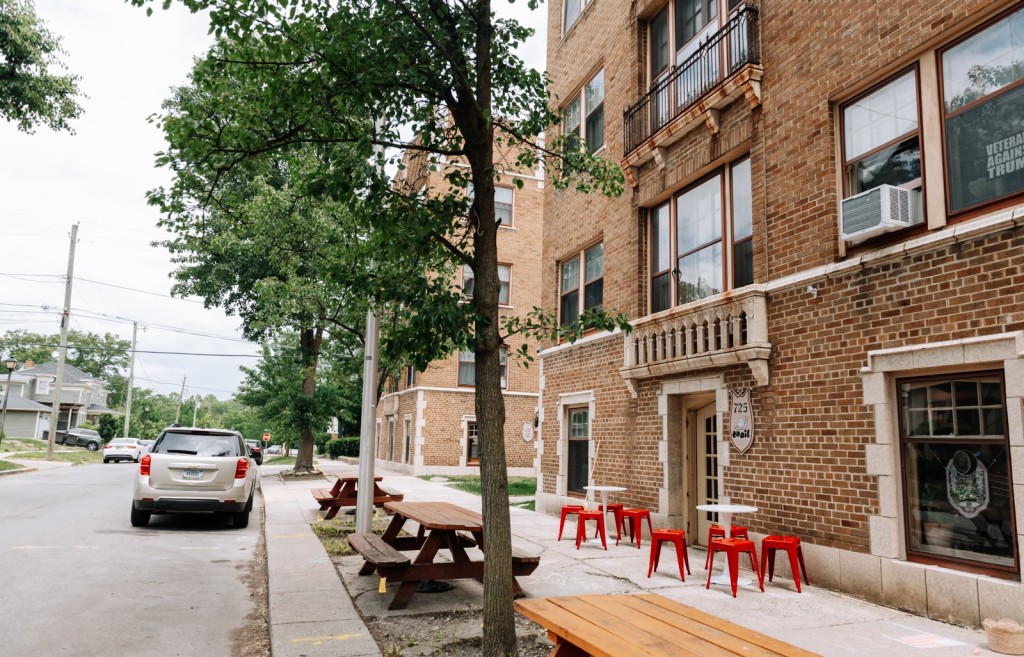
Kody Tinnel is a member and former president of the Packard Area Planning Alliance (PAPA), and a resident in the Historic Foster Park Neighborhood. While he lives in a denser area of the city, commercial properties are still a lengthy walk, and he says that the distance makes it difficult for public transit to operate efficiently.
The challenge is ultimately one of proximity. In that sense, density is less a transportation solution itself than a condition that makes other transportation options possible. Transit systems, walking, and cycling become easier when more people live closer to destinations. As development spreads outward and distances increase, personal vehicles often become the most practical transportation option, regardless of how much infrastructure is added for alternatives.
A 2025 study supports this hypothesis. After studying roughly 41% of the world’s population, researchers from UCLA and Google found that increased density and street redesign are the two most effective ways to make walking and biking an easier choice for residents.
Tinnel also noted that, even if Fort Wayne builds out its transportation network beyond individual cars, it might still be a hard sell to residents accustomed to living in an individualistic culture.
“American culture is very individualistic, and this idea that you need ultimate freedom by virtue of a car, and it is the cultural ideal to have a single family home with a big yard and all of that. So there’s all this social, cultural stuff that goes into this as well, where even if you could start to have it make more sense — like the idea that would actually be cheaper for me to take the bus, as opposed to having and maintaining and fueling my own vehicle — that social piece is going to be challenging to overcome for some as well.”
Moving Fort Wayne Forward Reader Survey
Hey! We could really use your help making sure we can continue producing journalism that informs and inspires. Taking a few seconds to answer these questions will ensure we’re on the right track and that our funders understand our impact.
This car-centric culture, he observes, has other negative effects that spill over into other areas of life in Fort Wayne. Tinnel believes that neighborhoods that have the appearance of focusing on vehicles first, like garages in front of the house, can create situations where people do not know their neighbors.
“They never see them. They park their car in the garage when they leave in the morning, maybe they wave at someone if they happen to pass them, but otherwise it’s just this very isolating experience. You’re not really interacting with your neighbors as much — you don’t have to.”
Khan agrees, saying that the value of human interaction and community does not blossom well when neighborhoods are not connected and walkable, even if they are recreationally walkable.
“I think that that has a higher propensity to occur when you have walkable neighborhoods, and not just a neighborhood where you can walk, but a neighborhood where walking to, again, a destination where you can walk to — a coffee shop. Where you can walk to dinner, where you could walk through a park, and where you can access nature all without having to get into a car. It creates opportunities for people to interact.”
This desire for community, by his observation of interest in becoming a resident of the development, transcends all demographic groups.
“I would say most suburban developments in Fort Wayne are really nice places to have a home, but most of them are not close in proximity to retail, and some of them aren’t in close proximity to parks and nature.”
While many of Fort Wayne’s neighborhoods fit Khan’s description, he expressed hope that the Villages of Arneo will set a trend, showing residents, investors, and skeptics that a return to walkable neighborhoods in Fort Wayne is possible after a century dominated by car-centric development.
Cities tend to build developments around the dominant transportation of the era. Throughout Fort Wayne’s history, transportation and development patterns have shaped one another. Advocates of mixed-use and denser development argue that bringing destinations closer together may not only create opportunities for community, but also make walking, cycling, and transit more practical transportation choices. Whether developments like the Villages of Arneo become a niche product or a model for future growth may help determine what transportation options are practical in Fort Wayne decades from now.
Author

Related Articles
How early introduction to alternative transportation can impact habits
Fort Wayne is a city with a car-centric mindset. Early exposure to biking and transit could help, but a lack of density could limit long-term habit change.
How improvements to wayfinding build confidence in trail users
Regional planners are expanding trail signage and wayfinding to help riders move beyond familiar routes and explore the network with confidence.