Ferris State taps public health dentist to launch Michigan’s first dental therapy program
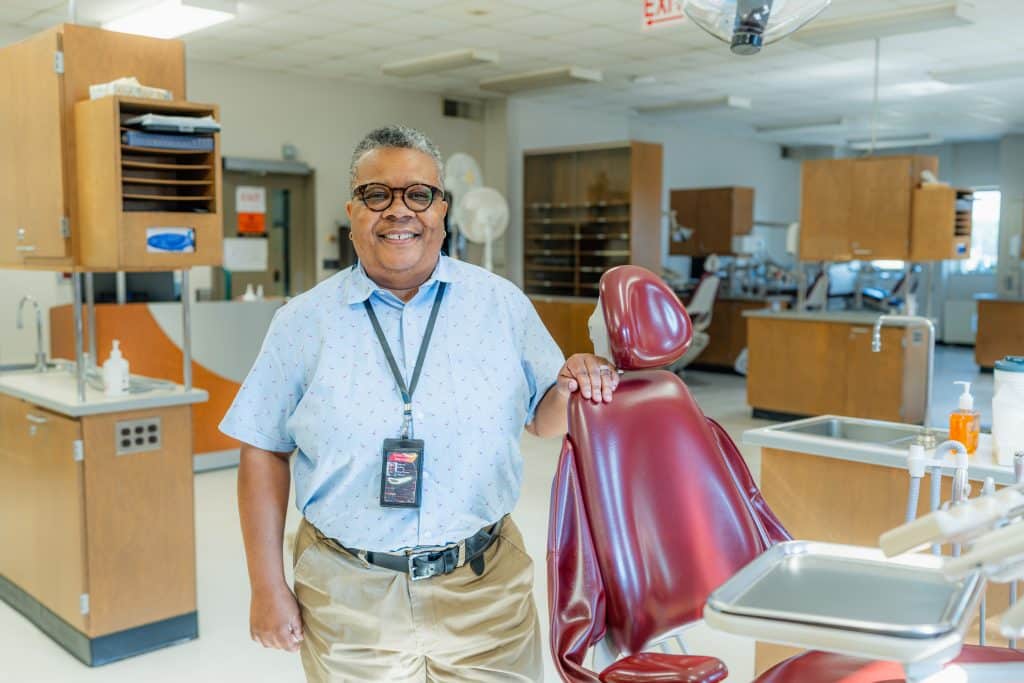
Dr. Deborah Brown will lead Michigan’s first dental therapy program at Ferris State, preparing providers to improve access to routine dental care.
This story is part of a series on the challenges and solutions related to oral health in Michigan, Indiana, and Ohio. It is made possible with funding support from the Delta Dental Foundation.
Dr. Deborah Brown still remembers her first trip to the dentist.
She was about 5 years old. By then, she already had about a dozen cavities.
Growing up in an underserved neighborhood in New Jersey, Brown experienced firsthand what can happen when children do not have easy access to dental care.
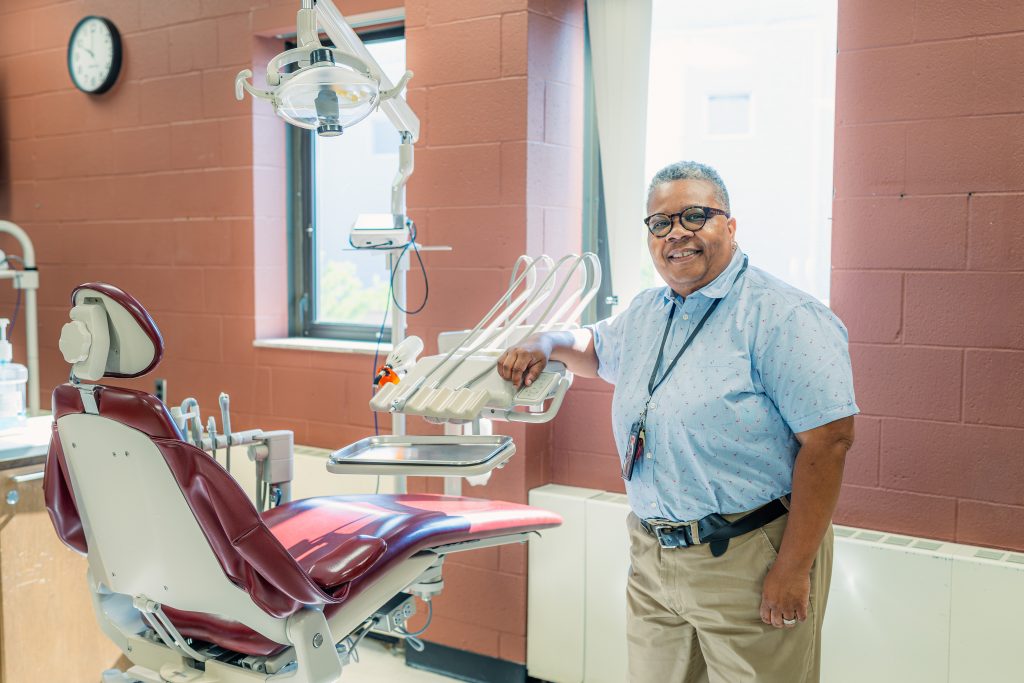
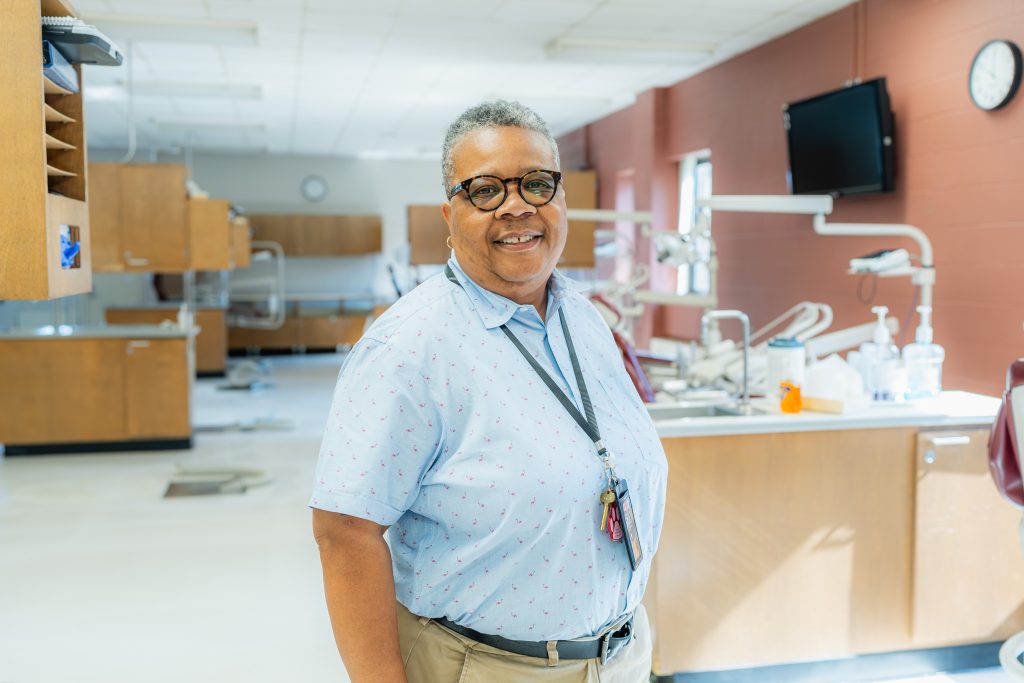
That experience eventually led Brown into public health dentistry. Now it has brought her to Ferris State University in Big Rapids, where she has been hired to launch Michigan’s first dental therapy program.
Beginning in 2028, pending accreditation, the program will allow students to become dental therapists without leaving Michigan. Only a few dental therapists currently practice in the state, Brown says, and each had to study out of state for training. Ferris hopes the program will educate providers who can expand access to routine dental care, particularly in rural and other underserved communities.
“We’ll have our own homegrown dental therapists here in Michigan,” Brown says.
Dental therapists work with supervising dentists to provide routine care, including exams, fillings and preventive services. Their role allows dental practices to serve more patients while dentists focus on more complex procedures.
“If you have a dental therapist working in an area where it’s hard to find a dentist, they can do a lot of the basic treatment, fillings and things like that, so that people can still have access to care,” Brown says.
Brown compares the profession to healthcare roles many people already know.
“I try to relate it to something that they’re already familiar with, like a nurse practitioner or a physician’s assistant,” Brown says. “It’s what you would call a mid-level provider. They can do a little bit more than a hygienist and a little bit less than a dentist.”
According to the Michigan Department of Health and Human Services, the state has about 59 dentists for every 100,000 residents, but those providers are not evenly distributed across Michigan. More than 1.5 million residents live in federally designated dental shortage areas, including children, seniors, low-income families, pregnant women, people with disabilities and residents of rural communities.
Experiences drew her to profession
Brown understands those challenges because she experienced them herself.
“I’ve always been drawn to public health because I grew up in an underserved area in New Jersey,” Brown says. “I didn’t have my first dental visit until I was probably 5 years old, and by that time I had like 12 cavities. I was always drawn to doing this type of work.”
Her path into dentistry wasn’t a traditional one. Brown entered dental school at 31 and graduated four years later.
“I was a late bloomer,” Brown says. “A family dentist was talking to my mom, and he said, ‘Tell her to contact me, and I’ll have her come to my office, and she can shadow me.'”
Brown took him up on the offer.
“I did that, and I was like, ‘Wow, I like what he’s doing,'” Brown says. “He actually wrote me a reference letter for dental school.”
She earned her dental degree from Rutgers University School of Dental Medicine and later completed a Master of Healthcare Administration at Seton Hall University.
She spent the next three decades working in public health dentistry, including federally qualified health centers, Medicaid organizations and nonprofit dental clinics. Brown moved to Michigan in 2018 to become chief executive officer of My Community Dental Centers, a nonprofit organization that operates clinics across the state and provides comprehensive dental care to all patients, including Medicaid recipients and people without insurance.
She joined Ferris State in May after the university selected her to lead development of its new dental therapy program.
“I’ve always been a champion for dental therapy because I know that there’s still so much need, especially in our more rural areas and underserved areas of the state,” Brown says.
When Ferris State announced plans to establish Michigan’s first dental therapy program, Brown initially imagined serving as an instructor.
“But then when they posted for the program director, I said, ‘Oh, wow, that’s something I’d really like to do,'” Brown says. “I’d really like to be at the beginning of this program.”
Ferris leaders say Brown’s experience made her the right person to build the program.
“This program is an exciting new chapter for Ferris State and will provide students with in-demand skills that will allow them to help people across Michigan and beyond,” says Dr. Lincoln Gibbs, dean of Ferris State’s College of Health Professions. “We are confident that Dr. Brown’s vision, expertise, and leadership will guide this new program to excellence.”
The Michigan Department of Health and Human Services is assisting Ferris State through a federal Health Resources and Services Administration oral health workforce grant. The funding includes $85,000 to help the university hire a consultant to assist with curriculum development and accreditation.
Offers bachelor’s, master’s degrees
Brown says another feature of the program could open doors for students with varied educational backgrounds.
“The one thing that I’m excited about is that this program has the options for whether you’re a dental assistant or dental hygienist, or if you’re someone who has not been in dentistry at all,” Brown says. “You can get into the program.”
Students will be able to earn bachelor’s and master’s degrees through the program. Applicants will not need to hold a bachelor’s degree before enrolling because credits earned in the dental therapy curriculum will apply toward both degrees.
“You don’t need to have a college degree before you get in, and you don’t need to be a hygienist before you get in, so the options are open for everybody,” Brown says. “I think it’s a good option for many different types of individuals.”
Interest is already building, even though the first class is expected to begin in 2028.
“At least every week we get a call or an email from people who want to know what they need to do to prepare,” Brown says.
Many of those inquiries come from dental assistants looking to continue their education. Brown says dental assisting often is the first step toward other careers in dentistry.
“It’s a great pathway,” Brown says. “I’ve met dentists who were assistants, then maybe they became hygienists, and then they decided to go to dental school.”
Ferris plans to enroll about six students in its inaugural class. Brown says beginning with a smaller cohort will allow faculty to fine-tune the curriculum before expanding enrollment.
“We want to make sure that we are giving our best foot out the door,” Brown says. “Any new program you’re going to have to tweak things along the way. It’s better to have it small if you need to change or make adjustments than to have a large class.”
Anyone interested in learning more can contact Ferris State’s College of Health Professions at chp@ferris.edu. Brown says the university is keeping a list of prospective students while the program moves through accreditation.
Photos courtesy of Ferris State University
Related Articles

Historic properties are prime candidates for residential and mixed-use developments
The revival of legacy commercial, educational and manufacturing properties embraces sustainability, technology and adds housing.

Partner Partner Content Five years in, this wind park’s revenue is reshaping local school and farm finances
Five years after Michigan’s largest wind farm began generating power in Isabella County, its economic effects are becoming clearer. A new analysis finds the project is generating millions in estimated annual lease revenue for landowners while expanding the tax base for local school districts, helping some pay down debt and improve facilities.

Evictions impact millions of kids. These schools get an alert when it happens to their students.
Evictions impact millions of kids. These schools get an alert when it happens to their students.