Primary care providers help expand oral health access through national training initiative
The 100 Million Mouths Campaign trains primary care providers to identify oral health concerns, expanding access and improving patient care beyond dental offices.
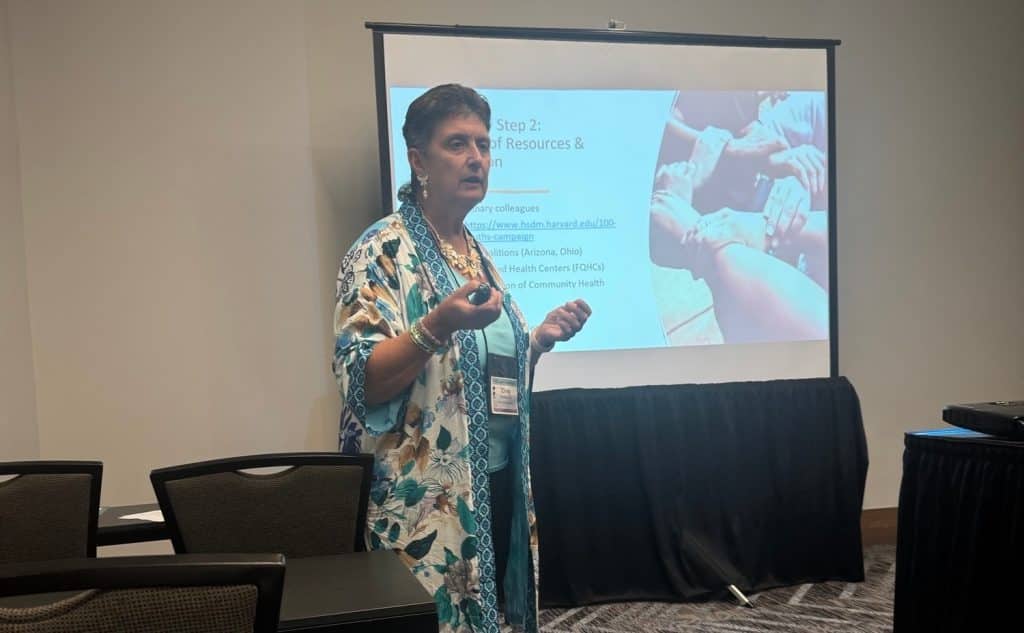
Ohio oral health advocate Cindy Lord says changing health professional education is one of the best ways to improve access to dental care.
While more than 100 million Americans do not visit the dentist each year, the majority of them visit a primary care provider regularly. Health leaders say that is a missed opportunity to identify oral health problems before they become larger health issues.
Colin Colter witnessed the consequences while caring for patients in federally qualified health centers and rural clinics across the country.
“It became very apparent what role oral health played in overall health outcomes,” says Colter, clinical coordinator for the physician assistant program at Wayne State University and Michigan’s oral health champion for the 100 Million Mouths Campaign, an effort to close the dental health gap.
He remembers caring for patients with uncontrolled diabetes who were also missing several teeth. Instead of eating vegetables and lean proteins, many relied on softer, carbohydrate-heavy foods that made managing diabetes even more difficult.
“A common reason their diet looked the way it did was because they had a hard time chewing healthier foods,” Colter says.
The 100 Million Mouths Campaign is training future physicians, PAs, nurse practitioners, and other primary care providers to include oral health in routine patient care. The effort reflects a growing movement to integrate oral health into the broader healthcare system rather than treating it as a separate specialty.
The project is coordinated through a partnership between the University of Massachusetts Chan Medical School and the Harvard School of Dental Medicine. The campaign has expanded to 35 states, including Michigan and Ohio, with support from the Delta Dental Foundation.
“We named it 100 Million Mouths because there are more than 100 million people in this country every year who do not see a dental professional,” says Dr. Hugh Silk, a family physician and professor of family medicine and community health at the University of Massachusetts Chan Medical School, who is a co-founder of the campaign. “We thought if we could train medical professionals to do more, that would help decrease that burden.” His co-founder is Dr. Shenam Ticku, a dentist and researcher at Harvard School of Dental Medicine.
Increasing oral health education
Silk says research has linked oral health to overall health for years, yet many medical providers receive little education about caring for the mouth.
“For years we’ve known this connection between the mouth and the body,” Silk says. “For years we’ve known that medical clinicians are not learning enough about oral health.”
The campaign recruits health educators from across the country and trains them to become “oral health champions” by bringing oral health into medical schools, PA programs, nursing programs, and residency programs.
“The goal is to teach learners about the importance of oral health on overall health and give them the skills to ask the right questions, examine the mouth, provide services like fluoride varnish, and better care for their patients,” Silk says.
“We also train the faculty so that our champion isn’t needed in that program forever,” Silk says. “We want there to be sustainability.”
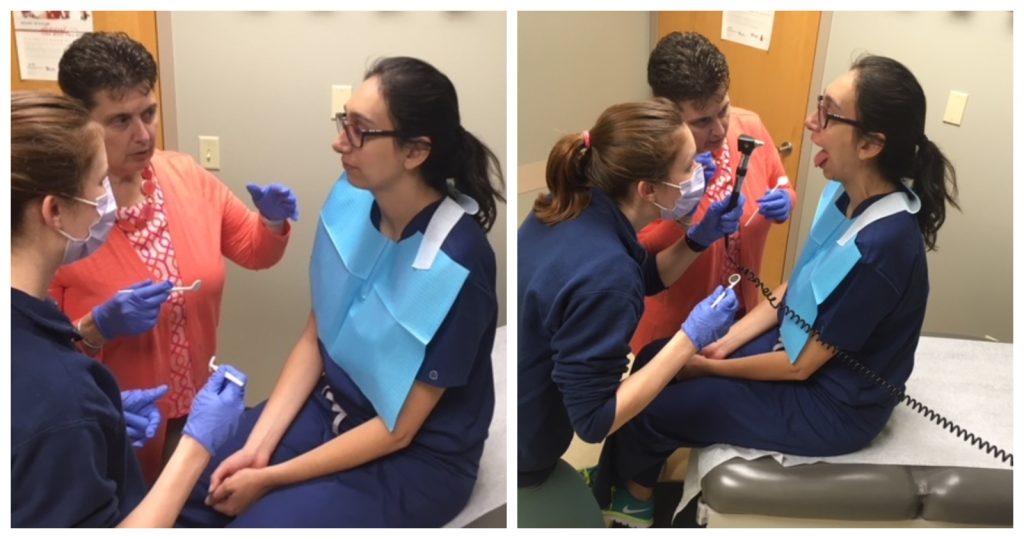
Ohio’s oral health champion, Cindy Lord, believes changing health professional education offers one of the best opportunities to improve access to care.
Lord, a PA who spent more than 35 years in family medicine and health professions education, founded the PA program at Case Western Reserve University School of Medicine before retiring. She now volunteers at a free clinic in Painesville, Ohio.
“Oral health is about the mouth, and the mouth is part of the body,” Lord says.
She believes medicine has separated oral health from the rest of the body for too long.
“In medicine, we took the head off the body years ago,” Lord says. “We don’t do mental health, and we don’t do dental.”
Her volunteer work brings those gaps into focus.
“My patients may be uninsured, but they are not unemployed,” Lord says. “They are hardworking people, often self-employed, employed by companies that don’t offer health insurance, or insured but burdened by unaffordable deductibles and copays. Every day, they must choose between paying for food, housing or transportation.
“Too often, routine dental care is the first thing sacrificed, leading to tooth decay, gum disease, tooth loss, and chronic pain. When that pain becomes unbearable, they seek temporary relief in the emergency department and leave with a bill they cannot afford. As healthcare providers, we can and must do better.”
What medical training often misses
Since launching in 2020, the campaign has trained 135 schools and programs and reached about 15,000 students and residents across 35 states, Silk says.
Education is the starting point because each graduate will care for thousands of patients during their career.
“Most health care programs receive less than three hours of oral health curriculum during their entire training,” Colter says.
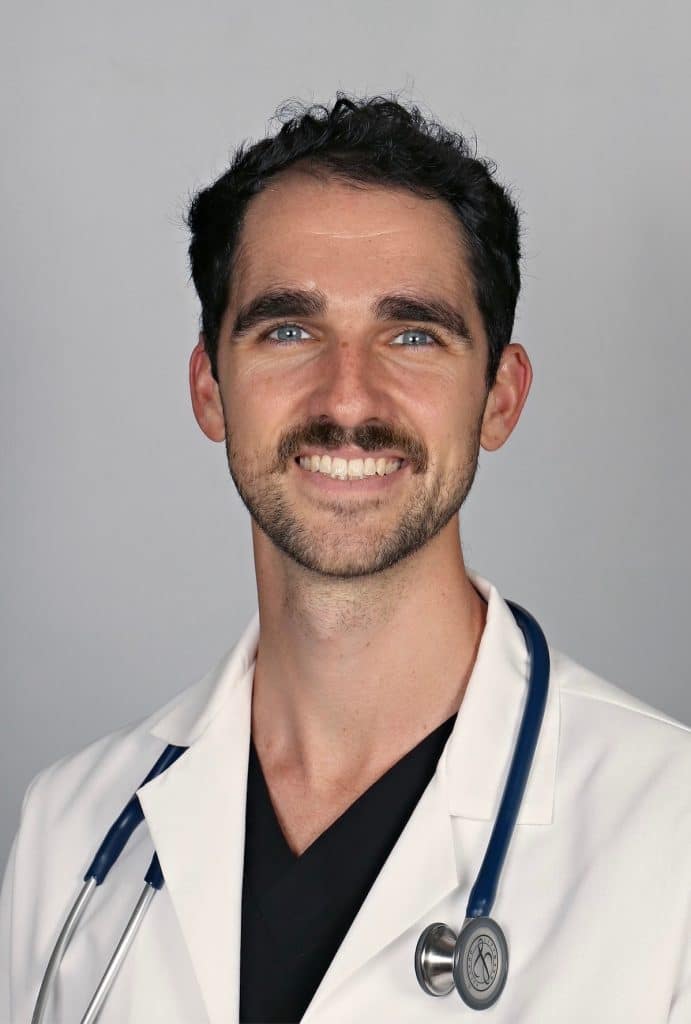
Many students leave believing oral health belongs only to dentists.
“Many students think the teeth are outside the scope of a primary care provider, but that’s just not true,” Colter says.
Lord says educators often discover they already teach oral health without realizing it.
“Oral health is already in everyone’s curriculum,” she says. “It’s just hidden.”
She encourages faculty to build on lessons they already teach.
“You wouldn’t leave cardiology out of your curriculum. You wouldn’t leave the heart out of your exam,” Lord says. “They’re already teaching the mouth. We just need to highlight it.”
Schools have responded positively, Colter says, although crowded curricula remain a challenge.
“The good news is no one says oral health doesn’t matter,” he says. “The challenge is that medical curricula are already full. Programs are trying to find creative ways to weave oral health into what they’re already teaching.”
Health equity also remains a major focus.
“This topic has deep inequities,” Silk says. “We need to train our learners why certain groups are not getting the care they need and what would help change that.”
Making use of resources
Michigan already has many organizations working to improve access, Colter says.
“One of the biggest challenges is helping people know those resources exist,” he says.
Transportation, work schedules and finances keep many people from receiving dental care.
“Someone may very much want to go to a dental clinic, but they can’t get time off work or transportation becomes the barrier,” Colter says. “There are definitely some complex issues that affect outcomes, but fortunately there are a lot of smart people working on solutions.”
Silk says the campaign’s next step is measuring how many patients newly trained providers reach over time.
“We’re starting to calculate how many patients these learners will touch and where we are on the spectrum of trying to reach 100 million mouths,” he says.
Lord believes the effort will continue to grow as graduates enter practice and begin teaching others.
“The goal of the 100 Million Mouths Campaign is that we educate these different programs, those students go out into practice, and they keep spreading that knowledge,” she says.
Silk hopes patients will begin to expect oral health conversations during routine medical visits.
“I think it’s important for people to know this is going on and, ideally, to start asking their medical provider about their oral health,” Silk says.
“When you go to see your primary care provider, you can ask them about your heart. You can ask them about your mental health. You should be able to ask them about your mouth.”
Photos courtesy of Cindy Lord
Related Articles

COVID kids and mental health: How are pandemic littles doing today?
Mental health challenges have surfaced but kids also benefited from increased family time and less hectic schedules.
Micro forests attract not only birds and bees but Metro Detroiters, too
Whether you call them micro, mini, or pocket forests, they are taking root around the world — and in metro Detroit. They help the environment, provide refuge to native species, and respite to people seeking green spaces — especially in urban areas.
How public libraries instill literacy in littles
Libraries’ children’s programming builds kindergarten readiness and a lifelong love for reading.