The power of print: Preschoolers engaged in print-focused activities show stronger literacy skills
The simplest tools are still the most effective: paper, pencils, and everyday print.
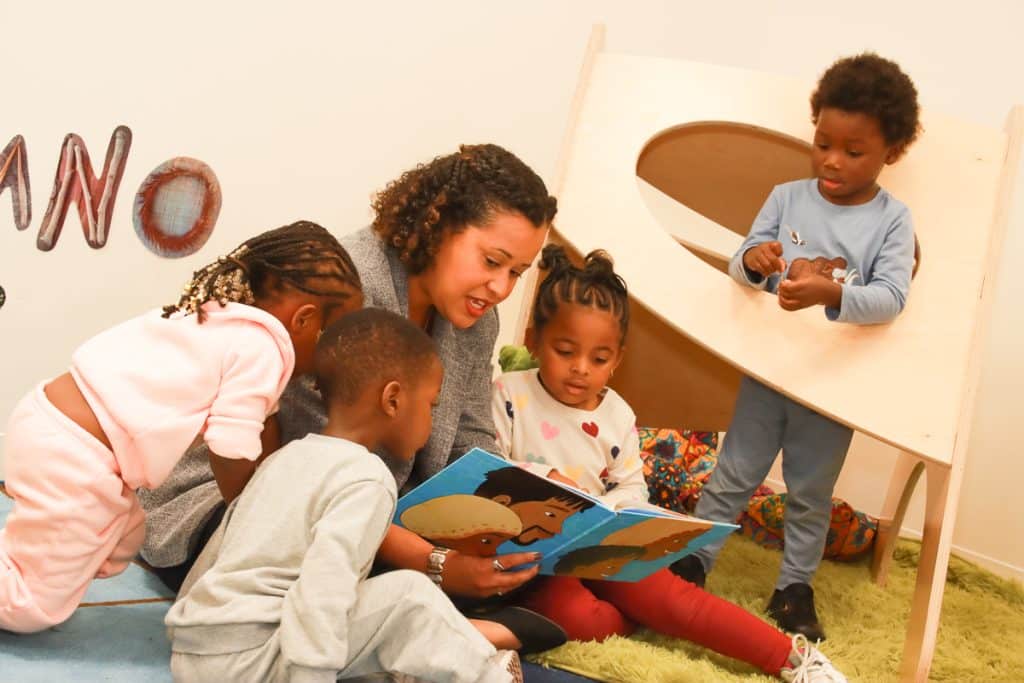
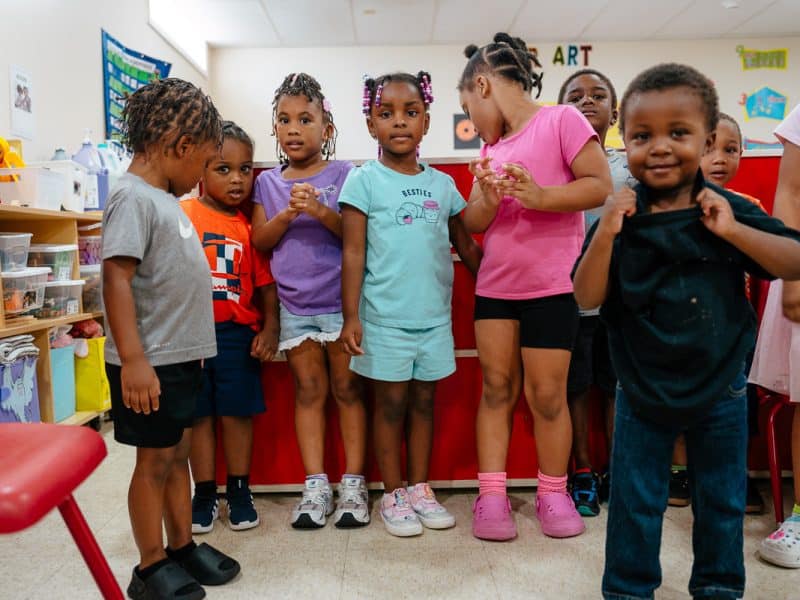
Boston Square Early Learning Center in Grand Rapids.
When it comes to teaching preschoolers their ABCs, Michigan State University (MSU) researchers say the simplest tools are still the most effective: paper, pencils, and everyday print.
A new MSU study found that preschoolers who engaged in print-focused activities — like writing their names, spotting words on signs, or labeling drawings — showed stronger early literacy skills than peers who spent more time on digital or analog literacy games. Unlike print-focused practices, which emphasize hands-on work with letters and words, digital or analog literacy games include screen-based apps, alphabet videos, flashcards, or board games designed to teach letters and sounds
The findings highlight a critical message for parents and educators. Technology may supplement learning, but it cannot replace meaningful, hands-on interactions.
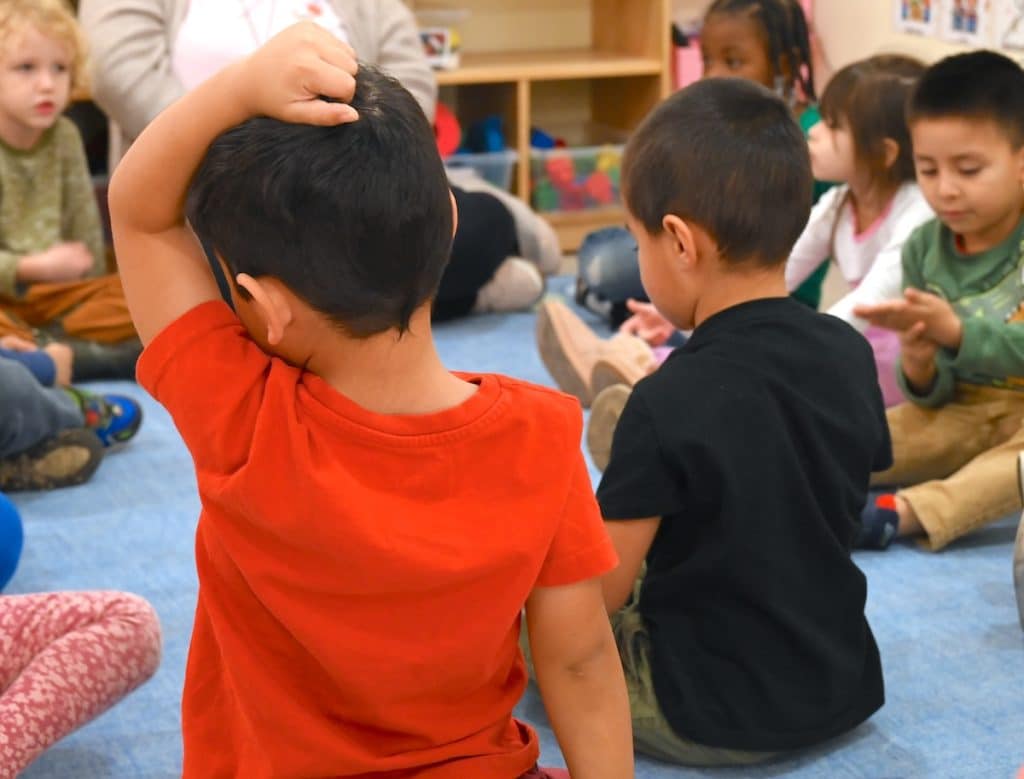
Voces La Escuelita GSRP classroom in Battle Creek.
Print wins over digital for preschool literacy
“Parents and teachers often prioritize book reading, but our findings really show that we have to teach children about print directly,” says Lori Skibbe, professor in MSU’s Department of Human Development and Family Studies. “Helping them to understand letter knowledge, how letters correspond to sounds, and word recognition in writing are among the strongest predictors we have for later reading success.”
The study’s co-author, Ryan Bowles, added that the study’s results raise important questions about the role of educational games.

“We don’t really know how parents are using digital media and whether there is a way it can be really helpful for children,” Bowles says. “What we do know is that the quality of the app really matters, and in this study, heavier use of games was linked to lower literacy outcomes”
The study, supported by the U.S. Department of Education and the National Institutes of Health, came about from Skibbe’s interest in the ways children with speech and language impairments develop early literacy skills.

“My interest was really in understanding and helping to support and assess early literacy skills for children when they have a speech and/or language impairment,” says Skibbe. “To answer that question, the MSU team recruited more than 1,000 children across the Midwest, including about 200 with identified speech or language challenges, to get a broad view of how different literacy practices shape learning at home. ”
The study, which included more than 1,000 children ages 3 to 6, also looked closely at families of children with speech and language impairments. These parents reported engaging in fewer shared reading and print activities at home, making it harder to create rich literacy environments. Yet even for these children, print-based routines made a clear difference.
“All children benefited from the use of print activities,” Skibbe emphasized. “This doesn’t have to be something that takes a lot of time. It can be simple, fun, and provide meaningful opportunities to connect with children while supporting their skills.”
Inside a classroom where print comes first
The emphasis on weaving print into daily routines isn’t unique to MSU’s lab classrooms. Decades of early literacy research have underscored the power of making print a visible, everyday presence in children’s lives. The lesson was simple. When children see their words written down, they realize print reflects their own voice and ideas. Even as technology and digital games have become more common in classrooms, that message still rings true in MSU’s Child Development Laboratories classrooms, where menus, messages, and checklists remind children that print is part of their world.
For Heidi Foxworthy, academic specialist and head teacher at MSU’s Child Development Laboratories–Haslett, the research aligns with her daily practice. Her classroom is intentionally designed as a “print-rich environment” filled with clipboards, sticky notes, and journals that make reading and writing part of children’s everyday play.

“Children are naturally curious and want to be part of their community,” Foxworthy says. “When they see print being used in meaningful ways, like writing a daily message, planning meals, or making checklists, they not only learn how print works but also see how it connects to their lives.”
That intentionality extends to lesson planning and spontaneous learning moments. Whether it’s writing a thank-you note after receiving a gift or turning snack preferences into a menu, Foxworthy uses opportunities to embed literacy into activities that matter to children.
“The key is finding what’s meaningful to them and using print to expand on it,” she says.
According to Foxworthy, the classroom environment is carefully structured to encourage literacy in many ways.
“It’s about making print meaningful and accessible so they see it as part of daily life,” she says.
Those opportunities, she adds, are not always formally planned lessons. Sometimes they are spontaneous, like jotting down a snack order or labeling artwork together.
“The beauty is when it all intertwines. You realize literacy supports not just reading and writing, but also behavior, routines, and even social-emotional growth,” says Foxworthy.
Balancing digital in a digital world
While digital tools are common in many classrooms across the country, Foxworthy says she has chosen not to prioritize digital games in her teaching.
“Most of our families get so much digital game exposure outside of school that I don’t feel the need to provide it here,” she says.
Instead, she uses technology sparingly, an iPad to play a song during circle time or to research a topic children are curious about, like antlions. She also integrates children into her documentation process, using talk-to-text features or showing them their photos as part of class storytelling.
“It’s less about games and more about purposeful use,” she says.
For families, she tries to provide practical guidance. If parents plan to use digital tools, she recommends high-quality options and shares ideas for weaving print literacy into daily routines.
“I really like to give families ways to prioritize print literacy within the home,” Foxworthy says. “It’s not about avoiding technology altogether but about making sure print is at the center.”
Both the research and Foxworthy’s classroom emphasize the importance of family involvement. Foxworthy often sends home newsletters with simple at-home activities, records story read-alouds, and hosts family literacy nights.
“Families are the first and most important teachers,” she says. “Our role is to show them that literacy doesn’t require expensive tools, just meaningful conversations, shared routines, and everyday print.”
Skibbe and Bowles hope the research sends the same message to parents across Michigan and beyond.
“Focusing on print is rewarding and can be fun and practical,” Skibbe says. “Pointing out letters on a street sign or writing your child’s name together may seem small, but these interactions add up in powerful ways.”
Photos by Tommy Allen, John Grap, and Nick Hagen.
Photos of Ryan Bowles, Lori Skibbe, and Heidi Foxworthy courtesy Michigan State University.
Early Education Matters shares how Michigan parents, child care providers, and early childhood educators are working together to create more early education opportunities for all little Michiganders. It is made possible with funding from the W.K. Kellogg Foundation.
Author

Related Articles

Is PreK for All meeting its goals?
Roadmap co-author encouraged by how the state is expanding its Great Start Readiness Program into universal pre-K.
Michigan’s free universal pre-K program could serve 70,000 4-year-olds this school year
Launched in 2023, PreK for All now has no income qualifications.
Free Wonderschool platform will help Michigan families find childcare faster
Scheduled to launch early 2027, the platform will connect parents to available childcare and preschool spaces with one application.