Why early childhood belongs on every Michigan voter’s ballot
Why Michigan voters should pay attention candidates’ stands on childcare and early learning.
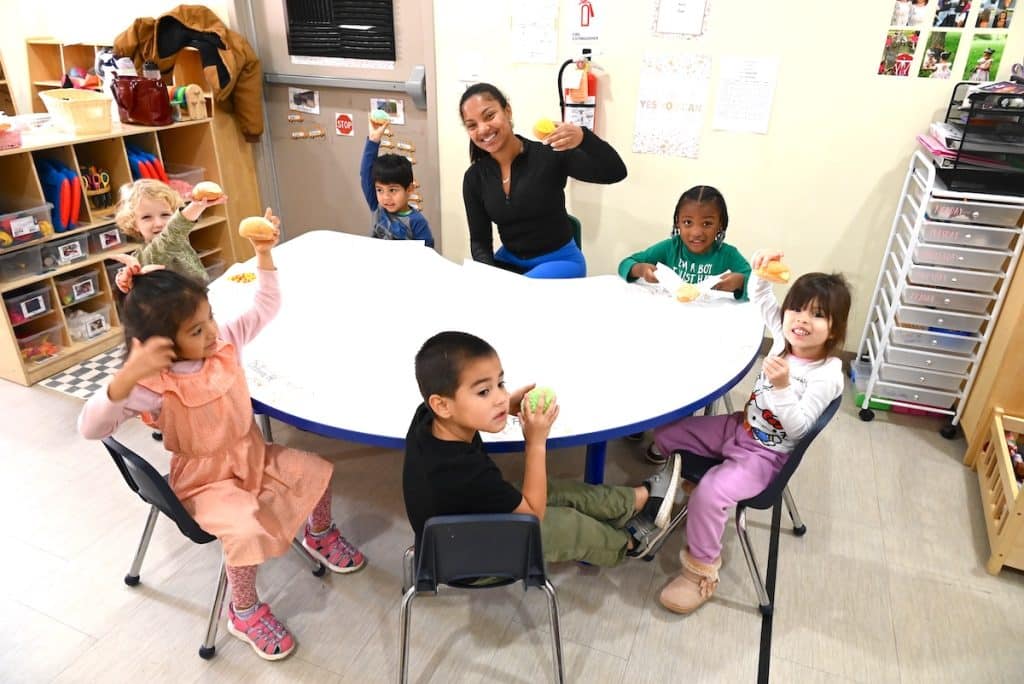
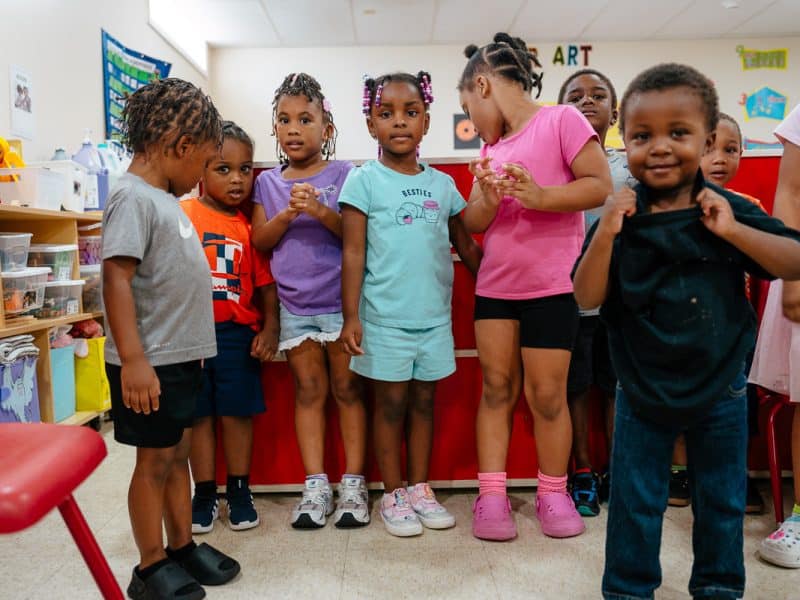
Intercultural Bilingual Early Childhood Education Center in Battle Creek.
As Michigan voters prepare to head to the polls for the Aug. 4 primary election, issues like taxes, housing, and public safety are likely to dominate campaign conversations. But early childhood advocates say voters should also pay close attention to where candidates stand on childcare and early learning.
Research increasingly shows that childcare is not simply a family issue but an economic one. According to a report from the U.S. Chamber of Commerce Foundation, Michigan loses an estimated $2.88 billion annually because of insufficient childcare through lost economic activity, employer expenses and tax revenue.
For Mina Hong, vice president of strategic impact of the Early Childhood Investment Corporation (ECIC), childcare is no longer only a family issue. It is a workforce issue, an economic issue, and a community issue that affects every Michigander. ECIC recently released a Voter and Candidate Education Toolkit to help Michigan residents better understand how early childhood policy intersects with issues that affect communities across the state. The resource encourages voters to ask candidates where they stand on childcare affordability, workforce development, and investments in early learning, arguing that these policies shape not only children’s futures but also Michigan’s economic future.
“Elected officials work for their constituents,” Hong says. “We’re the ones that have to ensure that we’re electing folks who align with what we need and represent our priorities as families here in Michigan.”
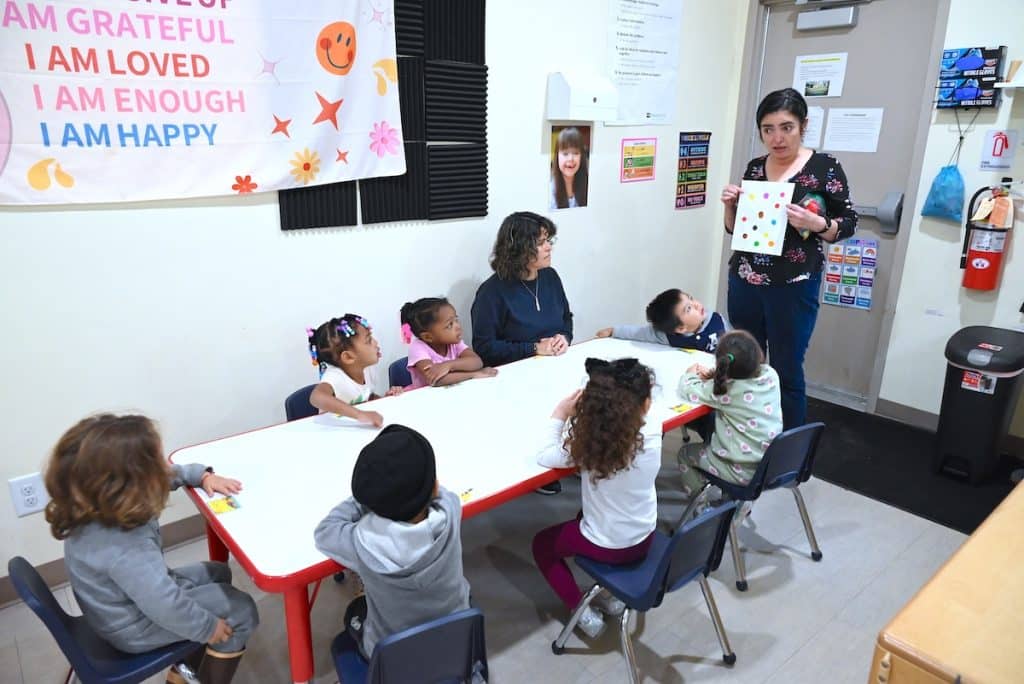
Intercultural Bilingual Early Childhood Education Center.
Child care remains one of families’ biggest financial challenges
While Michigan families continue grappling with rising costs for housing, groceries, and transportation, Hong says childcare remains one of the largest expenses many households face. Finding available care is difficult, she says, but finding affordable care can be even harder. Families seeking infant care, care for children with developmental delays or disabilities, or care during evenings and weekends often encounter even greater barriers.
“If candidates aren’t talking about childcare, if they’re not talking about early childhood issues, then clearly they’re not hearing from enough families,” Hong says. “At ECIC, we’re hearing from kids and families all the time that childcare is a top priority.”
The shortage extends across much of the state. According to ECIC, 44% of Michiganders live in a child care desert, meaning there are more than three children for every available licensed child care slot, making access difficult even for families who can afford care.
Hong says affordability and availability often go hand in hand. Even families with stable incomes can struggle to find care that meets their needs, particularly for infants, children with disabilities or developmental delays, or parents who work evenings, overnight shifts or weekends. For many families, the challenge isn’t only paying for care, but also finding an available provider at all.
Why child care matters to Michigan’s economy
Michigan employers bear the largest share of the state’s child care challenges. According to the Michigan Chamber of Commerce, businesses lose an estimated $2.3 billion each year through employee absenteeism, turnover, and reduced productivity when families cannot secure dependable child care. Hong says those numbers illustrate why childcare should be viewed as economic infrastructure rather than simply a family issue.

“They’re losing out because of high turnover, employee absenteeism, and families having to make tough decisions between returning to work after having a baby or dropping out of the workforce altogether,” she says. “If we can’t really turn this issue around, we’re going to continue to have challenges growing our economy.”
Hong also encourages residents to think more broadly about what economists call the “care economy” — the network of childcare providers, educators, and caregivers whose work allows others to participate in the workforce. When that system becomes unstable, the effects ripple across businesses, families, and Michigan’s economy.
Data shows Michigan also loses an estimated $576 million in annual tax revenue because parents reduce work hours or leave the workforce when dependable childcare is unavailable. Those losses illustrate that childcare challenges affect not only individual families and employers but also the state’s ability to grow its economy and fund public services.
The impact also extends into the future. Research shows high-quality early learning helps children develop the skills they need to succeed in school and eventually enter the workforce, making investments in childcare and early education investments in Michigan’s long-term economic competitiveness.
Those long-term outcomes are one reason childcare should not be viewed as a stand-alone policy issue. Instead, Hong encourages voters to think about early childhood alongside housing, workforce development, and economic growth because each depends on families having reliable access to affordable, high-quality care. Children, parents and caregivers all benefit when these systems work together.
“Strong communities require a whole-child, whole-family approach,” Hong says.
Although Congress determines the future of federal nutrition programs like Supplemental Nutrition Assistance Program (SNAP), Michigan voters will influence how the state supports children and families through this election cycle. State leaders make key decisions about child care funding, the early childhood workforce, and other investments that affect families’ ability to access affordable, reliable care.
Hong encourages voters to ask candidates where they stand on those issues. She also encourages residents to continue those conversations after Election Day by building relationships with their elected officials and sharing their experiences navigating Michigan’s early childhood system. She says policymakers rely on families, educators and providers to understand what’s working, where gaps remain, and how future policy decisions can better support children and caregivers across the state.
“They’re trying to win your vote,” Hong says. “It’s the perfect opportunity to ask them what they think about these issues.”
Photos by John Grap.
Early Education Matters shares how Michigan parents, childcare providers, and early childhood educators are working together to create more early education opportunities for all little Michiganders. It is made possible with funding from the W.K. Kellogg Foundation.
Author

Related Articles

Is PreK for All meeting its goals?
Roadmap co-author encouraged by how the state is expanding its Great Start Readiness Program into universal pre-K.
Michigan’s free universal pre-K program could serve 70,000 4-year-olds this school year
Launched in 2023, PreK for All now has no income qualifications.
Free Wonderschool platform will help Michigan families find childcare faster
Scheduled to launch early 2027, the platform will connect parents to available childcare and preschool spaces with one application.