‘Epic’ blue wave helps Democrats take Congress in overwhelming rebuke to President Trump
This post was originally published on this site.
By Charlie Hunt, Boise State University
Voters turned out in massive numbers on Election Day to hand Democrats control of Congress, in a sweeping snub of President Donald Trump and Republicans. Democrats won several statewide races in places long considered GOP bastions, including races that were considered insurmountable even weeks ago.
Democrats took control of the House and Senate, flipping Senate seats in Texas, South Carolina, North Carolina, Kansas and Ohio. The results reflected broad dissatisfaction across the country with Trump, his agenda and the candidates he had endorsed.
The Conversation’s senior politics editor, Alfonso Serrano, spoke on election night with Charlie Hunt, a scholar at Boise State University who studies Congress and elections.
It was obviously a strong showing for Democrats on Election Day, something that was even evident in the margin of some Democratic losses. What does it tell you, for example, that democratic socialist Angie Nixon fought a competitive race for the Senate in Florida?
There is this big uniform shift toward the Democrats that we’re seeing really across virtually all kinds of locations and geographies and counties. What I think is particularly notable here, and something we were on the lookout for in this election, and we’re seeing it, is the substantial shift in the Hispanic vote from 2024 in places like Texas and Florida, where you’re getting these 30-to-35 point shifts from how Donald Trump performed in 2024. That was a big part of what helped him win, and it seems like it has snapped right back and even farther in the other direction. This is what made Florida, I think, closer than a lot of folks thought.
It’s what put a number of really, really right-leaning districts in play, particularly in South Florida. And it looks like it is going to help Democrats keep the number of seats they had in Florida in the House that they had before the election, which is incredible when you consider that Florida did this mid-decade gerrymander to try to get them out of a bunch of those seats.
Some rural areas of the country were also more competitive than expected, like North Carolina’s 11th Congressional District, where Democrat Jaime Ager flipped a conservative district. What does that tell you?
It’s definitely an indicator of at least one of these two things. One is just really massive Democratic turnout across the board. Regardless of where they live, Democrats were so enthusiastic and energized to turn out that they did so across all different types of districts and counties.
It could also be an indicator of some cross-party voting, where Republicans are crossing over in some cases and voting for the Democrat. I don’t imagine there’s a ton of that, but in a lot of these close districts, and if you’ve got enough of those folks in places like Texas, it really does make a big difference, those small shifts.
I think we’re probably also likely to see, and we saw some of this in the exit polling, a major shift in independent voters, unaffiliated voters, toward the Democrats, whereas in 2024 they had been closer to Trump.
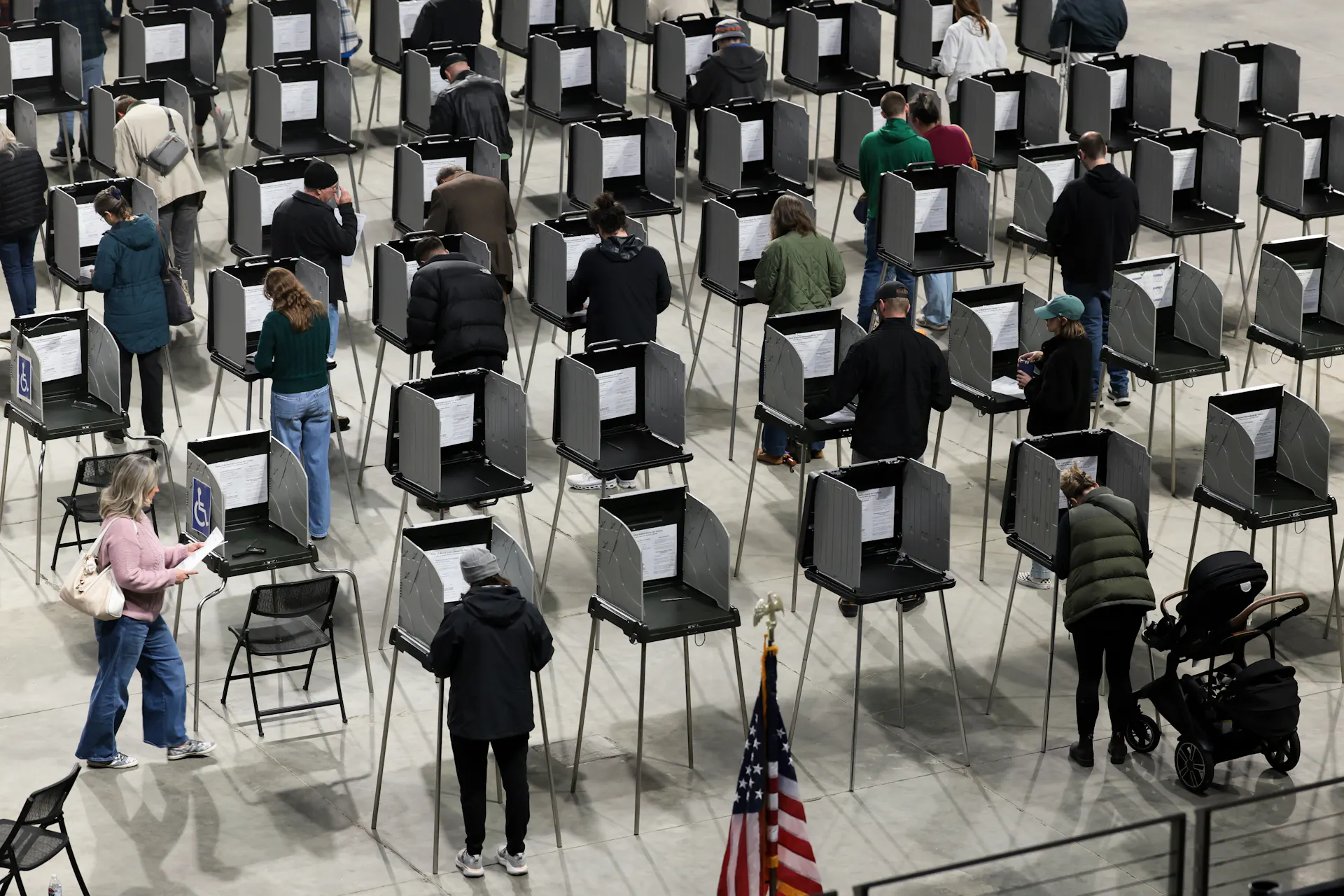
I’d like to go back to turnout briefly. Turnout looks like it was strong across the country. In Georgia, for example, Election Day’s turnout was on pace to beat turnout in the 2024 presidential elections.
That’s unprecedented, at least in modern elections. In Texas, for example, in some counties we saw James Talarico getting as many raw votes as Kamala Harris did in a presidential election. This isn’t a very political science term, but that’s insane. In a midterm election you typically see 10% or 15% less turnout than you would in a presidential election. But Democrats voted in presidential-level numbers in a lot of these really key areas, and that’s explaining how they’re able to overperform at levels we haven’t seen in at least 20 years.
Joe Raedle/Getty Images
Elon Musk spent nearly half a billion dollars supporting Republican candidates, including some US$200 million in Texas to elect Ken Paxton for the Senate, who lost. What does that tell you about the influence of political spending?
Republican PACs, super PACs and billionaire donors like Elon Musk may have raised more money compared to Democrats, but Democratic candidates themselves outraised Republican candidates through donors that gave directly to their campaigns.
This is important for a couple of reasons. Number one, because candidates get much better rates on TV ad buys than outside spenders. And so they get more bang for their buck when they’re spending on advertisements, which is the most expensive component of any campaign. And more to the point, that is an indicator of sort of dedicated grassroots donors who turn into voters, whereas Musk gets one vote at the end of the day.
And there is no amount of money that can make up for a really flawed candidate like Ken Paxton. And more to the point, a lot of this money, once you get into the tens, the hundreds of millions of dollars, a lot of the research talks about the diminishing returns that you get on that. Going from zero dollars spent to $10 million spent, that’s a very different kind of campaign. But once you go from $500 million to $510 million, that’s not going to get you a whole lot more votes.
Any final thoughts?
The territory that Democrats covered is unbelievable. The South Carolina Senate race went to Annie Andrews, the Democrat, which was unfathomable even a few months ago. Mississippi still appears to be somewhat in play. The blue wave turned into something approaching a tsunami. I think a lot of Democrats saw the polling and didn’t want to believe it or couldn’t bring themselves to believe it. But some of this late polling seems to have gotten things on the mark.
What we’ve seen in these midterm elections is a massive rebuke of the last two years of the Trump administration, and a sort of blue wave of epic proportions toward the Democrats, the likes of which we haven’t seen in 20 or more years. It’s a huge confirmation of the approach that Democrats took in this election.
This article is republished from The Conversation, a nonprofit, independent news organization bringing you facts and trustworthy analysis to help you make sense of our complex world. It was written by: Charlie Hunt, Boise State University
Read more:
- Meta’s B fine left out accountability for harm from the Cambridge Analytica data privacy scandal
- Justice Department’s interference before midterms was unsuccessful, unprofessional and unprecedented
- Why the Supreme Court blocked Trump and the Postal Service from restricting mail‑in voting for the midterms
Charlie Hunt does not work for, consult, own shares in or receive funding from any company or organization that would benefit from this article, and has disclosed no relevant affiliations beyond their academic appointment.
Related Articles

Task force aims to preserve health equity amid Medicaid cuts
West Michigan collaboration gets the word out about Medicaid changes and shares resources to help those affected.

Michigan’s community mental health system: Overcoming stigma to provide needed care
Community mental health has played an important role in shifting the culture to asking for help.

State takeovers of struggling Texas school districts come at a high cost, with little evidence of success
Local school boards and district administrators typically determine how public schools are run. If students are not meeting basic academic standards, though, state governments sometimes step in and take over the day-to-day operations of entire school districts.