Task force aims to preserve health equity amid Medicaid cuts
West Michigan collaboration gets the word out about Medicaid changes and shares resources to help those affected.
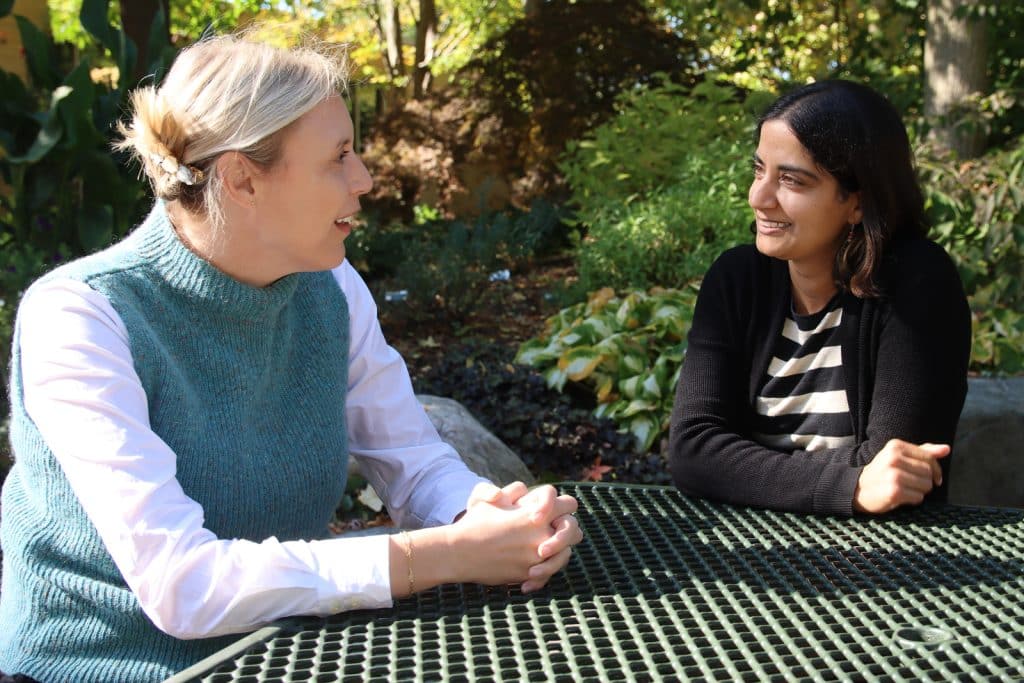
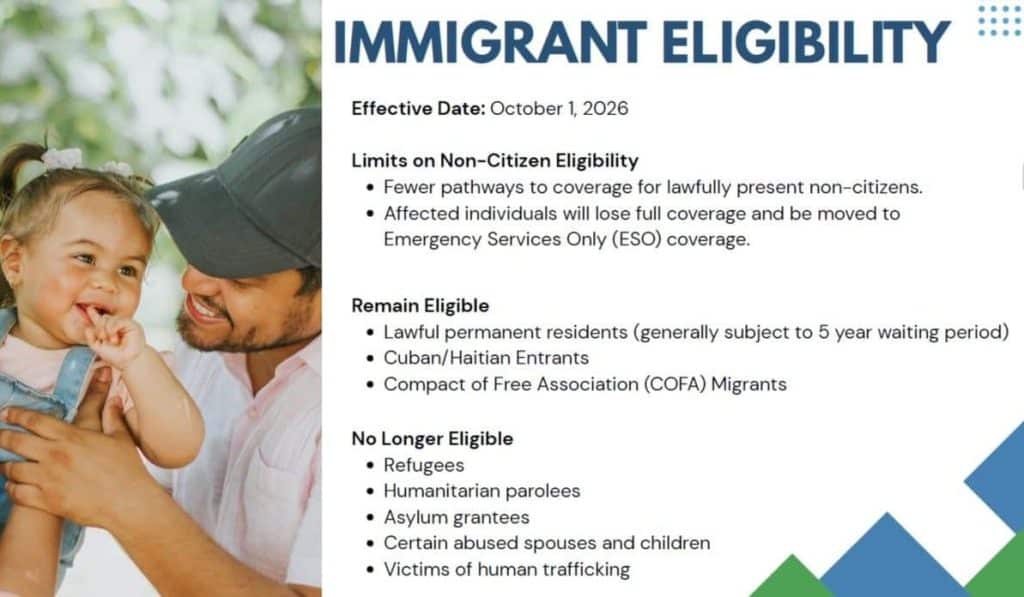
Flora*, a legal permanent resident living in Kent County, is in the midst of cancer treatments. On October 1, certain Medicaid changes went into effect for non-citizens. Confusion surrounding these changes resulted in Flora’s insurance coverage being erroneously denied — because she has lived legally in the U.S. more than five years, the changes do not apply to her. With help from the West Michigan Medicaid Task Force, her coverage was reinstated. (Legal non-citizens are the only immigrants who have ever qualified for Medicaid.)
“We have a great partnership with the gentleman who works for MDHHS [Michigan Department of Health and Services], and luckily her insurance was reinstated. However, we can’t do that for every single individual,” says Megan Erskine, CEO of Catherine’s Health Center and Task Force co-chair. “We expect, and I’m not being dramatic, increased mortality rates, increased comorbidity rates, increased costs to health systems.”
The Task Force is the current iteration of the Kent County Health Equity Council. Established in 2020, the collaboration brings together 70 organizations and 100 individuals including the Kent County Health Department, the Grand Rapids African American Health Institute (GRAAHI), the Hispanic Center of West Michigan. The original goal was to ensure marginalized communities had access to trustworthy COVID-19 information, testing, and vaccinations.
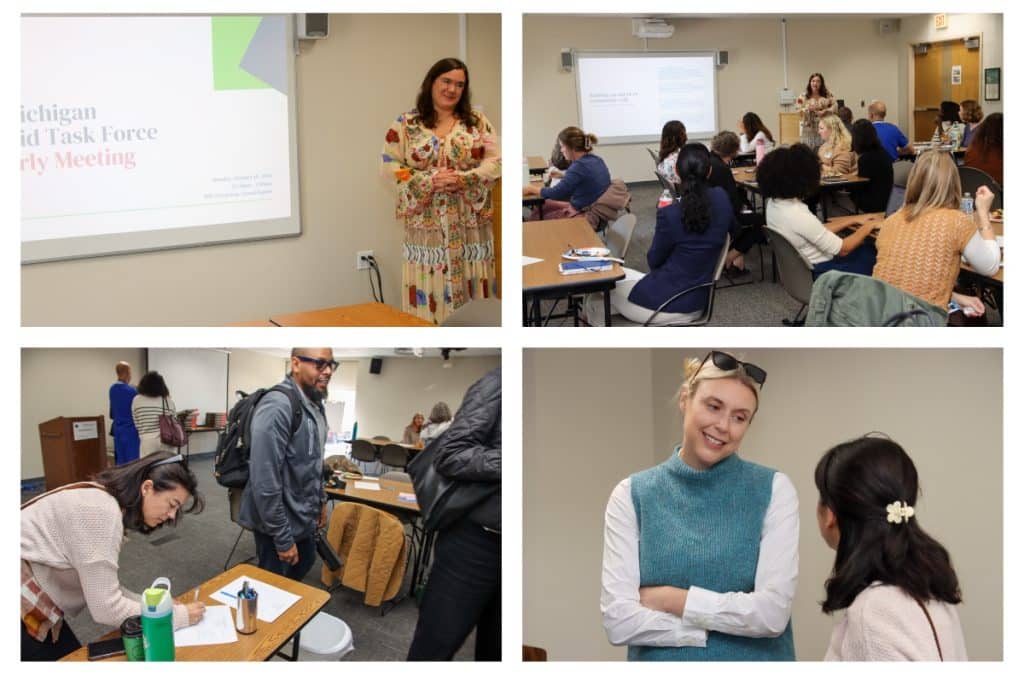
When the pandemic ended, the Council continued. With guidance from community voices and data from the Kent County Community Health Needs Assessment, new priorities were set: first, Mental healthcare access and, then, health insurance coverage. In 2025, when H.R.1, “The Big Beautiful Bill,” passed, the Council expanded its geographic reach throughout West Michigan and shifted into high gear as the West Michigan Medicaid Task Force.
“We decided this was the most important issue that we could work on for our community,” Erskine says. “We leveraged the same partners and stakeholders who were already at the table but shifted our attention and our priorities to understanding how H.R.1 would impact Michigan and our community and how we can function as an information aggregator.”
Task Force members have been gathering information at MDHHS meetings, webinars, and community conversations. The Task Force shares this evolving information on its website, in monthly email updates, and through trusted community messengers within West Michigan’s communities.
“There’s a lot of confusion and misinformation out there. So we are essentially serving as a clearinghouse to get all of that information and make sure that our community partners know how H.R.1 will impact the health of our community,” Erskine says. “H.R.1 has already made a huge impact on non-citizens. A lot of what will be coming in 2027 is related to work requirements that will impact the Healthy Michigan population.”
Come January, Medicaid work requirements will kick in.
“That’s going to impact a very large population,” Erskine says.
Unhealthy Michigan
One in four Michiganders had Medicaid before the policy changes. Currently, about 750,000 Michiganders have Healthy Michigan Plan expanded Medicaid. The policy changes will slash these numbers. Erskine notes that most people on the Healthy Michigan Plan are either already working, are students, or have a disability or illness. Only 6%of people on Medicaid are able and not working.
“People will delay preventative care, and preventative care is access to primary care. It’s getting your cancer screenings, your immunizations, those regular visits to monitor your hypertension or your chronic condition like diabetes,” Erskine says. “When people have access to preventative care and primary care, that often means that they’re not using the hospital emergency department for care.”
In Arkansas and Georgia, where the work requirement already was in place, more people did not go to work. They simply lost their health insurance and got sicker. In Georgia, more money was spent on administering work requirements than had been spent on expanded Medicaid.
“There’s no gain in terms of cutting fraud, waste, and abuse,” Erskine says. “And this is not an ‘Our lights go off from time to time — everything’s fine’ situation.”
Increased emergency room visits are not the only financial havoc the new policies will wreak on hospitals. The Michigan Hospital Association expects that the state’s hospitals will lose $2.5 billion in revenue annually. This loss could force healthcare providers to cut services, reduce staff, or opt out of the Medicaid program altogether.
Healthcare is the state of Michigan’s largest industry with a $77 billion economic impact per year. In addition, a University of Michigan study found that Michigan’s Medicaid expansion has boosted the state’s economy and budget and sparks the creation of more than 30,000 new jobs every year — one-third of them in healthcare and 85% in the private sector. Annually, these jobs boost personal spending power for Michiganders by $2.3 billion and generate $150 million in tax revenue.
“As a public health person, I’m obviously very concerned for these individuals who may delay care,” Erskine says. “As a citizen in West Michigan and the state of Michigan, I am worried about our economy. I am worried about the financial safety of our hospitals, and ultimately for jobs and for businesses. This is going to impact all of us.”
Find a local FQHC
Meanwhile, the Task Force is getting the word out about Federally Qualified Health Centers (FQHCs). These community-based healthcare clinics provide primary care and preventive services to underserved populations regardless of insurance status or ability to pay. Cherry Health and Catherine’s Health Center are examples of FQHCs with locations in Kent County. Many health systems also operate own similar clinics, for example, in Grand Rapids, Trinity Health offers Clinica Santa Maria and the Browning Claytor clinic.
“We want people to understand that if they lose their insurance, please come to these facilities for primary care so we can continue to take care of you,” Erskine says. “Many of us have agreements with health systems that allow us to refer uninsured patients for secondary or tertiary care. That’s a really important message that we’re trying to get out there.”
Photos by Tommy Allen
*Flora is a pseudonym used to protect safety and privacy.
MI Families shares the work of community organizations, healthcare providers, educators, employers, and other Michiganders as they work to create better health, educational access, and economic security for all Michigan families. It is made possible with funding from the W.K. Kellogg Foundation.
Author

Related Articles
Free MedWish MedWorks clinic in Cleveland brings free dental care and more to patients
Volunteer dental and medical professionals at a MedWish MedWorks clinic in Cleveland provide free care and connect patients with follow-up services.
Michigan’s community mental health system: Overcoming stigma to provide needed care
Community mental health has played an important role in shifting the culture to asking for help.
High-risk pregnancy doctors publish new standards for care under state abortion bans
A group of maternal-fetal medicine specialists has developed new guidelines to help providers in those states navigate legal risks for themselves and medical challenges for their high-risk patients, Stateline reports.