Free Wonderschool platform will help Michigan families find childcare faster
Scheduled to launch early 2027, the platform will connect parents to available childcare and preschool spaces with one application.

Michigan has invested heavily in expanding access to early childhood education. Now, through a new partnership with Wonderschool, state leaders hope to make finding and enrolling in preschool programs easier for families.
The Michigan Department of Lifelong Education, Advancement, and Potential (MiLEAP), in collaboration with Wayne Regional Educational Service Agency (Wayne RESA), is developing a statewide coordinated enrollment platform powered by Wonderschool that will allow families to search for participating early childhood programs, complete a single pre-K pre-application, and apply to multiple providers through one streamlined process. The new platform is expected to launch in early 2027. The effort builds on Michigan’s broader Pre-K for All initiative, which has driven record enrollment in the Great Start Readiness Program (GSRP) while saving participating families an estimated $14,000 annually in childcare costs.
Rather than replacing Michigan’s investments in early childhood education, officials say the platform is designed to help families more easily connect with the opportunities already available while reducing administrative burdens for providers.
“Michigan families have told MiLEAP and our partners that finding and enrolling in early learning programs can be confusing and time-consuming,” says Emily Laidlaw, deputy director of early education at MiLEAP. “Depending on where they live, families often must navigate multiple websites, complete different application forms, and search for information that isn’t always consistent or easy to find.”
The coordinated enrollment process is designed to remove those barriers by creating one streamlined experience where families can explore options, complete a single pre-K pre-application, and apply to multiple participating programs.
“Our goal is to make accessing high-quality early learning opportunities simpler, more transparent, and more equitable for families across Michigan,” Laidlaw says.
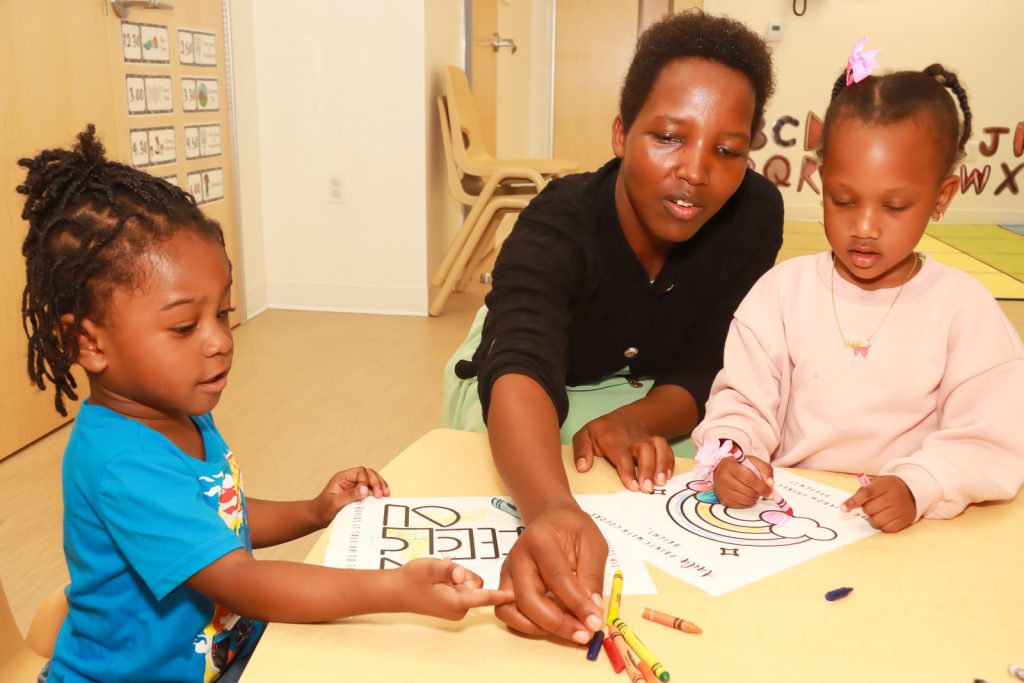
Building a statewide enrollment system
As the fiscal agent for the project, Wayne RESA selected Wonderschool through a competitive purchasing process to develop the statewide enrollment tool. Initially, the coordinated enrollment platform will focus on Michigan’s Pre-K for All initiative and GSRP, with implementation tailored to the needs of local communities.
According to Laidlaw, MiLEAP has worked closely with Wayne RESA and Wonderschool throughout the planning and design process to ensure the platform integrates with Michigan’s existing early childhood programs and services. Intermediate school districts (ISDs), Head Start grantees, and other early childhood partners have also participated in the planning process.
“Our shared goal is to create a true one-stop shop for families seeking pre-K opportunities while reducing administrative burden for providers and giving the state better data to support planning and improve access to early childhood opportunities for Michigan families,” Laidlaw says.
As development continues, MiLEAP plans to test the system with families, providers, and education partners before the statewide rollout to ensure the platform is intuitive and responsive to community needs.

Simplifying a fragmented process
While Michigan has expanded investments in early childhood education, enrolling in those programs has often remained a fragmented experience for families. According to Alan Oman, senior advisor for the Early Childhood Investment Corporation (ECIC), enrollment systems are currently coordinated largely at the local level through intermediate school districts and Head Start grantees. As a result, families’ experiences often vary depending on where they live.

“Moving toward a statewide coordinated system will ensure that families have a more universal experience accessing pre-K programs, regardless of where they live in the state,” Oman says.
Jessica Affholter, business development manager for First Children’s Finance, says enrollment barriers extend well beyond completing applications.
“The biggest enrollment barriers really vary depending on where families are located in Michigan and the resources available in their community,” Affholter says. “In many rural communities, one of the biggest barriers is simply availability, particularly for infants and toddlers.”
Families often weigh numerous factors when searching for care, including proximity to home or work, whether programs offer evening or summer hours, whether siblings can attend the same location, and affordability. Those challenges can be even greater in childcare deserts and historically underserved communities, where families may face fewer choices, transportation barriers, and limited financial resources.
“The biggest difference is that families will no longer have to navigate a patchwork of separate websites and application processes,” Laidlaw says. “Instead of visiting multiple websites or filling out duplicate applications, they’ll have one consistent statewide experience.”
The new platform will allow families to complete a single pre-application, search for programs based on their needs, receive clearer guidance throughout enrollment, and access multilingual tools designed to support a wide range of users.
“The key to the success of a statewide enrollment platform is that it is designed from the beginning to provide families with the information they need to make the best and most informed choices for their child,” Oman says. “The most important goal of a statewide enrollment platform is to ensure that all families have positive outcomes in their search for quality care, regardless of where they live or the barriers they face.”
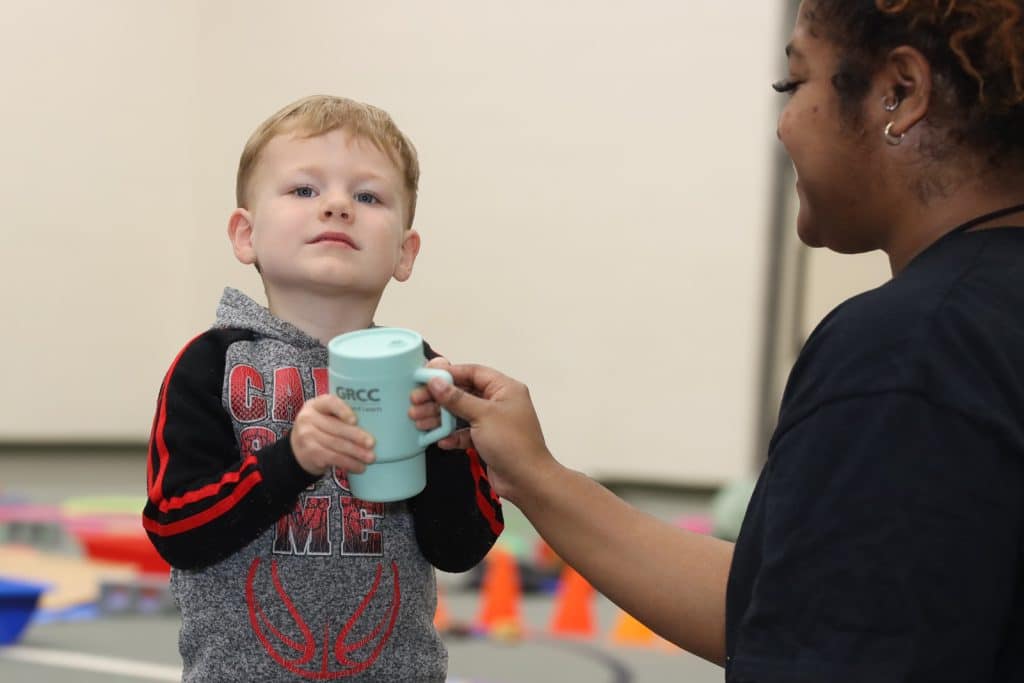
Benefits for providers and communities
State leaders say the coordinated enrollment effort is designed to support providers as much as families.
“A provider may have an open infant or preschool seat while a family nearby is calling multiple programs and sitting on waitlists without ever knowing that opening exists,” Affholter says.

A statewide platform could reduce vacancies, shorten the amount of time seats remain unfilled, and reduce the time providers spend marketing openings or managing multiple waitlists.
“The important piece, though, is that it needs to be easy for providers to maintain and useful enough that they actually use it,” Affholter says. “Ideally, it would complement the systems providers are already using rather than creating one more thing they have to manage.”
Oman says providers also stand to benefit from a coordinated system.
“It will create both efficiencies by interacting with a single coordinated navigation system and help significantly increase awareness as all communities, programs, and providers can focus their awareness strategies to connecting families to a single navigation system,” he says.

Building on local collaboration
For Camarrah Morgan, network partner and program partner of the Max M. and Marjorie S. Fisher Foundation, the idea of coordinated enrollment is not new. Morgan has worked alongside community partners across Southeast Michigan to develop centralized intake processes that connect families with both GSRP and Head Start opportunities.
“There seems to be an opportunity to align the work that already exists in communities with the work Wonderschool is planning to do,” Morgan says.
She says centralizing enrollment could simplify what is currently a fragmented experience for many Detroit-area families.

“Centralizing intake processes will be very important for families, and that will need to be one place,” Morgan says. “Right now, there are several places families go to find and enroll in childcare in Wayne County and Detroit.”
Morgan says she is optimistic about the state’s direction and looks forward to seeing how the initiative develops.
“This initiative is one part of Michigan’s broader effort to make high-quality early childhood education more accessible and affordable for families,” Laidlaw says. “Having more early childhood programs available only helps if families can find the options that work for their children, understand what’s available, and successfully enroll.”
Affholter agrees, noting that expanding childcare capacity and expanding access are not the same thing.
“Michigan has made significant investments in expanding access to childcare and pre-K, but families are still navigating different programs, eligibility requirements, applications, and enrollment processes,” she says. “Simplifying and coordinating enrollment can help make sure those investments translate into children actually getting into available programs.”
Once launched, MiLEAP plans to monitor family engagement, provider participation, application activity, enrollment trends, waitlists, and data quality to better understand where service gaps remain and guide future policy decisions. This will mean better statewide data about where families are searching for care, which programs have capacity, and where additional investments are needed. This information also will help policymakers better understand where true gaps exist while helping providers strengthen their long-term sustainability.
Complicated systems often place the greatest burden on families with transportation challenges, language barriers, limited internet access, or inflexible work schedules.
“Simplifying enrollment helps ensure that expanding access doesn’t just create more opportunities on paper, but makes those opportunities genuinely accessible to the families they’re intended to serve,” Affholter says.
For Affholter, success will ultimately be measured by how well the system serves everyone involved.
“Ultimately, success would be a system where families can find and access care more easily, providers can fill the seats they already have, and Michigan has better information to guide future investments in childcare and pre-K,” she says. “Those pieces — family access, provider sustainability, and smarter system-level planning — really have to work together.”
Photos by Tommy Allen.
Photos of Alan Oman, Jessica Affholter, and Camarrah Morgan courtesy subjects.
Early Education Matters shares how Michigan parents, childcare providers, and early childhood educators are working together to create more early education opportunities for all little Michiganders. It is made possible with funding from the W.K. Kellogg Foundation.
Author

Related Articles

The Farm Bill, SNAP, and the childcare connection
SNAP helps families meet all basic needs, including childcare.

CDFIs investments in childcare allows daycares like Detroit’s Lil Love Bugs to further invest in children’s futures
Childcare is not a family issue, but a workforce issue. Members of the MI CDFI Coalition showcase how investing in quality, affordable childcare and early childhood education positively impacts the entire community.
Early childhood millages strengthen childcare system
Kalamazoo childcare millage would be a test case for the state.