From hospital to homelessness: Marquette project seeks to establish recuperative care for the unhoused
People experiencing homelessness are often discharged to shelters or the streets with no way to receive crucial recuperative care. A project led by Room at the Inn in Marquette aims to change that.
This article is part of State of Health, a series about how Michigan communities are rising to address health challenges. It is made possible with funding from the Michigan Health Endowment Fund.
A person who’d just had a foot amputated due to frostbite. Others who’d had recent amputations due to unmanaged diabetes. Another who’d had open heart surgery just two weeks ago.
As the executive director of Room at the Inn, one of the Upper Peninsula’s few homeless shelters, Chelsie Wilkinson recalls these and many other people who were discharged from a hospital to her shelter while still requiring recuperative care that her staff was ill-equipped to provide.
“It’s really, really horrendous to watch people not only not have a house, but then suffer medically and then just not have any of the rest or support that they need to recuperate,” she says.
Driven to find a better solution for these scenarios, Wilkinson has spent the past year creating a better system to provide recuperative care for people experiencing homelessness after a hospital discharge. With support from the Michigan Health Endowment Fund, the Superior Health Foundation, and Blue Cross Blue Shield Foundation, she has spearheaded an effort to create a dedicated recuperative care facility in Marquette and develop a path for replication of the model. So far, the effort has resulted in the creation of a learning collaborative engaging partners across the UP.
“It’s really big for our territory and our region up here,” says Elise Bur, director of the Northern Michigan (NMU) University Center for Rural Health and a partner in the recuperative care project. “If we can get this worked out, it’s definitely going to be leading developments in other rural areas, not only in the state, but potentially nationally as well.”
The growing challenge of recuperative care
Homelessness rose 47% in the Upper Peninsula just between 2021 and 2022, and it’s been on the rise nationally as well. When Wilkinson started working at Room at the Inn three years ago, she estimates that her 30-bed shelter served 16 to 22 people per night. Over the past 18 months, she says, every one of those beds has been filled and she’s purchased 16 cots that have been filled every night as well. Wilkinson and her staff have faced numerous escalating challenges, not the least of which is increased need for recuperative care.
“What we were seeing anecdotally was hospitals from all over the UP, all the way from the Wisconsin end, all the way to by the [Mackinac] bridge end, … calling us and saying, ‘Hey, I have a patient who’s medically cleared for discharge, but they don’t have a housing option or they can’t go home,'” she says.
Wilkinson was often forced to say “no” to such requests because her staff wasn’t trained to provide the care the patient needed. That creates a difficult situation for both the hospital and the patient. Hospitals may absorb expensive costs of care for patients whose Medicaid coverage has run out, or the patient may be discharged without adequate care, raising the risk of another hospitalization.
“Care you get in the hospital is only really helpful if patients have somewhere to go after they discharge,” says Lize Stefanac, a doctor at Marquette Family Medicine and a partner in the recuperative care project. “I think that’s a big problem for people who are unhoused and don’t maybe have help at home that other people do have to help them follow their discharge plan.”
Wilkinson saw a model for a potential solution in 2024, when she met the director of the HOPE Recuperative Shelter in Pontiac, a 15-bed facility offering exactly the kind of service she and her staff needed. A study by the Oakland University William Beaumont School of Medicine found that the facility produced net emergency department cost savings of over $180,000 for just 20 patients over 60 days. Wilkinson says she was “blown away” by the facility and its success since it opened in 2015, but she knew that numerous partners would be needed to create a similar facility in the UP.
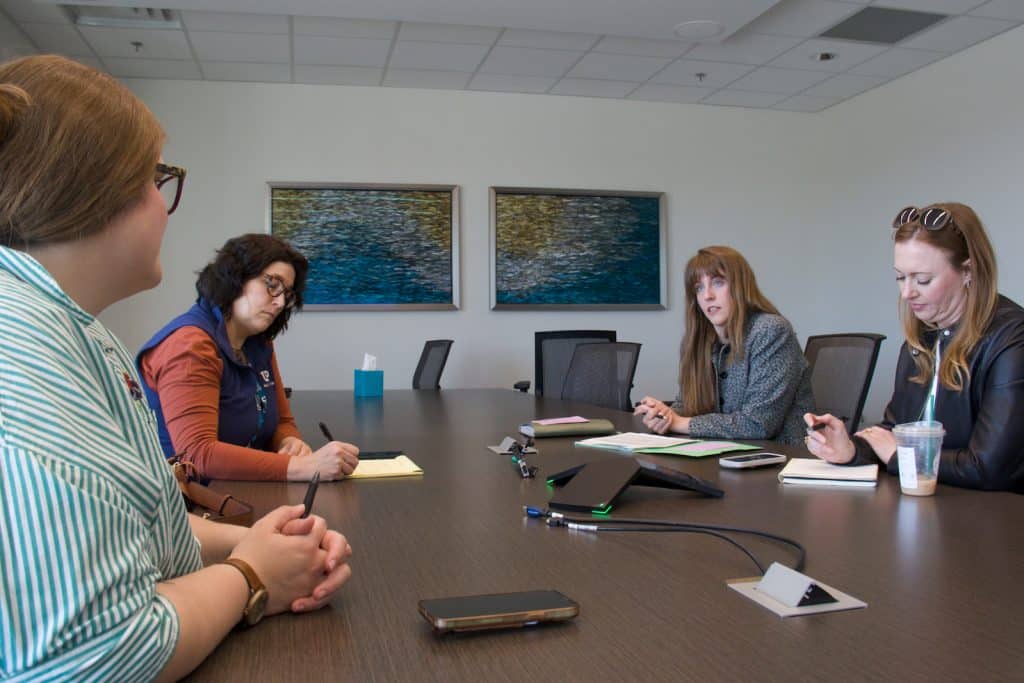
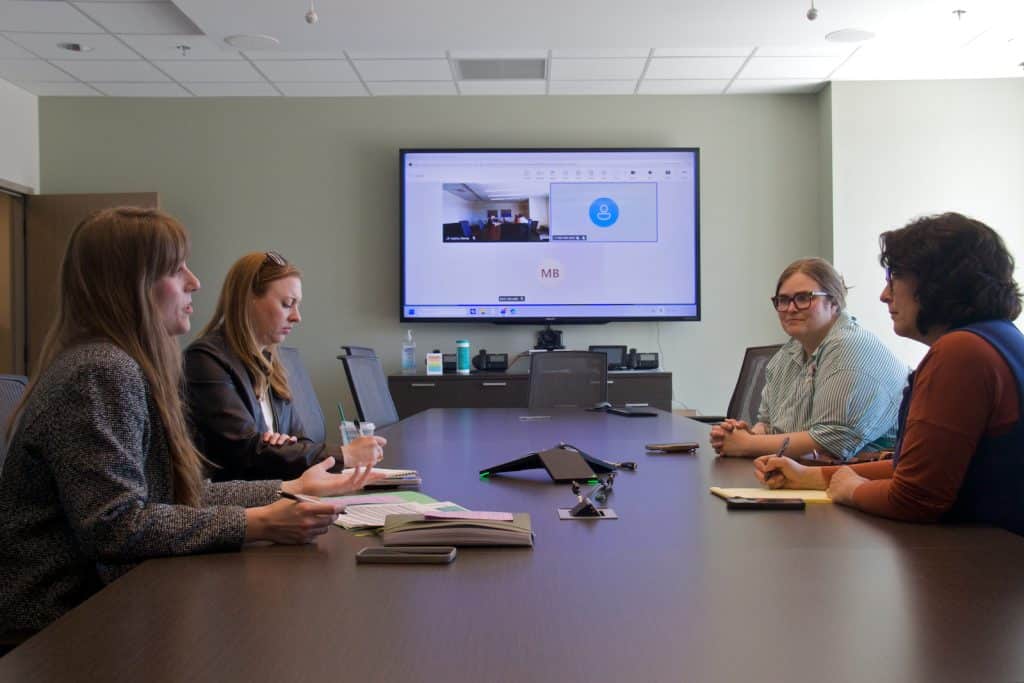
So she went about engaging a group of stakeholders including the Upper Peninsula Health Plan, Upper Peninsula Health Care Solutions, the NMU Center for Rural Health, the Upper Great Lakes Family Health Center, and the Superior Alliance for Independent Living. While some of these stakeholders were unaware of some of the challenges that others were experiencing, Wilkinson says there are “150 reasons why [the project] makes sense” for players in all sectors.
She says those range “from the altruistic, bleeding-heart reason” that “it’s just the right thing to do to treat people with dignity and respect while they’re going through a medical and housing crisis” to “the brass tacks of what this is actually costing our medical system, our homelessness and services system, because we’re being reactive instead of proactive.”
“I think if people thought for more than five minutes about how much this is actually costing them, it kind of sells itself, because the cost of running this program for a night versus the cost of one hospital room for a night is going to be very different,” Wilkinson says.
Building a recuperative care model
Since informally launching Room at the Inn’s recuperative care project last year, Wilkinson says her efforts have been focused on three key areas. The first has involved partnering with Marquette Family Medicine to improve the health care expertise available at Room at the Inn itself. The two organizations launched an outreach clinic that involves Marquette Family Medicine staff providing health care services on site at Room at the Inn. With support from the Superior Health Foundation, Room at the Inn has also provided first aid, CPR, and community health worker training for shelter staff, giving them more confidence to address guests’ medical needs.
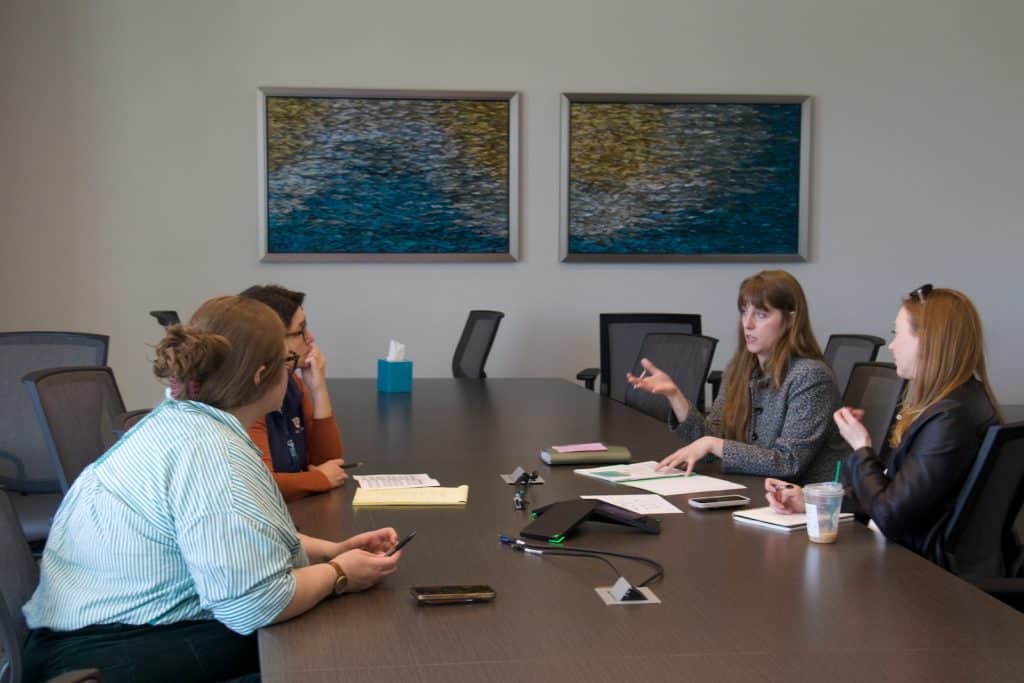
The second focus area has been improving data collection and care coordination between health care and housing systems. Wilkinson says that’s involved working to ensure that medical records are more easily exchanged between hospitals and shelters. She’s also developing a system to track and provide better post-discharge referrals for hospital patients experiencing homelessness.
The third, and biggest, piece of Wilkinson’s work is establishing the recuperative care facility itself. She’s already identified a site for the facility and is currently pursuing funding to outfit it and pay for the first year of supportive services there. She’s already thinking ahead to what happens after the facility opens as well, because, she says, it “will likely get referrals from all over the UP.” So, Wilkinson says, she and her partners have been “getting in front of as many health care professionals as we can all across the UP” to share their work.
“I feel like, once we bring it to people’s attention, it just clicks almost immediately,” she says.
Megan Murphy, CEO of the Superior Health Foundation, says replicating the model may be a bit challenging because of the lack of both homeless shelters and hospitals in the UP. But she says that also heightens the need for replicability.
“I think it is really important that we have the opportunity to replicate it so that people can stay a little bit closer to home instead of having to come all the way to Marquette to do that recuperative care and get back to a point where they are healthy enough to go back out on their own or transition into the shelter before they find permanent housing,” she says.
Wilkinson says she “really can’t put into words how much suffering” she and her staff see daily, and she’s driven to alleviate more of it. The result, she says, will be improved morale for everyone involved.
“There’s no good way to put a price on morale, whether you’re talking about the morale of your discharge team at the hospital or you’re talking about the morale of my staff when somebody just gets dropped off in a hospital gown with no discharge plan,” she says. “And then who suffers, really? The client, our shared constituent, really is the one who’s suffering – both in a physical way, obviously, because they’re sick and they’re not being cared for. But also their dignity as a person in our community who is in crisis is just not being taken care of.”
Author
Related Articles

Dementia care navigators help Coloradans get the support they need
Launched in 2024 by the Centers for Medicare and Medicaid Services, the GUIDE model provides care and support for Medicare beneficiaries living with dementia as well as their caregivers.

COVID kids and mental health: How are pandemic littles doing today?
Mental health challenges have surfaced but kids also benefited from increased family time and less hectic schedules.

They grew up breathing Detroit air. Generations of women are pushing for new approaches to pollution.
Some are organizing and training to advocate for their neighbors; some are trying to change the laws to consider the cumulative burden of pollution.