Trinity Health and Michigan community groups will make fresh, local food a Medicaid benefit
A new Trinity Health initiative will allow people in the Ann Arbor, Detroit, and Grand Rapids areas to access fresh, affordable produce from local organizations through their Medicaid health plans.
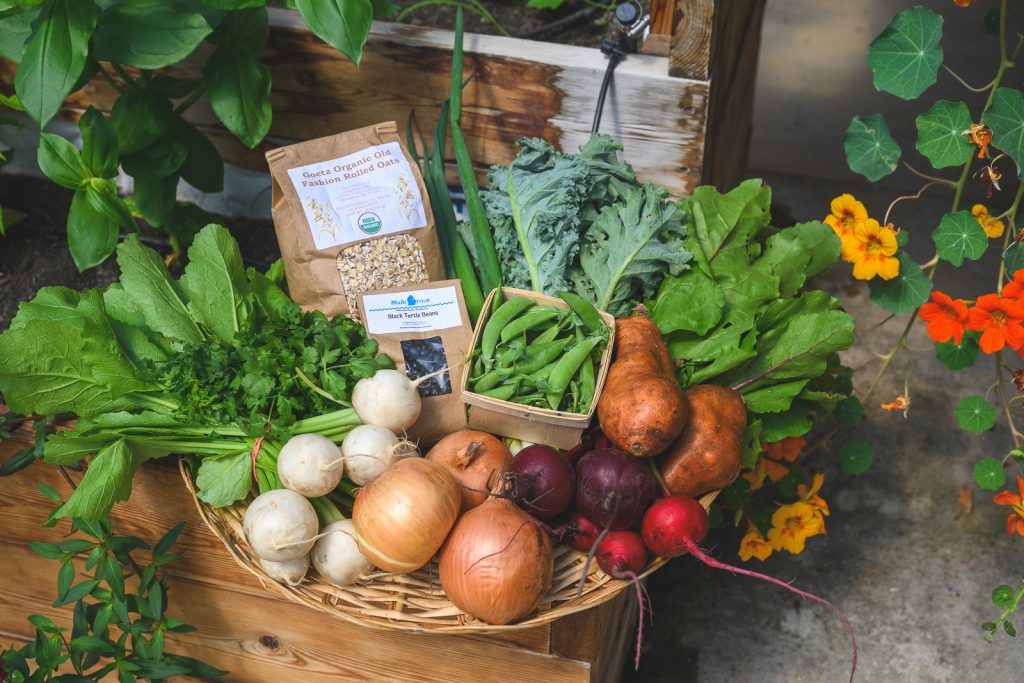
This article is part of State of Health, a series about how Michigan communities are rising to address health challenges. It is made possible with funding from the Michigan Health Endowment Fund.
A new Trinity Health initiative will allow people in the Ann Arbor, Detroit, and Grand Rapids areas to access fresh, affordable produce from local organizations through their Medicaid health plans. The new program will involve Trinity Health, a Livonia-based health system, acting as an intermediary between Medicaid health plans and small, community-based organizations (CBOs) in western and southeastern Michigan. Trinity Health will bill the health plans on the CBOs’ behalf, allowing them to provide local, healthy food to Medicaid recipients in their communities.
The program grew out of an increasingly popular concept known as “food is medicine,” which advances the simple idea that a nutritious diet is a crucial factor in people’s health. The U.S. Department of Health and Human Services brought attention to the approach in 2022, and in 2025 Michigan Medicaid health plans received federal approval to offer four different “food is medicine” programs under a Medicaid provision known as In Lieu of Services (ILOS).
ILOS programs are alternatives to traditional health plan benefits that have been deemed medically beneficial and eligible for Medicaid coverage. Accordingly, Trinity Health’s new program is called the Trinity Health In Lieu of Services Network. The effort is funded by Trinity Health itself, grants from the Michigan Health Endowment Fund and the Michigan Department of Health and Human Services, individual philanthropists, and corporate partners.
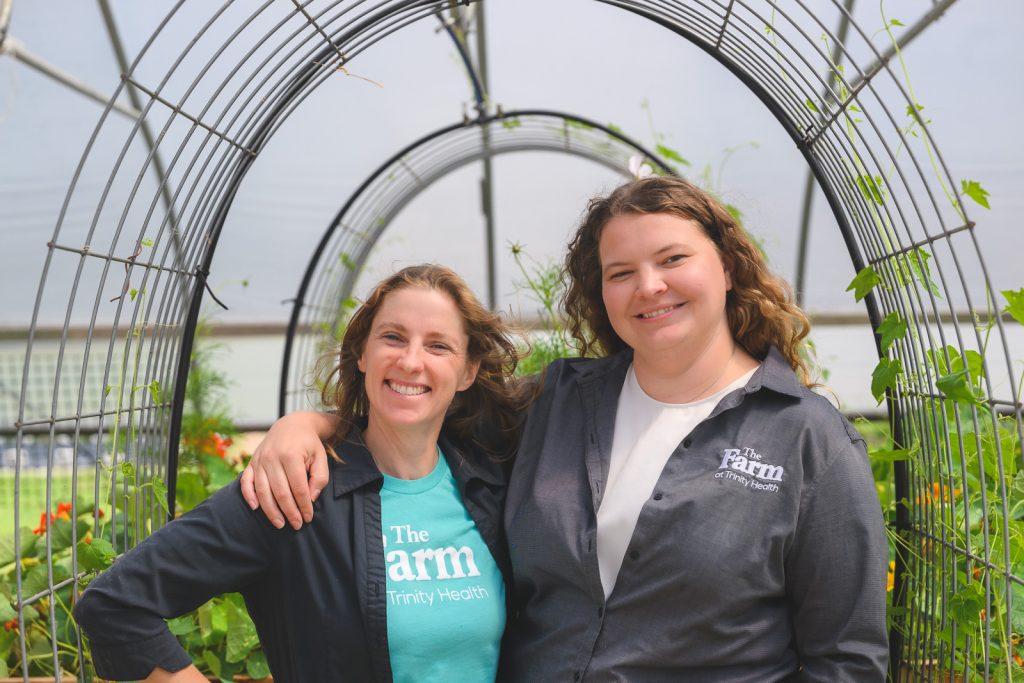
Katelyn Smoger, Trinity Health’s statewide director of food is medicine and farms, says the project was a natural fit for Trinity Health. She says the health system has been doing food access and food security work since 2010, and farms operate on several of Trinity Health’s hospital campuses. Smoger says ILOS “felt like a full-circle moment” for her and her colleagues, allowing Trinity Health to use its existing billing and legal teams to make it easier for some of the health system’s many smaller partner CBOs to provide healthy food to Medicaid recipients.
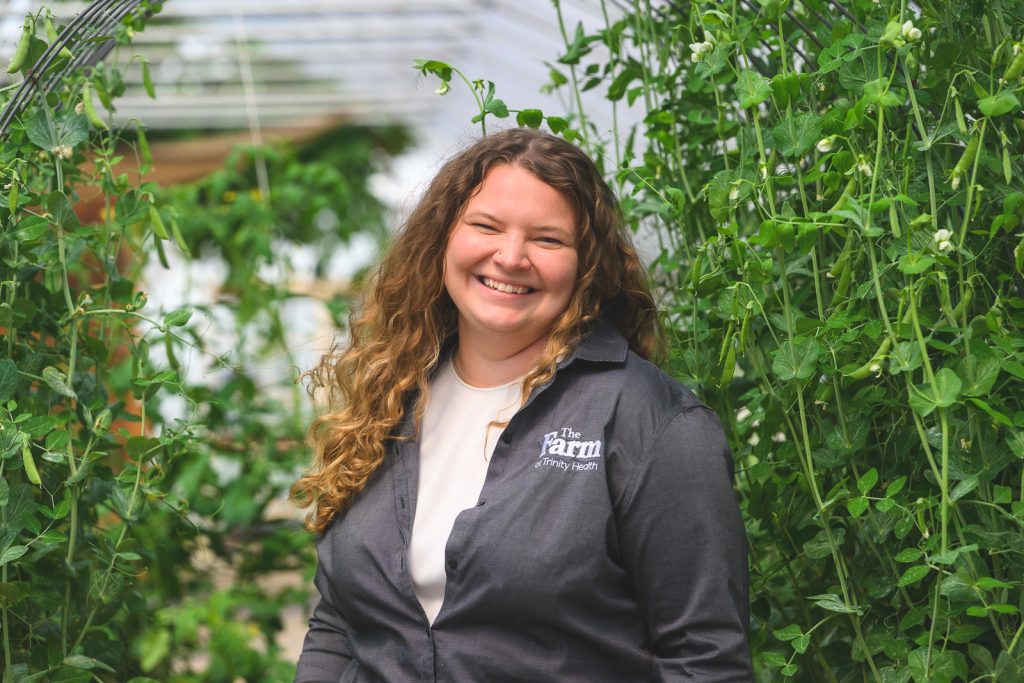
“We know that there is a direct correlation between social determinants of health and your health, and that includes access to fresh, affordable, healthy fruits and vegetables,” Smoger says. “And we also know that that same access can help prevent, treat, or manage chronic disease for our patients. … It is really life-changing for a lot of them.”
Building a network to support “food is medicine”
Given Trinity Health’s long-running work in “food is medicine” programs, staff were eager to take advantage of ILOS status for their own healthy food pack and produce prescription programs. The former provides boxes of produce to participants, while the latter offers vouchers that participants can use to purchase healthy food from farmers markets.
“We’ve been running food access and education programs for over a decade and now this is the the first time that we are able to contract with an insurance company and be reimbursed for our services by insurance, as opposed to really funding it just with grants and philanthropy,” says Jae Gerhart, manager of farm programs at Trinity Health.
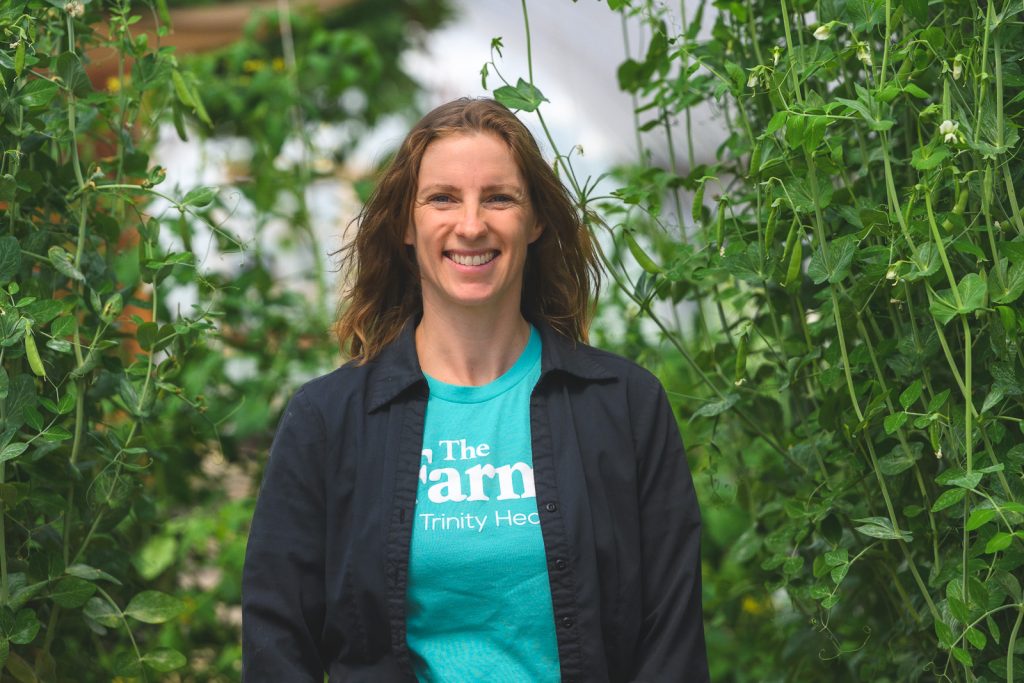
However, Trinity Health staff also recognized that that process wasn’t so simple for the many smaller CBOs they work with across Michigan, despite the fact that many of them were already successfully offering “food is medicine” programs.
“For us, it was really eye-opening to go through the contracting process and understand the financial cost, the legal investment, and access that you had to have to establish some of these contracts,” Smoger says. “And all of the pieces that felt like it might be a barrier for our friends in community were things that we as a health system have a really strong footing in. And so it felt appropriate that we could, as a community benefit arm of the hospital, leverage the services that already exist as a result of being a health system.”
Jae Gerhart, Trinity Health’s manager of farm programs, says this approach also helps bolster the distribution of locally produced food. The state of Michigan requires that Medicaid health plans providing ILOS services send at least 30% of their referral volume to a local provider, a provision that Gerhart describes as “awesome.” She says that without such a requirement, national companies would be more likely to crowd out smaller “food is medicine” providers. Smoger agrees, saying that it would be “a challenge” for health plans to meet the 30% requirement without the type of work Trinity Health is doing.
“We think it’s important that we are taking the dollars from programs like this and investing it into our communities,” she says. “But we also know it’s hard for our health plan partners who are doing this work to establish relationships, understand who’s providing those services, and then be able to actually execute multiple contracts with those community-based organizations.”
Trinity Health staff chose to focus their efforts in Michigan Prosperity Regions 4, 9, and 10. As defined by the state, those regions encompass 22 counties in the Ann Arbor, Detroit, and Grand Rapids regions, where most of Trinity Health’s Michigan facilities are located. Trinity Health staff kicked off the project by creating an asset map for those three regions in collaboration with the Michigan Farmers Market Association and the Michigan Primary Care Association. Through numerous site visits and other research, they assessed which CBOs were offering “food is medicine” programs and what kinds of support they needed.
“Our findings did indicate that we have tons of wonderful CBOs in these regions who’ve been providing services to their communities for sometimes decades,” Gerhart says. “They’ve built quite a lot of trust with the populations that they serve and they’re really good at service delivery, but there’s a lot of barriers to system navigation when it comes to contracting with a health plan. And so essentially this indicated that, great, our idea has use and that we believe this is going to be well positioned to support those CBOs.”
Next steps
This month, Smoger, Gerhart, and their colleagues will launch the CBO Network Establishment Working Group. Gerhart says she intends for the group to engage “at least a couple dozen” representatives of CBOs from across the three regions. They will work with Trinity staff through December to co-create the Trinity Health In Lieu of Services Network and the operating agreements that will govern Trinity Health’s relationships with all participating CBOs. Smoger says the working group is also important to ensuring that the network is not “duplicative” of any existing efforts and that all involved parties are pooling resources in pursuit of a common goal.
“We felt so strongly that it was important for community-based organizations who may otherwise have been blocked by some of those barriers … to be able to have a seat at the table and participate in this program from its initial formative years and get a say in what this looks like for their own communities for years to come,” Smoger says.
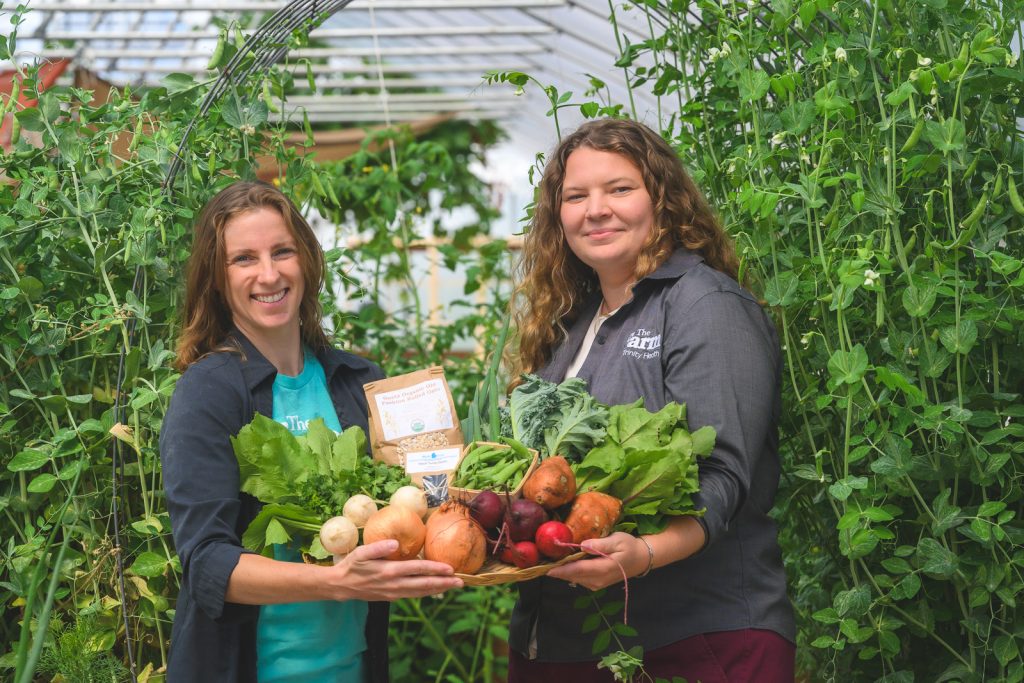
Trinity Health staff hope that the network will create sustainable long-term support for “food is medicine” programs that have often been funded by short-term grants in the past. Smoger says ILOS is “adding a strand to a braided funding model” that many small CBOs rely on.
“I think [ILOS is] really going to shape what ‘food is medicine’ looks like in Michigan and across the U.S. for many years to come,” she says.
Smoger also hopes her and her colleagues’ work will serve as a replicable model for other communities across Michigan. The currently planned network serves three of Michigan’s biggest cities and their surrounding areas, but Smoger says similar service is also needed in the large swaths of Michigan that aren’t included in Trinity Health’s project.
“We do not intend nor want to be the only holders of this work, but instead to let it create a blueprint and lessons learned that can be shared out with other prosperity regions throughout the state,” she says.
Author

Related Articles

Column: Medicaid Changes and the Potential Impact
Recent actions in Indiana, Nebraska, and other states to come, put at risk those personal choices of the disabled who are dependent on Medicaid, about where and how to live their lives.
In memory care deserts, senior centers can help close the gap in brain-related healthcare
The aging populace has already led to an unprecedented rise in the prevalence of Alzheimer’s disease and related dementias.

Dementia care navigators help Coloradans get the support they need
Launched in 2024 by the Centers for Medicare and Medicaid Services, the GUIDE model provides care and support for Medicare beneficiaries living with dementia as well as their caregivers.