Zoning can make or break small business success
Local economies thrive when regulations support small businesses and entrepreneurs while protecting residents’ quality of life.
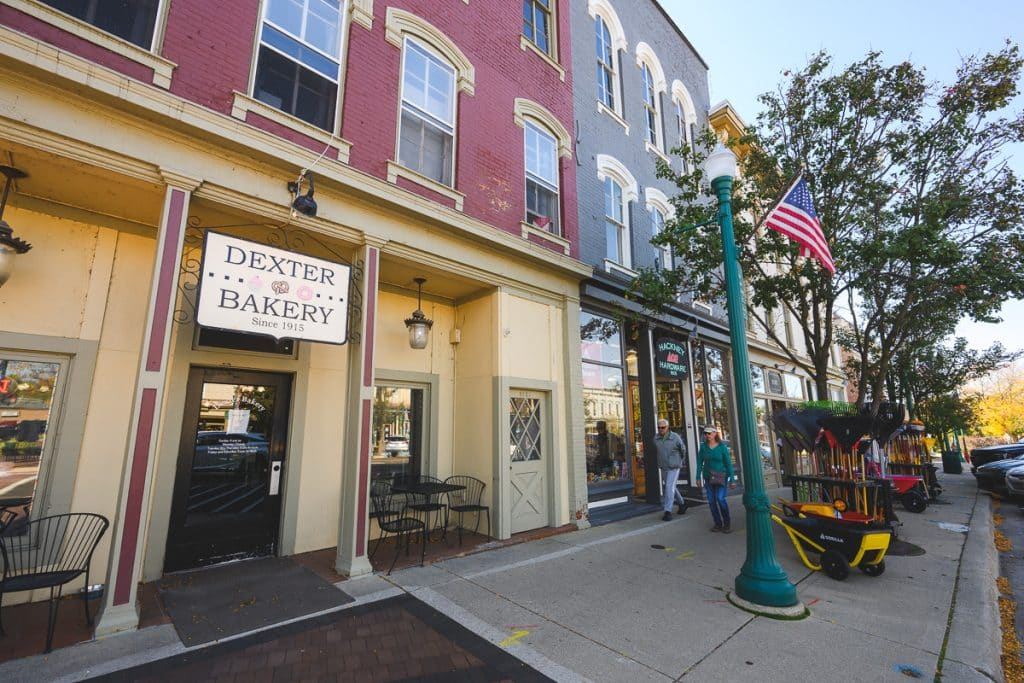
In the 1970s, manufacturers located in what was then the Village of Dexter began leaving for one simple reason: They didn’t have room to grow. In response, village leaders acquired land and updated zoning ordinances for the Dexter Business and Research Park, a concerted effort to support business expansion, new jobs, and continued industrial tax revenue.
In the 1980s, Dexter’s newly established Downtown Development Authority (DDA) began investing its tax increment in the historic downtown, creating streetscape, infrastructure, parking, and redevelopment opportunities.
“A number of times we amended the zoning ordinance to keep it updated,” says Michelle Aniol, City of Dexter community development manager.
In 2019, zoning changes from a use-based to a a form-based code increased flexibility for mixed uses along the Dexter-Ann Arbor Road commercial corridor. This change supports mixed-use businesses such as a daycare, medical offices, and out-lot development at the Dexter Crossings strip mall. National chain Ziggi’s Coffee opened a shop there with a drive-through earlier this year.
When COVID struck in 2020, Dexter was among the first municipalities to develop zoning ordinances that allowed restaurants and bars to create outdoor dining within on-street parking spaces — a measure that helped them continue serving customers safely and likely kept them in business. After COVID, downtown zoning was updated again.
“As restaurants and bars evolved to include microbreweries, we amended our ordinance to allow those types of businesses even though the brewing is a manufacturing operation,” Aniol says.
Dexter’s thriving historic downtown and busy commercial corridor reflect the community’s ongoing, strategic attention to zoning. And while most people don’t give it much thought, zoning plays a critical role in facilitating — or hindering — economic development.
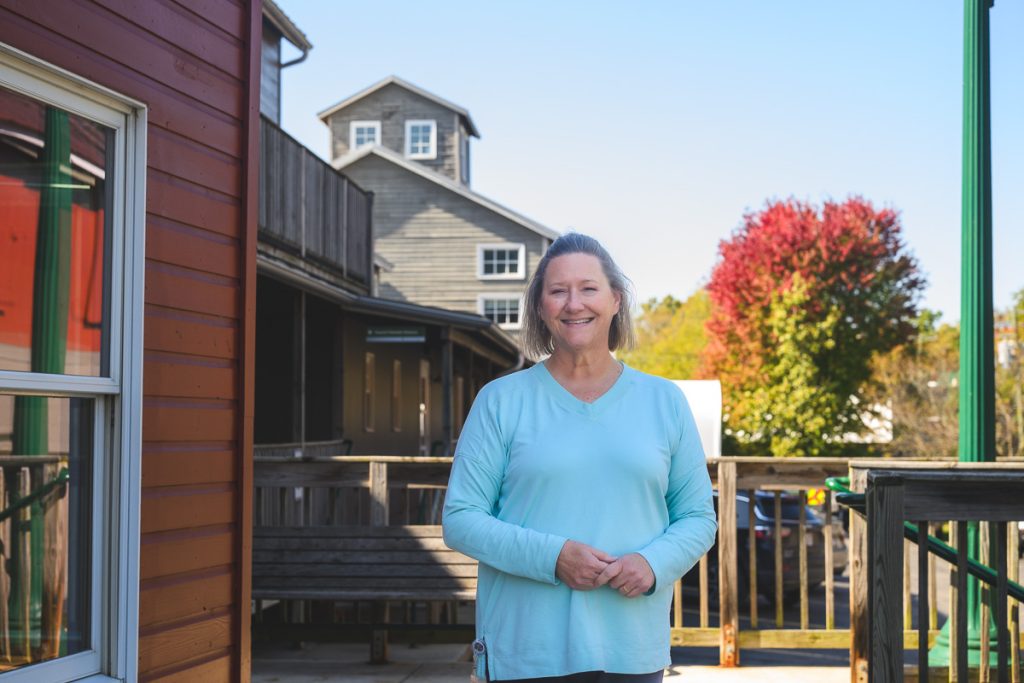
Ashley Jankowski Abeid, former senior planner with McKenna, affirms that zoning ordinances can be a powerful tool for supporting small businesses and entrepreneurs. As one of its services, McKenna works with communities to audit zoning ordinances to better support small businesses and entrepreneurs that are vital to local economies.
“It controls if and where a business can locate in your community, how long that will take, how much money it will cost, and how their customers will see and access them,” she says. “It will dictate whether an entrepreneur can operate micro-business like a home-based business, a small neighborhood retail business, a pop-up site, or a food truck.”
Zoning ordinances are land-use regulations that guide the type of buildings and activities that can occur in a particular area — permitted uses, special uses, site standards, lot size, required set-back from streets, building heights, landscaping, architectural and design standards, and parking requirements.
“A lot of small business owners might not even be familiar with a zoning ordinance, and yet this is the tool that will really dictate whether or not they can open up shop,” Jankowski Abeid says.
Beyond zoning, other regulations can also help or hinder a business owner’s ability to open and operate. They may have to attend a series of meetings, follow specific permitting procedures, pay fees for various permits, register or license their business, and obey stringent signage standards.
“All of those requirements can either add to or reduce the administrative burden and those upfront costs that are placed on a small business owner, who often has very limited capital and very limited time to make it happen,” Jankowski Abeid says.
Zoning also shapes how customers reach and use a business, including whether outdoor seating is allowed and whether nearby homes and businesses bring foot traffic.
“It’s really important that municipalities understand that small business success is very much tied to their zoning ordinance,” Jankowski Abeid says.
Making the approval process easier to navigate
McKenna recently worked with Ann Arbor SPARK, an entrepreneurial support hub in Washtenaw County, to evaluate permitting procedures for some Washtenaw County municipalities. The goal was to make it easier for people to launch and maintain small businesses by identifying where business owners were getting confused, updating websites with easier to access information, and tweaking building department procedures and business support resources.

“We developed a “How to open a business in Washtenaw County” blog post, which clearly laid out every single step in the permitting and development process for new entrepreneurs, all of the application steps,” Jankowski Abeid says. “We worked with the city of Ypsilanti to create a “How to open a business” guide custom to their city.”
SPARK COO Phil Santer relates how zoning ordinances and regulations can be a barrier for small businesses. He shares the example of Apple Play Schools, a childcare center which had challenges navigating the confluence of state and local requirements to get the daycare center approved.
“There was a realization on behalf of the city to adjust a couple of their rules and requirements,” Santer says. “That’s a broader example of what we’re trying to do, which is advocating for communities to understand, from a business standpoint, what’s the customer journey.”
Santer says that well-intentioned zoning ordinances and regulations can have unintended consequences.
“In particular for things that we’re trying to grow and scale, I want to make our communities think a little bit harder about what ways our communities could be throwing up barriers that weren’t intended,” he says.
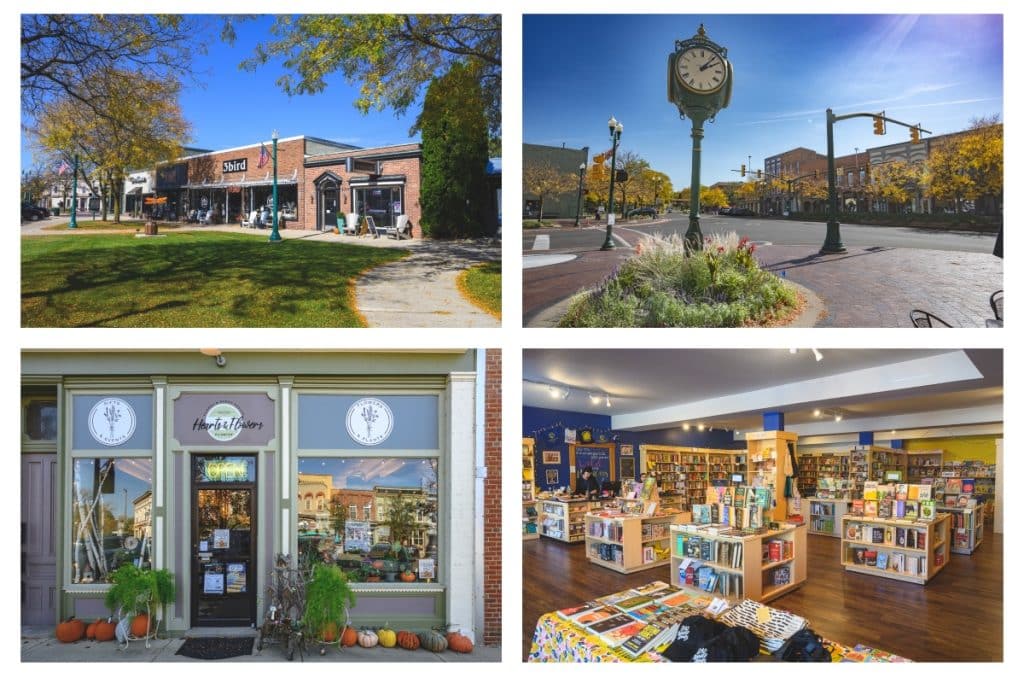
Top: (L) 3birds home goods. Bottom: (L) Hearts and Flowers florist and (R) Courageous Books.
Chelsea’s ordinances look at downtown and commercial corridor
For the City of Chelsea, zoning ordinances that guide how an existing building can be adapted for a new use are especially significant.
“It is such a built-out city,” says Michelle Marin, planning consultant for the City of Chelsea. “For a small business owner, especially a new small business owner, navigating these complicated regulations, can be brutal. As a planner, I think zoning is probably one of the most important things that a local government does to support small businesses.”

Chelsea’s small businesses contribute to the local economy, provide a lot of jobs, and bring people to its vibrant downtown.
“They help create that sense of place that residents and visitors really value,” Marin says. “Legalese and going through an expensive and lengthy approval process can be a significant barrier to even getting started. Our goal is to make sure that the zoning regulations do what they’re supposed to do, which is protect the health, safety, and welfare of the community — not create unnecessary obstacles for entrepreneurs.”
As Aniol, Marin, Santer, and Jankowski Abeid have shared, municipalities can work to craft plans and policies that create places where people want to live while simultaneously supporting small business owners and entrepreneurs. Successful zoning ordinances promote housing diversity, connect neighborhoods to downtowns and commercial corridors, and establish commercial corridors that are human-scaled and inviting.
“At the very baseline level, we want to make sure that municipalities are on the ground talking with their small businesses.” Jankowski Abeid concludes. “Our small business owners are wearing so many hats. It’s important to show them that they’re valued, that they’re heard, and that they have a listening ear at the city level who’s ready to meet their needs with policy, plans, and resources.”
Photos by Leslie Cieplechowicz
This story is made possible with funding from the Michigan Municipal League Foundation, a nonprofit association dedicated to making Michigan’s communities better by thoughtfully innovating programs, energetically connecting ideas and people, actively serving members with resources and services, and passionately inspiring positive change for Michigan’s greatest centers of potential: its communities.
Author

Related Articles
Filling the gap: How small-scale developments are reshaping neighborhoods
Brightpoint’s Developer Loan Program helps small-scale developers build affordable infill housing, combating Fort Wayne’s growing housing shortage.
Voters to weigh different approaches to housing affordability in November
Voters in four states will decide housing-related ballot measures in November, providing testing grounds for different strategies to boost affordable homes.
MI CDFI Coalition members, collaborators help create connections and collective identity in communities
In order to create sustainable economic and community development, it takes a village, or in this case — an entire ecosystem of organizations, advisors, coalitions, CDFIs, and other collaborators to help foster a sense of place.