Is PreK for All meeting its goals?
Roadmap co-author encouraged by how the state is expanding its Great Start Readiness Program into universal pre-K.
In February 2023, Governor Gretchen Whitmer proposed expanding free pre-K to all Michigan 4-year-olds in her State of the State Address. In June 30 of that year, she announced that free pre-K would be expanded to 5,600 kids. Estimated enrollment for the ‘26-’27 school year is 70,000.
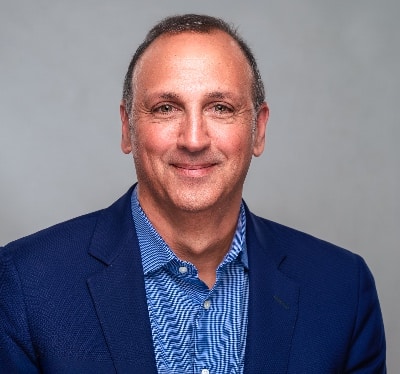
Jeff Capizzano, president and founder of the Policy Equity Group, worked with Whitmer’s PreK for All taskforce and Southern Imaginations to develop the Roadmap for rolling-out the successful program. Early Education Matters recently spoke with him about the progress of universal pre-K in Michigan.
Q. How is pre-K for all benefiting Michigan’s children and families?
A. When you think about early childhood, you think about access, affordability, and quality. What Pre-K for All has been doing since the governor’s announcement has been improving the system in all three of those areas. The access is increasing. You have the universal eligibility for four year olds. And they’re still maintaining the standards while this expansion is happening. You’ve got these high quality settings. From a child’s perspective, you’re providing them with a high quality experience that helps them get ready for school. Providers are seeing increases in revenue because the legislature is allocating for GSRP goes up.
You have to create a distinction between universal eligibility and universal access. There’s no eligibility threshold for the program. What we’re trying to move to now is that everyone who wants to be into the program can access it. With this latest round of funding from the legislature, we’re going to get there.
Q. How well is the current PreK for All initiative conforming to the Roadmap that PEG released in Feb. 2024?
A. I’ve never been a part of a state initiative where they have created such a comprehensive plan and then managed very directly to the plan. The Roadmap is still the foundation. That speaks to the way the roadmap was created. The University of Michigan focused on what the research was saying about what makes the highest quality program and what other states were doing. Then you had the stakeholders, understanding what the stakeholders wanted and their concerns. When you put those two perspectives together, we came out with a plan that was both evidence based and responsive to what the stakeholders wanted. We’re so happy that the state is following it so closely.
The first thing was the universality of the program. They did that, and that eased the administrative burden on programs and trying to find kids while prioritizing the low income kids. We called for the inclusion of family child care providers. The state is actively piloting. Retaining mixed delivery was a key concern, making sure that there was opportunity for a diverse set of providers to meet the preferences of the families. In all those areas, they’re doing great.
There’s more that has to be done. The beauty of the Roadmap was that it didn’t just look at Pre-K for All implementation; it looked at what kind of impact it might have on the entire early childhood system. We talked a lot about the need to support ages birth to three — we still need to do more on that. The Roadmap talked about pay parity, early childhood educators getting paid similar to their K-12 peers, particularly in community based settings. We’re not there yet. But given all of the work the state has done in trying to focus on the roadmap, we will get to those.

Q. How is free pre K for four year olds impacting childcare and education providers who relied on four year olds to balance their business costs?
A. This is always a major concern for community based providers. They’re really worried about the four year olds that they’re serving being taken away and served in school-based settings. The impact has been mixed. For those community-based providers that qualify for PreK for all, that meet the standards, they get the PreK for All funding, a significant allocation — $14,000 – $16,000 per child.That is really helping them financially,
The group that might not meet all the requirements of PreK for All … this group that’s struggling to be a part of it, aren’t doing as well.
Wayne RESA, and some other ISDs that are implementing PreK for All are doing everything they can to include community-based providers, even if they don’t initially meet the standards. We’re continuously trying to figure out ways to bring those other providers in.
Q. What progress is being made for the home-based providers to take part in PreK for All?
A. This was a major recommendation of the Roadmap. We heard quite a bit during the stakeholder input sessions that you can’t leave home-based providers behind. We ended up recommending that the state start initially with a home-based PreK for All pilot, not developed from the perspective of “Can home-based providers do this?” But in terms of support and funding to ensure that home-based providers can participate.
The state is moving forward with that perspective with the pilot — allocating almost $12,000 a child and $7,000 startup grants to make sure providers have all of the things that they need. They are trying to figure out what are the supports necessary to ensure that home-based providers can participate. I love that. But, we need to continue to conduct additional outreach and provide additional support so more home-based providers take up this opportunity.
Q. What policy changes are needed to make PreK for All even more successful for everyone — kids, families, schools, and providers?
A. We really need to focus on making sure that we have the workforce capacity to achieve universal pre-K and build a stronger early childhood system overall. There have been small advances in trying to to support the early childhood workforce — the wage pilot, the benefits pilot. You’ve got some money in the last legislative session being allocated to workforce supports. But the policy change that is necessary is significantly more support for the early childhood workforce. It’s the teacher-child interaction that benefits the child. It’s the teachers that fuel the early childhood programs. And teachers are the main expense for programs. Not adequately financing early childhood programs overall means that we’re not paying our workforce enough, and we’re seeing turnover.
We have an aging workforce. We’re seeing them retire without people like their places. This University of Michigan study shows that retirement was the leading reason for license termination. Essentially, 34% of all programs that ended up not renewing their license were due to retirement.
When you think about a young person wanting to enter the early childhood field, they start looking at how much early childhood educators get paid. What are the benefits like? On top of that, they start looking at the way that the federal government is talking about early childhood. So, we’re not setting ourselves up from a policy perspective to grow the early childhood workforce right now,
Another major concern is the new proposed rule for Head Start that guts all the performance standards, but still requires them to follow the law, which has a lot of detail in it. There’s a waiver within the GSRP implementation manual that if you are a Head Start program, you don’t have to necessarily follow the GSRP standards. What does this new proposed rule do to that waiver? I have a lot of concerns about that.
Photos by Tommy Allen.
Jeff Capizzano photo courtesy subject.
Early Education Matters shares how Michigan parents, child care providers, and early childhood educators are working together to create more early education opportunities for all little Michiganders. It is made possible with funding from the W.K. Kellogg Foundation.
Author

Related Articles
Michigan’s free universal pre-K program could serve 70,000 4-year-olds this school year
Launched in 2023, PreK for All now has no income qualifications.
Free Wonderschool platform will help Michigan families find childcare faster
Scheduled to launch early 2027, the platform will connect parents to available childcare and preschool spaces with one application.
The Farm Bill, SNAP, and the childcare connection
SNAP helps families meet all basic needs, including childcare.