AMEN builds Great Lakes team to expand free dental care
Regional equipment and local volunteers help AMEN bring free dental clinics to more Great Lakes residents who lack regular care.
This story is part of a series on the challenges and solutions related to oral health in Michigan, Indiana, and Ohio. It is made possible with funding support from the Delta Dental Foundation.
Janelle Randall remembers people arriving hours before a free dental clinic in the Grand Rapids area opened. Some were in line by 5 or 6 a.m., waiting for the doors to open at 9 a.m.
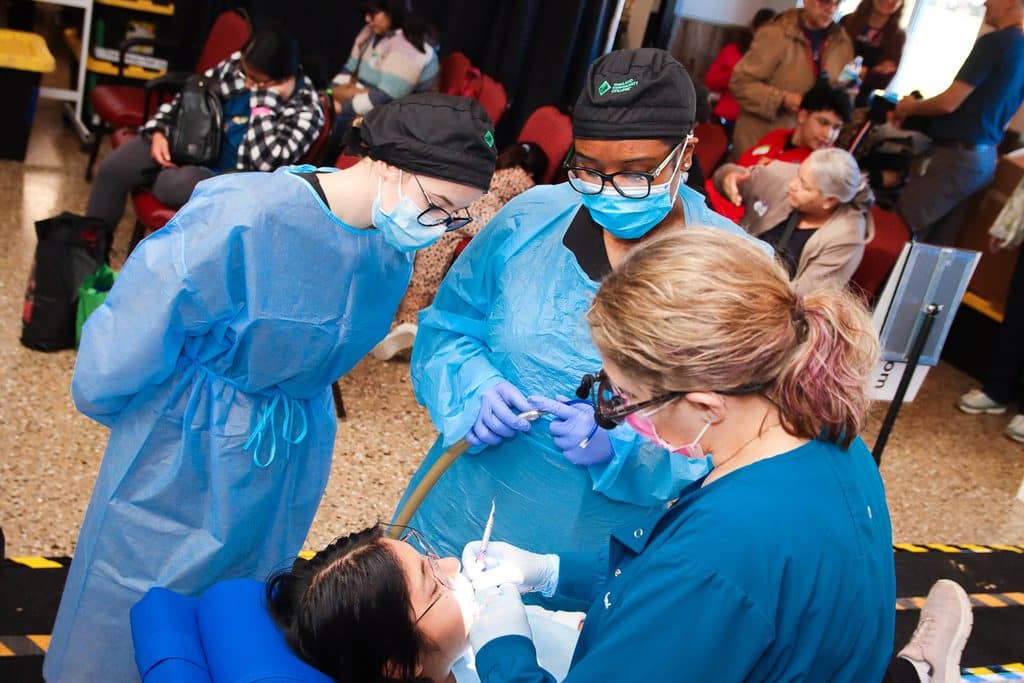
The clinic staff and volunteers transformed church space into a dental office. They brought in chairs, X-ray equipment, and tools for cleaning teeth, filling cavities, and removing teeth.
“Every chair was filled all day long with extractions and fillings, and people of all ages coming in to get it done,” says Randall, executive director of the Adventist Medical Evangelism Network, known as AMEN.
The turnout reflects what the organization sees at clinics across the country: lots of patients who have gone years without dental care.
The nonprofit is working to reach more people by building a Michigan team, with equipment kept in the Great Lakes region. A Delta Dental Foundation grant is helping support the regional work.
By giving local teams the tools and training to hold more clinics, AMEN no longer depends on one team that travels across the country.
“Instead of having to solely rely on one team, there is now an entire clinic team just focused on Michigan as a result of the grant,” says Nicole Braxton, AMEN’s clinic director.
Dental care in demand
Braxton says dental care is the most requested service at AMEN Free Clinics, which also offer vision and other health services. Each clinic serves 100 to 300 patients per day, depending on the site and the number of volunteers.
Most patients are ages 35 to 55, though the clinics also serve children. Many do not have a regular dentist.

“It is a privilege to serve over 2,500 Michigan residents while meeting a significant need for accessible dental care,” Braxton says. “Many of our patients share that they have not visited a dentist in several years, and some have gone a decade or longer without dental care. This reinforces the importance of our work and the meaningful impact we can make by helping individuals access the dental services they need.”
Most clinics take place in Seventh-day Adventist churches, which sponsor the events and work with other churches, healthcare providers, and community groups. AMEN began partnering with the Michigan Conference of Seventh-day Adventists in 2023 and has built a network of local volunteers and partners, Braxton says.
Some events also take place in community centers.
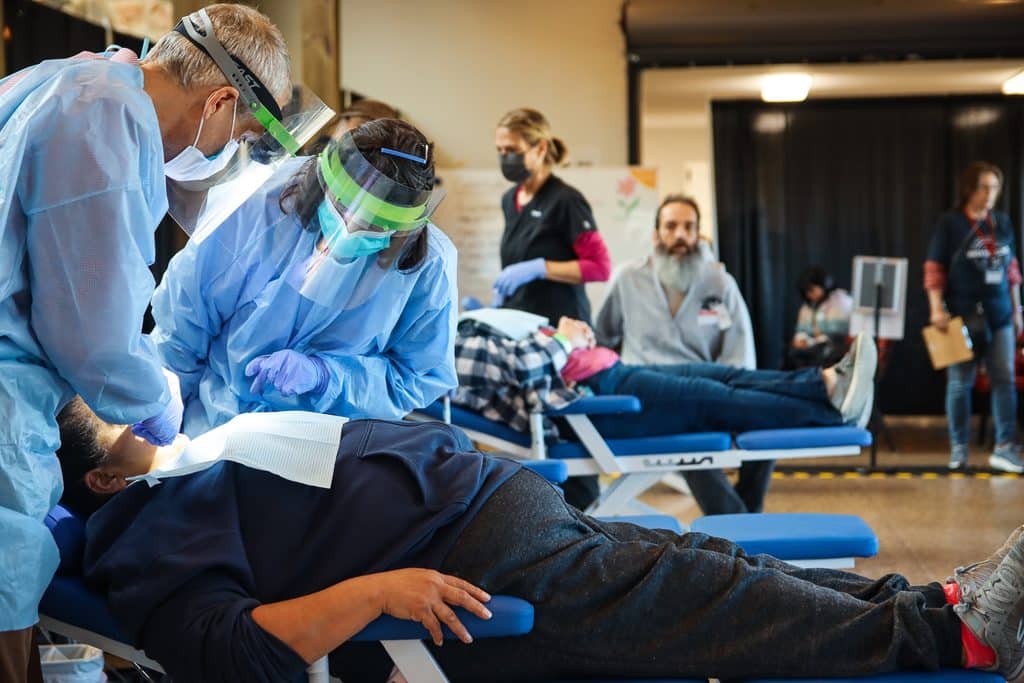
AMEN Free Clinics bring the clinic systems, equipment, and expertise, while local partners help plan, recruit for the clinics, and spread the word.
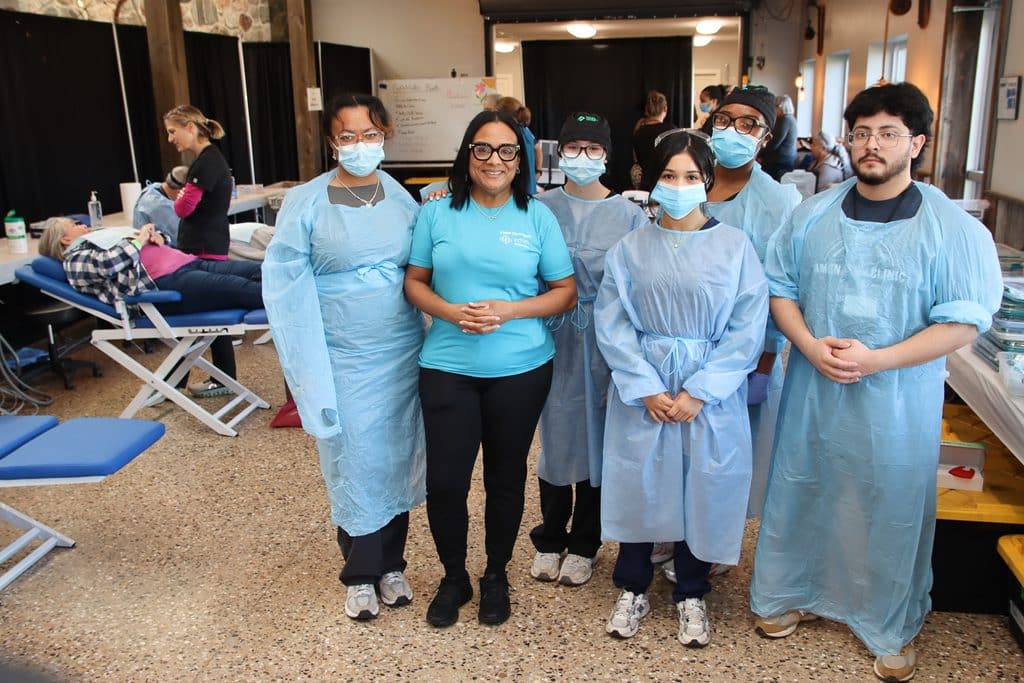
The number of dental volunteers varies. Some clinics have about eight providers. Others have more than 20, including dental students, Braxton says.
AMEN works with schools such as Oakland Community College and the University of Michigan. The partnerships provide students a chance to care for patients alongside experienced providers.
“We see it as an incredible holistic training ground,” Braxton says.
More care in region
Randall says AMEN’s national team travels widely, with clinics ranging from Maine to Georgia, as well as Chicago and Arkansas. But moving equipment and finding volunteers take planning. A separate set of equipment in the Great Lakes region, purchased with the help of a grant from the Delta Dental Foundation, allows AMEN to support more clinics closer to home.
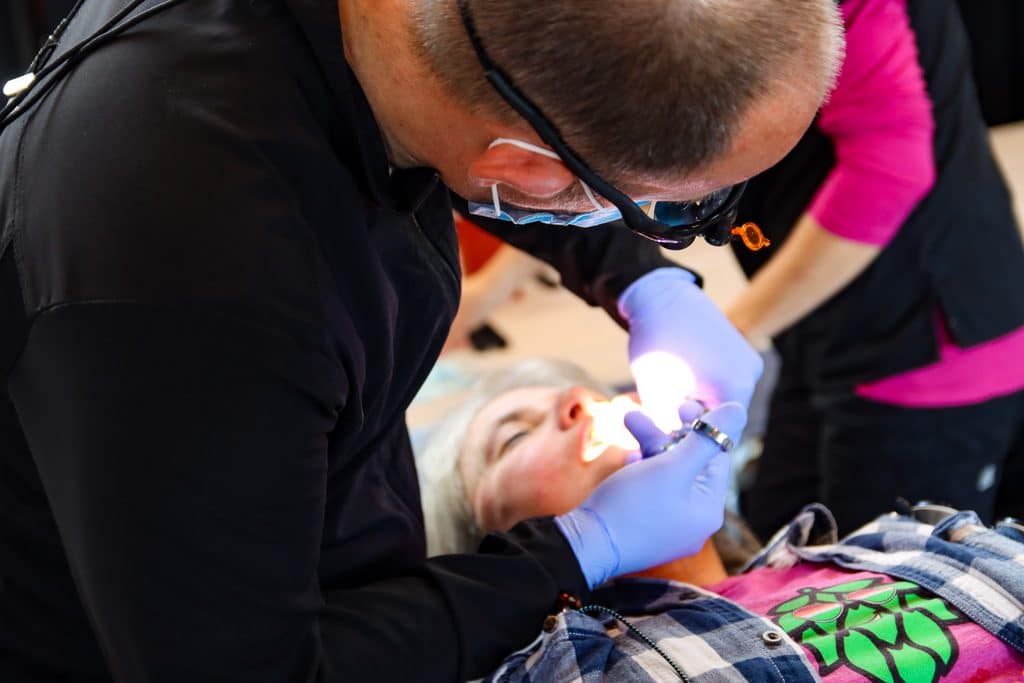
With equipment nearby, local teams can hold more clinics without waiting for the national team to travel there.
“We are able to do more clinics in the Great Lakes region because of the grant,” Randall says.
Braxton says AMEN also works with local partners to help patients find care after each clinic. Interns make lists of nearby services, and local organizers add places they recommend for dental, vision, medical and mental health care. Some services are free, while others base their fees on a patient’s income.
AMEN also asks each church to find a dentist who can help a patient who has an urgent dental problem after a clinic visit, Braxton says.
“We try to give them as many options as we can,” Randall says. “Unfortunately, we don’t have the ability to guarantee follow-up services.”
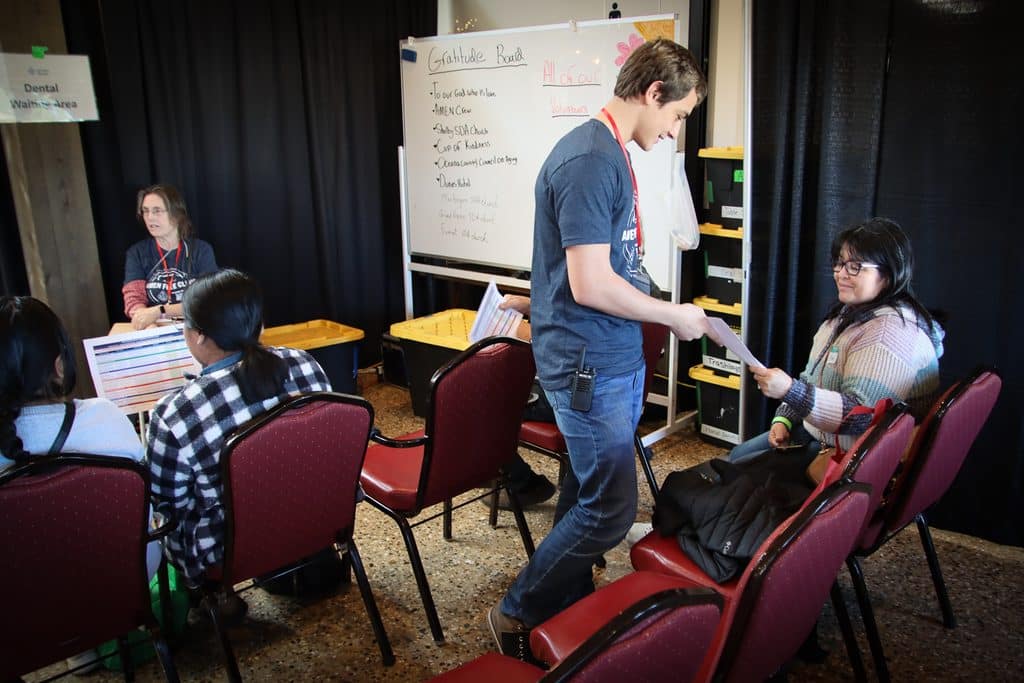
Space at each clinic is limited. Patients receive care on a first-come, first-served basis.
Patients and volunteers can find upcoming events at amenfreeclinic.org.
The Michigan effort aims to create more chances for people to get care by giving regional teams the equipment and training to serve their communities.
“The reality is we help more people,” Randall says.
AMEN has three upcoming free clinics scheduled in the Great Lakes region: Dec. 6, 2026, in Fort Wayne, Indiana; Aug. 15, 2027, in Flint, Michigan; and Sept. 26, 2027, in Negaunee, in Michigan’s Upper Peninsula. Visit amenfreeclinic.org for clinic details and updates.
Related Articles

How community mental health supports grandparents raising grandchildren
Caring for a grandchild adds another level of difficulty in navigating aging — physically, mentally, and financially.
How the State of Michigan and Michigan Works! plan to assist Medicaid families affected by new work requirements
Michigan budgeted $168.6 million in grants to state agencies and organizations to help residents navigate Medicaid changes.

Beyond the shortage: How the Caregiver Incentive Project is building a better caregiving industry
The Caregiver Incentive Project povides free training, financial incentives, and support network for caregivers. The nonprofit aims to establish formal job standards, and deliver vital relief to underserved rural families.