How community mental health supports grandparents raising grandchildren
Caring for a grandchild adds another level of difficulty in navigating aging — physically, mentally, and financially.
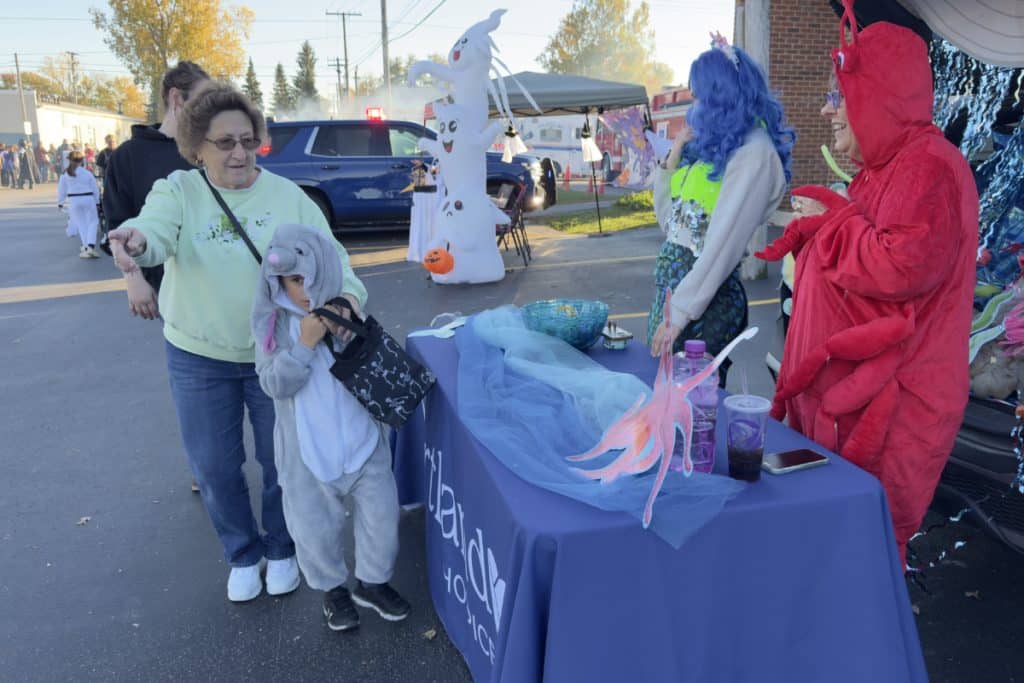
Mental health challenges have historically been heavily stigmatized. Work has been done to combat the stigma, but generational beliefs still create some barriers when trying to effectively address mental health care. Community mental health agencies (CMHs) are committed to improving mental health issues that challenge the everyday lives of adults and children. Addressing the mental health challenges of grandparents raising grandchildren is one area of focus.
Caring for a child adds another level of difficulty in navigating lives as grandparents. Physically keeping up with little children can be difficult. Grandparents may also be overwhelmed with their own physical and mental health. Caregivers don’t get much help unless they’re foster parents, so the availability of resources is limited. They may live on a fixed income, so financially supporting their needs and the needs of children can be a struggle. CMHs provide some resources to aid in these areas, and typically these services are covered through Medicare, Medicaid, or other insurance.
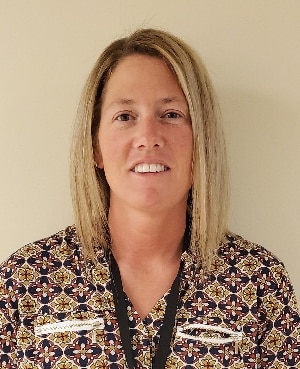
“When you have to go to a primary care doctor, but you’re having issues with your heart, they’ll refer you to a cardiologist,” says Nicole Beagle, chief operations officer at Sanilac County Community Mental Health Authority. “Well, here we have a wide range of services that we can put in place — it’s not piecemealing them out to different specialties.”
Grandparents did not have access to many of the mental health resources available today when they were growing up. They also don’t always understand how to address certain situations because they did not grow up in the same environments as their grandchildren. Beagle mentions social media as a source of mental health problems in children. She says it has tripled the challenges children face and made those challenges more complex than what grandparents experienced as children
Beagle says that CMHs serve as a “safety net” of mental health services. And that safety net extends to grandparents raising grandchildren.
“We have a lot of skilled clinicians and care managers that are trained in a lot of different modalities,” says Beagle. “So, it allows us to practice mental health treatment and substance abuse treatment in a way that allows us to offer a lot of different options, so that it’s just not talk therapy.”
Sanilac County CMH’s Parenting through Change program gives parents, caregivers, and grandparents raising grandchildren an opportunity to learn new parenting skills and connect with other people in similar situations.
“We listen to that grandparent saying, ‘This is how I handled something with my kid, and I think it worked,’ look at that, and see how it might fit into their current situation,” says Beagle. “We’re not disregarding their generational upbringing and the things that they’ve learned but looking at how we can incorporate that into the current landscape of what they’re dealing with.”
Patricia Stapley, a parent support partner for Sanilac County CMH, has two adult children of her own and spent over six years raising a family member’s child who had severe mental health challenges. She was also a foster parent for a brief period in her life. Stapley now works to support grandparents, parents, guardians, foster parents, and children with mental health disabilities.
“It’s actually surprising how many grandparents are out there raising their grandchildren,” says Stapley.
She’s seen children that range in age from six months to teenagers. She also connects families with food pantries and other free community services that families who have never been through the system, or any community agencies, may not be aware of.
“Maybe the parents themselves just can’t be there, or maybe the parents are just relying on the grandparents a lot and dropping the kids off to the grandparents,” says Stapley. “Sometimes it’s hard for the grandparents, too, because they have to put their life secondary, and they put their grandkids first.”
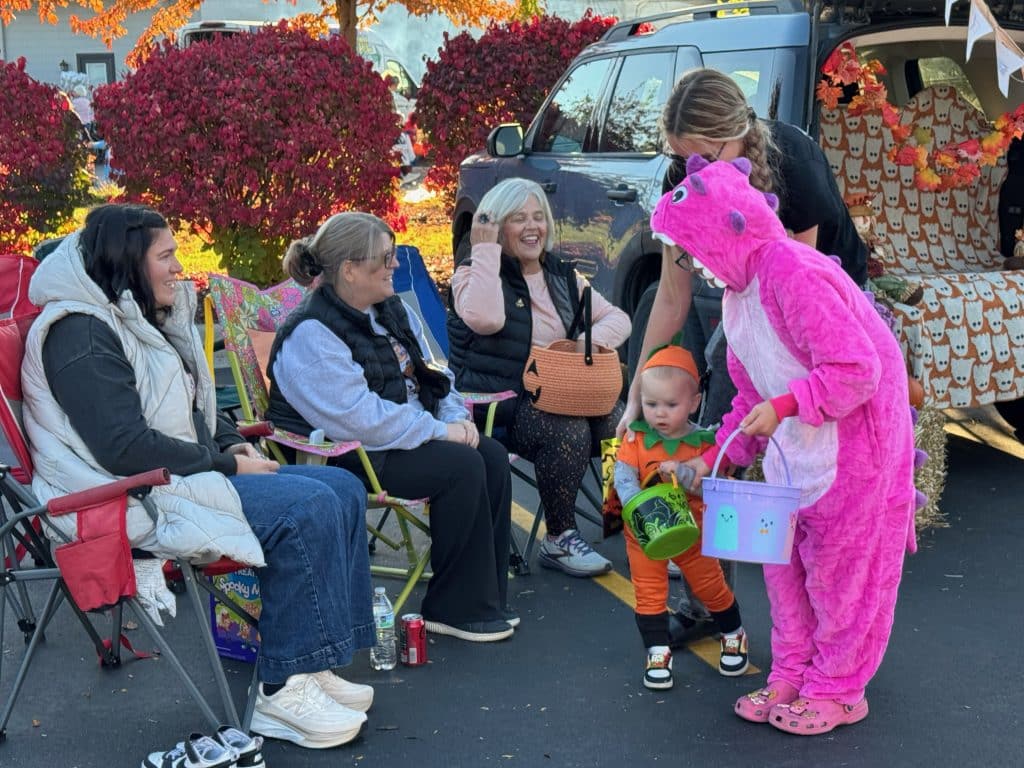
OnPoint parent training includes grandparents
In Allegan County, OnPoint helps grandparents work through the adjustment of becoming primary caregivers to children again and caring for grandchildren with mental health disorders. The CMH also matches grandparents with parent support partners who have experience raising children with special needs. In addition, OnPoint educates families through Parent Management Training — Oregon model and Parenting Through Change sessions. These evidence-based practices teach specific parenting skills.
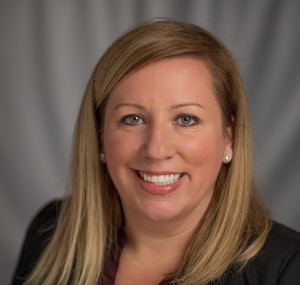
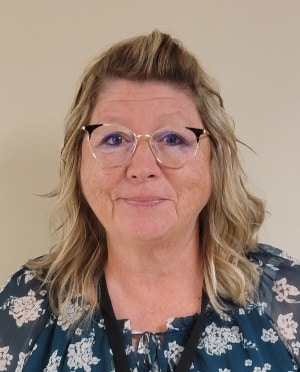
Tara Poore, OnPoint’s manager of children’s services, says the CMH has come a. long way in addressing the mental health needs of both grandparents and the grandchildren they are raising.
“There’s just much more support. There’s awareness, there’s knowledge. Just getting them into services helps them to realize there are different ways to look at this,” Poore says. “We can provide education. We can provide support. You don’t have to do it by yourself.’”
Addressing mental health disorders can be complex. Children being raised by their grandparents can feel neglected and abandoned because their parents are unable to care for them. Grandparents often struggle with figuring out how they ended up in these situations.
“The other piece that we do talk to some grandparents about is if the children are technically foster care versus a guardianship and just the differences – kind of educating them on the differences, and then what resources might be available,” says Beth Evans, a therapist at OnPoint. “We have a lot of grandparents who have adopted, and just making sure they’re aware of post-adoption resource centers, different activities and different resources are available in that arena as well, because I think that gets missed sometimes when it’s a kinship adoption or kinship placement.”
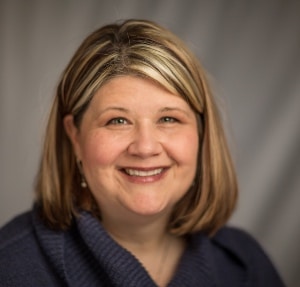
OnPoint offers trauma-informed parenting classes for grandparents, where they can learn why they’re seeing certain behaviors, and how best to adjust to their new lives.
“There might be a lot of their own guilt because they’re raising their grandchildren — and maybe the children they raised aren’t making good choices,” Evans says. “Acknowledging the fact that they don’t get to be traditional grandparents the way that their friends or peers might be because they’re the parent at this point. And so, really allowing them that space to kind of mourn that fact, that change in their relationship.”
Grandparents can reach out to their county’s CMH for simple help with parenting skills, with concerns about their grandchildren’s moods or behavior, and if any kind of mental health crisis arises. Grandparents raising teens can also find support if they fear their grandchildren are involved in substance abuse.
Children can also be referred to CMHs through school and primary care doctors. If children are already receiving services when they are removed from their parents and placed with their grandparents, the Michigan Department of Health and Human Services (MDHHS) will connect them to a CMH in the grandparents’ county to continue their mental healthcare.
CMHs may also be able to provide respite for grandparents. Therapists and case managers often point families towards different community events and Community Living Services for children. This allows grandparents to have a break while their grandchildren have an opportunity to get out in the community and practice social skills.
“That helps the grandparents have a little bit more control over the child because they’re learning some more appropriate skills within the community,” Beagle says.
Photos by Leslie Cieplechowicz
Photos of Nicole Beagle, Tara Poore, Beth Evans, and Patricia Stapley courtesy subjects.
The MI Mental Health series highlights the opportunities that Michigan’s children, teens and adults of all ages have to find the mental health help they need, when and where they need it. It is made possible with funding from the Community Mental Health Association of Michigan, Center for Health and Research Transformation, Lifeways, OnPoint, Sanilac County CMH, Summit Pointe, Michigan Health and Hospital Association, Washtenaw CMH, and Public Safety Preservation Millage.
Author

Maria Patton is a lifelong Ypsilanti resident. She earned her bachelor’s degree from the University of Michigan in communication and media in 2023. She’s spent the past three years working in the public relations departments of three NFL teams. Maria is currently working towards a master’s degree in communications at Wayne State University. She can be reached at mariapatton09@gmail.com.
Related Articles

How Michigan organizations are tackling food insecurity on the local level
Fair Food Network, Groundwork Center for Resilient Communities, and Detroit Food Policy Council increase families’ healthy choices while supporting local growers and retailers.
New arrivals in the ER? Georgia gears up to solve rural maternal health crisis
Most of Georgia’s counties are without a labor and delivery unit. To fill those gaps, the state is looking to equip emergency rooms to handle obstetric emergencies. Advocates and doctors worry, however, that the ER is being used as a stopgap.
As SNAP cuts take effect, Michigan families and food banks brace for growing need
Consequences will reach far beyond the dinner table, affecting family stability, children’s health, and their ability to learn.