Family Time Coaching reunites families faster, reduces strain on foster care system
Program mentors parents so they can do better for their kids.
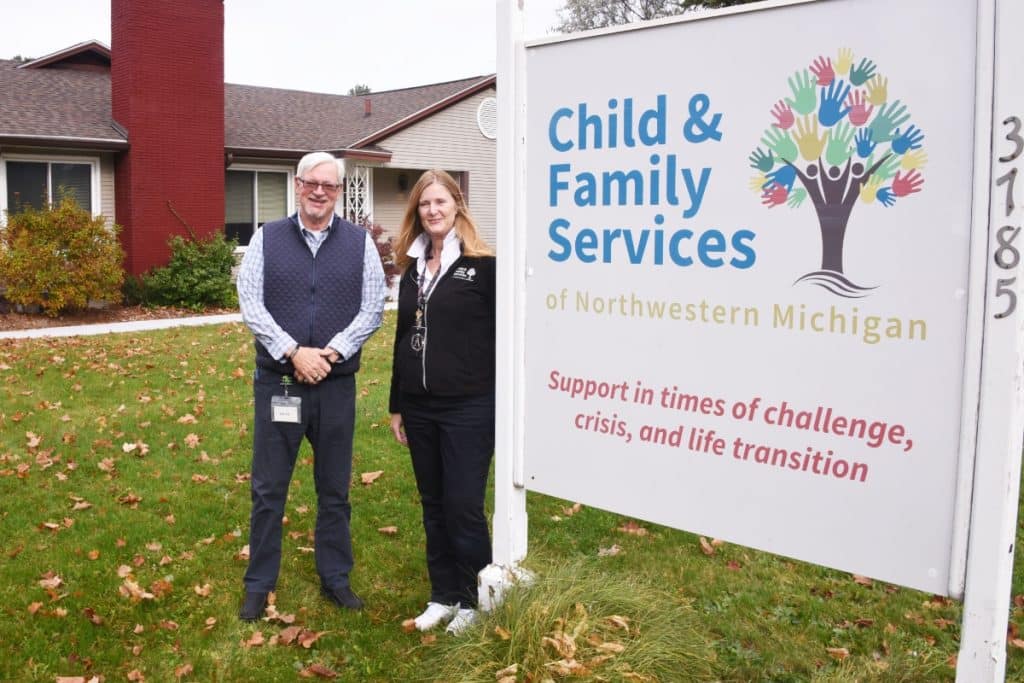
“Ninety-nine percent of parents whose kids come into foster care desperately want to be reunified with their children.”
This statement, made by Child and Family Services of Northwestern Michigan (CFS) child welfare director Aprille Sutton provides one important reason why she and her colleagues have implemented Family Time Coaching with parents who have had their children removed. Other reasons are equally important. Like the rest of the country. Michigan does not have enough foster parents to care for children no longer living with their families. And for children, like abuse and neglect, separation from parents is a traumatic event that can have life-long effects on health and well-being.
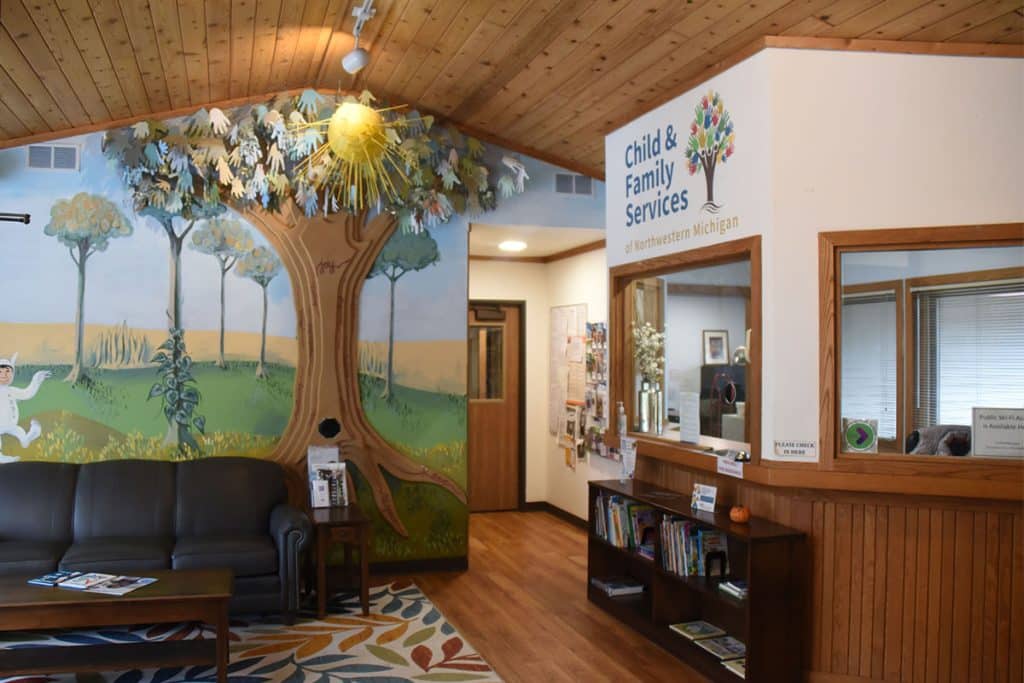
You’re led into a visit room. There’s toys scattered on the floor, but those aren’t your children’s toys. There’s a couch, small tables, some books, but this isn’t your house … And then you see the mirror. It’s a two-way mirror. You realize you are being watched … your children enter, led by another worker. They pause at the door, and your three-year-old clings to the worker’s legs, and your five-year-old stands there and stares. They don’t run to you. They don’t speak to you, and you don’t know what to do. You love them desperately, but right now you’re three strangers in a room, and time is ticking.
This is how a CFS YouTube video describes the first standard reunification meeting from the parent’s perspective — and why CFS began using Family Time Coaching.
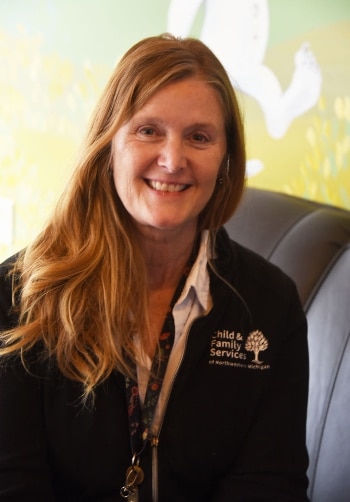
“We just weren’t happy with the way that our visits were going. They were very sterile — a worker behind a glass, and then a mom coming in. The kids were all awkward, and the mom didn’t know what to do, or the dad, and it caused a lot of stress for our parents and our kids. I was unnatural and anxiety producing,” Sutton says. “Having been at CFS for over 20 years, I thought “What would I want if I was in this position?”
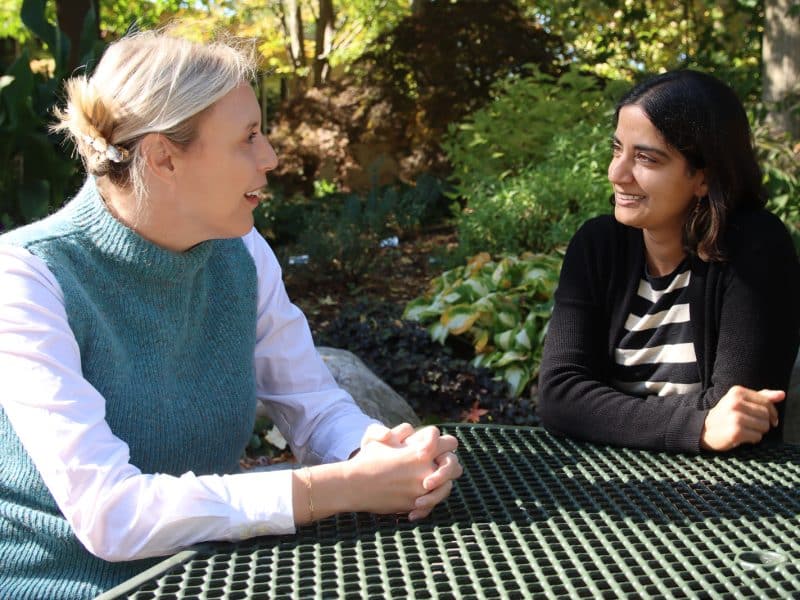
Angela Ray, one of the facilitators of CFS’ Family Time Coaching program, starts by meeting with only the parent. She helps parents prepare emotionally, understand what to expect, and coaches them in how to engage with their child based on their child’s individual developmental needs.
“We’re providing guidance, support, hands-on coaching, and education that helps parents develop skills and understand how to provide safety and health for their children,” says Andrea Domres, CFS foster care intake specialist and supportive visitation supervisor.
During the visit, Ray quietly guides, supports, and answers questions, keeping the focus on the connection between parent and child. Visits are often taken out of awkward, intimidating rooms to parks, on picnics, or during other activities that feel natural. After the visit, she talks with the parent about what worked and what didn’t in order to shape goals for the next visit.
“The parents and kids have a foster care worker, but the foster care worker has a full caseload, court hearings, reports — a lot of red tape. So we wanted somebody else who had the time and attention to walk next to these parents in this difficult time. When your kids are removed, you’re at your lowest point,” Sutton says.
“We’re connecting that dot for them to understand that substance abuse is associated with parenting,” Ray says. “We want them to keep the child safe, to be present, to make safe decisions. When we’re not sober, we’re doing none of those things. We connect those dots in such a way that they want to get sober and do what is best for their child for the reunification.”
Family Time Coaching provides parents with parenting skills, emotional support, and connection strategies while addressing social determinants of health: housing, employment, and community supports. Because 90% of the parents that CFS works with live with substance use disorder (SUD), those community supports often include recovery programs and additional counseling.
The model’s origins
A national consultant in juvenile justice and foster care, Dr. Marty Beyer developed the Family Time Coaching model after her involvement in several states’ foster care agencies seeking systemic change.
“What I noticed across the country was that even though counties and states had a lot of variability, across the country, it was standard to have supervised visits that were bringing out the worst in everyone unintentionally,” Beyer says. “Parents said that they didn’t feel traditional supervised visits, which they were spending a lot of time on, were productive.”
She observed that the visits were very painful for parents, didn’t provide information on whether or not a parent could keep their child safe should they be returned, and were very stressful for children.
“When we interviewed parents, they thought the purpose of visits was to jump through a hoop rather than to provide a family time that was as reassuring to their child,” Beyer says.
Launched in 2004, the Family Time Coaching model has been implemented in about half of U.S. states, the Choctaw Nation, Canada, Bermuda, Australia and Belgium. Dr. S. Auguste Elliott invited Beyer to bring the program to Easterseals Vermont when she saw how stressful and unproductive traditional visitation times were for the families served. With Family time Coaching, visits became family times that “treated parents as parents, even though children have been removed, and families as families, even though they’re not living together.”
“How could this be a useful time and a wonderful time instead of being a time that created a lot of angst and tears? We found Marty, and she trained us up in 2008,” Elliott says. “The most remarkable thing was how parents reported on the changes that they made as a result of the program. One was really personal growth — more confidence, autonomy, empowerment, and self-regulation skills.”
Elliot soon joined Beyer, training Family Time coaches and certifying trainers to train new coaches in their own agencies. The biggest win has been reunifying families on a much shorter timeline. Where the model has been implemented, agencies are reunifying families on a much shorter timeline and more families are staying intact. More than half of children were either returned home or headed toward reunification within the first six months of taking part, 65% within the first nine months, and 70% within the first 12 months — 100% of these children remained at home three months after completing the program; 90% six months after.
Success for Michigan families
For CFS, Family Time Coaching reflects this same success across the counties their coaches serve in Northern Michigan. Since launching the program in 2023, 16 of the 32 families served have achieved full reunification and another five are working toward reunification.
“It has shortened the length of time in foster care for kids. Where a kid might have spent a year and a half in foster care, kids are spending a year or nine months,” Sutton says. “It brings the parents along at a faster pace to reunification.”
In cases where reunification is not the best path for the child, Family Time Coaching has helped the parents come to that realization sooner, avoiding the additional trauma of prolonged legal proceedings and placing the child in a permanent home much sooner.
“While reunification remains our primary goal, we also recognize that success can take different forms,” Ray says. “For four families, Family Time Coaching helped facilitate the difficult decision to voluntarily release parental rights, supporting parents as they worked toward a thoughtful and healthy resolution centered on their children’s best interests.”
Photos by John Russell.
State of Health is a series about how communities and organizations are addressing Michigan’s health challenges and concerns. This series is made possible with funding from a building coalition of funders, including Delta Dental Foundation and Michigan Health Endowment Fund.
Author

Related Articles

Survivors of suicide: Many of those mourned are veterans
Nov. 21 is Survivors of Suicide Loss Day. Help and support is available for Michiganders living with this unique grief.

How community mental health supports grandparents raising grandchildren
Caring for a grandchild adds another level of difficulty in navigating aging — physically, mentally, and financially.
Task force aims to preserve health equity amid Medicaid cuts
West Michigan collaboration gets the word out about Medicaid changes and shares resources to help those affected.